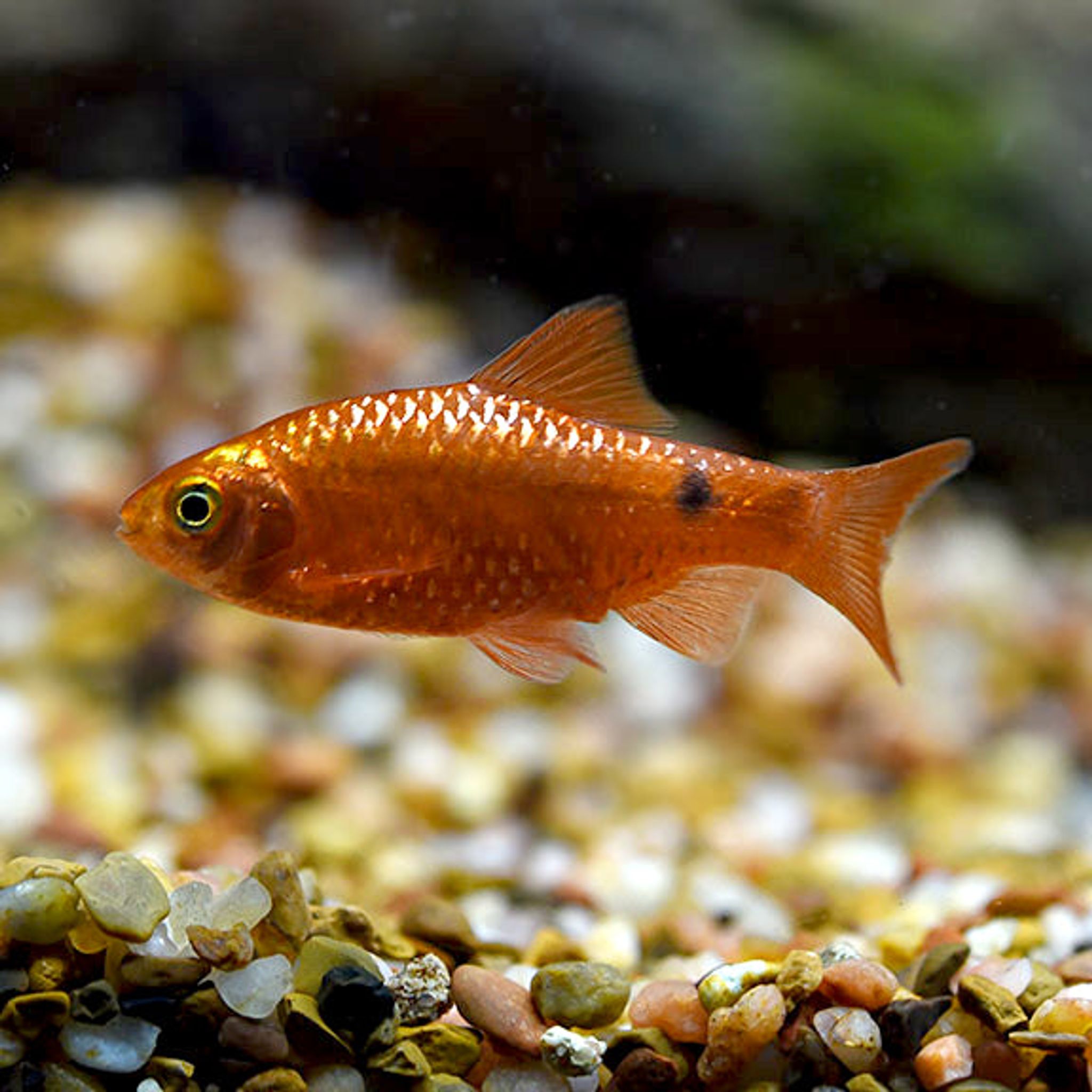

What Do Rosy Barb Eat? A Practical Feeding Guide
Rosy barbs (Pethia conchonius) are omnivores that will eat almost anything you put in the tank, which is exactly why so many owners end up overfeeding them. This guide covers the actual diet, exact portions and schedules, fry feeding, color-boosting foods, and the mistakes that cause the most problems.
What Rosy Barbs Eat in the Wild
In their native rivers and streams, rosy barbs graze constantly on a mix of:
- Algae and diatoms scraped from rocks and plants
- Small insects and insect larvae
- Crustaceans and worms
- Plant matter and detritus
This background matters for the tank: it's why a single food type never fully covers their needs. They evolved as generalist grazers, not specialist predators, so their captive diet should mirror that variety.
The Base Diet: Daily Staple Food
For everyday feeding, a high-quality tropical flake or a small sinking/floating pellet formulated for omnivores should make up the bulk of the diet. Rosy barbs are unfussy, active feeders — they'll take flake, pellet, frozen, freeze-dried, or live food without hesitation, so getting them to eat is rarely the issue. Getting the portions and rotation right is.
You can browse a range of everyday and specialty foods in FishyHub's Food & Supplements selection, including freeze-dried options for adding protein without the mess of live cultures.
Protein Supplements (2–3 Times a Week)
A few times a week, add a protein-rich food such as:
- Live or frozen bloodworms
- Brine shrimp
- Daphnia
- Small insects or insect larvae
Protein at this frequency supports growth, muscle tone, and breeding condition — it's the building block for tissue repair and egg/sperm production, which is why fish on a protein-light diet often look thin or breed poorly even if they're eating plenty of flake.
Plant Matter (Weekly or a Few Times a Week)
Rosy barbs also need fiber, which helps digestion and reduces the risk of constipation and bloat. Good options, used interchangeably rather than as one required item, include:
- Blanched or boiled peas (skins removed)
- Zucchini or cucumber slices
- Blanched spinach or lettuce
None of these is mandatory over the others — pick whichever is easiest to prep and rotate through a couple of them over time.
Grazing on Algae and Biofilm
Rosy barbs will pick at algae and biofilm growing on decor, plants, and driftwood throughout the day. This is a real, if minor, food source and one reason a tank with some natural algae growth isn't a bad thing for this species. However, grazing alone doesn't supply enough nutrition — treat it as a supplement to scheduled feedings, not a replacement for them.
Color Enhancement: Feeding for the Rosy-Red
The breeding coloration hobbyists specifically buy this fish for — the deep rosy-red to orange flush, most pronounced in males — is driven partly by diet. Foods rich in carotenoids intensify this coloration:
- Shrimp-based frozen or freeze-dried foods
- Spirulina flake or pellets
- Color-enhancing commercial flake or pellet blends
Working one of these into the weekly rotation, alongside good water quality and lighting, is the most reliable way to bring out stronger color without resorting to guesswork.
How Often and How Much to Feed
Feeding Frequency
Twice daily is the standard recommendation for adult rosy barbs, and it's the best default for most home tanks. Feeding once a day is acceptable for maintenance on an established, stable tank, but fry need to eat far more often than adults (more on that below).
Portion Size
Feed only what the fish can fully consume in 2–3 minutes. When in doubt, lean toward the shorter end of that window — it's much safer to slightly underfeed than to overfeed. As a rough quantity guide for a small group:
| Food type | Rough amount for 5–6 adult barbs | Feeding window |
|---|---|---|
| Flake | A pinch that covers roughly a 2 in (5 cm) circle on the surface | 2–3 minutes to disappear |
| Small pellets | 8–10 pellets total | 2–3 minutes to disappear |
| Frozen bloodworms/brine shrimp | A thumbnail-sized cube, thawed | 2–3 minutes to disappear |
| Blanched vegetable | One pea-sized piece or a 1 in (2.5 cm) slice per fish | Removed after a few hours if uneaten |
If food is still visibly sitting on the surface or substrate after three minutes, you fed too much — scale back next time.
A Sample Weekly Routine
| Day | Morning | Evening |
|---|---|---|
| Mon | Flake | Frozen bloodworms |
| Tue | Flake | Blanched pea or zucchini |
| Wed | Flake | Flake |
| Thu | Color-enhancing pellet | Brine shrimp or daphnia |
| Fri | Flake | Blanched spinach or cucumber |
| Sat | Flake | Flake |
| Sun | Optional skipped feeding | Light flake feeding |
Skipping one feeding a day per week is optional, not universal — some keepers use it to let fish "clean up" any residual food and avoid buildup, similar to the guidance often given for other easy-to-overfeed omnivorous barbs and goldfish-type fish. It isn't required, but it's a harmless habit for adult fish in a stable tank.
Why Variety Matters
Rotating food types isn't just for color — it prevents nutritional deficiencies that build up on a monotonous, single-food diet over months. Protein supports growth and spawning; plant fiber supports digestion and helps prevent constipation and bloat. A fish fed nothing but flake for a year can still develop dull color, poor growth, or digestive issues even though it never looks obviously malnourished day to day.
Feeding Rosy Barbs in a Community Tank
Rosy barbs are fast, semi-aggressive feeders that will out-compete slower or shy tankmates — small tetras, bettas, and other gentle community fish can end up missing meals if food is dropped in one spot. Adjustments that help:
- Spread food across the tank surface rather than dropping it in one place
- Feed in two or three spots at once if keeping barbs with slower eaters
- Use sinking pellets fed separately for bottom-dwelling tankmates, since rosy barbs feed mainly at mid-water and the surface — excess flake left for bottom feeders will just rot uneaten on the substrate
If you're stocking a mixed tank, it's worth checking compatibility and feeding habits for any small community fishes before adding rosy barbs, since their fast, competitive feeding style doesn't suit every tankmate.
Fry and Breeding: What Baby Rosy Barbs Eat
Rosy barbs are prolific egg-scatterers, and fry feeding follows a clear progression:
- Days 1–2: Newly hatched fry live off their yolk sac and don't need feeding yet.
- Once free-swimming: Offer infusoria or a commercial liquid fry food.
- As they grow: Graduate to baby brine shrimp (live or frozen) and finely crushed flake.
Fry should be fed small amounts multiple times a day — more frequently than adults — to support their rapid growth rate. Skipping feedings at this stage slows growth far more than it would in an adult.
Common Feeding Mistakes and How to Fix Them
Overfeeding
The single most common problem. Signs include cloudy water, ammonia or nitrite spikes, bloated fish, and uneaten food rotting in the substrate. Fix it by feeding smaller portions on the 2–3 minute rule and removing any uneaten food with a net or a turkey baster after each feeding.
A Monotonous Diet
Flake-only feeding long-term tends to produce dull color, slower growth, or deficiency-related issues. Fix it by rotating in frozen or live protein and blanched vegetables on a weekly schedule like the one above.
Fish Not Eating
Check the water temperature first. Rosy barbs prefer cooler, subtropical temperatures — roughly 64–72°F (18–22°C) — unlike many tropical community fish that are comfortable at 78°F and above. A tank kept too warm can suppress their appetite and slow their metabolism, while a tank that's too cold has the same effect at the other extreme. Illness, recent transport, or being newly introduced to a tank can also cause a fish to skip meals for a day or two before settling in.
Fin-Nipping or Aggression at Feeding Time
This is usually a hunger or group-size issue rather than a food-quality one. Rosy barbs should be kept in schools of 5–6 or more; a smaller group tends to redirect competitive energy toward fin-nipping. Increasing school size, and feeding more frequently or across a wider area, often reduces the behavior.
Feeding Around Water Changes, Quarantine, or Transport Stress
Hold off on feeding for a few hours after a water change or after moving fish to a new tank — stressed fish often won't eat right away, and uneaten food just adds to the bioload during a period when water quality is already more fragile. During quarantine, feed lightly and watch for normal appetite as a sign the fish is settling in and recovering.
Frequently Asked Questions
Can rosy barbs eat only flakes?
Yes, flake can serve as the base diet, but relying on it exclusively long-term risks nutritional deficiency and dull color. Rotate in frozen or live protein and blanched vegetables at least a few times a week.
How often should I feed rosy barbs?
Twice a day is standard for adults, with fry needing smaller, more frequent feedings throughout the day. Skipping one feeding a week is optional and harmless for adult fish in a stable, established tank.
Do rosy barbs eat algae?
Yes, they graze on biofilm and algae growing on decor, plants, and driftwood as a supplemental food source. It isn't sufficient as their sole diet, so it should never replace scheduled feedings.
What makes rosy barbs more colorful or red?
Carotenoid-rich foods bring out the rosy-red to orange breeding coloration, especially in males. Shrimp-based frozen food, spirulina, and color-enhancing pellets or flake are the main options.
Can rosy barbs eat vegetables?
Yes — blanched peas with the skins removed, zucchini, cucumber, spinach, and lettuce are all accepted and beneficial for digestion. Rotate between a couple of these rather than relying on just one.
What do rosy barb fry eat?
Fry live off their yolk sac for the first couple of days, then need infusoria or a liquid fry food once free-swimming. As they grow, move them onto baby brine shrimp and finely crushed flake, fed in small amounts several times a day.
Why is my rosy barb not eating?
Check water temperature first, since rosy barbs prefer a cooler range (roughly 64–72°F/18–22°C) than many tropical tankmates and can lose their appetite in an overheated tank. New-fish stress and illness are the other common causes, and appetite often returns within a day or two as the fish settles in.
Can you overfeed rosy barbs?
Yes, easily — they're voracious, opportunistic eaters that will keep accepting food well past what they need. Overfeeding leads to obesity, bloating, and water-quality decline from uneaten food, so stick to the 2–3 minute portion rule.
Ready to stock or round out a school? Browse available barbs on FishyHub to find healthy rosy barbs for a new or existing setup.


