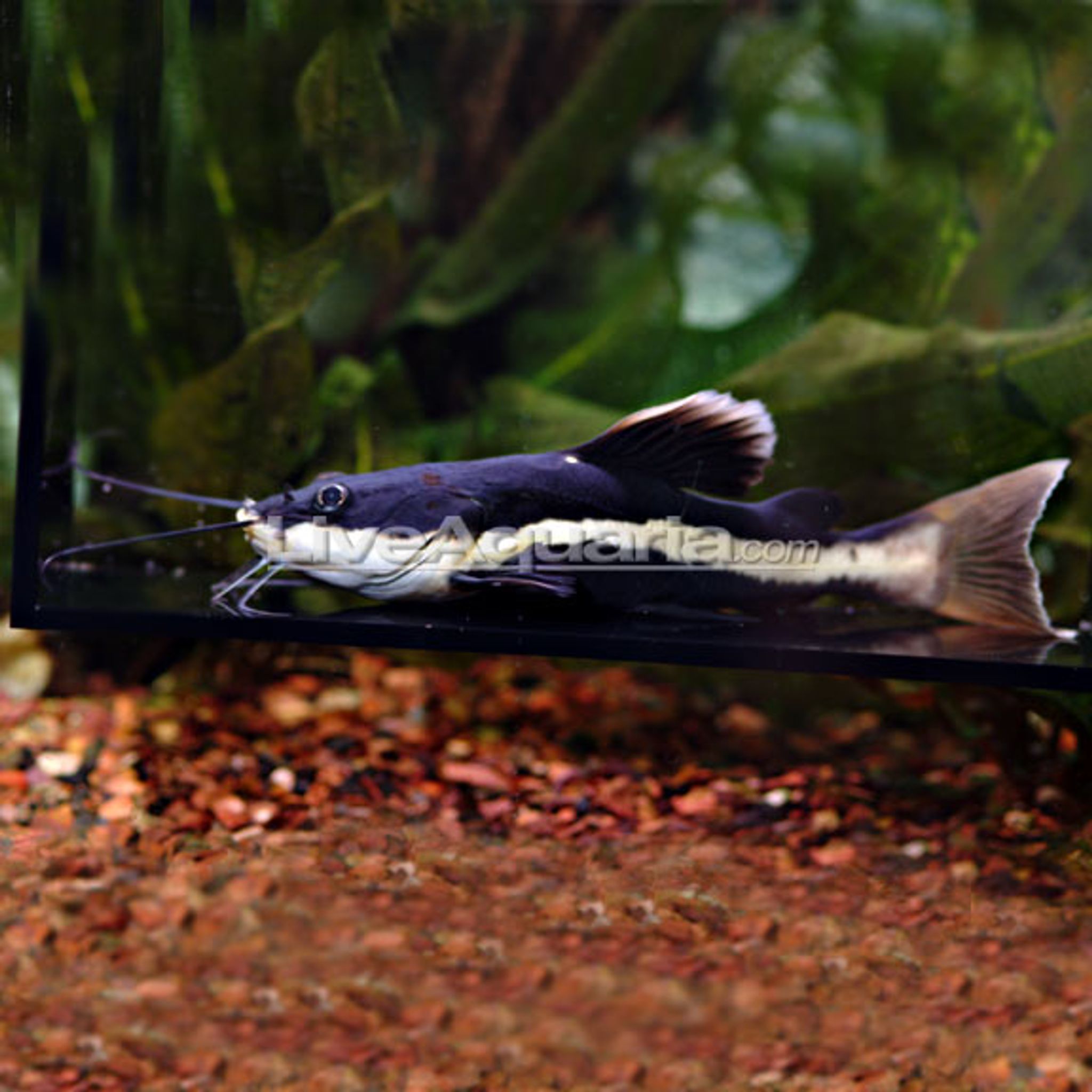

What Do Redtail Catfish Eat? A Practical Feeding Guide
Redtail catfish (Phractocephalus hemioliopterus) are opportunistic predators that eat a mix of sinking pellets, whole fish, shrimp, mollusks, and other meaty foods — and they will try to eat almost anything that fits in their mouth, tank mates included. This guide covers exactly what to feed one, how much, how often by life stage, and why feeding decisions are inseparable from tank size and water quality once this fish grows past its cute juvenile stage.
What redtail catfish eat in the wild
In their native South American rivers, redtail catfish are omnivorous predators. Wild diet studies and field observations describe them eating:
- Crustaceans (crabs, shrimp)
- Small fish
- Aquatic insects and insect larvae
- Occasional plant matter, including fallen fruit that drops into the water
This background matters for captive feeding: the species evolved to eat a varied, meat-heavy diet with some plant material mixed in, not a single food item repeated forever. It's also built to be a generalist hunter, which is the root of the "eats anything" reputation that follows it into home aquariums.
The core feeding rule: highly opportunistic
Redtail catfish are not picky. A hungry individual will attempt to swallow any tank mate small enough to fit in its mouth, and its mouth gets larger every month as the fish grows. This isn't aggression in the usual sense — it's predation, and it means:
- Diet planning and tank-mate planning are the same conversation.
- A fish that looks "peaceful" with similarly sized tank mates as a juvenile can become a threat to those same fish within a year.
- Any feeding plan has to assume the fish will eat opportunistically between scheduled meals if given the chance.
Building the diet: staple and supplemental foods
Staple diet
A high-quality sinking pellet or carnivore/predator formula should form the base of the diet. Pellets are nutritionally complete, easy to portion, and don't carry the parasite or pathogen risks that whole live prey can.
Supplemental meaty foods
Rotate in fresh or frozen whole foods to add variety and nutrients that pellets alone may not fully replicate:
- Whole fish such as tilapia or smelt
- Shrimp
- Mussel
- Squid
- Scallops
- Large earthworms
- Crayfish
Always thaw frozen items fully and rinse them before feeding — this reduces the risk of introducing excess phosphate-laden liquid or freezer residue into the tank.
Foods to avoid
- Mammalian meat (beef heart, chicken, pork): too fatty and poorly digested by fish; regular feeding is linked to fatty deposits and organ strain over time.
- Feeder goldfish or other feeder fish: they carry a real disease risk and are nutritionally thin. Oily feeder species also raise a thiaminase concern, where an enzyme in the fish can break down thiamine (vitamin B1) in the predator over repeated feedings.
Feeding frequency by life stage
| Life stage | Approximate size | Feeding frequency |
|---|---|---|
| Juvenile | A few inches | Daily or every other day |
| Sub-adult | Growing rapidly, several inches to 1+ ft | Tapering down as size increases |
| Adult | 3–4 ft (captive) | Roughly once every 3–5 days |
Feeding frequency isn't fixed by a calendar — it should track body condition and activity level. A fish that looks rounded, sluggish, or reluctant to move after a meal doesn't need another feeding on schedule; skip it.
Where sources disagree on adult feeding
Adult feeding frequency is one of the more debated points in redtail catfish care. Some keepers feed full-grown adults just once a week; others recommend two to three meaty feedings per week. A sensible middle ground is once every 3 to 5 days for large adults, adjusted by how the fish looks and behaves. The practical risk runs one direction: obesity and organ stress from overfeeding are a much bigger real-world problem in this species than underfeeding, so when in doubt, feed less often rather than more.
Portion sizing: a rule of thumb
Most care resources are vague about exact portions. A workable rule of thumb: a single serving of protein roughly matching the size of the fish's own head is a reasonable meal for one feeding. Beyond that, use the clearance test:
- Feed only what the fish clears within a few minutes.
- Remove uneaten food promptly rather than letting it sit and foul the water.
- If the fish still looks full or sluggish from the previous meal, skip the next scheduled feeding.
Growth rate and how it changes feeding needs
Redtail catfish grow fast. A juvenile purchased at a few inches can reach over a foot in length within its first year on a generous feeding schedule. Captive adults commonly reach 3–4 feet, with wild individuals reported at 4–5+ feet in some accounts. As the fish grows:
- Individual meals get larger, but frequency should drop, not increase.
- Bioload from each feeding grows disproportionately, since a bigger fish produces more waste per meal.
- Tank and filtration requirements scale far faster than most new owners expect.
Tank size and water parameters tied to feeding
Feeding a redtail catfish responsibly is inseparable from having the right system to handle the waste it produces. Recommended water parameters:
- Temperature: 75–82°F (24–28°C)
- pH: 6.0–7.5
- Hardness: soft to moderate
- Filtration: oversized mechanical and biological capacity relative to a typical setup of the same volume
- Water changes: 25–30%+ weekly, given the heavy waste load from a large, meat-fed predator
On tank size, cited minimums for a full-grown adult range from about 1,500 to 2,500+ gallons, with a long, wide footprint — roughly 10–12+ feet in length. A sensible way to read that range: treat 1,500 gallons as an absolute floor for an adult, understanding that serious keepers and public aquariums often provide considerably more. This is well beyond what a typical home fishroom can accommodate, and it's the central reason this species is not a "starter fish" despite its cheap, small size at purchase.
Because feeding drives bioload so directly, vacuuming leftovers promptly and running filtration well above the tank's nominal rating are effectively part of "feeding" this fish correctly, not a separate maintenance task.
Anyone weighing this species should look closely at oversized filters and realistic tank volumes before buying, since the filtration and water-change demands scale with every pound the fish adds.
Common feeding mistakes to avoid
- Buying a 3–4 inch juvenile with no long-term housing plan. Many redtail catfish end up needing rehoming to ponds or public aquariums once their tank stops being adequate.
- Overfeeding meaty foods too often, which drives rapid, oversized growth, obesity, and fatty deposits or organ strain.
- Using beef, chicken, pork, or fatty feeder goldfish as a dietary staple.
- Underestimating bioload. Skipping large water changes or running undersized filtration after big meaty feedings is a common trigger for ammonia and nitrite spikes.
- Housing with tank mates small enough to be eaten, or assuming a docile juvenile will stay peaceful once it reaches predator size.
- Feeding an all-pellet diet with no whole-prey items, which can miss nutrients that fresh or frozen meaty foods provide.
A few things most feeding guides skip
Vitamin and mineral supplementation
A diet heavy on pellets and a narrow rotation of meaty foods can end up short on certain vitamins and minerals. Occasionally soaking food items in a fish-safe vitamin supplement before feeding is a simple way to offset that gap, especially for a fish that's fed relatively infrequently as an adult.
Transitioning a feeder-trained juvenile onto pellets
Some juveniles arrive already conditioned to live feeder fish. To shift them onto a healthier staple, try offering pellets first while the fish is hungriest, then gradually reduce whole-fish feedings as pellet acceptance improves. Patience matters more than speed here — a stubborn feeder-fish habit can take several weeks to break.
Parasite risk from live and frozen whole foods
Because this species eats so much live and frozen whole prey relative to community fish, it's worth a specific caution: source feeder items carefully and consider a brief quarantine or observation period for live foods before offering them, to reduce the chance of introducing parasites alongside a meal.
Exit planning before you ever need it
Given how often redtail catfish outgrow home setups, it's worth knowing your options before you're forced to use them: local aquarium societies, livestock rehoming networks, and public aquariums sometimes accept large specimens that have outgrown private care. Researching this in advance, rather than scrambling once the fish hits 2 feet, is a genuinely useful step most care guides skip entirely.
Feeding technique and enrichment
Hand-feeding with long tongs is a common technique for large predatory catfish. It gives more precise portion control than dropping food in and lets an owner observe the fish closely at each meal without other tank inhabitants swarming the food first — useful in mixed setups where feeding time can otherwise trigger aggression toward tank mates.
How other catfish compare: not every species needs this scale
It's worth noting that "catfish" covers an enormous range of care requirements, and the redtail catfish sits at the extreme end.
Banjo catfish, for contrast, stay small at 3–4 inches, are shy and nocturnal, and feed on macroinvertebrates and detritus in the wild. In captivity they do well on sinking pellets or flakes plus frozen bloodworms and brine shrimp, typically offered after the lights go out. No thousand-gallon tank required.
Bumblebee catfish offer a different kind of contrast, this time around breeding rather than feeding scale: spawning is often triggered by rearranging hardscape or otherwise disturbing the tank layout. Eggs are tiny — around 1–2mm, greenish and translucent — and fry are raised on baby brine shrimp (live or decapsulated) plus microworms. It's a reminder that "catfish care" isn't one template; each species has its own feeding, breeding, and housing profile.
For anyone still deciding which catfish fits their setup, browsing plecos, corys, and other bottom dwellers alongside the monster fish category is a useful way to compare scale before committing to a species.
Frequently Asked Questions
How often should I feed my redtail catfish?
Juveniles do well fed daily or every other day, tapering down as they grow. Full adults typically need feeding only about once every 3 to 5 days. Watch body condition and activity rather than sticking to a rigid calendar — a full-looking or sluggish fish should have its next feeding skipped.
Can redtail catfish eat goldfish or feeder fish?
It's generally discouraged. Feeder fish carry disease risk and tend to be fatty and nutrient-poor, with oily species raising a thiaminase concern over repeated feedings. Appropriately sized whole fish like tilapia or smelt, offered occasionally, are a better choice.
Do redtail catfish eat pellets?
Yes. A quality sinking carnivore or predator pellet can serve as the dietary base, supplemented with rotating meaty whole foods like shrimp, mussel, squid, or scallops for variety.
Why is my redtail catfish not eating?
Common causes include new-tank stress, declining water quality, temperature outside the 75–82°F (24–28°C) range, or simply a natural slow-digestion period after a large previous meal. Check parameters first before assuming illness.
What human or kitchen foods are safe?
Avoid mammalian meats like beef, pork, and chicken — they're too fatty and poorly digested. Occasional lean white fish or unseasoned shrimp from the market can work as an offering, but these shouldn't replace a proper pellet-and-whole-prey rotation.
How big will my redtail catfish get, and does that affect feeding?
Captive adults commonly reach 3–4 feet, with some wild individuals reported larger. As size increases, meals should get proportionally larger but less frequent, and the tank and filtration must scale up dramatically to handle the resulting waste load.
Is it true they'll eat anything?
Practically, yes. Treat this less as a diet quirk and more as a housing and tank-mate safety issue — any fish or invertebrate small enough to fit in its mouth is at risk, regardless of how peaceful the redtail catfish seemed as a juvenile.
Before bringing one home, it's worth browsing FishyHub's food and supplements category to see the range of pellet and frozen options available, and weighing them against the tank size and filtration this species will eventually demand.


