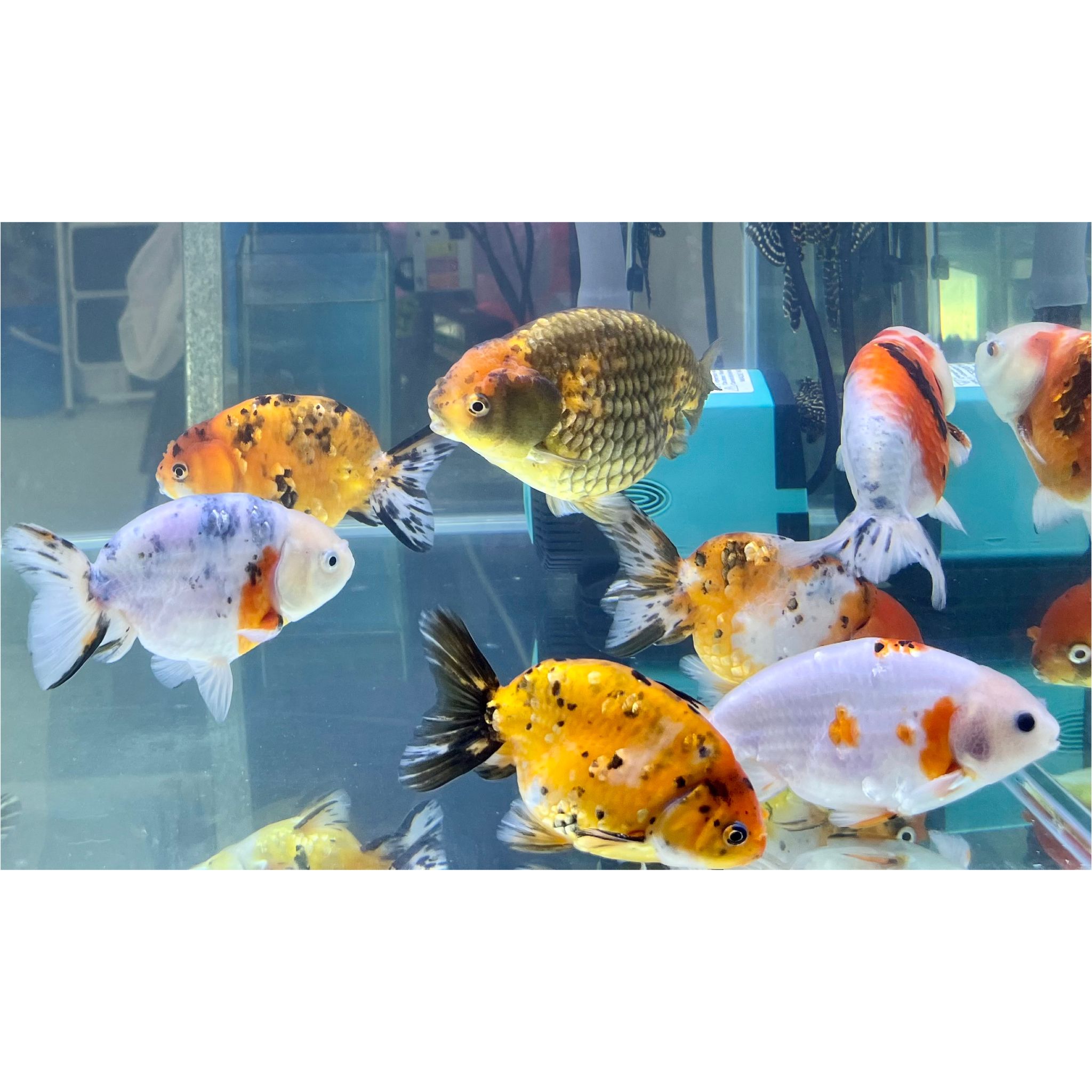

What Do Ranchu Goldfish Eat? A Practical Feeding Guide
Ranchu goldfish eat a varied diet of sinking pellets or gel food, blanched vegetables, and occasional live or frozen protein — fed in small portions two to three times a day. Their humped back, missing dorsal fin, and downward-tilted mouth make them clumsier eaters than slim-bodied goldfish, so how you feed them matters as much as what you feed them. This guide covers exact portions, schedules, and the feeding mistakes that most often lead to swim bladder trouble.
Why Ranchu Feeding Is Different
Ranchus are fully omnivores, but their body shape changes the practical rules. A single-tail comet or common goldfish can chase surface flake, dart around competitors, and course-correct with its dorsal fin. A ranchu has none of those advantages:
- No dorsal fin, which makes steering and quick turns harder.
- Eyes angled downward, which limits how well it tracks food that's above it.
- A humped, egg-shaped body that sits lower in the water and moves slower.
The result is a fish that is prone to gulping air at the surface, easily out-competed by faster tankmates, and unusually sensitive to overfeeding. Every recommendation below is built around managing those three risks.
Core Diet: What to Feed Daily
Sinking Pellets or Gel Food First
Sinking pellets or a gel food formulated for fancy goldfish should make up the bulk of a ranchu's diet. Sinking food lets the fish feed at a comfortable depth without straining upward and gulping air at the surface — a major contributor to swim bladder disorder in round-bodied goldfish. Floating flake isn't off-limits, but treat it as an occasional, supervised exception rather than a daily staple.
Look for pellets sized for a small, downturned mouth, and check the label for:
- Protein: roughly 30–35%, which supports growth and immune function without excess waste.
- Fat: moderate, around 5%; fancy-goldfish formulas often run slightly lower than standard goldfish food specifically to reduce buoyancy problems.
A browse of goldfish varieties and companion foods on FishyHub can help you compare fancy-goldfish-specific formulas against generic goldfish pellets before you buy.
Pre-Soak Dry Food
Before feeding, soak dry pellets or gel food cubes in tank water for 5–10 minutes. This lets them fully expand outside the fish's gut instead of inside it, and it reduces the amount of air and water swallowed along with the food. Treat this as a routine step for every feeding, not just something you start doing after a fish already looks bloated.
Vegetables, 2–3 Times a Week
Fresh or blanched vegetables add fiber and help prevent the constipation that often precedes buoyancy problems. Good options:
- Peas — shelled and skinned, never fed raw or whole.
- Blanched zucchini or cucumber, cut into small pieces.
- Leafy greens — spinach, kale, or romaine, softened by blanching or a quick scald.
Sources disagree on whether raw peas are acceptable; the safer, more current guidance is to blanch and skin peas every time, since the skin is a common choking and impaction risk for a fish with a small mouth.
Protein Treats, a Few Times a Week
Live or frozen (thawed) bloodworms, daphnia, or brine shrimp are excellent occasional treats. They add variety and natural pigments that support color, but they should stay a supplement — a few feedings per week — rather than a staple, since they're not nutritionally complete on their own.
How Much and How Often
The Two-Minute, Eye-Size Rule
Feed only as much as your ranchu can finish in about 2 minutes, then remove any uneaten food to protect water quality. As a simple visual gauge, aim for roughly an amount of food equal to the size of the fish's eye, per feeding, per fish — a useful starting point when "what it eats in 2 minutes" feels too vague to act on.
Feeding Frequency by Age
| Life stage | Feedings per day | Focus |
|---|---|---|
| Fry (first weeks) | 4–6 small feedings | Baby brine shrimp, crushed flake or powder for rapid early growth |
| Juveniles | 3–4 small feedings | Transitioning to small sinking pellets plus protein treats |
| Adults | 2–3 small feedings | Sinking pellets/gel food, vegetables 2–3x/week |
Sources vary between two and three-plus small meals for adults; the practical takeaway is to favor several small meals over one large one at every life stage, tapering fry-level frequency down to the adult schedule over several months as growth slows.
Build in a Fasting Day
Skip one feeding day roughly once a week, or after any bloating or buoyancy episode, to let the digestive tract fully clear. Many experienced keepers treat this as routine maintenance rather than a fix applied only after something goes wrong.
Feeding Ranchus Around Tankmates
Because ranchus are slower and clumsier feeders, faster tankmates — including other, more streamlined goldfish varieties — can out-compete them and leave them underfed even when the tank as a whole looks well fed. Practical fixes:
- Spot-feed directly in front of the ranchu using a turkey baster or long feeding tool.
- Use a feeding ring to keep floating or slow-sinking food in one contained area.
- Feed at separate times or locations if you keep ranchus with faster goldfish.
- Where possible, house ranchus only with similarly slow, round-bodied fancy varieties.
Water Conditions That Affect Appetite
Feeding success depends on stable water conditions as much as food quality. Target:
- Temperature: 65–72°F (18–22°C). Ranchus prefer cooler water than tropical fish, and appetite drops noticeably below about 60°F (15.5°C), largely stopping in cold winter ponds.
- pH: 7.0–8.0; ranchus tolerate mildly alkaline water well.
- Ammonia and nitrite: 0 ppm at all times.
Tank size matters too. A safer, more current guideline is a minimum of about 20 gallons (75 L) for the first ranchu, adding roughly 10 gallons (38 L) per additional fish — more generous than the older "10 gallons per fish" rule, because ranchus produce heavy waste relative to their body size. Because of that waste load, stronger filtration and more frequent water changes should be planned alongside any feeding routine, not treated as an afterthought. Reviewing filters sized for your tank volume before adding a ranchu is worth the extra step.
Ranchus in Outdoor Ponds
Ranchus can live in outdoor ponds in mild climates, but they're less cold-hardy and less pond-durable than common or comet goldfish because of their round body and reduced swimming ability. If you do pond them:
- Provide predator protection, since their slow, clumsy swimming makes them easy targets.
- Build with a liner and adequate depth — 18–24+ inches (46–61+ cm) — to buffer temperature swings.
- Reduce or stop feeding once water drops toward 50°F (10°C), as ranchu metabolism slows sharply.
- Watch for predatory pond insects such as dragonfly nymphs and backswimmers, which can injure small or fry-stage ranchus.
- Avoid overfeeding, which contributes to nuisance insect activity and algae blooms in a pond setting.
Because fast common goldfish and koi will out-compete a ranchu for food, a ranchu is better suited to a dedicated fancy-goldfish pond or an indoor tank than a mixed hardy-pond-fish setup.
Common Feeding Mistakes
| Mistake | Why it's a problem | Fix |
|---|---|---|
| Overfeeding | The single most common ranchu problem; causes water quality crashes, bloating, swim bladder disorder | Strict 2-minute portions, plus a weekly fasting day |
| Floating food only | Encourages air-gulping and buoyancy disorder | Switch to sinking pellets/gel food; pre-soak dry food |
| One food type long-term | Nutritional deficiencies, dulled color, weak immunity | Rotate pellets, vegetables, and occasional live/frozen protein |
| Ignoring slow eating | Faster tankmates steal food, leaving ranchus underfed | Spot-feed or house with similarly slow varieties |
| Full portions in cold water | Undigested food sits and rots in the gut below ~60°F | Reduce or stop feeding as temperature drops |
| Feeding right before lights-out | Undigested food overnight contributes to digestive issues | Feed earlier in the day while the fish is active |
| Assuming illness for a floating or sinking fish | Often diet-related swim bladder disorder, not disease | Fast for a day or two and offer a skinned pea before assuming disease |
Feeding and Color Changes
Diet and water quality tie directly into two color issues ranchu keepers commonly notice:
Turning black. Dark spots or patches are most often ammonia burn scarring — a healing response — rather than disease, though genetics (in calico or telescope-type fish) and aging can also cause dark patches. Overfeeding drives ammonia spikes, which stresses the fish and can trigger these pigment changes, so portion control is a direct line of defense.
Turning white or pale. Causes include stress, poor water quality, disease, aging, and diet. A nutritionally poor or overfed diet can dull color over time, while a varied diet that includes some live or frozen food supplies natural pigments that support color retention. Treat variety and portion control as a color-health measure, not just a cosmetic fix.
Closing Thoughts
Feeding a ranchu well comes down to matching food and technique to its body shape: sink the food, soak it first, keep portions small, and fast periodically. Combined with stable, cool-side water and enough space, a consistent routine avoids the buoyancy and digestion problems ranchus are known for. Browse goldfish and feeding supplies on FishyHub to put together a setup suited to their needs.
Frequently Asked Questions
How often should I feed my ranchu goldfish?
Adults do best on 2–3 small meals per day. Juveniles and fry need more frequent, smaller feedings — up to 4–6 times a day — to support faster growth.
What is the best food for ranchu goldfish?
A quality sinking pellet or gel food made for fancy goldfish, supplemented with blanched vegetables a few times a week and occasional live or frozen protein like bloodworms or daphnia.
Can ranchu goldfish eat flakes?
They can, but sinking pellets are safer as a staple because flakes encourage surface gulping and air intake, which raises the risk of swim bladder disorder in round-bodied fish.
Why does my ranchu float or sink and struggle to swim after eating?
This is usually swim bladder disorder linked to overfeeding, floating food, or constipation rather than disease. Fast the fish for a day or two and offer a skinned pea before assuming illness.
How much should I feed a ranchu goldfish at once?
Only as much as it can finish within about 2 minutes — roughly an amount the size of the fish's eye per feeding. Remove any leftovers promptly to protect water quality.
Do ranchu goldfish need vegetables?
Yes. Blanched, skinned peas and softened leafy greens 2–3 times a week add fiber that aids digestion and helps prevent bloating and constipation-related buoyancy issues.
Should I feed my ranchu goldfish in winter or a cold pond?
Reduce or stop feeding as water temperature drops toward the 50s°F (10–15°C), since digestion and metabolism slow dramatically and undigested food can sit and rot in the gut.
Why is my ranchu goldfish turning black or losing color?
Black patches are most often ammonia burn scarring from a healing response, though genetics and aging can also play a role; pale or dull color often points to stress, poor water quality, or a nutritionally limited diet. A stable, varied diet and clean water support healthier pigmentation in both directions.


