
What Do Pictus Catfish Eat? A Practical Feeding Guide
Pictus catfish (Pimelodus pictus) are omnivorous bottom foragers that need a sinking diet built around protein, not surface flakes. This guide covers exactly what to feed, how much, how often, and how to feed them in a community tank without starting a fish-versus-fish problem.
Species Snapshot
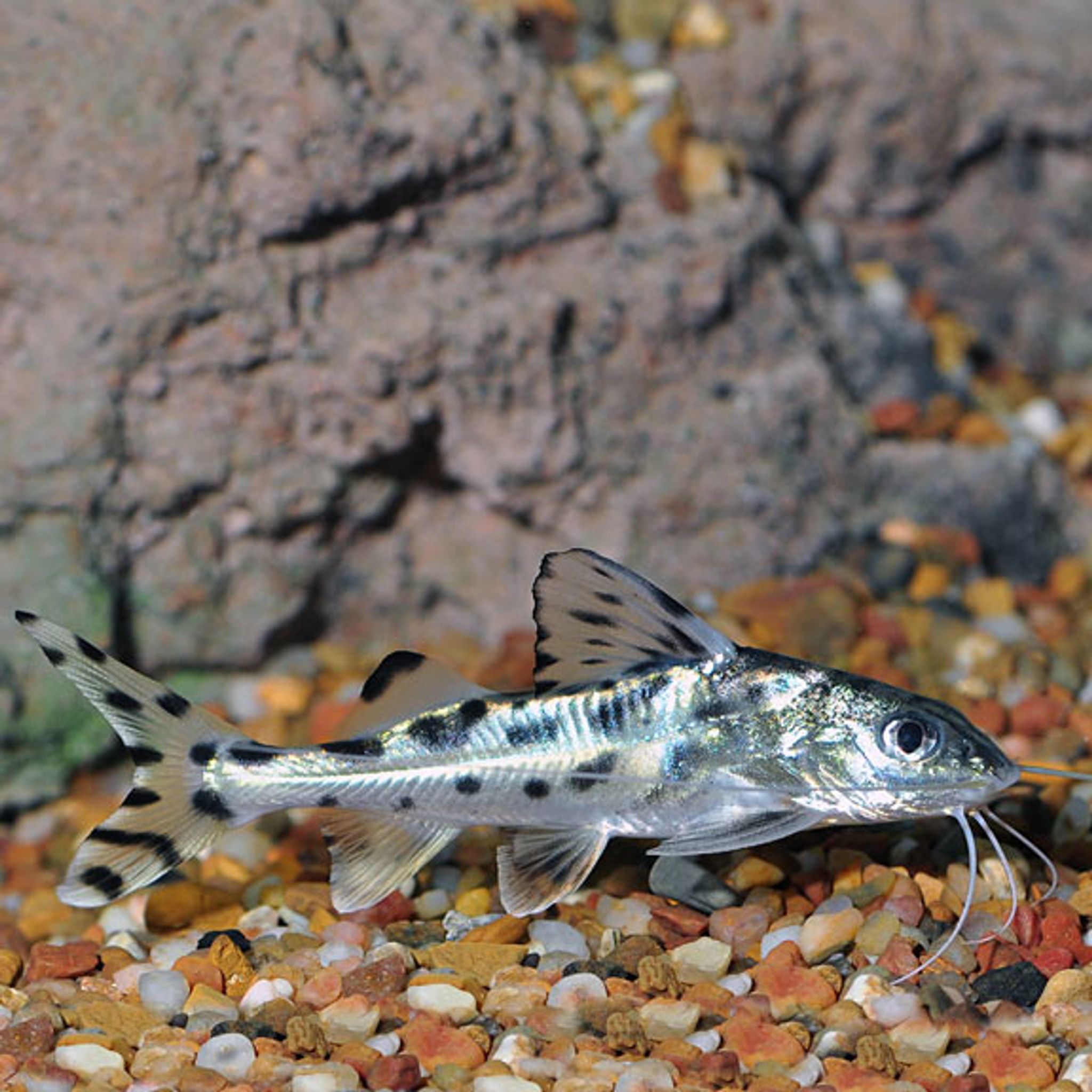
Pictus catfish are native to the Amazon and Orinoco basins in South America. They're easy to identify by their long, whisker-like barbels and silver, black-spotted bodies. In home aquariums they typically reach 4–5 inches in length and are active, fast-swimming fish, especially once the lights dim.
Their natural diet is broad: insect larvae, small crustaceans and snails, small fish, plant matter, and algae scraped off wood and rock. That wild diet is the key to feeding them correctly — pictus are omnivorous scavengers with a real predatory streak, not gentle grazers.
What Do Pictus Catfish Eat? The Core Diet
Staple: Sinking Pellets or Wafers
The foundation of a pictus diet should be a high-quality sinking pellet or wafer formulated for catfish and other bottom feeders. Sinking is not optional — pictus rarely feed at the surface, so floating flakes are frequently missed entirely and vacuumed up by faster fish before the catfish even notices.
Look for a pellet with a crude protein target in roughly the 35–45% range, since pictus function closer to semi-carnivores than to typical algae-grazing catfish.
Protein and Meaty Foods (2–4x Per Week)
Meaty foods should supplement the staple pellet several times a week:
- Frozen or live brine shrimp
- Bloodworms
- Blackworms
- Daphnia
- Mysis shrimp
- Mosquito larvae
- Occasional small bits of beef heart or shrimp/fish meat as a treat
Frozen or freeze-dried is the safer default for most home aquarists — it's convenient and avoids the parasite risk that can come with live foods. Live food isn't required, but it can serve as an occasional enrichment extra when sourced from a reputable supplier rather than wild-caught. If offering live foods, gut-loading them beforehand (feeding the feeder culture a nutritious diet a day or two before use) boosts the nutritional payoff for your catfish.
Plant Matter and Algae
Vegetable matter should make up a smaller share of the diet than protein. Useful options include:
- Blanched zucchini
- Blanched cucumber
- Blanched spinach or lettuce
- Naturally occurring tank algae
Pictus will graze on algae when it's available, but a tank full of algae and leftover scraps isn't a real feeding plan — plant matter alone is insufficient for proper growth and coloration.
Feeding Schedule and Portion Sizing
How Often to Feed
Sources disagree here, and the honest answer is that both approaches work depending on the fish:
- Once daily is typically enough for well-fed adults in a stable community tank.
- Two smaller feedings per day suit juveniles, or any adult showing signs of food-stealing or aggression toward tankmates.
How Much to Feed
A simple rule of thumb: offer roughly a pinch of pellets per fish per feeding, then watch closely. The real test is time, not weight — feed only what's consumed within 3–5 minutes, and remove anything left over promptly to protect water quality.
Best Time of Day
Pictus are more active at dusk and overnight than during bright midday light. An evening feeding with the lights dimmed usually gets noticeably better engagement than a feeding attempted at midday, when the fish may be tucked away and less motivated to forage.
A Simple Weekly Feeding Plan
| Day | Morning/Midday | Evening (lights dimmed) |
|---|---|---|
| Mon, Wed, Fri | Small amount sinking pellets | Frozen bloodworms or brine shrimp |
| Tue, Thu | Small amount sinking pellets | Sinking pellets or wafers |
| Sat | Blanched vegetable (zucchini/spinach) | Daphnia or mysis shrimp |
| Sun | Skip or very light feeding | Sinking pellets |
Adjust portions down for juveniles feeding twice daily, and skip a day occasionally if a fish looks overly full — pictus don't self-regulate well and will eat until visibly bloated.
Feeding in a Community Tank
Because pictus rarely compete well at the surface, feeding technique matters as much as food choice:
- Feed surface fish first with flakes, giving them something to focus on.
- Drop sinking pellets or wafers in a separate spot once the surface fish are occupied, ideally near where the pictus already forages.
- Avoid dumping all food in one spot, which lets faster community fish clean out the catfish's share before it arrives.
Pictus do best kept in groups of 3–5 or more, in tanks of 55 gallons or larger. A stressed, isolated, or underfed pictus is more likely to go hunting for food it shouldn't touch — which brings up the biggest safety issue with this species.
Predation Risk: Keep Feeding and Stocking Both in Mind
Pictus catfish are opportunistic. Yes, they eat other fish — anything small enough to fit in their mouth is fair game, especially if the catfish is underfed. Consistent, adequate feeding reduces opportunistic hunting, but it is not a substitute for smart stocking. The real safeguard is never housing pictus with fish or invertebrates small enough to be swallowed, regardless of how well-fed the catfish appears to be.
This means nano fish and dwarf shrimp are a poor match. A well-fed pictus can still eat a shrimp overnight; browsing FishyHub's shrimp selection is worth doing before finalizing tankmates, so you can choose species sized appropriately for a pictus tank rather than after the fact.
Stable water parameters also support healthy appetite: pictus do well at 75–82°F, pH 7.0–7.5, in soft-to-moderately-hard water. Because they're heavy eaters and correspondingly heavy waste producers, weekly to biweekly partial water changes of around 25% help offset the extra bioload from a protein-rich feeding schedule.
How Pictus Compare to Other Aquarium Catfish
Pictus sit in the middle of the aquarium catfish spectrum, which is why their feeding plan looks different from other bottom dwellers:
- Corydoras — small, peaceful, omnivorous flake and pellet eaters with no predatory interest in tankmates. Browse corydoras for comparison.
- Plecos/Bristlenose — largely herbivorous algae grazers that take occasional meaty treats.
- Otocinclus — algae specialists with minimal protein needs.
- Glass and whiptail catfish — omnivorous scavengers, broadly similar in feeding approach to pictus.
- Larger predatory catfish (e.g., redtail) — strictly carnivorous, meaty diet only, and far too large for most community setups.
Pictus fall between these groups: genuinely omnivorous, but with a stronger predatory streak than a Corydoras or pleco, which is exactly why a flake-only or algae-only diet fails them.
Common Feeding Mistakes to Avoid
- Feeding only flakes at the surface. Pictus rarely surface-feed, so food gets missed and faster fish clean it up. Switch to sinking pellets or wafers.
- Overfeeding because the fish "always looks hungry." Pictus will eat until visibly bloated. Stick to timed portions, not on-demand feeding.
- Assuming algae and scraps are enough. Plant matter alone doesn't support proper growth or color; protein is required.
- Skipping water changes despite heavy feeding. A big eater produces more waste — keep a regular partial water-change routine.
- Housing pictus with nano fish or shrimp. Even a well-fed pictus may eventually eat anything small enough to swallow.
- Ignoring barbel sensitivity. Sharp substrate or nippy tankmates can damage barbels and suppress appetite. If a normally eager eater suddenly stops feeding, check the barbels first.
Frequently Asked Questions
Do pictus catfish eat other fish?
Yes. They're opportunistic feeders and will eat fish small enough to swallow, especially when underfed. Keep tankmates similar in size or larger to avoid losses.
How often should I feed my pictus catfish?
Once daily is typically enough for adults in a stable community tank. Some keepers split this into two smaller feedings, particularly for juveniles or fish that seem to be competing aggressively for food.
What is the best staple food for pictus catfish?
A high-quality sinking pellet or wafer made for omnivorous bottom feeders, ideally in the 35–45% crude protein range, supplemented with meaty frozen or live foods several times a week.
Can pictus catfish eat flakes?
Yes, as a minor supplement, but flakes float and are easily lost to faster surface-dwelling fish. Sinking foods should remain the main food source for this species.
Do pictus catfish eat algae?
They'll graze on some naturally occurring algae, but they aren't effective algae control fish. A formulated sinking diet is still necessary for proper nutrition.
Why does my pictus catfish look bloated?
This is usually overfeeding. Cut back portions, fast the fish for a day, and monitor for improvement before resuming a normal, timed feeding schedule.
What live foods are safe for pictus catfish?
Brine shrimp, daphnia, bloodworms, and blackworms from reputable suppliers are all safe options. Avoid wild-caught feeder insects or worms, which can carry parasites.
Will pictus catfish eat shrimp in my tank?
Likely yes, especially smaller dwarf shrimp species. Pictus are not considered shrimp-safe tankmates regardless of how consistently they're fed.
Ready to plan a feeding routine or stock a pictus-appropriate community tank? You can browse sinking and freeze-dried foods on FishyHub to round out a protein-first rotation for your catfish.


