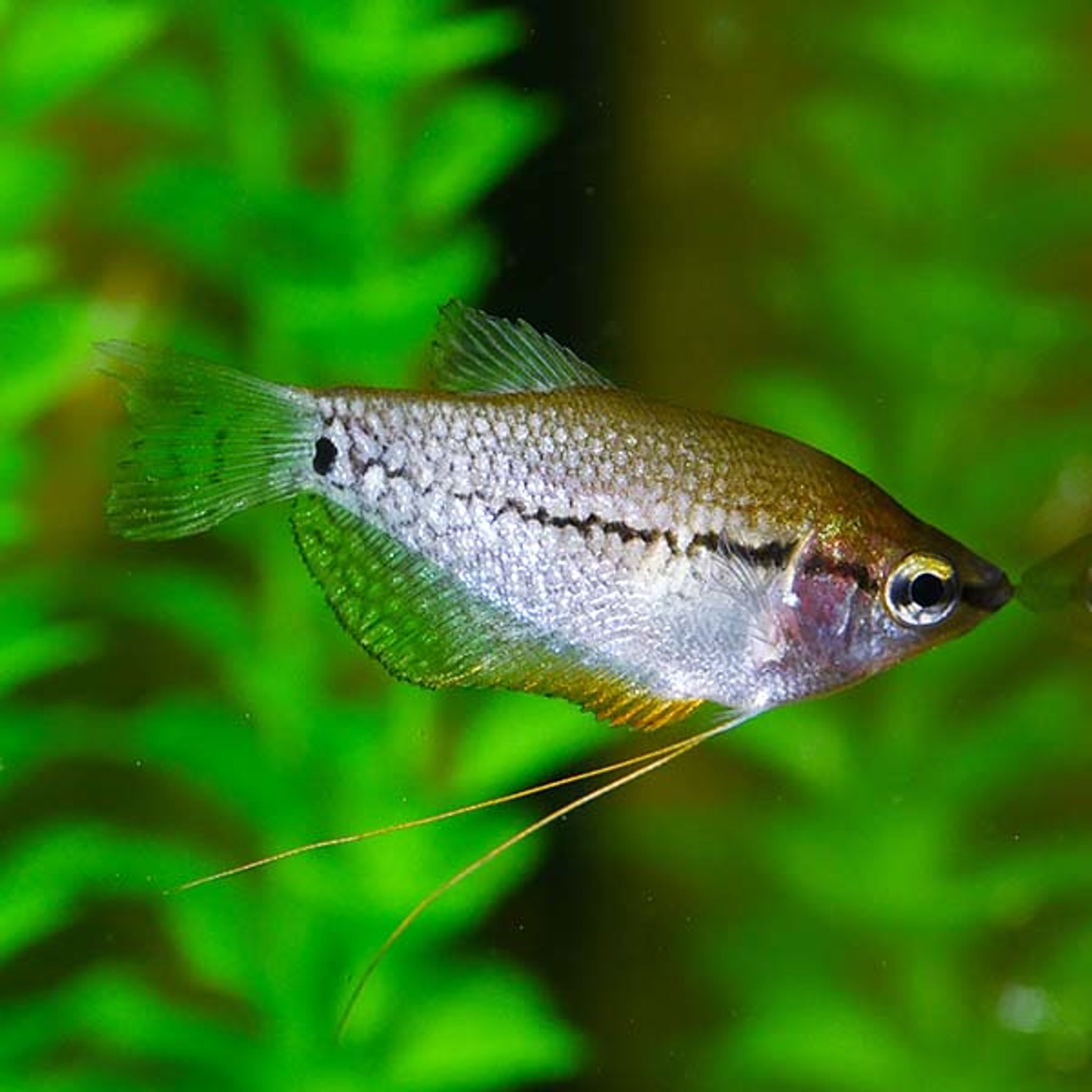

What Do Pearl Gourami Eat? A Practical Feeding Guide
Pearl gourami (Trichopodus leerii) are unfussy omnivores that thrive on a quality flake or micro-pellet staple rounded out with occasional protein and plant matter. They feed at or near the surface, eat almost anything offered in the right size, and are far more likely to be overfed than starved. This guide covers exactly what to feed, how much, how often, and how to handle the situations that trip up new owners.
What Pearl Gourami Eat in the Wild
In their native slow-moving waters, pearl gourami graze on small insects, insect larvae, tiny crustaceans, zooplankton, and bits of algae or plant matter picked off vegetation near the surface. This background matters for two practical reasons: they're built to be omnivores, not strict carnivores or herbivores, and they're adapted to feeding at the surface rather than digging through substrate.
That surface habit connects directly to their labyrinth organ, which lets them gulp atmospheric air. Because they spend so much time near the surface, floating or slow-sinking foods work far better than fast-sinking pellets, which can go completely unnoticed and uneaten on the substrate.
The Core Diet: A Simple Weekly Routine
A healthy pearl gourami diet rests on three components, rotated across the week rather than fed all at once.
1. Daily staple: flake or micro-pellet
A quality omnivore or tropical flake/micro-pellet formula should form the backbone of daily feeding. Look for a floating or slow-sinking product — this matters more for gourami than for most community fish, since a food that drops too fast to the bottom may simply never get eaten. You can browse a range of suitable options in FishyHub's gourami and food & supplements categories.
2. Protein, 2–4 times a week
Adding brine shrimp, bloodworms, blackworms, daphnia, or glassworms — live, frozen, or freeze-dried — a few times weekly improves conditioning and color, particularly the male's red breast during breeding season. Live and frozen protein is a nice-to-have for extra vibrancy, not a requirement for a healthy pet-only setup; freeze-dried alternatives work perfectly well day to day. FishyHub's freeze-dried food selection is a convenient way to add this variety without the storage hassle of frozen cubes.
3. Plant and vegetable matter, a couple of times a week
Blanched zucchini, spirulina flakes or pellets, and algae wafers round out the diet with fiber and micronutrients that support digestion. Skipping this entirely for months tends to show up as dull color and, occasionally, sluggish digestion.
Why the rotation matters: relying on one food type long-term creates nutritional gaps. Protein variety drives pigment development (especially reds and oranges), while plant matter supplies fiber that keeps digestion moving — neither does the other's job.
How Much and How Often to Feed
For adult pearl gourami, 2–3 small feedings a day is the standard recommendation for active growth, conditioning, and color. A single daily feeding is also acceptable for a lightly stocked, low-maintenance adult tank — it just won't push growth or color as hard.
Portion size rule of thumb: feed only what the fish clear in about 2 minutes. In practice that's roughly a small pinch of flake per fish, or 4–6 micro-pellets, adjusted to how many gourami are in the tank. There's no need to guess at vague "small amounts" — if food is still visibly floating or drifting after two minutes, you fed too much.
Overfeeding, not underfeeding, is the far more common mistake with this species. Their adult size (about 4–5 inches / 10–12 cm) and moderate metabolism mean their actual food requirement is smaller than most new owners expect.
Feeding by life stage
| Stage | Feeding frequency | Food type |
|---|---|---|
| Fry (first weeks) | 3–4x/day, tiny amounts | Infusoria or liquid fry food |
| Juvenile | 3–4x/day | Finely crushed flake, baby brine shrimp |
| Adult (active/breeding) | 2–3x/day | Flake/pellet staple + protein + veggie rotation |
| Adult (light stocking) | 1x/day | Flake/pellet staple, protein 2–3x/week |
Water Temperature and Appetite
Feeding activity and appetite are best around 77–82°F (25–28°C). Cooler water slows metabolism and digestion, so a gourami in a tank running below that range may eat less enthusiastically and digest more slowly — feed lighter, not heavier, in cooler conditions rather than trying to compensate with extra food.
Community Tank Feeding Tips
Pearl gourami are peaceful, somewhat deliberate eaters, and in a mixed tank with fast, aggressive feeders like barbs or danios, they can lose out at the surface. A couple of fixes help:
- Spread food across the surface rather than dropping it in one spot, so a slower gourami has more chances to grab a bite.
- Spot-feed by dropping a small amount directly near the gourami if it's consistently getting outcompeted.
- Watch body condition over a few weeks — a gourami that's visibly thinner than tankmates is a sign it's losing the competition for food.
Adult pearl gourami are generally not a threat to adult tankmates, but they may eat very small fry or tiny shrimp if given the opportunity — worth keeping in mind if you're also raising small community fish fry or shrimp in the same tank.
Fasting and Vacation Feeding
Fasting one day a week is a common, optional practice for many omnivorous aquarium fish to support digestion, and it's reasonable — though not mandatory — for pearl gourami too.
For longer absences, adult pearl gourami can safely go 3–5 days, even up to about a week, without food with no harm. That makes a short fast a better plan for a weekend trip than an automatic feeder set to dump too much. For longer vacations:
- A slow-dissolve vacation feeder block — use cautiously, since these can cloud or foul the water if oversized.
- An automatic feeder loaded with pre-measured pellets.
- A trusted fish-sitter given pre-portioned daily packets rather than open access to the food container.
Avoid the instinct to double-feed right before leaving "just in case" — a short planned fast is healthier than the water-quality hit from overfeeding beforehand.
Does Fish Food Go Bad?
Yes, and it's worth checking before you scoop that pinch in. General shelf-life guidelines:
- Dry flake/pellet: about 18 months to 3 years sealed; roughly 6 months once opened.
- Freeze-dried food: years sealed; about 6 months once opened.
- Frozen food: keeps about 6 months frozen; discard thawed leftovers after 12–24 hours.
Store dry food airtight, in a cool, dark, dry spot away from tank humidity and heat — not on a shelf right above the aquarium. Discard anything that's gone mushy, smells foul, shows mold or insects, or has lost its crisp texture, even if it's within the printed date range.
Poor Nutrition and Disease Risk
Inconsistent or low-quality feeding stresses fish and weakens their immune response, making bacterial issues — bloating and swelling consistent with dropsy-type conditions, fin rot, or other infections — more likely across labyrinth fish generally, not just gourami. The prevention toolkit is the same as good feeding practice: a varied diet, correct portions, clean and stable water, consistent temperature, and avoiding overcrowding stress.
Breeding-Related Feeding
If you're conditioning a pair for breeding, step up live or frozen protein — bloodworms, brine shrimp — over the 1–2 weeks before you expect spawning. Males build bubble nests at the surface once conditioned. The resulting fry are extremely small and need infusoria or a commercial/liquid fry food for the first couple of weeks before they're large enough to graduate to baby brine shrimp and finely crushed flake.
Color Varieties: Does Diet Change?
Pearl gourami come in a few color forms — the standard silver/pearl-spotted pattern, gold, and orange or red-finned "flame"-type strains. Feeding recommendations don't change based on color variety; a gold pearl gourami and a standard one eat the same diet in the same amounts.
Why Isn't My Pearl Gourami Eating?
New arrivals commonly refuse food for the first 1–3 days after transport — this is normal stress adjustment, not illness. If refusal continues beyond a few days, or shows up alongside bloating, clamped fins, lethargy, or color loss, the cause is more likely water quality problems, illness, or food that's the wrong size or type than simple pickiness. Test your water parameters first before assuming it's a diet issue.
Common Feeding Mistakes to Avoid
- Overfeeding: the single most common issue — uneaten food fouls water and can trigger bloating or constipation. Fix it by feeding only what's cleared in about 2 minutes, and skip a day if leftovers keep piling up.
- Fast-sinking food: a surface-feeding fish with a labyrinth organ may simply never find pellets that drop too quickly. Switch to floating flake or slow-sinking micro-pellets.
- One food type forever: creates nutritional gaps and dull color. Rotate staple, protein, and vegetable matter weekly.
- Not removing leftovers: don't rely on scavenger tankmates to clean up completely — test ammonia after unusually heavy feeding regardless.
- Overfeeding before vacation: a short planned fast beats a pre-trip feeding binge.
- Ignoring temperature: feeding heavily in water that's too cool slows digestion. Keep the heater in the 77–82°F (25–28°C) range for normal appetite and digestion.
Frequently Asked Questions
How often should I feed my pearl gourami?
Two to three small meals a day is typical for active growth and color. Once daily is acceptable for a lightly stocked adult tank that isn't being pushed for breeding condition.
What is the best staple food for pearl gourami?
A quality omnivore or tropical flake or micro-pellet formula that floats or sinks slowly, supplemented with occasional live or frozen protein and vegetable matter for variety.
Can pearl gourami eat vegetables?
Yes. Blanched zucchini, spirulina-based flakes or pellets, and algae wafers a couple of times a week supply fiber and micronutrients that support digestion.
How long can a pearl gourami go without food?
A healthy adult can typically go 3–5 days, and sometimes up to about a week, without any harm. That makes short trips easy to plan around without special equipment.
Do pearl gourami eat other fish or shrimp?
Adults are generally peaceful omnivores and aren't a threat to adult tankmates, but they may eat very small fry or tiny shrimp if given the chance.
Why isn't my pearl gourami eating?
Usually it's stress from a recent move or new-tank adjustment, which typically resolves within 1–3 days. If refusal persists longer, check water parameters and watch for signs of illness like bloating or clamped fins.
Does fish food go bad?
Yes — dry food loses potency over time and can spoil once opened, typically within about 6 months. Check for a foul smell, mushy texture, or visible mold, and store it airtight away from heat and humidity.
How do I feed pearl gourami while on vacation?
For short trips, a healthy adult can simply fast for a few days. For longer absences, use a slow-dissolve vacation feeder block, an automatic feeder with pre-measured pellets, or a sitter given pre-portioned daily packets.
Ready to put this into practice? You can browse flake, pellet, and freeze-dried options sized for surface feeders in FishyHub's food & supplements category.


