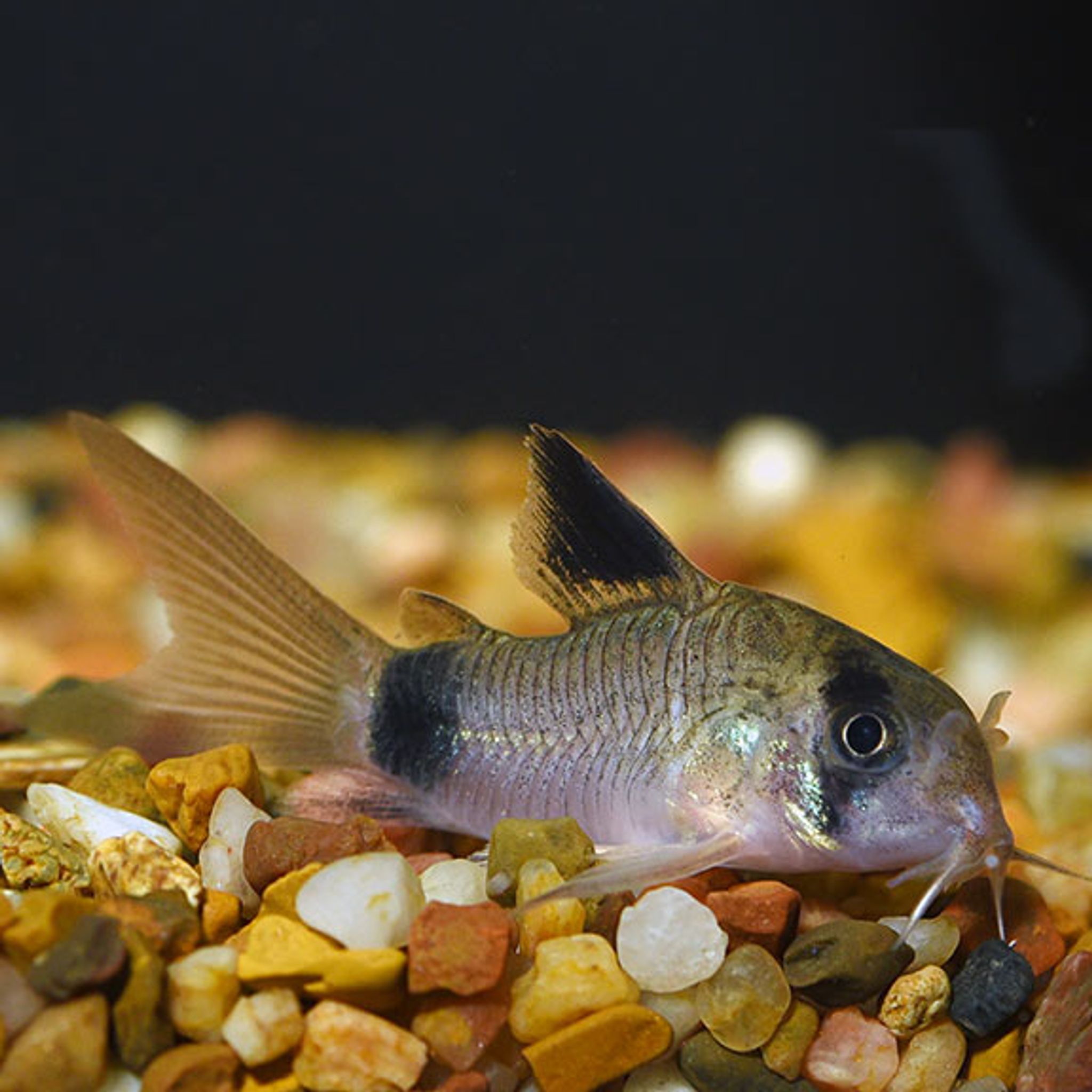

What Do Panda Cory Eat? A Practical Feeding Guide
Panda corys (Corydoras panda) are omnivorous bottom scavengers that need a rotation of sinking protein foods and occasional vegetables, not pellets alone. This guide gives you a concrete shopping list, a weekly schedule, portion sizes for a typical shoal, and fixes for the most common complaint: corys that look thin even though the tank "gets fed" every day.
What panda corys eat in the wild
In their native streams, panda corys spend their day rooting through leaf litter and soft sediment, picking up whatever organic matter, small invertebrates, and bits of plant material has settled there. They aren't picky specialists — they're generalist scavengers built to process a mixed diet. That's the model to copy at home: a base of meaty protein plus some plant matter, delivered where they actually live, at the bottom of the tank.
Building a balanced panda cory diet
The staple: a quality sinking pellet or wafer
Your everyday food should be a sinking pellet or wafer formulated for catfish and other bottom feeders. Check the ingredient list — look for fish meal or whole fish listed near the top rather than being buried behind corn, wheat, or other filler grains. A good staple gives you a consistent, complete baseline you can build the rest of the diet around. You can browse a range of sinking and bottom-feeder formulas in FishyHub's food and supplements category.
Protein boosters, 2–3 times a week
Rotate in meatier foods a few times weekly to round out the staple diet:
- Bloodworms
- Brine shrimp
- Daphnia
- Mosquito larvae
- Tubifex worms
- Blackworms
- Krill
Frozen versions of these are generally the safer everyday choice over live foods, since live foods (unless from a clean, cultured source) carry a higher risk of introducing parasites or pathogens. Thaw frozen portions in a small cup of tank water before dropping them in, rather than tossing in a frozen cube directly.
Gel foods for intact, sinking nutrition
Soft gel diets — the kind mixed from a powder and set into a gel, often marketed for shrimp or bottom feeders — are worth adding to the rotation. Because they hold together as a solid piece rather than crumbling, they sit intact on the substrate long enough for corys to find and work on them, instead of dissolving into gravel gaps where it's wasted.
Vegetables and algae wafers, occasionally
Offer blanched or cooked peas (skins removed) or thin zucchini slices now and then, along with algae wafers. Be aware that panda corys often ignore algae wafers in favor of meatier food — treat vegetable matter and algae wafers as a supplement to round out nutrition, not a foundation of the diet.
Flakes: fine as a bonus, not a main course
Flakes that miss the surface and eventually sink can supplement a cory's diet, but in a community tank most flakes get eaten by mid- and upper-level fish long before they reach the bottom. Don't count on flakes as a primary food source for your corys.
How much and how often to feed
Feed once daily as the default. A weekly fasting day — skipping feeding entirely one day a week — is fine for adult corys and mimics natural feast-and-famine cycles. Skip fasting for juveniles, and skip it if other tankmates would end up getting overfed to compensate on off-days.
Portion rule: offer only what the group can fully clear in about 2–5 minutes, then remove any leftovers promptly. Uneaten food that sits in the substrate breaks down and can spike ammonia and nitrite, so err small and add more next time rather than dumping in a large portion up front.
| Shoal size | Starting portion (staple pellets/wafers) | Adjustment rule |
|---|---|---|
| 6 corys (minimum recommended group) | 1 small sinking wafer, broken into pieces, or a pinch of pellets (roughly 4–6 pellets per fish) | If cleared in under 2 minutes, increase slightly next feeding |
| 8–10 corys | 1–2 wafers or a slightly larger pinch of pellets | If food remains after 5 minutes, reduce the next portion |
| 12+ corys | 2+ wafers, scaled proportionally | Split across two feeding spots to reduce competition |
Panda corys should be kept in groups of six or more, and portions need to scale with shoal size — feeding needs are cumulative, not per-tank-flat-rate. Watch the whole group, not just the boldest individuals crowding the glass.
Fry and juveniles need a different schedule
Adult once-daily feeding doesn't apply to young corys. Fry and juveniles grow fast and have small stomachs, so they do better on multiple small feedings per day — finely crushed staple food or baby brine shrimp offered two or more times daily rather than one larger adult-style meal.
Best time of day to feed
Panda corys are most active and forage best in low light or after dark, so feeding right as room lights go off, or in dim lighting, matches their natural behavior and also reduces competition from daytime-active fish that would otherwise beat them to the food.
Smart feeding for slow eaters in a community tank
The single most common reason panda corys look underfed is competition: fast, surface- or mid-water-oriented fish like barbs or danios intercept food before it ever reaches the bottom. A few fixes work well together:
- Feed on two levels. Drop a small amount of flake or pellet mid-water for the faster swimmers, then add sinking wafers or pellets separately for the bottom crew.
- Feed at opposite ends of the tank. Offer food for surface fish at one end while dropping sinking food for the corys at the other, so the two groups aren't competing over the same spot.
- Feed after lights-out. Since panda corys are naturally more active after dark and many community fish settle down, a post-lights-out feeding for the bottom of the tank faces far less competition.
- Use dense, quick-sinking foods. Anything that floats and slowly drifts down gives fast fish more time to grab it before it reaches the substrate.
Substrate: it affects feeding success too
Corys use their barbels — the whisker-like sensory organs around their mouths — to find food in the substrate. Soft sand or smooth, rounded gravel lets them forage naturally without damage. Sharp or coarse substrate can wear down or injure barbels, which in turn impairs their ability to locate food and can lead to secondary infections. If you're setting up or refreshing a cory tank, it's worth checking your gravel and sand options before adding fish.
Signs of good and poor nutrition
Check individual fish regularly, not just the group as a whole — a shoal can look fine overall while one or two thinner fish are quietly losing out.
- Well fed: slightly rounded or plump belly, full and active barbels, steady color, normal activity level.
- Underfed: pinched or concave belly, dull or curled barbels, fading color, and lethargy or reduced foraging activity.
Common feeding mistakes to avoid
- Relying only on floating flakes and assuming the corys are getting enough in a mixed community.
- Overfeeding, which leaves rotting food in the substrate and spikes ammonia or nitrite — feed only what's cleared in a few minutes and vacuum any excess.
- Using sharp gravel that damages barbels and indirectly hurts a cory's ability to find food.
- Not spot-checking individual fish, so a thin or outcompeted cory goes unnoticed in an otherwise healthy-looking group.
- Feeding a single food type long-term, which creates nutrient gaps — rotate protein sources and add occasional vegetables.
- Feeding only during bright daylight and missing the corys' natural low-light foraging window.
A simple weekly rotation
| Day | Food | Notes |
|---|---|---|
| Mon | Sinking pellet/wafer | Staple |
| Tue | Frozen bloodworms or brine shrimp | Thaw in tank water first |
| Wed | Sinking pellet/wafer | Staple |
| Thu | Gel food | Feed after lights-out |
| Fri | Blanched pea or zucchini slice | Occasional vegetable day |
| Sat | Frozen daphnia or blackworms | Protein booster |
| Sun | Fasting (adults only) | Skip for juveniles |
Align gravel vacuuming with your feeding schedule — a light substrate clean a day or two after a heavier protein feeding helps manage bioload from any uneaten sinking food.
Frequently Asked Questions
How often should I feed my panda corys?
Once daily is standard for adults. A weekly fasting day is optional and generally fine, but skip it for juveniles, which need more frequent small feedings to support growth.
What is the best staple food for panda corys?
A quality sinking pellet or wafer with real fish protein listed near the top of the ingredients, supplemented with frozen meaty foods like bloodworms or brine shrimp a few times a week.
Can panda corys eat flakes?
Yes, as an occasional supplement, but flakes are usually eaten by mid- and upper-level fish before they reach the bottom in a community tank, so they shouldn't be the main food source for corys.
Do panda corys need vegetables?
Occasional blanched peas or zucchini slices and algae wafers help round out the diet, though panda corys aren't always enthusiastic about plant matter and often prefer meatier foods.
Why do my panda corys look thin even though I feed the tank?
They're likely being outcompeted by faster, more active fish. Try targeted bottom feeding, feeding at opposite ends of the tank, and offering sinking food after lights-out to reduce competition.
Should I feed live or frozen food?
Frozen is the safer everyday choice since it carries a lower risk of parasites or pathogens. Live foods from a clean, cultured source can be an occasional treat or used for breeding conditioning by more experienced keepers.
How much food is too much?
Anything left uneaten after about five minutes should be considered excess. Remove it promptly and offer a smaller portion at the next feeding to avoid fouling the water.
What time of day is best to feed panda corys?
Just before lights-out or in dim light, since panda corys are most active and forage best during low-light periods, similar to their natural nocturnal behavior.
Ready to build out or restock your bottom-feeder crew? Browse Corydoras and check the freeze-dried food selection on FishyHub to round out your feeding rotation.


