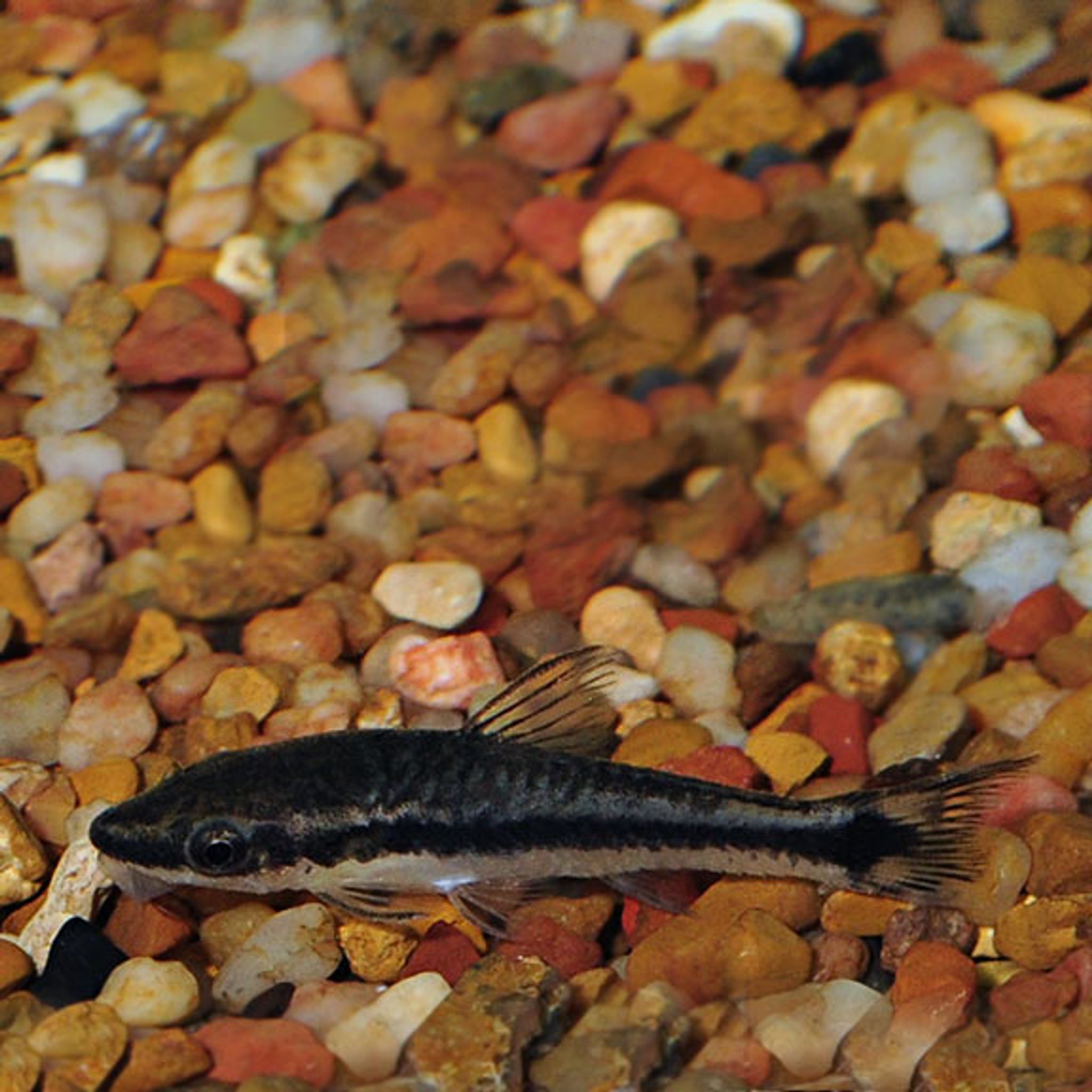

What Do Otocinclus Catfish Eat? A Practical Feeding Guide
Otocinclus catfish ("otos") eat soft algae, diatoms, and the microbial film called aufwuchs that coats rocks, wood, glass, and plant leaves — and they need it almost constantly, not just at feeding time. The most common cause of oto deaths is not disease; it's a tank without enough natural grazing material, backed up with the wrong supplemental foods. This guide covers the natural diet, a realistic feeding schedule, and the troubleshooting steps that actually keep otos alive.
Otocinclus Are Grazers First, Supplement-Eaters Second
Fish sold as "otos" — including Otocinclus vittatus, affinis, macrospilus, and cocama — are traded almost interchangeably, but they share the same feeding biology. In the wild they're obligate grazers: small mouths built for rasping soft growth off surfaces, feeding in short bouts nearly all day long rather than eating one or two large meals.
Their natural diet is made up of three things:
- Soft green algae — the fine, velvety green film on glass, wood, and leaves.
- Diatoms (brown algae) — the brownish coating common on new or low-light surfaces.
- Aufwuchs/biofilm — the mixed layer of bacteria, microalgae, and organic particles that builds up on any submerged surface over time.
Otos generally ignore tougher nuisance growth like hair algae and black beard algae (BBA). If a tank is overrun with those but has no soft algae or biofilm, otos can still starve even though the tank "looks" algae-covered.
Why a Brand-New Tank Is the #1 Killer
Because otos graze near-continuously, they depend on a tank that already has biofilm and algae established — ideally one running for at least 2–3 months with visible growth on surfaces before the otos go in. Adding a group of otos to a freshly cycled, sterile-looking tank is the single most common reason they die within weeks of purchase.
Some retail-oriented advice downplays this, suggesting heavy supplemental feeding can substitute for a mature tank. It can help, but it's a workaround, not a real substitute — enthusiast keepers are consistently firmer on this point, and the practical outcome backs them up: otos placed in older, algae-rich tanks survive and condition far better than otos dropped into new setups regardless of how many wafers go in.
A Simple Pre-Stocking Checklist
Before buying otos, aim to have:
- Lights running 8–10 hours a day for several weeks to encourage algae growth.
- Live plants in place — their leaves grow biofilm faster than bare glass or plastic decor.
- A completed nitrogen cycle plus a few extra weeks for surfaces to develop a visible green or brown film.
- Optionally, a piece of driftwood, rock, or filter media transferred from an already-established tank to "seed" biofilm faster.
If you keep a heavily aquascaped tank where algae is scraped off for aesthetics, otos are a poor match unless you're willing to relax that maintenance on at least some surfaces, or commit to daily supplemental feeding to make up the gap.
Supplemental Foods That Work
Once a biofilm base exists, supplements round out nutrition and cover slow growth periods. Suitable options sold in the US include:
| Food type | Feeding notes |
|---|---|
| Algae wafers/rounds | Break into small pieces so all otos in the group can reach food |
| Blanched zucchini, cucumber, spinach, kale | Soften first; clip or weigh down near the substrate |
| Spirulina flakes, tablets, or discs | High-value plant protein; good year-round staple |
| Soft sinking pellets (small size) | Choose pellets sized for small mouths, not large cichlid pellets |
| Blanched or frozen daphnia, baby brine shrimp | Occasional protein boost, useful for conditioning |
Blanching Vegetables the Right Way
- Drop the vegetable piece into boiling water for 1–3 minutes, or microwave briefly, until it softens slightly.
- Weigh it down with a veggie clip or a fork so it sinks and stays put.
- Leave it in the tank for several hours up to overnight.
- Remove any uneaten portion within 24 hours — leftover vegetable matter fouls the water and can spike ammonia.
Spirulina: Why It's Worth Prioritizing
Spirulina is a blue-green algae used as an ingredient in many flakes, wafers, and standalone discs, and it's especially valuable for otos. It runs roughly 60–70% protein by dry weight and carries vitamins and natural pigments that support immune function and coloration. When comparing foods, look for spirulina listed near the top of the ingredient list rather than buried near the end.
Spirulina-based foods should supplement grazing, not replace it — they fill nutritional gaps and support otos during periods when natural biofilm growth slows down (after a big scrub, a filter clean, or a water change that disturbs surfaces).
How Often to Feed, and How Many to Keep
Feeding Frequency
Sources vary on this: some recommend supplemental feeding daily, others say every 2–3 days is fine once algae is established. Both are reasonable in the right context — the practical approach is:
- New or low-algae tanks: feed a small amount of wafer or blanched vegetable daily.
- Established, algae-rich tanks: taper down to every other day.
- In all cases: treat belly shape as the real indicator, not the calendar. If bellies are staying round, you're feeding enough regardless of the exact schedule.
Group Size
Otos are shoaling fish and feed far more confidently in numbers. Recommendations across sources range from "at least 3" to "10 or more," but a practical minimum for a home aquarium is 6, with larger groups of 10+ reducing stress and improving feeding success further. Otos don't compete aggressively for food, which sounds helpful but actually means an undersized group — or a group housed with fast, pushy tankmates — can leave weaker individuals quietly underfed even when food is visibly present.
Recognizing Malnutrition Early
The single most useful diagnostic for otos is belly shape, and it's worth checking regularly rather than only when a fish already looks obviously sick.
- Healthy belly: gently rounded, convex profile when viewed from the side or above.
- Starving belly: flat, concave, or visibly "pinched in" behind the head — this is the clearest early warning sign.
Other malnutrition signs include lethargy, clamped fins, and fish dying within 2–4 weeks of purchase — a timeline that's almost always diet-related rather than disease-related. It's also easy to mistake a naturally slim body type for starvation, or to miss a genuinely sunken belly if you only glance at the tank occasionally; a quick daily look at a few individuals from above is more reliable than judging from a distance.
Otos frequently arrive from shipping already stressed and underweight, having spent time in bare holding tanks. Getting them onto food quickly after acclimation — and sourcing from a display tank that already shows algae growth, when possible — meaningfully improves survival odds.
Water Conditions That Support Feeding Success
Feeding otos well is partly about water chemistry, since stable, mature conditions are what let biofilm and soft algae actually grow:
- Temperature: 72–79°F (22–26°C)
- pH: 6.0–7.5
- Hardness: soft to moderate
A stable, well-planted tank running within these ranges will generally produce more of the surface growth otos rely on than a bare, frequently-disturbed setup.
Otos vs. Other Algae Eaters
Otos are one of the best choices for planted tanks specifically because they graze soft algae and biofilm without damaging plant leaves, and they pair well with shrimp and nerite snails in the same setup. That said, they're not a universal algae solution:
- Otocinclus: small, peaceful, excellent for nano and planted tanks; eat soft algae/biofilm only.
- Bristlenose pleco: larger, tackles tougher growth, needs more bioload capacity.
- Siamese algae eater: one of the few fish that reliably eats hair algae and BBA, but needs more swimming space.
- Mollies: opportunistic algae grazers but far less specialized, with a bigger appetite for prepared foods.
If your main problem is hair algae or black beard algae, otos won't solve it — pair them with a species suited to that job, or address the algae with light and nutrient adjustments instead.
Breeding and Fry Feeding
A varied diet — vegetables, algae wafers, spirulina, and occasional live or frozen protein — helps condition adult otos toward spawning. Eggs are typically laid on glass or plant leaves. Fry feed primarily on infusoria and biofilm in the first weeks, and can be supplemented with finely crushed algae wafers as they grow.
For very young fry, cultured live foods like vinegar eels and infusoria are especially useful, since fry mouths are too small for standard flakes or wafer crumbs. Vinegar eels are simple to culture at home using a vinegar-and-fruit base, with a usable population ready to harvest after a few weeks. These live foods matter most for fry and very young otos — established adults do fine without them.
Frequently Asked Questions
Do otocinclus need algae wafers if my tank has algae?
Wafers help fill nutritional gaps but shouldn't fully replace natural grazing. They're most useful in newer tanks or during periods when algae growth is temporarily low, such as after a big clean.
How often should I feed otocinclus catfish?
Feed lightly every day in new or low-algae tanks, then taper to every other day once a strong biofilm layer is established. Belly shape, not a fixed schedule, is the best guide to whether you're feeding enough.
Can otocinclus survive on algae alone?
In a well-established, algae-rich tank, yes — but supplementing with spirulina-based foods or vegetables is still recommended to cover nutritional gaps and slow-growth periods.
What vegetables can I feed otocinclus?
Zucchini, cucumber, spinach, and kale all work well. Blanch them briefly to soften, then clip or weigh them down near the substrate or glass so they stay accessible.
Why is my new oto dying or not eating?
The usual cause is starvation from an algae-free or too-new tank, compounded by shipping stress or competition from faster tankmates. Check belly shape and confirm the tank has an established biofilm layer before ruling out other causes.
How many otocinclus should I keep together?
Keep at least 6, ideally 10 or more. As shoaling fish, otos feed more confidently and experience less stress in larger groups, which directly improves feeding success.
Do otocinclus eat hair algae or black beard algae?
No. They target soft green and brown algae along with biofilm, and generally ignore tougher nuisance algae types like hair algae and BBA.
How are otocinclus different from other algae-eating fish?
Otos are smaller and more peaceful, making them a strong fit for nano and planted tanks where they graze soft algae and biofilm without harming plants. Species like Siamese algae eaters or bristlenose plecos handle tougher algae types but need more space and produce more bioload.
Ready to start or expand an algae-eating crew? Browse otos and other compatible bottom dwellers in Plecos, Corys & Bottom Dwellers, along with spirulina wafers and other grazing supplements in Food & Supplements on FishyHub.


