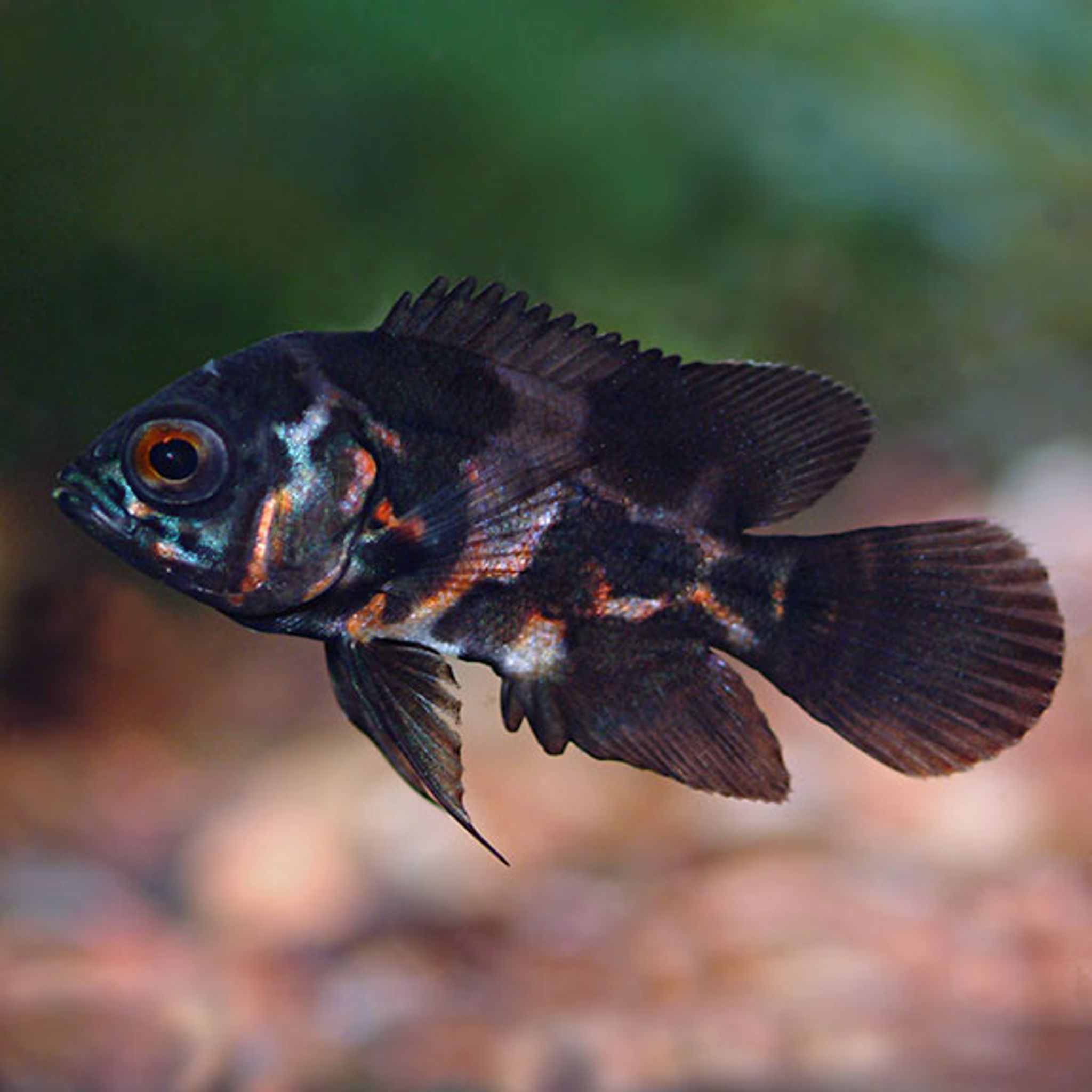

What Do Oscar Eat? A Practical Feeding Guide
Oscars are big, food-driven cichlids that do best on a rotation of a quality pellet staple plus real protein and a little plant matter — not a single food fed forever. This guide breaks feeding down by fish size, gives portion and frequency numbers you can actually use, and covers the mistakes that cause the most problems: obesity, hole-in-the-head symptoms, and messy water.
What Oscars Eat in the Wild vs. the Tank
In their native habitat, Oscars are opportunistic omnivores. They pick off insects, crustaceans, smaller fish, and some plant material as it becomes available — they aren't built to thrive on one ingredient. A captive diet should copy that mix rather than relying on a single food type, whether that's flakes, pellets, or straight meat.
The Staple: A Cichlid Pellet or Stick
The base of an Oscar's diet should be a high-quality cichlid pellet or stick formulated for large omnivorous cichlids, sized as either floating or slow-sinking depending on where your fish prefers to feed. Look for a protein level in the 32–40% range, leaning toward the higher end for juveniles that are putting on size quickly and toward the middle of the range for adults.
A few handling notes make a real difference:
- Match pellet size to mouth size. A large adult Oscar struggles with small flakes and either spits them out or overeats out of frustration; a young juvenile can choke on oversized sticks meant for a grown fish.
- Soak dry pellets briefly in tank water before feeding, especially larger dried sticks, since dry food can expand once swallowed and contribute to bloating.
- Browse cichlid-appropriate staples and other prepared foods in Food & Supplements when building out a rotation.
Variety and Protein Boosters (2–4x a Week)
Two to four times weekly, add a protein-rich extra to the pellet base:
- Earthworms
- Krill
- Peeled, unseasoned shrimp
- Bloodworms
- Mysis shrimp
- Silversides
- Chunks of tilapia or other white fish fillet
- Crickets or other feeder insects
These foods round out the amino acid and micronutrient profile that a pellet-only diet can miss, and they double as enrichment since Oscars actively hunt and chase real prey items. A freeze-dried food option is a convenient way to rotate in krill, shrimp, or similar proteins without keeping a freezer stock.
Plant Matter, Occasionally
Even though Oscars are meat-forward feeders, a small amount of plant material supports digestion and mirrors natural omnivory. Offer one of the following every week or two:
- Blanched peas (skins removed)
- Spirulina-based pellets
- Algae wafers
This isn't the main event — just a periodic addition to the rotation, not a daily requirement.
Portions by Fish Size
"Feed what's eaten in a couple of minutes" is the right general rule, but a size-based starting point makes it easier to judge:
| Oscar length | Approx. daily portion | Feeding frequency |
|---|---|---|
| Under 4 in (10 cm) | 4–6 small pellets or equivalent, split across meals | 2–3x daily |
| 4–8 in (10–20 cm) | A pinch (roughly 6–10 medium pellets) or equivalent | 1–2x daily |
| 8 in+ (20 cm+) | 4–6 large pellets/sticks or equivalent, or a larger meal every other day | Once daily or every other day |
Treat these as a starting point and adjust based on body condition — a healthy adult Oscar should have a gently rounded but not ball-shaped belly.
Feeding Frequency by Life Stage
- Fry and juveniles (under about 4 inches): Feed 2–3 small meals a day to fuel rapid growth.
- Sub-adults (4–8 inches): Drop to 1–2 feedings a day.
- Adults (8 inches and up): Once daily or every other day is both fine — a daily small meal and an every-other-day larger meal produce similar results. Consistency and portion control matter more than which exact schedule you pick, and adults are the group most prone to overfeeding.
Regardless of stage, only offer what disappears in 2–3 minutes, and net out anything left after that to keep ammonia from spiking.
A Simple 7-Day Rotation
| Day | Feeding |
|---|---|
| Mon | Cichlid pellet/stick |
| Tue | Cichlid pellet + shrimp or krill |
| Wed | Cichlid pellet/stick |
| Thu | Blanched peas or algae wafer |
| Fri | Cichlid pellet + earthworm or bloodworm |
| Sat | Cichlid pellet/stick |
| Sun | Fast day (skip feeding) |
Adjust the specific proteins to whatever you have on hand — the pattern (staple most days, protein boost a few times a week, one plant day, one fast day) is what matters.
Why a Fast Day Helps
Skipping food one day a week for juveniles and adults gives the gut a break, supports digestion, and is one of the simplest tools for preventing obesity in a fish that will beg for food constantly whether or not it needs it.
Say No to Feeder Fish
Feeding live goldfish or minnows is a common question, but the consensus among experienced keepers is to skip it entirely:
- Goldfish contain thiaminase, an enzyme that breaks down vitamin B1 and can lead to nutritional deficiency over time.
- Feeder fish carry meaningfully higher disease and parasite risk than prepared or frozen foods.
- Oscars don't need live prey to thrive — they'll happily eat frozen or dead alternatives with none of the downside.
Some older hobbyist advice still suggests occasional feeders for enrichment, but current thinking leans firmly against it. If you want the enrichment of live food, live earthworms or crickets from a trusted culture are a safer substitute.
Tank Size and Water Quality Are Part of the Feeding Plan
Oscars eat heavily and produce a correspondingly large amount of waste, so feeding routine and filtration capacity aren't separate topics — they're linked. A feeding schedule that would be fine for a lightly stocked, well-filtered tank can overwhelm a tank with marginal filtration. Strong mechanical and biological filtration, paired with regular partial water changes, should be considered a required part of any Oscar feeding plan, not an optional extra. Reviewing options in Filters is worthwhile before scaling up feeding volume as your fish grows.
Hand Feeding Oscars
Oscars are intelligent, food-motivated fish that often learn to take food directly from a person. A practical path:
- Start with tongs or a feeding skewer to build trust and let the fish associate your presence with food.
- Only use clean, wet hands — no soap, lotion, or sunscreen residue, which can irritate skin and gills.
- Move slowly and let the fish approach you, rather than reaching toward it.
- Stop and back off if the fish is young, skittish, or hesitant — this works best with a settled, confident individual.
Hand feeding is useful for bonding, encouraging a shy eater, or delivering supplements directly.
Foods That Enhance Color
The reds and oranges in tiger and red Oscars are driven by carotenoid pigments — astaxanthin and canthaxanthin — found in shrimp, krill, and color-formula pellets. Including these consistently in the rotation over several weeks brings out more vibrant color. It's a gradual effect, not an overnight fix, and it won't change a fish's genetically determined base pattern — a wild-type Oscar won't turn into a red Oscar no matter what it's fed.
Cooking Homemade Food for Cichlids (Optional, Advanced)
Some experienced keepers with multiple large cichlids make a gelatin-bound homemade food: blended shrimp, peas, spirulina or chlorella, a vitamin supplement, and unflavored gelatin, frozen in premeasured portions and thawed before use. The appeal is cost control and full ingredient transparency across a big collection. For someone keeping a single Oscar, this is genuinely optional — a good rotation of prepared and frozen foods covers the same nutritional ground without the prep work.
Albino Oscars: Same Diet, Different Pigment
Albino Oscars are a color morph, not a separate species, and their dietary needs don't differ from standard, tiger, or red Oscars. They benefit from the same varied, protein-rich diet, including color-enhancing foods — though because albinism affects pigment production differently, the visible impact of carotenoid-rich foods tends to be more limited. Some keepers describe albinos as slightly more light-sensitive, but that's a lighting consideration, not a feeding one.
Common Feeding Mistakes
| Mistake | Result | Fix |
|---|---|---|
| Overfeeding or feeding too often | Obesity, fatty deposits, faster water fouling | Portion control plus a weekly fast day |
| All-pellet or all-meat diet | Linked by many keepers to HLLE and lateral line erosion | Rotate in variety, quality food, and clean water |
| Feeding goldfish/feeders regularly | Thiaminase-related deficiency, disease introduction | Switch to frozen or prepared proteins |
| Food too large or wrong shape | Choking, spitting food, or ignored meals | Match pellet/stick size to current mouth size |
| Leaving uneaten food in the tank | Ammonia spikes, cloudy water | Remove excess within minutes; feed smaller amounts |
| Sudden appetite loss | Often stress, water quality, or illness | Check ammonia/nitrite (should read 0) and temperature (about 74–81°F / 23–27°C) before assuming pickiness |
Hole-in-the-head symptoms and lateral line erosion are frequently tied by hobbyists to nutrient gaps from a monotonous diet, sometimes alongside water-quality factors. A varied feeding rotation and consistent water changes address both the suspected dietary cause and a contributing environmental one at the same time.
Frequently Asked Questions
How often should I feed my Oscar?
Juveniles do best with 2–3 feedings a day, while adults can go once daily or every other day. In every case, portion the meal so it's fully eaten within a couple of minutes.
Can Oscars eat goldfish?
Physically, yes, but it isn't recommended. The disease risk and the thiaminase-related nutrition gap in goldfish outweigh any benefit, so frozen shrimp or fish fillet is a better choice.
What human foods can Oscars eat?
Small amounts of unseasoned cooked shrimp, plain white fish, or blanched peas are fine as an occasional addition. Avoid anything seasoned, fatty, or bread-based.
Why is my Oscar not eating?
This is usually stress, a new-tank adjustment period, a water quality issue, a temperature swing, or early illness. Check your parameters first and give the fish a day or two before assuming it's just being picky.
How do I get my Oscar to hand feed?
Start with tongs or a skewer to build trust, stay calm and consistent, and progress to bare fingers only once the fish is comfortable approaching. Always use clean, wet hands with no soap or lotion residue.
What causes holes in my Oscar's head?
Hole-in-the-head symptoms are commonly linked to diet and water quality. Improving dietary variety, adding a vitamin-rich food source, and maintaining clean water are the standard first steps, and the condition is generally treatable if caught early.
Do baby Oscars need different food than adults?
Yes. Juveniles need smaller pellet or food particle sizes and more frequent feedings to keep up with their faster growth rate compared to adults.
How can I make my Oscar's colors more vibrant?
Regularly including shrimp, krill, or a color-enhancing pellet containing carotenoids helps bring out reds and oranges over several weeks, alongside good water quality and appropriate lighting.
A consistent staple, a rotating protein boost, and a filtration setup sized to match a heavy-eating fish are the core of a sound Oscar feeding routine. You can browse Oscars and the foods and equipment to support them directly on FishyHub.


