What Do Oranda Goldfish Eat? A Practical Feeding Guide
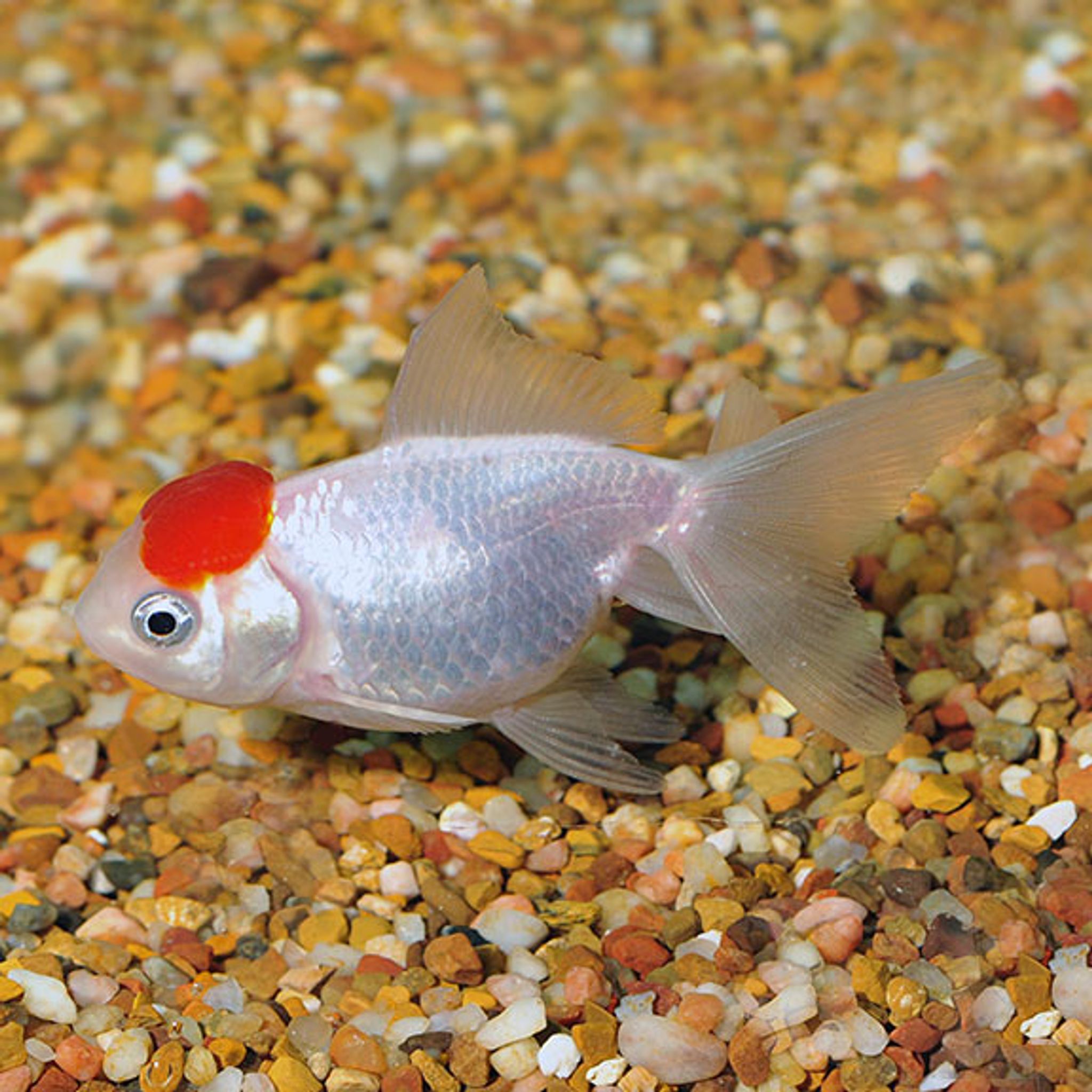
Oranda goldfish eat a mix of a quality sinking or soaked goldfish pellet, fresh vegetables several times a week, and occasional protein treats like brine shrimp or bloodworms. Because of their rounded body and the fleshy wen on their head, how and how much you feed matters just as much as what's in the bowl. This guide covers portions, schedules, and the wen- and eyesight-related quirks that make Orandas different from a generic goldfish.
The core diet: what belongs in the bowl
Orandas are omnivores with a hearty appetite but a short, simple digestive tract that digests slowly and imperfectly. Their diet should rest on three layers:
- A staple pellet or flake formulated for goldfish, fed at every meal.
- Vegetables as a fiber supplement several times a week.
- Protein treats like brine shrimp or bloodworms a few times a week for variety and growth.
None of these should be treated as optional — a diet of dry flakes alone, with no vegetable fiber, is one of the most common contributors to constipation and swim bladder disorder in fancy goldfish.
Choosing a staple food
Look for a goldfish-specific formula rather than a generic tropical fish flake. Tropical fish foods tend to run too high in fat and protein and too low in fiber for a goldfish's needs over the long term. A good goldfish pellet or flake typically has:
| Trait to check | What to look for |
|---|---|
| Protein | Roughly 30–35% — enough for growth, not so much it strains digestion |
| Fat | On the lower end; excess fat is linked to internal fat buildup in fancy varieties |
| Fiber | Added fiber (often from wheat germ or plant matter) to support gut motility |
| Base ingredient | Wheat-germ-based or "cold water" formulas digest more easily, especially below room temperature |
| Buoyancy | Sinking or slow-sinking preferred over floating |
Sinking and slow-sinking pellets are generally the better choice for Orandas specifically. Because they feed at the surface, gulping at floating flakes makes it easy for them to swallow air along with food, which raises the risk of buoyancy problems and bloating. Sources don't fully agree here — some allow floating flake if it's soaked first, others recommend sinking food outright for fancy goldfish. A practical middle ground: make sinking or pre-soaked food the daily habit, and treat occasional floating flake (soaked) as fine for surface variety rather than a staple.
Soak dry pellets for a minute or two before feeding. Dry food continues to absorb water and expand after it's swallowed; soaking it first means that expansion happens in the bowl, not in the fish's gut, which reduces both air-gulping and bloat risk.
Vegetables: how much is enough
Vegetables are a fiber source, not a full meal replacement. Good options include:
- Peas — shelled, skin removed, and mashed or halved for smaller fish
- Blanched or cooked zucchini and cucumber, cut into small pieces
- Leafy greens like lettuce or spinach, blanched to soften
Recommendations range from "occasional treat" to "daily alongside pellets." A sensible middle ground is fresh vegetables 3–5 times a week, sized small enough for the fish's mouth. This keeps fiber intake consistent without turning every meal into a salad.
Protein treats
Brine shrimp, daphnia, and bloodworms — live, frozen, or freeze-dried — make good treats 1–3 times a week. They add variety and support growth, but shouldn't replace the daily staple, since they're lower in the balanced fiber and nutrient profile a formulated goldfish food provides. Freeze-dried options are easy to keep on hand and are worth browsing in freeze-dried foods alongside a regular goldfish-formulated pellet or flake.
How often and how much to feed
Feed 2–3 small meals a day rather than one large one. Two feedings a day is generally enough for most home aquarists — it's simpler to control portions — with a third small feeding reasonable for young, growing, or especially active fish.
For portion size, the standard rule is to feed only what the fish can finish in about 2–3 minutes, then remove anything left over. As a starting point, think of a pea-sized amount of food per average adult fish per feeding, scaling down for juveniles and up slightly for larger individuals — then adjust based on how quickly it disappears.
Leftover food is not a minor issue: uneaten flakes and pellets decay quickly, fouling water and spiking ammonia, and in outdoor settings they're a direct contributor to algae growth.
A note on fasting
Many experienced keepers build in one fasting day per week where the fish isn't fed at all. This gives the digestive tract a chance to fully clear, which can reduce the buildup that leads to bloating and constipation over time. It's a small habit that's easy to overlook but worth adding to a weekly routine.
Feeding around the wen: vision and access problems
The wen — the fleshy growth on an Oranda's head — is part of what makes the breed distinctive, but as it develops it can partially cover the eyes and even encroach on the mouth. That changes how the fish finds food.
Practical adjustments:
- Feed in the same spot, at the same time, every day. Consistency helps a fish with reduced vision learn where food shows up.
- Feed by vibration or sound cue — tapping the tank or a consistent approach routine before dropping food in can help the fish anticipate feeding time even with limited sight.
- Watch each fish individually at feeding time, not just the tank as a whole. A wen-impaired fish can appear to be "at the surface for food" without actually eating any of it.
- Never trim wen tissue yourself. If overgrowth is severe enough to block the mouth or eyes, that's a job for a veterinarian, not a home fix.
Competition in mixed tanks
In a tank with faster or unimpaired tankmates — common goldfish, comets, or quicker fancy varieties — an Oranda can consistently lose out at feeding time simply because it can't see or move as fast. Feeding in more than one spot at once, and watching to confirm the Oranda is actually getting food (not just present at the surface), helps even out access.
Temperature and seasonal feeding
Goldfish are cold-tolerant, but their metabolism and digestion slow dramatically as water cools. Below roughly 50–55°F (10–13°C), digestion becomes sluggish enough that feeding should be reduced or paused — food sitting undigested in a cold gut does more harm than good, and it fouls the water besides. Feeding picks back up as temperatures rise into the warmer months.
Pond feeding basics
For Orandas kept in outdoor ponds, seasonal food switching matters more than for indoor tanks:
- Summer: higher-protein food supports active growth in warm water.
- Spring and fall: lower-protein, wheat-germ-based food is easier to digest as temperatures swing.
- Winter (consistently cold water): little to no feeding — the fish's digestion effectively shuts down.
Feeding schedules are only half the pond-readiness picture. Adequate filtration, aeration, and depth matter just as much, since a pond that can't process waste efficiently will struggle regardless of how carefully you portion food. A UV clarifier, while not a feeding tool itself, is commonly bundled into pond setups because it helps keep water clear as biological load — including food waste — builds up over a season.
Overfeeding and uneaten food are also among the leading contributors to algae blooms and "pond scum." Controlling portions, removing uneaten food promptly, and keeping filtration and clarification equipment running are all part of the same feeding discipline.
Diet and color
Coloration in Orandas — the depth of orange and red pigment — is influenced by more than genetics and lighting. Carotenoid-rich foods, including shrimp, spirulina, and commercial "color enhancing" pellets, can intensify orange and red pigmentation over time when fed consistently. That said, diet is only one factor; genetics sets the underlying potential, and lighting affects how color actually appears to the eye.
Goldfish and live plants
Orandas are enthusiastic plant-eaters and will nibble or uproot soft, tender species given the chance. If you want live plants in the tank, hardy and less palatable options tend to hold up better:
- Anubias
- Java fern
- Java moss
- Amazon sword
- Anacharis (in moderation — it's more palatable than the others on this list, so treat it as a snack that may get eaten)
Floating plants can double as a grazing option, giving the fish something to pick at between meals without wrecking a carefully planted layout.
Raising Oranda fry
Fry have very different needs than adults. Newly hatched fry start on infusoria or a commercial fry food, then move to baby brine shrimp and crushed flake within days to a couple of weeks. Because they're growing rapidly, fry need 4–6 small feedings a day rather than the 2–3 meals adults get. Feeding frequency gradually tapers down toward a normal juvenile and then adult schedule over the following couple of months.
Common feeding mistakes
| Mistake | What it causes |
|---|---|
| Overfeeding | Bloating, buoyancy problems, ammonia spikes, shortened lifespan over time |
| No vegetable fiber in the diet | Constipation, higher swim bladder disorder risk |
| Skipping the pre-feeding soak | Dry food expands in the gut, worsening bloat |
| Assuming the wen isn't a problem | Fish may be missing meals without visible signs |
| Feeding heavily in cold water | Undigested food fouls water; digestion is too slow to keep up |
| Using tropical fish food as a staple | Too much fat and protein, not enough fiber |
| Ignoring feeding competition | A slower or wen-impaired fish quietly goes underfed |
| Leaving uneaten food in the tank | Water fouling and algae growth |
Overfeeding remains the single most common mistake. Goldfish will beg for food long after they've had enough, and their digestive system simply isn't built to process large volumes efficiently. When in doubt, feed less and feed more often, rather than more at once.
Feeding while you're away
Short trips of a day or two rarely require any special planning — a healthy adult Oranda handles a couple of skipped meals without issue. For longer absences, an automatic feeder set to dispense a small, pre-measured amount once or twice a day is safer than asking someone to eyeball portions, and far safer than dropping in a multi-day feeding block before you leave, which almost always overfeeds and fouls the water while you're gone.
Frequently Asked Questions
How often should I feed my Oranda goldfish?
Twice daily is the standard recommendation, with an optional third small feeding for young or very active fish. Feed only what the fish can finish in about 2–3 minutes.
What is the best food for Oranda goldfish?
A quality sinking or pre-soaked goldfish-specific pellet or flake as the daily staple, supplemented with vegetables several times a week and occasional protein treats like brine shrimp or bloodworms.
Can Orandas eat vegetables?
Yes. Peas (shelled and skin removed), blanched zucchini, cucumber, and leafy greens are good fiber sources offered roughly 3–5 times a week.
Why does my Oranda goldfish seem to miss its food?
It's usually one of two things: reduced vision from wen overgrowth covering the eyes, or being outcompeted by faster tankmates. Feed in a consistent spot and watch each fish individually to confirm it's actually eating.
Can I overfeed my goldfish, and how do I know?
Yes, very easily. Signs include a bloated or swollen body, floating or sinking at odd angles, and water that fouls quickly. When in doubt, feed a smaller amount more often rather than a large meal at once.
Do Orandas need less food in winter or a pond?
Yes. Digestion slows dramatically below roughly 50–55°F (10–13°C), so feeding should be reduced and eventually paused as water temperature drops, then resumed as it warms back up.
What do baby Oranda goldfish (fry) eat?
Newly hatched fry start on infusoria or a commercial fry food, then move to baby brine shrimp and crushed flake within days to weeks. They need 4–6 small feedings a day, tapering toward a normal schedule over a couple of months.
Will diet change my Oranda's color?
Carotenoid-rich foods like shrimp, spirulina, and color-enhancing pellets can intensify orange and red pigmentation over time, though genetics and lighting also play a significant role.
Ready to set up a feeding routine for your own fancy goldfish? Browse Oranda and other goldfish varieties on FishyHub to find your next fish.


