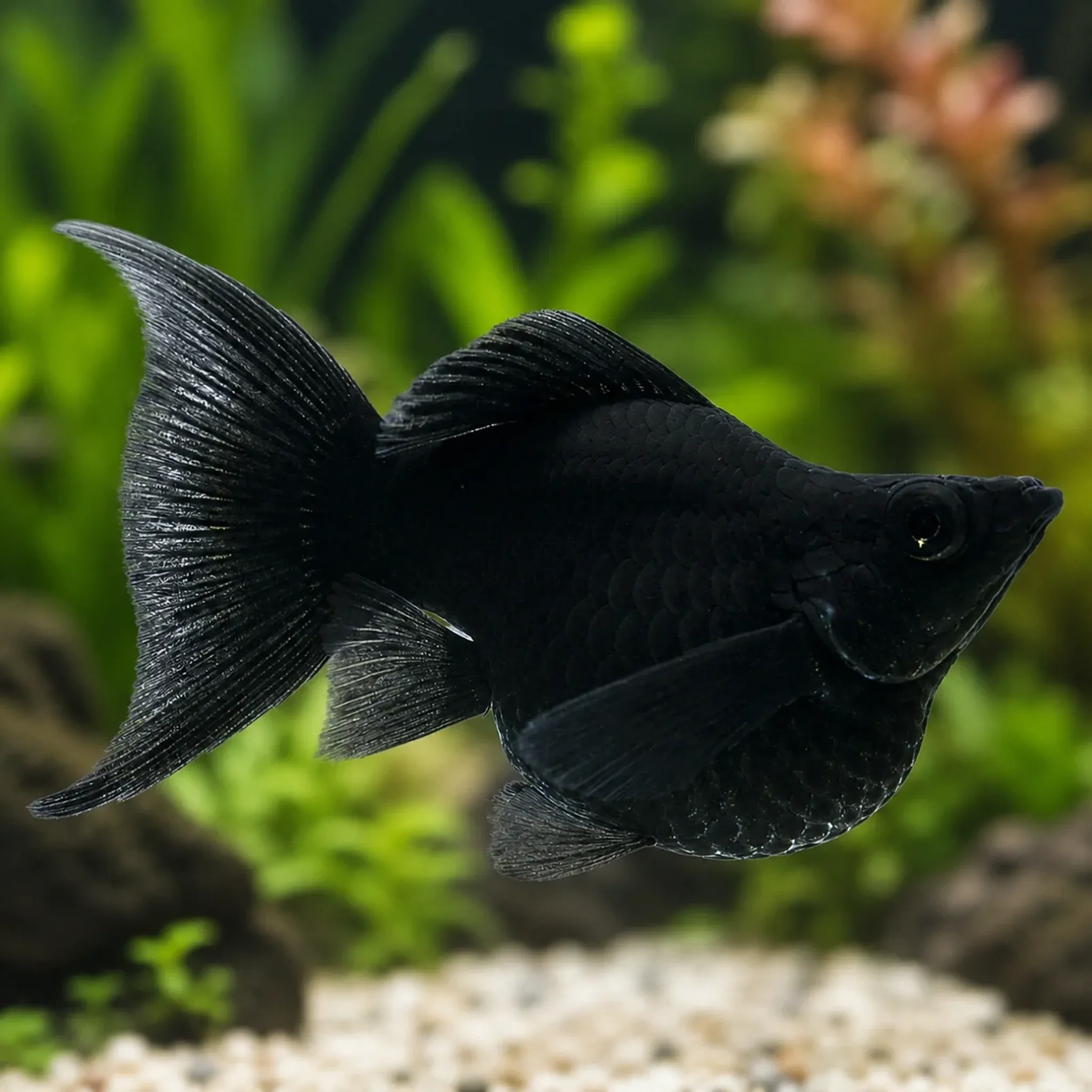

What Do Molly Eat? A Practical Feeding Guide
Mollies eat a plant-forward omnivore diet built around a spirulina-based flake or micro-pellet, topped up a few times a week with vegetables and occasional protein treats. Get the mix and the schedule right and you avoid the two most common failures: overfeeding, which fouls water, and underfeeding, which stunts growth and stresses breeding females. This guide breaks down exactly what to feed, how much, and how to adjust for fry, pregnant females, and vacations.
Are Mollies Herbivores or Omnivores?
Mollies are omnivores with a strong herbivore lean, not strict vegetarians. In the wild, a large share of their diet is algae, biofilm, and soft plant matter, rounded out with small invertebrates and insect larvae they pick off surfaces as they graze.
That wild grazing pattern is why a good household molly diet should skew toward plant-based content rather than a pure protein diet. Some keepers describe mollies as balanced omnivores needing roughly equal protein and vegetable matter, while others treat them as near-pure grazers. A practical middle ground that matches their natural behavior without shorting their protein needs:
- 60–70% vegetable/algae-based content (spirulina flake, blanched vegetables, algae wafers)
- 30–40% protein content (brine shrimp, bloodworms, daphnia, quality flake with some animal protein)
Feeding mostly protein with no vegetable component is a common cause of bloating, constipation, and the swimming abnormality often called "shimmy" in mollies specifically — their digestive systems are built to process a lot of plant fiber.
The Molly Feeding Basics
Staple Food
The base of the diet should be a high-quality flake or micro-pellet formulated for tropical community fish, ideally one that lists spirulina or another algae source in the first few ingredients rather than generic fish meal or wheat/soy filler as the dominant ingredient. You can browse a range of suitable staple and treat options in FishyHub's Food & Supplements category.
Feeding Frequency and Portion Size
Feed 2–3 small meals per day, offering only what the group clears in about 1–2 minutes per feeding. If food is still floating or sinking uneaten after two minutes, you fed too much — remove the excess rather than letting it decay.
As a rough portion rule of thumb for a mixed group of adult mollies:
| Group size | Flake/pellet amount per feeding | Feedings per day |
|---|---|---|
| 1–3 mollies | A small pinch (roughly what covers a fingernail) | 2–3 |
| 4–8 mollies | A slightly larger pinch, spread across the surface | 2–3 |
| 9+ mollies or mixed community tank | Split into two feeding spots to reduce competition | 2–3 |
Bioload matters as much as fish count. A lightly stocked or lightly filtered tank should stay on the conservative end of these amounts regardless of how many mollies you keep — filtration capacity, not appetite, is often the real limit on how much food a tank can safely process.
Vegetables and Algae
Offer a vegetable or algae component regularly, not as an occasional afterthought:
- Blanched zucchini or cucumber slices, weighted or clipped to the glass
- Blanched spinach
- Shelled peas, blanched and skinned
- Spirulina-based wafers or flakes
Mollies will also actively graze algae and biofilm growing on glass, decor, and plant leaves between feedings. This grazing is genuinely useful and healthy, but it is a supplement, not a complete diet on its own — most home aquariums don't grow enough natural food to meet a molly's full nutritional needs unassisted. A well-planted tank helps here on two fronts: live plants give mollies more surface area to graze and also absorb some of the excess nutrients from feeding, making the whole routine more forgiving.
Spirulina-heavy foods are excellent for color and gut health used 1–2 times a week, but they aren't nutritionally complete as a sole, 100%-of-the-diet staple — treat them as a strong regular addition, not a total replacement for a balanced flake.
Protein Treats
Two to four times a week, add a protein-rich treat: live, frozen, or freeze-dried brine shrimp, bloodworms, or daphnia. This isn't optional garnish — mollies breed almost continuously, and females carrying a brood have real elevated protein and nutrient needs. Skimping on protein during heavy breeding periods shows up as thinner, less colorful females over time.
Feeding Fry vs. Adults
This is where a lot of otherwise careful owners get it wrong, because fry and adults have very different tolerances and needs.
What Baby Mollies Eat
Newly born fry have tiny energy reserves and cannot fast for long. Feed them:
- Finely crushed flake or powdered fry food
- Baby brine shrimp
- Infusoria (especially in the first days)
Fry need 3–4+ small feedings per day, more often than adults, because they're growing fast and can't process large meals. Using adult-sized flake with fry in the tank is a common mistake — the particles are simply too big for fry to eat, and they can end up stunted or starving even though food is clearly present.
Transitioning Fry to Adult Food
A rough week-by-week ramp works well for most broods:
| Fry age | Food |
|---|---|
| Days 1–7 | Infusoria, baby brine shrimp, powdered fry food |
| Weeks 2–3 | Finely crushed flake mixed with baby brine shrimp |
| Weeks 4–6 | Coarser crushed flake, small pellet crumbs |
| Week 6+ | Standard adult flake/micro-pellet, sized to mouth |
How Long Can Mollies Go Without Food?
Healthy adult mollies can tolerate roughly 1–2 weeks without food if water conditions are optimal — but treat that as an emergency tolerance limit, not a target to plan around. Regular feeding is always better for health, color, and breeding condition.
Fry are a different story. They generally can't go more than about 3 days without food, and even that assumes a heavily aged, algae-rich, well-planted tank offering natural grazing. Never plan a trip around fry surviving unfed — arrange for someone to feed them, or don't leave a nursery tank unattended.
Vacation Feeding, Done Right
Before any extended absence:
- Do a large water change — roughly 50–70% — a few days ahead so the tank starts clean.
- Remove any uneaten food promptly in the days before you leave.
- Lean on tank grazing (algae, biofilm) plus, at most, a slow-release vacation feeder block used sparingly.
- Skip automatic feeders unless you've tested the exact dose beforehand — an over-dispensing auto-feeder is one of the most common causes of a fouled tank on return from vacation.
Mollies, Breeding, and Feeding Demands
Mollies are among the most popular livebearers kept in the hobby, alongside guppies, platies, and swordtails, prized largely for their hardiness and constant breeding. That breeding output is directly tied to diet quality — a female in poor nutritional condition produces smaller, weaker broods.
Recognizing a Pregnant Molly
Look for:
- A dark gravid spot near the vent
- A swollen, boxy-looking abdomen
- Reduced activity and more hiding as birth approaches
Gestation runs roughly 50–70 days, commonly cited around 60 days. Pregnant females benefit from extra protein and vitamin-rich foods during this window, so lean slightly more on brine shrimp, bloodworms, or daphnia while she's carrying.
How Mollies Reproduce
Mollies fertilize internally: males court females and larger males are often preferred as mates. Females can store sperm for months and produce multiple broods without a male present, and a single brood can range from roughly 10 to 60+ fry. Because reproduction is essentially ongoing rather than a single event, feeding for breeding health needs to be a continuous part of the routine, not something you only think about around a known mating event.
Do Mollies Eat Their Own Fry?
Yes, commonly. Mollies have no parental recognition instinct and will treat their own fry as easy food, especially in bare or crowded tanks. Reduce losses with:
- Dense floating plants (like a thick mat that fry can hide in)
- A breeding box or net to isolate the female before birth
- A separate rearing tank for fry
Fry generally become too large to be mistaken for food after about 2 weeks.
Feeding, Stress, and the "Shimmy" Confusion
Mollies and other livebearers share similar stress triggers and symptoms, which matters because a stressed, non-eating fish is often mistaken for a feeding problem.
Top stress triggers in livebearers:
- Poor water quality
- Temperature swings
- Overcrowding
- Aggressive or overly competitive tankmates
Key visual signs of stress include clamped fins and erratic swimming. A stressed molly frequently stops eating — and owners who respond by adding more food only make water quality worse, compounding the original problem.
Shimmying (a side-to-side rocking swim without much forward movement) in livebearers is usually linked to stress, poor water quality, or illness rather than diet directly. That said, chronic poor nutrition weakens immune function over time, which makes a fish more susceptible to the conditions that trigger shimmy. If you see shimmying, check water parameters and temperature before assuming it's a food issue.
Livebearers including mollies are genuinely hardy and tolerate a wide range of conditions — but "surviving" imperfect care is not the same as thriving. A proper, varied diet is about optimal color, growth, and lifespan, not just keeping the fish alive.
Temperature and Appetite
Mollies do best in roughly 72–82°F (22–28°C). Feeding response and metabolism slow down near the cooler end of that range, so if your tank runs cool, scale portions down slightly rather than feeding the same amount into a slower metabolism — excess food in a cooler, slower-processing tank sits uneaten longer and fouls water faster.
Feeding During Illness or Quarantine
During treatment for common issues like ich or fin rot, reduce feeding slightly and offer easily digestible foods rather than rich protein treats — a stressed, medicated fish has a slower gut and doesn't need a full feeding load. If a molly is recovering from constipation or bloating, skip protein-heavy foods for a few days and lean on blanched vegetables and skinned peas, which help move things along.
Common Feeding Mistakes to Avoid
- Overfeeding "just in case." This is the single biggest risk with mollies — excess food decays, spikes ammonia and nitrite, and worsens the bloating and constipation mollies are already prone to.
- Flakes only, no vegetables. Leads to digestive issues that get mistaken for swim bladder disease or pregnancy.
- Over-dispensing auto-feeders or vacation blocks. Fouls water while you're away and undoes the point of prepping beforehand.
- Adult-sized food with fry in the tank. Fry can't eat it, leading to stunted growth or starvation despite visible food.
- Feeding more in response to stress or illness symptoms. Clamped fins, hiding, and shimmying call for a water-quality check, not a bigger meal.
- Ignoring tankmate competition. Fast or aggressive eaters — some guppies and other livebearers included — can outcompete slower mollies, leaving individual fish underfed even though the tank looks well-fed overall. If you're stocking a mixed community, browsing Guppies and Small Community Fishes beforehand helps you plan tankmates with compatible feeding speed.
Frequently Asked Questions
How often should I feed my molly fish?
Feed 2–3 times daily, offering only small amounts that the group fully clears within 1–2 minutes each time. Consistency matters more than large single meals.
What vegetables can mollies eat?
Blanched zucchini, cucumber, spinach, and shelled peas all work well, along with spirulina-based wafers or flakes. Rotate a couple of these into the routine a few times a week.
Can mollies eat only flakes?
They can survive on flakes alone, but a flakes-only diet with no vegetable or algae component raises the risk of bloating and constipation. Combine flake with regular vegetables and occasional protein for better long-term health.
How long can mollies go without food on vacation?
Healthy adults typically tolerate roughly 1–2 weeks in good water conditions. Prep with a large water change beforehand, remove uneaten food promptly, and rely on tank algae and biofilm plus a modest vacation feeder rather than overfeeding before you leave.
What do baby mollies (fry) eat?
Fry eat crushed flake, powdered fry food, baby brine shrimp, and infusoria. Feed small amounts 3–4+ times a day since fry have tiny energy reserves and can't fast for long.
Do mollies need meaty or protein food at all?
Yes, in moderation. Brine shrimp, bloodworms, or daphnia a few times a week support the heavy reproductive demands on breeding females, but protein shouldn't dominate the diet given mollies' herbivore lean.
Why is my molly not eating?
Check water parameters and temperature first (mollies do best around 72–82°F), then look for stress or illness signs like clamped fins, shimmying, or hiding before assuming it's a diet problem. Pregnant females may also eat less right before giving birth.
Will mollies eat algae in the tank, and is that enough?
Yes, mollies actively graze algae and biofilm and it's a healthy supplement to their diet. It's not sufficient on its own in most home aquariums, though, so it should support a proper staple diet rather than replace it.
Ready to stock up on a spirulina-forward staple, protein treats, and vegetable-based foods for your molly tank? Browse the full range in FishyHub's Food & Supplements category, including Freeze Dried Food options for easy protein treats.


