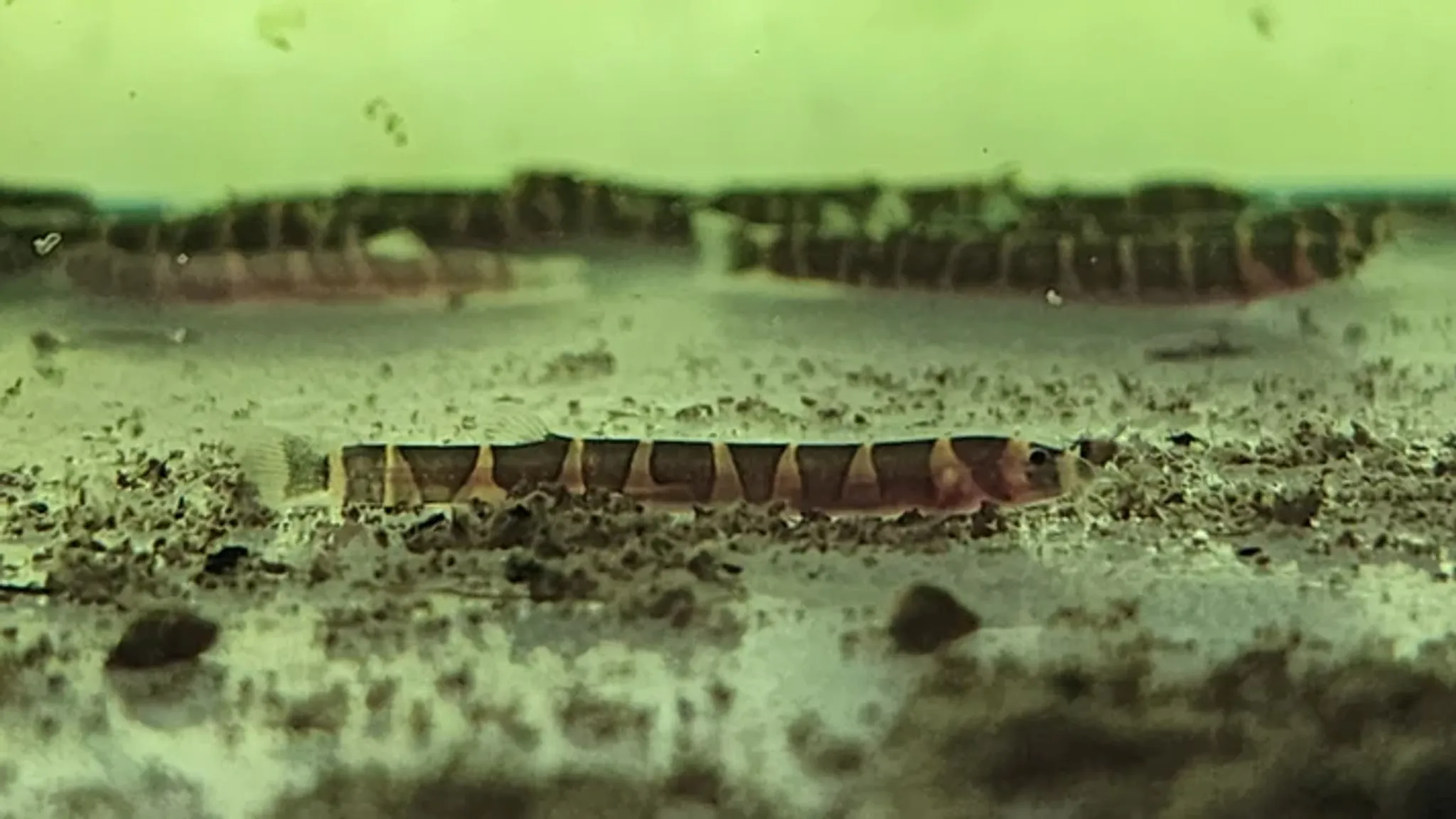

What Do Kuhli Loach Eat? A Practical Feeding Guide
Kuhli loaches are omnivorous scavengers that need sinking, protein-heavy food delivered near the substrate, ideally after lights-out. Feed them once or twice a day in amounts they can clear in 2-3 minutes, and don't assume leftovers from other fish are enough to keep them healthy.
Why Kuhli Loach Feeding Trips People Up
Kuhli loaches are eel-shaped, nocturnal bottom-dwellers that spend daylight hours buried in the substrate or wedged into hides. That behavior is exactly what makes feeding them harder than feeding a typical community fish: if you only ever feed flakes at the surface during the day, your kuhlis may never see a single bite. Getting food to them reliably, in a form they'll actually eat, is the whole game.
What Kuhli Loaches Eat in the Wild
In their native Southeast Asian streams, kuhli loaches root through leaf litter and soft sediment for insect larvae, small crustaceans, worms, and detritus, with a modest amount of plant material mixed in. That wild diet is why captive feeding should lean protein-forward rather than mimicking a typical flake-fed community tank. Understanding this background also explains why kuhlis ignore algae and floating foods almost entirely — nothing in their natural foraging strategy prepares them for food sitting at the surface.
Core Foods: What to Actually Feed
Kuhlis rarely rise in the water column, so sinking foods are non-negotiable. A useful working ratio is roughly 80% protein-based foods to 20% vegetable matter, though sources vary on the exact split — treat it as a rule of thumb rather than a strict formula.
Protein-based staples:
- Sinking pellets or wafers formulated for bottom feeders or community tanks
- Gel food
- Frozen or live bloodworms
- Blackworms and tubifex
- Brine shrimp, daphnia, and cyclops
- Grindal worms
Vegetable matter (smaller share of the diet):
- Blanched zucchini
- Blanched cucumber
- Blanched broccoli
- Spirulina-based sinking wafers
Rotate proteins rather than feeding the same item every day — bloodworms one feeding, a sinking pellet or gel food the next, occasional live or frozen daphnia in between. You can browse sinking pellets, gel foods, and other prepared options in FishyHub's food and supplements category, including freeze-dried options that work well as an occasional supplement to frozen or live foods.
How Often and How Much to Feed
Frequency: Once or twice daily is a solid default. Twice daily suits tanks where kuhlis are shy or competing hard for food; once daily can be fine if the group is confident and already picking up a reasonable amount of scavenged food between dedicated feedings. Adjust based on how well-fed the group actually looks (see the body-condition section below), not a fixed rule.
Portion size: Feed only what the group can clear in about 2-3 minutes. Because kuhlis feed slowly and out of sight, it's tempting to overfeed "just in case" — resist that urge, since uneaten sinking food is one of the biggest water-quality risks in a kuhli tank.
Timing: Feed after lights-out or in dim evening conditions. Kuhlis are nocturnal and forage far more confidently in low light, and feeding after dark also sidesteps competition from diurnal tank mates that would otherwise grab the food first.
Feeding in a Community Tank
Kuhli loaches are frequently kept alongside faster, more assertive eaters, and that changes the feeding strategy:
- Feed after lights-out so diurnal fish are less active and less likely to intercept sinking food before it reaches the bottom.
- Spot-feed near hides and burrow entrances using a turkey baster, a cut-off syringe, or a length of rigid tubing to place food precisely where kuhlis are already hiding.
- Choose foods that sink fast rather than slow-sinking flakes, which give faster fish more time to grab them mid-water.
- Consider a feeding ring or shallow dish on the substrate to concentrate food in one predictable spot, making it easier to target-feed and easier to spot leftovers.
Tank mates matter too. Corydoras and other dedicated bottom feeders compete directly for the same sinking food, so a tank with both may need more frequent or more targeted feeding to make sure kuhlis get their share; midwater fish that rarely visit the substrate are much less of a conflict. If you're stocking bottom dwellers alongside kuhlis, it's worth reviewing corydoras and other options in that category with feeding overlap in mind.
Substrate: The Overlooked Feeding Variable
Substrate choice directly affects whether kuhlis can forage the way they're built to. Fine sand or smooth, fine gravel lets them dig, burrow, and root out food naturally, which supports both feeding success and normal behavior. Coarse or sharp gravel can injure their sensitive barbels — the whisker-like feelers they use to locate food — and can also trap sinking food out of reach at the bottom of gaps between large particles. If you're setting up or refreshing a kuhli tank, a fine-grained option from FishyHub's gravel and sand selection is a safer long-term choice than coarse gravel.
Group Size and Social Feeding
Kuhli loaches are shoaling fish and should be kept in groups of 5-6 or more. Groups that are too small — one or two individuals — tend to stay stressed and overly shy, hiding constantly and rarely coming out to feed even when food is available. A confident, well-established group forages more actively and more visibly, which also makes it much easier to judge whether everyone is getting fed. When feeding a group, spread food across more than one spot rather than a single pile, so the whole group has a fair shot rather than just the boldest individual.
Signs of Proper vs. Insufficient Feeding
Because kuhlis hide most of the day, body condition is often the clearest feeding indicator you have.
| Sign | Well-fed | Underfed |
|---|---|---|
| Belly shape | Slightly rounded, full | Concave or pinched-in |
| Body profile | Smooth, even taper | Visible ribs or sunken area behind the head |
| Nighttime activity | Active foraging, comes out readily after lights-out | Little activity even in the dark |
| Weight over weeks | Stable or gradual growth | Noticeable thinning over time |
Check body condition periodically, especially in a mixed tank with efficient competitors like plecos, corydoras, or snails, since these can quietly out-compete kuhlis for the same sinking food without any obvious sign until weight loss sets in.
Common Feeding Mistakes
- Only feeding flakes at the surface — kuhlis may never encounter the food at all.
- Assuming they're "just scavengers" and skipping dedicated feedings — this leads to slow, hard-to-notice starvation, especially alongside other bottom feeders.
- Feeding only during the day, when kuhlis are hiding and inactive.
- Using coarse or sharp substrate that discourages digging or injures barbels.
- Overfeeding sinking food that goes uneaten and rots in the substrate, driving ammonia and nitrite spikes.
- Keeping too few kuhlis, leaving them too shy to come out and eat consistently.
- Not accounting for newly introduced, still-hiding kuhlis, who may stay hidden for days or weeks and need extra patience plus targeted spot feeding near their hides.
A Note on Fasting
An occasional no-feed day — roughly once a week — is fine for kuhli loaches and won't cause harm given their scavenging nature. It also helps offset the overfeeding risk in mixed tanks where sinking food tends to accumulate faster than it's eaten.
Water Conditions and Appetite
Stable water parameters support consistent appetite and digestion. Kuhli loaches generally do well around 73-86°F (23-30°C) and a pH of roughly 5.5-7.5, aiming for the middle of that range where possible; exact recommendations vary somewhat between sources, but kuhlis are generally tolerant of typical community tank parameters as long as conditions stay stable. Fish under parameter stress often eat less and hide more, which can look like a feeding problem when the root cause is water chemistry.
Frequently Asked Questions
How often should I feed kuhli loaches?
Once or twice a day in small portions, timed for low light or after lights-out. Adjust frequency based on how well the group is currently getting fed rather than following a fixed number.
Do kuhli loaches eat algae wafers?
They'll eat the wafer itself, but kuhlis aren't effective algae eaters. Treat algae wafers as a fine supplemental sinking food, not a solution for algae control.
Will kuhli loaches eat shrimp or snails?
Generally no — kuhlis are considered safe to keep with shrimp and snails, unlike some other loach species. Very small or freshly molted shrimp could occasionally be at minor risk, but this isn't typical behavior.
Do kuhli loaches eat live plants?
No. Kuhlis are plant-safe and are a reasonable choice for planted tanks.
How do I make sure my kuhli loaches get enough food with other fish in the tank?
Feed after lights-out when faster fish are less active, use a feeding tube or baster to target food to the substrate near hides, and feed away from the areas where quicker eaters typically congregate.
What is the best staple food for kuhli loaches?
Sinking pellets or gel food work well as a base, supplemented regularly with frozen or live bloodworms or blackworms for variety and added protein.
Can kuhli loaches starve if I just let them scavenge?
Yes, over time. Scavenged leftovers from other fish aren't a reliable sole food source, particularly in tanks with efficient competitors for the same sinking food.
What do baby or juvenile kuhli loaches eat?
Finely crushed sinking food, baby brine shrimp, or microworms work well for juveniles, particularly if they were bred in captivity and are still quite small.
Getting kuhli loach feeding right comes down to matching food and delivery to their nocturnal, bottom-dwelling habits rather than treating them like a typical community fish. For sinking foods, fine substrate, and compatible tank mates to round out a kuhli setup, browse FishyHub's loach selection and related categories.


