
What Do Knifefish Eat? A Practical Feeding Guide
Knifefish are carnivorous, mostly nocturnal predators, so what and when you feed them matters as much as the food itself. This guide breaks down exactly what to offer black ghost, clown, African and featherfin knifefish, how much, how often, and what to do when a new fish won't eat.
Knifefish Are Carnivores That Hunt in the Dark
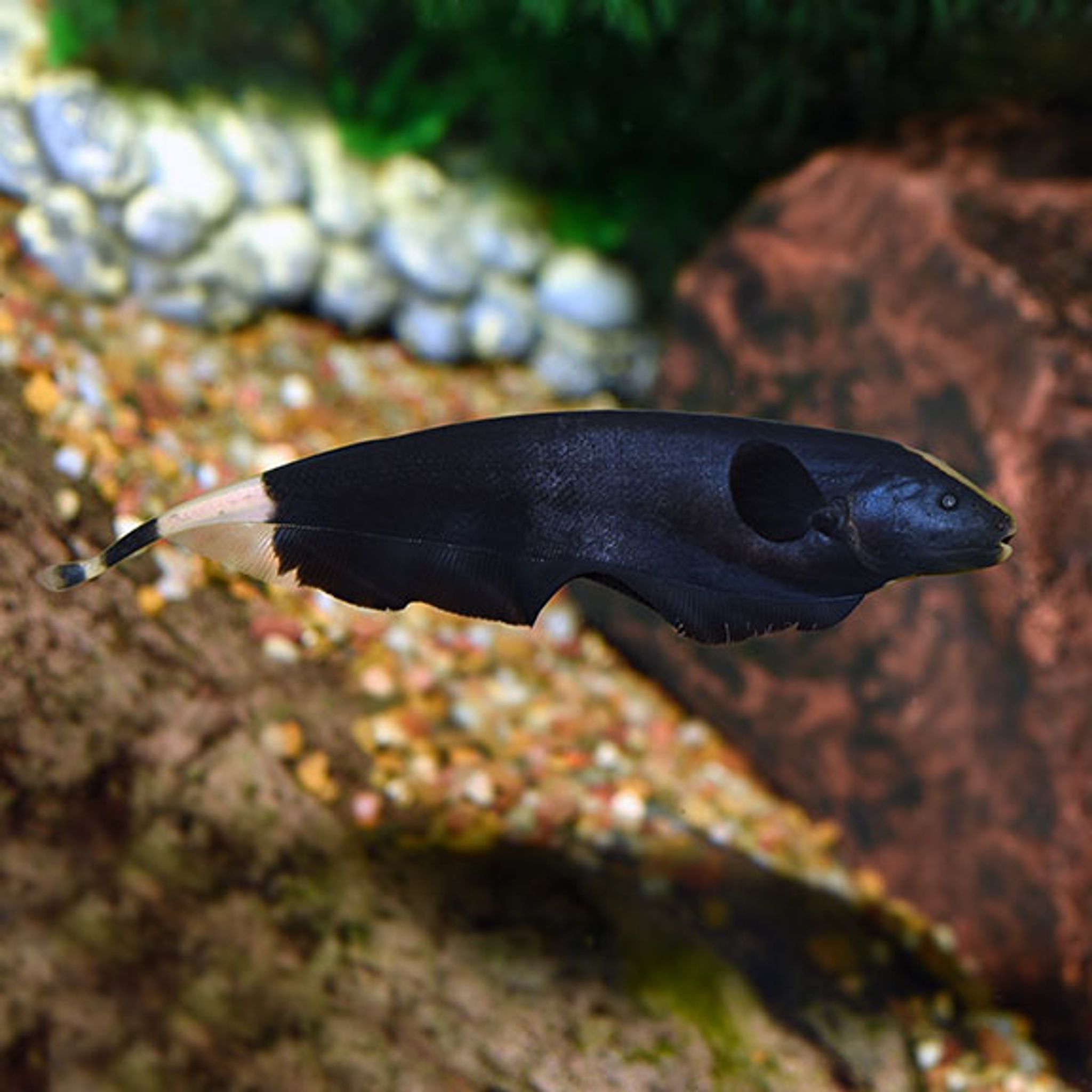
In the wild, knifefish feed on insect larvae, crustaceans, worms and small fish. Several common species, including the black ghost knifefish and brown ghost knifefish, are weakly electric — they generate a low-voltage field and use electroreception to locate prey rather than relying on sight. This is why they hunt confidently in murky or dark water.
Almost every knifefish species is nocturnal or crepuscular, meaning peak activity happens at dusk, in the evening, or after the tank lights go out. A knifefish that ignores food during the day isn't necessarily sick or picky — it may simply be waiting for darkness. Feeding under a dim moonlight or blue LED, or right after the main light shuts off, mimics natural conditions and often draws out fish that seem to "never eat."
Species Differences: Diet Needs by Size
Not all knifefish need the same diet. The species commonly sold differ enough in adult size and predatory intensity that a one-size-fits-all feeding plan doesn't work.
| Species | Typical adult size | Diet style | Beginner difficulty |
|---|---|---|---|
| Black ghost knifefish | Up to ~18–20 in (46–50 cm) | Soft live/frozen invertebrates | Moderate |
| Brown ghost / glass knifefish | 12–16 in (30–40 cm) | Soft live/frozen invertebrates | Moderate |
| Clown knifefish | Up to ~3 ft (90 cm) | Meaty chunks, whole prey as adult | Hard (needs a very large tank) |
| African knifefish | 18–24 in (46–61 cm) | Meaty chunks, small fish | Hard |
| Featherfin knifefish | 12–20 in (30–50 cm) | Meaty chunks, small fish | Moderate-hard |
Black ghost and brown ghost knifefish do well on a softer live/frozen diet of worms and small crustaceans. Clown, African and featherfin knifefish are more purely predatory: they need bigger meaty items as they grow and will eventually take whole small fish that fit their mouths. You can browse suitable tank setups and stock for these larger species in FishyHub's Monster Fishes category before committing to one long-term.
Core Diet: What to Feed
Small-to-medium knifefish (black ghost, brown ghost)
Build meals around:
- Live or frozen bloodworms
- Blackworms
- Brine shrimp
- Mosquito larvae
- Tubifex worms
- Small krill or prawns
- Daphnia
- Mysis shrimp
Larger, more predatory knifefish (clown, African, featherfin)
Offer the same staples above, plus larger items once the fish is big enough to handle them:
- Chopped or whole shrimp
- Earthworms
- Beefheart — sparingly, as an occasional treat only; it's high in fat and shouldn't be a staple
- Fish or shrimp slices
- Small fish that fit comfortably in the mouth
- Large sinking pellets and big-ingredient frozen carnivore blends once size allows
Where dry food fits in
Flakes and generic community pellets are a weak match for knifefish — most individuals are reluctant to accept them, especially when young. High-quality sinking carnivore or cichlid pellets can sometimes be trained in gradually alongside frozen foods, but dry food should never be the sole diet. Live and frozen foods remain the reliable nutritional backbone regardless of how well training goes, since they supply the vitamins, minerals and fat profile knifefish need for long-term health.
Rotating protein sources — worms one feeding, shrimp the next, insect larvae another day, with occasional pellets mixed in — provides broader nutrition than repeating the same single item and helps prevent picky eating.
Feeding Frequency and Portions
Guidance varies across sources between once daily and 2–3 feedings a day. The practical reconciliation:
- Juveniles and smaller species (young black ghost, brown ghost): 1–2 small feedings per day.
- Large adult predatory knifefish (mature clown, African, featherfin): once daily or every other day, since each meal delivers more food relative to their needs.
- A sensible adult baseline is 4–5 feeding days a week, with occasional fasting or skip days built in, since knifefish are prone to obesity.
Only offer what the fish will finish within 2–3 minutes. Anything left over should be siphoned out promptly — within minutes if possible, or by the next morning at the latest — since knifefish waste combined with leftover meaty food loads ammonia into the water fast, especially in tanks with modest filtration.
As the fish grows, increase portion and food size, not just frequency. A black ghost knifefish that reaches 18–20 inches, or a clown knife approaching 3 feet, needs noticeably larger prey items and more protein/fat than it did as a juvenile — failing to scale food up as the fish grows is a common cause of stunted growth in adults.
Getting a Shy or New Knifefish to Eat
New arrivals and juveniles are frequently shy and may refuse food for the first day or two — this is a normal adjustment period, not necessarily illness. Give the fish time before assuming something is wrong.
Things that help:
- Feed at night, after lights-out or under moonlight/blue LED, rather than during the day.
- Provide hiding spots — a PVC pipe, driftwood, or dense plants — near a consistent feeding location so the fish feels secure enough to emerge.
- Start with live foods like bloodworms or blackworms, which trigger a stronger feeding response than frozen or dry alternatives.
- Keep water quality tight during this period; ammonia or nitrite spikes and low oxygen commonly cause knifefish to go off food entirely, so consistent filtration and regular water changes support a steady appetite.
For a stressed new import in a bare quarantine tank, offer small portions of live food at night and remove uneaten food quickly to avoid fouling the water — quarantine tanks typically lack the biological filtration of an established display, so leftover meaty food causes ammonia problems faster.
Tame individuals, most often black ghost knifefish, can eventually be trained to hand-feed with patience and consistency, though this is a bonus, not a requirement for keeping the fish healthy.
Feeding Tools That Help
A turkey baster or a feeding skewer/tongs lets you target-feed a shy or bottom-hugging knifefish directly at its hiding spot, rather than dropping food into open water where faster tank mates grab it first. This reduces competition and aggression in multi-fish tanks and cuts down on food drifting to the substrate and rotting unnoticed.
Signs of Good Nutrition vs. Malnutrition
| Sign | Well-fed knifefish | Malnourished knifefish |
|---|---|---|
| Body shape | Full behind the head, rounded but not bloated | Visibly thin, sunken belly |
| Behavior | Active foraging, responsive at feeding time | Lethargic, hides constantly |
| Skin/color | Even coloration | Dull or faded |
| Common cause | Varied live/frozen diet | Flake-only or feeder-fish-only diet |
Feeder Fish: Not a Recommended Staple
Feeder goldfish and livebearers are sometimes offered as an occasional treat for large adult knifefish, but they carry real risks: disease introduction and thiaminase-related nutritional deficiencies from a feeder-heavy diet. The safer approach is to skip feeder fish altogether — frozen or gut-loaded live invertebrate foods provide similar enrichment without the disease vector. If you do offer them, it should never be a staple and only for large, established adults.
Common Mistakes to Avoid
- Flakes-only or generic pellets-only diet — insufficient protein and fat, leading to a slowly thinning fish.
- Daytime-only feeding — a nocturnal knifefish may simply be waiting for dark, not refusing food.
- Overfeeding with large meaty chunks left to rot — ammonia spikes and cloudy water follow quickly, especially without strong filtration.
- Relying solely on feeder goldfish — disease risk and nutritional gaps over time.
- Giving up too soon on a new fish that hasn't eaten in a day or two — this is usually normal adjustment, not illness.
- Not increasing food size as the fish grows — stunts growth or leaves large adults underfed.
- Underestimating tank mates — small fish, shrimp and snails can simply become food for a predatory knifefish; plan tank mates with this in mind rather than treating losses as a mystery.
A gel food or frozen carnivore blend can be soaked briefly with a vitamin supplement before feeding, which helps offset the nutritional gaps that come with a heavy frozen-food diet over time. For live and frozen protein sources, browse Food & Supplements and Freeze Dried Food on FishyHub to build a rotating menu.
Frequently Asked Questions
Can knifefish eat flakes or pellets?
Flakes and pellets aren't a knifefish's preferred food, and many individuals are reluctant to accept them at all. Some can be trained onto sinking carnivore or cichlid pellets over time, but frozen and live foods should remain the core of the diet regardless.
How often should I feed my knifefish?
Juveniles do well with small amounts once or twice daily, while large adults can be fed once daily or every other day. In both cases, only offer what's eaten within a couple of minutes.
Why won't my new knifefish eat?
It's usually shyness or stress after transport, not illness. Try offering live bloodworms or blackworms at night near a hiding spot, and give the fish several days before becoming concerned.
Can I feed my knifefish goldfish or feeder fish?
It's not recommended as a staple due to disease risk and nutritional gaps like thiaminase deficiency. Frozen or gut-loaded live invertebrate foods offer similar enrichment more safely.
What do baby or juvenile knifefish eat?
Small live foods such as baby brine shrimp, bloodworms and blackworms work best, offered in small, frequent portions as the fish adjusts and grows.
Will knifefish eat other fish or shrimp in the tank?
Yes, especially larger species — anything small enough to swallow is at risk. Choose tank mates with this predatory instinct in mind rather than assuming community fish will be safe.
If you're setting up a tank around one of these predators, FishyHub's Monster Fishes category is a good place to compare species and plan a feeding routine that fits their adult size.


