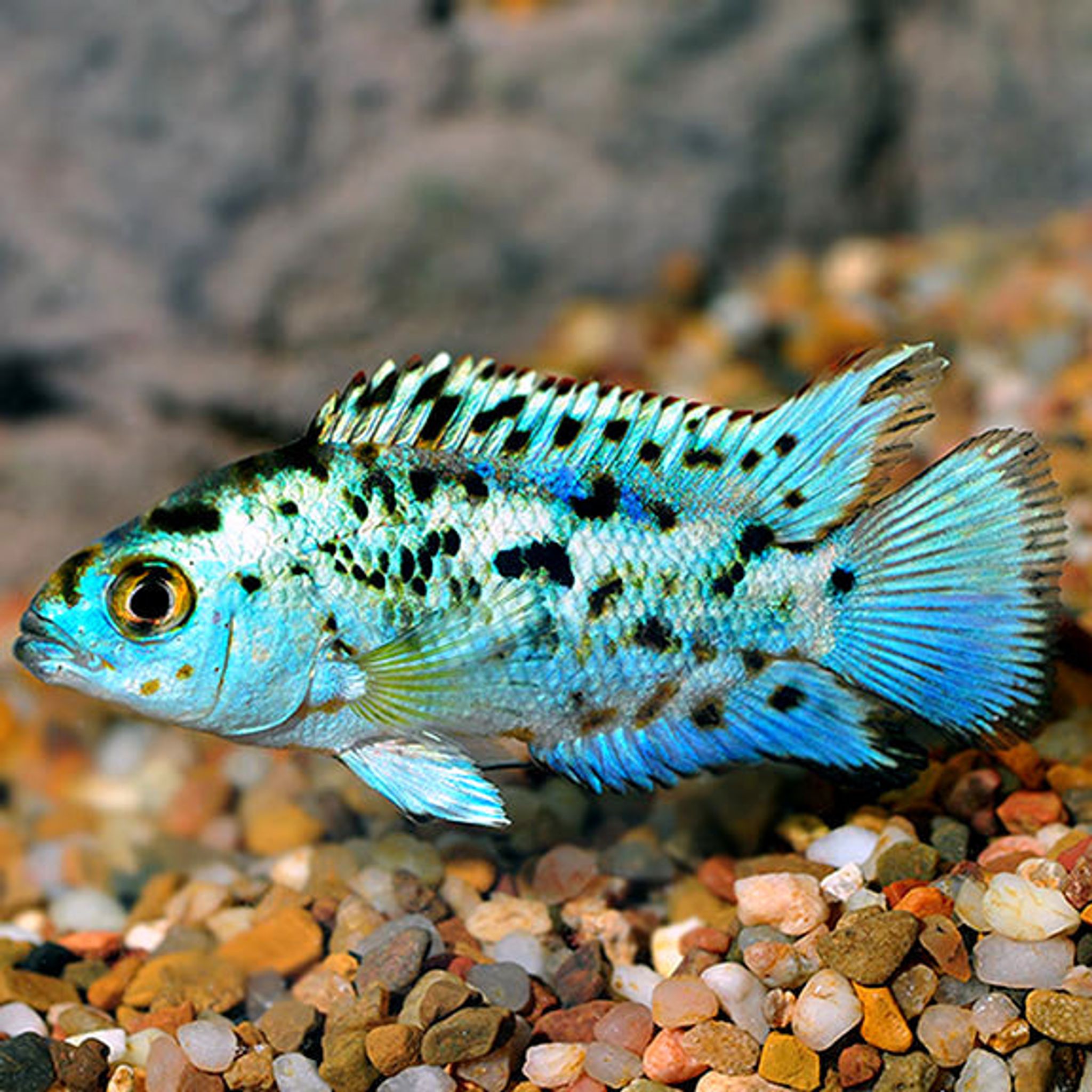

What Do Jack Dempsey Eat? A Practical Feeding Guide
Jack Dempseys are food-driven, opportunistic predators, and most feeding mistakes with this cichlid come from either the wrong food type or the wrong amount. This guide breaks down exactly what to feed, how often, and how much at every life stage, plus how to head off the bloating, pitting, and feeding-time chaos this species is known for.
What Jack Dempseys Eat in the Wild
In their native Central American waters, Jack Dempseys hunt insects, worms, small fish, snails, and crustaceans. That background explains their aquarium behavior: they're alert, quick to lunge at moving food, and built to process meaty protein efficiently.
Hobbyists sometimes argue over whether to call them a strict carnivore or an omnivore. The practical answer sits in between — Jack Dempseys are predominantly carnivorous but do well with occasional plant matter mixed in. Treat them as a mostly-meat eater with room for greens on the side, not an either/or debate.
The Staple Diet: Sinking Cichlid Pellets
A high-quality sinking pellet formulated for large cichlids should make up roughly 70-80% of the diet. Pellets sink to where Jack Dempseys naturally feed (bottom to mid-water) and hold their shape better than flakes as fish grow. Flakes are fine for very young fish but stop scaling well once a Dempsey passes a couple of inches.
When comparing pellets, check the ingredient list rather than the marketing copy:
- Fish meal or shrimp meal listed near the top — a sign of meaningful animal protein
- Avoid formulas where grain fillers or generic "fish by-product" dominate the label
- Match pellet size to fish size (see the table below) so smaller fish aren't struggling to swallow oversized pieces
You can browse sinking pellet and staple diet options in FishyHub's Food & Supplements section.
Pellet Size by Fish Size
| Fish size | Recommended pellet size |
|---|---|
| Under 3 in (7.5 cm) | Small pellet or crushed pellet |
| 3-5 in (7.5-13 cm) | Medium sinking pellet |
| Over 5 in (13 cm) | Large sinking cichlid pellet |
Rotation and Supplement Foods
Two to three times a week, swap a staple feeding for a frozen or live protein source. This variety fills nutritional gaps that a pellet-only diet leaves behind and tends to sharpen coloration over time.
Good rotation options include:
- Bloodworms (frozen or live)
- Brine shrimp
- Daphnia
- Blackworms
- Chopped shrimp or mussel
- Earthworms
- Occasional crickets, grasshoppers, or fruit flies for enrichment and natural hunting behavior
Foods containing shrimp or krill also supply carotenoids, which support the blue and gold flecking Jack Dempseys are prized for. A diet that's consistently protein-rich with some carotenoid input does more for color than any single "miracle" food.
Occasional Treats: Handle With Care
Small amounts of raw or cooked beef heart or poultry are sometimes recommended as an enrichment food, but treat this as optional and rare — no more than about once a month. These meats are high in fat relative to a fish's needs, and regular feeding can lead to fatty deposits and digestive trouble. If you skip mammal meat entirely, your Dempsey won't miss out on anything essential.
Should You Feed Vegetables?
Yes, in small amounts. Even though Jack Dempseys are mainly carnivorous, blanched peas (skins removed), zucchini, cucumber, or spirulina-based pellets once or twice a week help move things through the digestive tract and can reduce constipation. This is one area where sources disagree — some guides insist on a strict-carnivore-only approach — but a small, regular dose of vegetable matter is low-risk and broadly useful for large cichlids, so there's little reason to leave it out.
Why You Should Skip Feeder Fish
Feeder goldfish and minnows are widely marketed as "natural" food, but they carry real downsides: disease and parasite risk, plus a nutritional profile that's poorly matched to a cichlid's needs. If you want to offer live fish as occasional enrichment, only use fish that have been properly quarantined — and even then, it shouldn't be a regular part of the rotation.
Feeding Frequency and Portions by Life Stage
| Life stage | Size | Feeding frequency | What to feed |
|---|---|---|---|
| Fry | Under 1-2 in (2.5-5 cm) | Several small feedings per day | Baby brine shrimp, microworms, crushed flake or fry food |
| Juvenile | Under ~4 in (10 cm) | 2-3 times daily | Small-to-medium pellets, flake, rotation foods |
| Adult | 4-8 in males / 4-6 in females (10-20 cm) | 1-2 times daily | Large sinking pellets, rotation foods, occasional veggies |
Adult feeding frequency is the one place sources genuinely split — some recommend once a day, others twice. For most home aquariums, twice daily matches the majority recommendation and works well; once daily is a reasonable option for adults in larger systems where you're actively managing weight.
The 2-Minute Portion Rule
Rather than guessing at a "pinch," feed only what your Jack Dempsey can fully clear in about two minutes, then remove anything left over. As a rough sizing guide, a meal roughly equal in volume to the fish's eye is a sensible starting point per feeding for adults — adjust up or down based on body condition rather than a fixed number.
For context on portion sizing, adult Jack Dempseys in home aquariums typically reach about 8 inches (20 cm) for males and 6 inches (15 cm) for females — noticeably smaller than the 10-15 inch (25-38 cm) sizes sometimes reported from the wild. Portion and pellet size should scale to the fish in front of you, not to wild maximums.
Fasting Days
A once-weekly fasting day for adult Jack Dempseys is standard practice for large, food-driven cichlids generally, even though it's rarely called out for this species specifically. Skipping one day of food per week gives the digestive system a rest and is a simple way to prevent the slow creep of overfeeding.
Feeding Fry and Juveniles
Newly hatched fry can't handle pellets yet. Start with baby brine shrimp, microworms, or finely crushed high-protein fry food, offered in several small feedings throughout the day rather than one or two large ones. As fry grow toward 4 inches (10 cm) or once they can comfortably fit a small pellet in their mouth, begin transitioning to crushed or small sinking pellets and cut back feeding frequency toward the juvenile schedule above.
Signs of a Well-Fed vs. Overfed Jack Dempsey
| Sign | Well-fed | Overfed |
|---|---|---|
| Belly shape | Rounded but not distended | Visibly bloated or swollen |
| Behavior | Active, alert, comes to the front to beg | Sluggish after feeding |
| Waste | Normal, formed | Stringy, white, or excessive |
| Water clarity | Clear | Cloudy, ammonia smell |
If you're consistently seeing bloating, stringy white waste, or cloudy water, cut back on portion size before changing what you're feeding — quantity is usually the first thing to fix.
Tank Setup Notes That Affect Feeding
Because Jack Dempseys feed at the bottom and mid-water, sinking pellets suit their habits better than floating foods that sit at the surface too long. Their appetite and waste output are substantial for their size, so strong filtration matters as much as the food itself — a well-rated filter helps prevent the ammonia and nitrite spikes that overfeeding and heavy waste production can cause. You can compare options in FishyHub's Filters category.
Uneaten food is a direct water quality risk. Leftover pellets and meaty foods break down quickly and drive ammonia up, which is part of why the 2-minute rule and prompt removal of leftovers matter as much as the diet itself. Jack Dempseys have a reputation for hardiness, but that doesn't make them immune to poor water caused by overfeeding.
Feeding in a Community Tank
Jack Dempseys are territorial and can dominate a shared feeding session, out-competing tankmates or turning mealtime into a stress event for smaller fish. If you're keeping a Dempsey with other large, robust species from FishyHub's American Cichlids selection, spot-feed the dominant fish separately or drop food at multiple points around the tank so subordinate fish can eat without confrontation.
A Simple Weekly Rotation Schedule
| Day | Food |
|---|---|
| Mon | Sinking cichlid pellets |
| Tue | Frozen bloodworms or brine shrimp |
| Wed | Sinking cichlid pellets |
| Thu | Blanched peas or zucchini |
| Fri | Sinking cichlid pellets |
| Sat | Chopped shrimp, mussel, or daphnia |
| Sun | Fasting day (adults only) |
Adjust to twice-daily portions on feeding days for adults, or 2-3 feedings on juvenile days, using the same rotation logic.
Common Mistakes and Troubleshooting
- Overfeeding. The most common issue — leads to obesity, bloating, and ammonia spikes. Fix it with the 2-minute rule and a weekly fasting day for adults.
- Dry food only, long-term. Pellets and flakes alone can leave nutritional gaps and dull coloration. Rotate in frozen or live foods weekly.
- Relying on feeder fish. Disease and parasite risk outweighs the convenience. Avoid, or strictly quarantine before use.
- Ignoring head and lateral line erosion (HLLE). Pitting along the head and lateral line is often linked to poor diet — particularly low vitamin and mineral intake from over-reliance on low-quality flake — combined with poor water quality. Address it with a varied, high-quality diet and consistent water changes. A few cases have also been linked to activated carbon use or stray electrical voltage in the tank, so if diet and water changes don't resolve it, those are worth ruling out too.
- Assuming stunted growth is a food problem. Slow growth is more often caused by an undersized tank or infrequent water changes than by food amount. Correct feeding won't fix a tank that's too small for the fish.
- Feeding-time aggression scaring tankmates. Spot-feed the dominant fish or use multiple feeding points, as covered above.
Frequently Asked Questions
How often should I feed my Jack Dempsey?
Adults do well on 1-2 feedings a day, juveniles need 2-3 feedings daily, and fry require several small feedings spread throughout the day. Twice daily is the most common recommendation for adults in typical home tanks.
What is the best staple food for Jack Dempseys?
A high-quality sinking pellet formulated for large cichlids, with fish meal or shrimp meal near the top of the ingredient list, makes the best staple. It should form roughly 70-80% of the overall diet.
Can Jack Dempseys eat vegetables?
Yes. Blanched peas with the skin removed, zucchini, cucumber, or spirulina-based pellets once or twice a week support digestion, even though the species is primarily carnivorous.
Do Jack Dempseys need live food?
No, live food isn't mandatory, but frozen or live options like bloodworms and brine shrimp add variety, enrichment, and can improve coloration. They work best as a 2-3 times weekly addition rather than a daily requirement.
Can I feed my Jack Dempsey feeder fish?
It's not recommended as a regular practice because of disease and parasite risk along with poor nutritional balance. If used at all, feeder fish should be an occasional, strictly quarantined item rather than a staple.
Why does my Jack Dempsey have pits on its head?
This is typically head and lateral line erosion (HLLE), most often linked to diet quality and water quality issues. Improving food variety, increasing water change frequency, and ruling out factors like activated carbon or stray voltage usually helps.
How much should I feed at each meal?
Feed only what your fish can fully finish in about two minutes, then remove any uneaten food promptly to protect water quality.
What do Jack Dempsey fry eat?
Fry eat baby brine shrimp, microworms, or finely crushed high-protein fry food, offered in several small feedings a day until they're large enough to handle small pellets.
Getting the feeding routine right is one of the biggest factors in raising a healthy, well-colored Jack Dempsey. Browse sinking pellets, frozen foods, and other staples in FishyHub's Food & Supplements category to build out your rotation.


