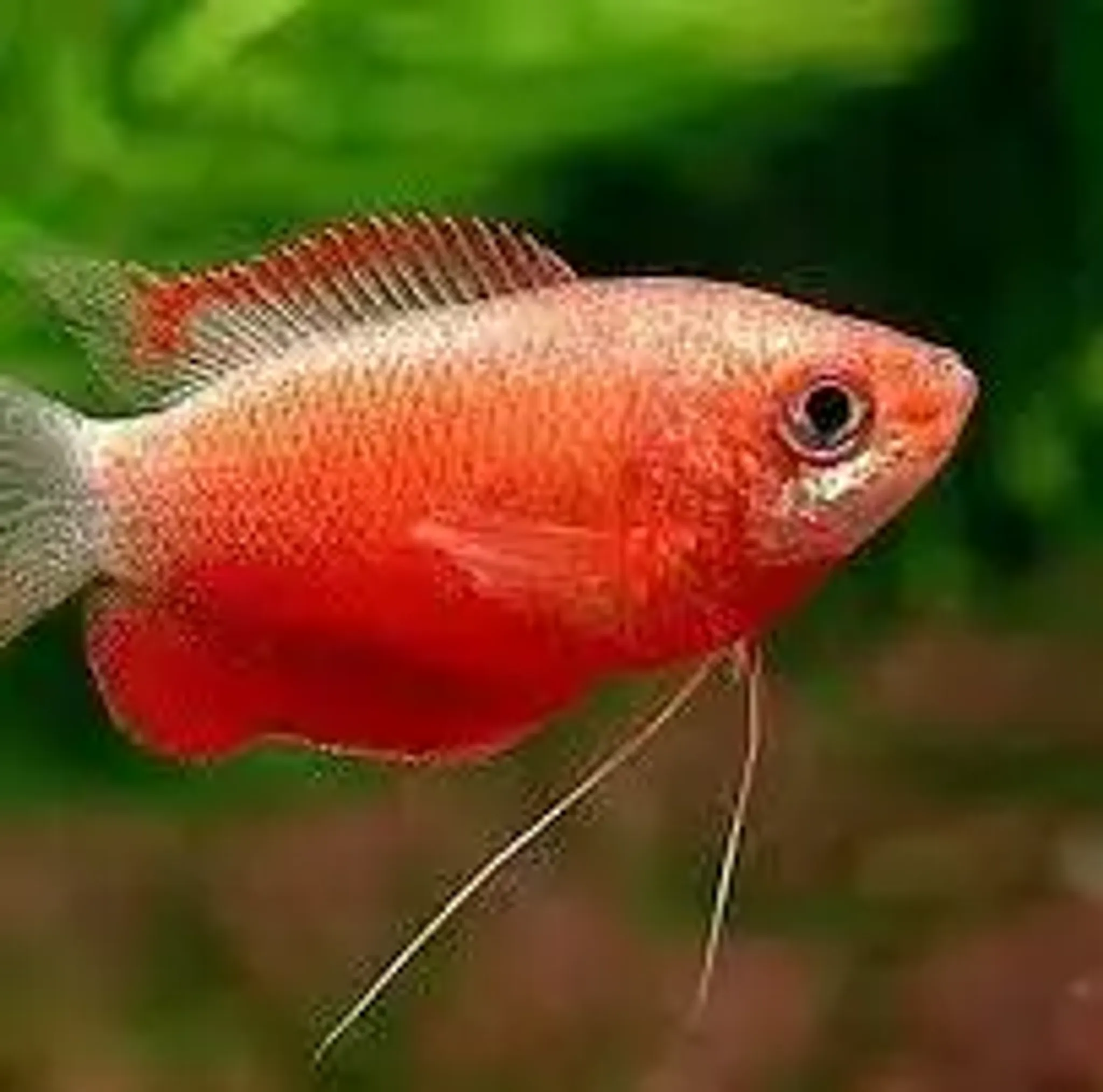

What Do Honey Gourami Eat? A Practical Feeding Guide
Honey gourami are easygoing omnivores that thrive on a rotation of quality flake or micro-pellet, occasional live or frozen protein, and a little plant matter. This guide breaks down exactly what to feed, how much, how often, and how to troubleshoot the feeding problems new keepers run into most.
What Honey Gourami Eat in the Wild
Honey gourami (Trichogaster chuna, sometimes labeled Trichopodus chuna) come from slow-moving, densely vegetated waters in South and Southeast Asia, similar in character to the shallow ponds and rice-paddy margins of India and Bangladesh. In these habitats they graze almost constantly, picking at biofilm on leaves and driftwood while snapping up small insects, insect larvae, crustaceans, and zooplankton drifting through the plants. They'll also nibble soft algae and other plant material when it's available.
That grazing, foraging lifestyle is why a planted tank tends to produce calmer, better-conditioned honey gourami: the plants aren't just decoration, they're a stand-in for the microhabitat this fish evolved to pick through all day.
The Core Diet: What to Actually Feed
In the aquarium, honey gourami are not picky. They'll take nearly any standard aquarium food you offer, which makes building a diet simple. Aim for three components:
1. A daily staple food
A quality tropical flake or micro-pellet formulated for small omnivorous fish should be the base of the diet, offered daily. Because honey gourami are small — topping out around 2 inches (5 cm) — with small, upturned mouths, particle size matters. Crush flakes or pellets between your fingers for juveniles or any fish under about an inch, so nothing is too big to comfortably swallow.
When comparing products, a rough (non-technical) benchmark is to look for 35-45% protein on the label for an omnivore-formulated flake or pellet — enough to support growth and color without being a pure carnivore diet.
2. Protein 2-4 times per week
Rotate in live or frozen protein sources several times a week:
- Bloodworms
- Brine shrimp
- Daphnia
- White worms
- Mosquito larvae
Freeze-dried versions of these are convenient and widely available, but soak them in tank water for a minute or two before feeding. Dry freeze-dried food expands once it hits the fish's gut, and skipping the soak is a common cause of bloating and constipation.
3. Plant and vegetable matter 1-2 times per week
Honey gourami are natural grazers, so skipping vegetable matter entirely is a missed opportunity, not a neutral choice. Good options include:
- Blanched, de-shelled peas (squeeze the pea out of the skin)
- Small pieces of cucumber or zucchini, blanched or lightly weighted down
- Spirulina-based algae wafers or tablets
- Vegetable flake
A varied diet that includes both protein and plant matter supports color intensity and immune health. An all-flake diet fed long-term is associated with duller coloration and potential nutrient gaps — it's not that flake is bad, it's that it shouldn't be the only thing on the menu.
How Much and How Often to Feed
For adult honey gourami, feed once or twice a day, offering only what the fish can finish in about 2-3 minutes. That window is the most practical portion guide available, since exact gram or teaspoon measurements vary too much by tank size and stocking to be useful on their own.
As a starting point for the small community or nano tanks most honey gourami keepers actually run:
| Tank size | Starting portion | Feeding notes |
|---|---|---|
| 5-10 gal (19-38 L) | A pinch of flake, or 3-5 micro-pellets per fish | Watch closely for leftovers after 2-3 minutes |
| 10-20 gal (38-76 L) | A larger pinch, or a small cube of frozen food shared across the group | Split across 2 feeding spots if keeping multiple males |
| 20+ gal (76+ L) community | Standard flake feeding plus rotated frozen/veggie days | Spot-feed shy or slow individuals separately |
Treat these as starting points, not fixed doses — always adjust down if food is left over after a few minutes, and skip straight to the next feeding rather than topping off.
Feeding by life stage
| Life stage | What to feed | Frequency |
|---|---|---|
| Fry (first days) | Infusoria or a liquid fry food | Several small feedings/day |
| Fry (larger) | Newly hatched baby brine shrimp, microworms | 2-3x/day |
| Juvenile | Crushed flake/micro-pellet, small frozen foods | 1-2x/day |
| Adult (maintenance) | Full rotation: flake/pellet, protein, veggies | 1-2x/day |
| Breeding conditioning | Same rotation, extra live/frozen protein | 2-3x/day |
Should You Feed More When Breeding?
Feeding frequency is one area where advice varies. For general maintenance, once or twice daily is the standard, and that's the right default for most tanks. A third, smaller feeding with extra live or frozen protein is specifically a breeding conditioning tactic, used by keepers actively trying to bring a pair into spawning condition — it isn't baseline care and shouldn't be treated as one.
Honey gourami are anabantoids, the same labyrinth-fish family as bettas, and males build bubble nests at the water's surface when conditioned to spawn. A well-fed, properly conditioned male tends to build a sturdier, longer-lasting nest — another reason the extra protein push during conditioning matters, but only in that context.
A Weekly Feeding Rotation Example
- Monday: Flake or micro-pellet
- Tuesday: Frozen bloodworms or daphnia (soaked if freeze-dried)
- Wednesday: Flake or micro-pellet
- Thursday: Blanched pea or algae wafer
- Friday: Flake or micro-pellet
- Saturday: Brine shrimp or mosquito larvae
- Sunday: Fasting day
That fasting day isn't a mistake — a once-weekly fast is standard practice for small omnivorous fish. It gives the digestive system a break and helps prevent the water-quality problems that come with a steady stream of leftover food.
You can browse a full range of ready-to-use flake and frozen foods and freeze-dried options to build this rotation without hunting down each item separately.
Common Feeding Mistakes
- Overfeeding. This is the single biggest risk with honey gourami. Leftover food fouls the water, spikes ammonia, and can cause bloating. Siphon out anything left after a few minutes rather than letting it sit.
- Flake-only diets. Long-term reliance on flake alone tends to produce duller color and nutritional gaps over time.
- Oversized food particles. A honey gourami's mouth is small and upturned; pieces that are too large get spat back out, which can look like illness or pickiness when it's really just a sizing problem.
- Ignoring feeding-time aggression. In mixed-sex or community tanks, males can get food-aggressive toward females and slower tankmates, especially in a small or bare tank. A fish that seems to be "not eating" may actually be getting shut out by a more assertive tankmate.
- Not soaking freeze-dried food. Feeding it dry can cause it to expand in the gut, leading to bloat or constipation.
- Skipping vegetables. As natural grazers, honey gourami benefit from regular plant matter — it shouldn't be treated as optional.
- Assuming illness too fast. Slow or selective eating is often about temperature or water quality, not disease. Confirm the tank is in the 76-82°F (24-28°C) range and water parameters are stable before troubleshooting further.
Feeding in a Community Tank
Honey gourami are peaceful and can be outcompeted by faster, bolder tankmates like barbs or danios. A few tactics help:
- Feed at 2+ spots in the tank so slower fish get a fair shot.
- Use sinking food occasionally for shy individuals that hang back from surface feeding.
- Add floating plants or cover near the surface — this reduces open competition and gives gourami a place to retreat, which also helps with male-on-female aggression at feeding time.
- Spot-feed with a turkey baster or pipette if one fish is consistently missing out.
If you're stocking a new setup, honey gourami pair well with other calm small community fishes that won't dominate the water column at feeding time.
When Feeding Problems Look Like Health Problems
Because honey gourami are labyrinth fish, the same warning signs that apply to bettas are worth knowing here too. Watch for:
- Bloating — often diet-related (overfeeding, un-soaked freeze-dried food) but can also signal internal illness.
- Clamped fins or resting on the bottom/side — usually points to stress, poor water quality, or illness rather than a food preference issue.
- Color loss or a pale, washed-out look — can stem from a poor diet, stress, or the early stages of disease.
- A gold or rust-colored dusting on the body — this is the classic sign of velvet disease, a parasitic infection that's more likely to take hold when a fish's immune system is already weakened by poor diet or stress.
None of these are things to fix with a diet change alone. If you see them, check water temperature and quality first, then consider a broader health check rather than assuming it's purely a feeding issue.
A quick note on a related but unrelated trend: essential oils and aromatherapy products are sometimes marketed as natural "treats" or additives for home aquariums. They aren't a recommended addition near fish tanks and shouldn't be introduced as a feeding supplement or treat of any kind.
Frequently Asked Questions
What is the best staple food for honey gourami?
A small-particle omnivore flake or micro-pellet works well as the daily base. Supplement it a few times a week with live or frozen protein and occasional vegetable matter for a well-rounded diet.
How often should I feed honey gourami?
Once or twice a day is standard for adult maintenance, feeding only what disappears in about 2-3 minutes. Breeders conditioning a pair for spawning sometimes add a third, smaller feeding with extra protein.
Do honey gourami eat algae or plants?
Yes. They naturally graze on soft algae and biofilm in the wild, and in the aquarium they'll appreciate blanched vegetables or a spirulina-based algae wafer once or twice a week.
Can honey gourami eat bloodworms and brine shrimp?
Yes — live or frozen bloodworms, brine shrimp, and daphnia are excellent occasional protein sources, best offered two to four times a week alongside the daily staple.
Why is my honey gourami not eating?
Check water temperature (76-82°F / 24-28°C) and overall water quality first, since sluggish appetite often tracks with those factors rather than pickiness. Also look for bullying from tankmates at feeding time and consider whether the food particles are too large; newly introduced fish may also need a short settling-in period.
What do baby honey gourami (fry) eat?
Fry start on infusoria or a commercial liquid fry food for the first several days. As they grow large enough, move them onto newly hatched baby brine shrimp and microworms, then transition to crushed flake.
Can honey gourami overeat?
Yes, and it's one of the most common care mistakes with this species. Overfeeding leads to leftover food fouling the water, ammonia spikes, and bloated fish, so it's best to feed sparingly and remove anything uneaten after a few minutes.
Do fish throw up food they don't like?
Not the way mammals vomit. What looks like "spitting out" food is usually a fish rejecting a piece that's too large for its mouth, or a stress response to poor water quality — not a sign of illness on its own.
Ready to stock or restock your setup? Browse gourami available on FishyHub alongside the flake, frozen, and freeze-dried foods needed to keep them well fed.


