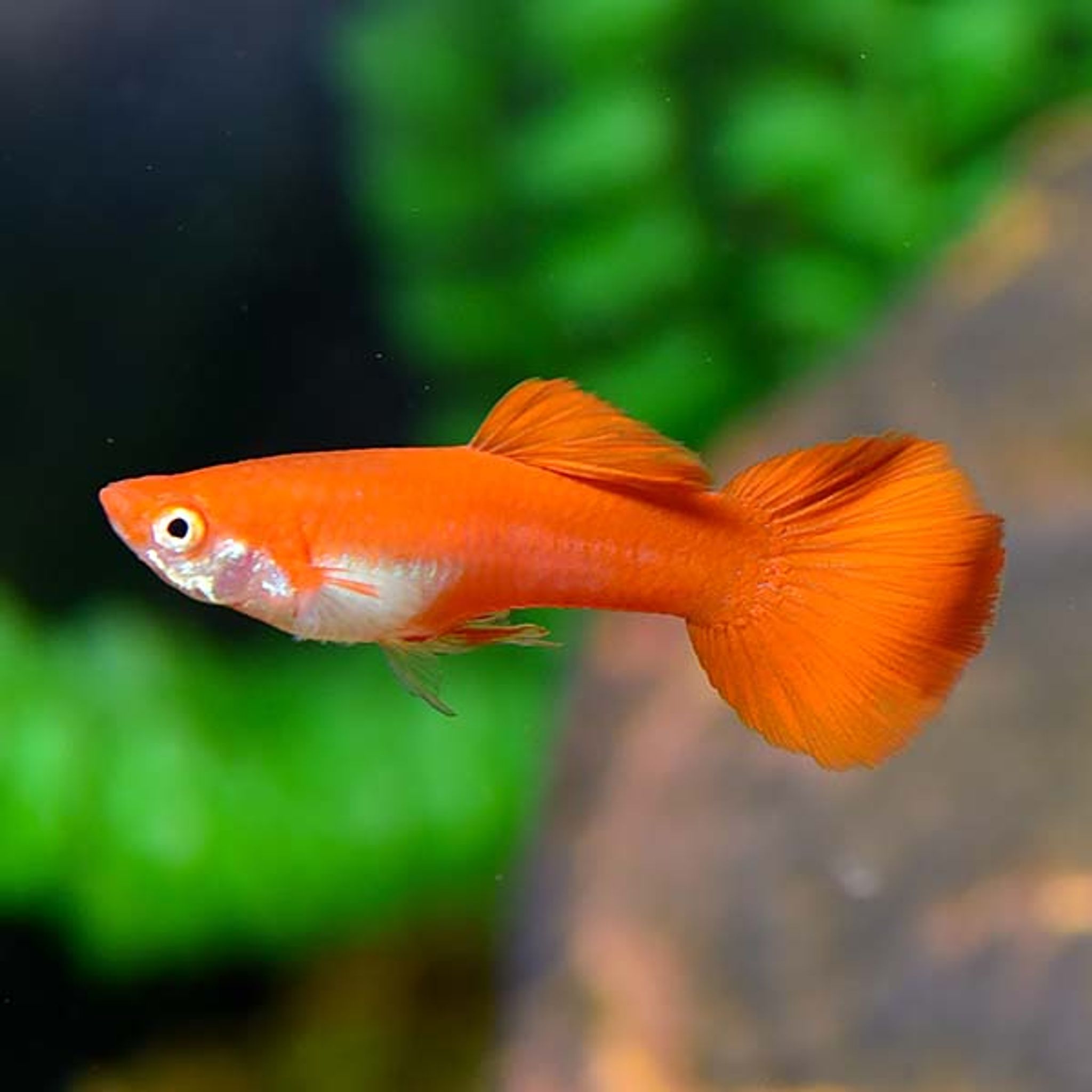

What Do Guppy Eat? A Practical Feeding Guide
Guppies eat a mix of plant matter and protein — a quality flake or small pellet as their staple, topped up with occasional live or frozen food and a little blanched vegetable. This guide breaks down exactly how much, how often, and what to do differently for fry, pregnant females, and vacations.
What Guppies Eat in the Wild vs. the Tank
In their natural habitat, guppies are omnivorous grazers. They spend most of the day picking at algae, biofilm, small invertebrates, insect larvae, and detritus rather than eating large meals. That constant grazing habit is the reason guppies do poorly on a single big feeding and much better on smaller, more frequent ones.
A captive diet should mimic that natural balance of plant and animal matter rather than leaning entirely on one or the other. That means:
- A plant-based component (spirulina, algae, vegetable matter) for fiber and digestion
- A protein component (fish meal, brine shrimp, daphnia, bloodworms) for growth, color, and breeding condition
- Small, frequent portions instead of one large feeding
Target Nutrition Ranges
Sources vary slightly on exact numbers, so treat these as ranges rather than fixed targets:
| Life stage | Protein | Fat | Notes |
|---|---|---|---|
| Adult guppies | 40–45% | 10–15% | Remaining ratio from carbohydrate/fiber (spirulina, veggie matter) |
| Fry (growing) | Up to 50–60% | Higher relative fat needs | Rapid growth demands more protein per body weight |
The Core Diet: Staple, Protein, and Plant Matter
Staple Food
A quality tropical flake or small sinking/floating pellet should form the base of the diet. Look for one that lists spirulina or algae meal among the main ingredients — it supports natural coloration and gives guppies the plant matter their gut needs. Flake versus small pellet is largely a matter of preference and tank setup; both work equally well as a staple. You can browse a range of options under guppies and general food and supplements to compare formulas.
When checking a label, a few things matter more than the marketing on the front of the package:
- Where fish meal or a named protein source sits in the ingredient list (earlier is better)
- Whether spirulina or algae appears rather than only generic "plant protein"
- How much filler (excess wheat, corn, or unnamed "grain products") is used to bulk out the food
Protein Supplements
Two to three times a week, supplement the staple with live or frozen protein: brine shrimp, daphnia, bloodworms, or microworms. This boosts color intensity, breeding condition, and overall immune health. Products like a freeze-dried food are a convenient, shelf-stable way to add this variety without keeping live cultures.
Vegetable Matter
Add blanched or soft vegetable matter occasionally — spinach, zucchini, and peas are common choices. This fiber helps prevent bloat and constipation, especially in fish that get a lot of dry, protein-heavy food.
How Much and How Often to Feed Adult Guppies
The single most useful rule: feed only what the group can finish in about 1–2 minutes. Anything left after that should be siphoned out or netted away.
| Meal | Frequency | Portion | Notes |
|---|---|---|---|
| Staple flake/pellet | 2–3x per day | Gone in 1–2 minutes | Base of the diet |
| Live/frozen protein | 2–3x per week | Small portion, same 1–2 minute rule | Swap in for one daily feeding |
| Blanched vegetable | 1–2x per week | Small piece, remove after a few hours | Helps fiber intake |
Tank Size and Stocking Density
A larger, more heavily stocked tank doesn't automatically need proportionally more food per feeding. If a tank has established algae growth and biofilm, fish are already grazing between meals, so total food volume should scale with the number of mouths and how much natural grazing is available — not just tank size. Overstocked tanks with little algae need more careful portioning, since fish have fewer natural snacks to fall back on.
Seasonal and Temperature Effects
In cooler water, guppies eat less and digest more slowly. This matters most in unheated tanks or setups with fluctuating room temperature — cutting back feeding frequency slightly in colder months helps avoid uneaten food fouling the water while digestion has slowed down.
Feeding Guppy Fry
Fry have tiny mouths and grow fast, so their feeding schedule looks different from adults.
- Days 1–3: Infusoria or a liquid fry food, since mouths are too small for flake
- After day 3: Newly hatched brine shrimp and finely crushed or powdered flake
- Frequency: 3–5 small feedings a day — the exact number depends on how much time you can commit; more frequent, smaller meals are always better than fewer large ones
Feeding fry adult-sized flake, or feeding them too infrequently, is a common cause of stunted growth. In a community tank, fry also compete with adults for food and often lose — a breeder net, breeder box, or dense floating plant cover gives fry a protected space to eat without adults out-competing them.
Do Guppies Eat Their Fry?
Yes. Filial cannibalism is common in guppies and is driven by instinct, stress, overcrowding, or nutritional deficiency in the parents rather than malice. Well-fed adults kept in a tank with hiding spots — dense plants, floating cover, or a breeder box — are noticeably less likely to eat their own fry. The same stress and nutrition factors explain why many livebearers and other fish species eat their young: adequate adult nutrition and a low-stress environment both reduce the behavior.
Common Cross-Species Food Questions
Can Guppies Eat Betta Food?
Occasionally, as an emergency substitute, but not as a staple. Betta pellets are formulated for a more carnivorous fish, tend to be higher in protein, larger in size, and lack the plant matter guppies need. Regular use risks bloating and constipation.
Can Guppies Eat Bloodworms?
Yes, in moderation — about 1–2 times a week as a protein treat. Bloodworms are rich, and overfeeding this kind of dense protein can cause bloating or constipation, so pair them with vegetable matter on other days.
Can Guppies Eat Goldfish Food?
Not as a staple. Goldfish food is formulated for a largely herbivorous, cold-water fish and runs lower in protein than a tropical omnivore needs. An occasional pinch won't hurt, but it shouldn't replace a proper flake or pellet.
Do Guppies Eat Ants?
Guppies may opportunistically eat small insects that fall into an open tank, but ants aren't a recommended or nutritionally useful food. They can also carry pesticide residue from outdoors, so don't intentionally feed them.
Guppy Pregnancy and Diet
Pregnant (gravid) females benefit from slightly more frequent, protein-rich feeding to support fry development and recovery after giving birth. That said, avoid overfeeding — excess food and an overweight female can worsen stress and increase the risk of prolapse.
Guppy Prolapse and Diet
Prolapse is often linked to constipation from overfeeding or too little fiber in the diet. Prevention includes:
- A varied diet that regularly includes blanched vegetable matter
- Avoiding excessive dry, high-protein feeding
- Not over-breeding females, since repeated pregnancies add physical stress
Color Enhancement Through Diet
Carotenoid-rich foods — spirulina, brine shrimp, daphnia, and color-enhancing flake — support and intensify a guppy's natural red, orange, and yellow pigmentation over time. Diet can't create colors that aren't already in a fish's genetics, but it can help existing color potential show through more vividly, especially across generations of selective feeding.
Can Male Guppies Live Together?
Yes, male guppies are generally compatible in same-sex groups, and keeping males together reduces breeding pressure on females. Competition for food can still occur in crowded tanks, so spread small portions across the tank at feeding time rather than dropping food in one spot — this reduces chasing and aggression.
A Note on Feeder Guppies
Guppies sold cheaply as "feeder fish" for predatory pets are often raised on minimal, low-quality diets in crowded conditions. If you end up keeping a feeder-sourced guppy as a pet rather than feeding it to another animal, plan on a health check, a quarantine period, and a diet upgrade to a proper staple and supplemental foods.
How Long Can Guppies Go Without Food?
Healthy adult guppies can typically go 1–2 weeks without food, grazing on algae and biofilm in an established tank. This makes them relatively vacation-friendly compared to many fish. It's not ideal for fry, breeding females, or sick fish, though, since they have less reserve and need more consistent nutrition.
Vacation Feeding Options
- Slow-release vacation feeder blocks for trips of about a week
- Automatic feeders set to dispense small, timed portions for longer absences
- A trusted person feeding sparingly, with clear instructions on portion size
Whatever method you choose, avoid the temptation to leave one huge feeding before you go — it just increases the odds of a water quality crash while you're away.
Common Feeding Mistakes
| Mistake | Result | Fix |
|---|---|---|
| Overfeeding | Cloudy water, ammonia spikes, bloating, constipation | Feed smaller amounts; remove uneaten food after 2 minutes |
| Only dry flake, long-term | Nutritional deficiency, dull color | Rotate in live/frozen food and vegetable matter weekly |
| Adult-sized food for fry | Stunted growth | Use crushed/powdered food; feed more often in small amounts |
| Ignoring fry competition | Fry starve in community tanks | Use a breeder box or dense plant cover for separate feeding |
| Sudden diet switch | Rejection, digestive upset | Introduce new foods gradually alongside familiar ones |
Diet also plays a quiet role in disease resistance. Fish on a poor, monotonous diet tend to have weaker immune function, which can make outbreaks of common issues like ich or fin rot harder to shake off — one more reason a varied, balanced diet pays off beyond just color and growth.
Frequently Asked Questions
What is the best staple food for guppies?
A quality flake or small sinking/floating pellet that includes spirulina, supplemented with live or frozen protein a few times a week, works well as the foundation of a guppy diet.
How many times a day should I feed guppies?
Feed adults 2–3 small meals a day, and fry 3–5 tiny meals a day. In both cases, portion size matters more than exact frequency — only offer what can be eaten in 1–2 minutes.
Can guppies eat human food?
Small amounts of blanched vegetables like spinach, zucchini, or peas, or a bit of boiled egg yolk, are fine occasionally. Avoid seasoned, fatty, or processed human food entirely.
Do guppies need live food?
No, live food isn't required, but occasional live or frozen protein like brine shrimp or daphnia improves color, conditioning, and breeding readiness compared to a flake-only diet.
Can guppies overeat?
Yes. Guppies will keep eating past fullness if food is available, which is why portion control — feeding only what disappears in 1–2 minutes — matters more than trusting their appetite.
What do I feed guppy fry in the first week?
Offer infusoria or a liquid fry food for the first few days when mouths are too small for flake, then transition to newly hatched brine shrimp and finely crushed flake as they grow.
Is it okay to skip feeding guppies for a weekend?
Yes, healthy adults handle a couple of days without food without any issue. For longer trips, use a slow-release vacation feeder block or have someone feed sparingly rather than leaving one large meal.
Why are my guppies not eating?
Common causes include recent overfeeding, poor water quality or stress, illness, or food that's too large for them to manage. Check water parameters first, then offer a smaller, varied portion to see if appetite returns.
Ready to put this into practice? You can browse healthy guppies and the flake, pellet, and freeze-dried options to feed them under Freshwater Livestock › Guppies on FishyHub.


