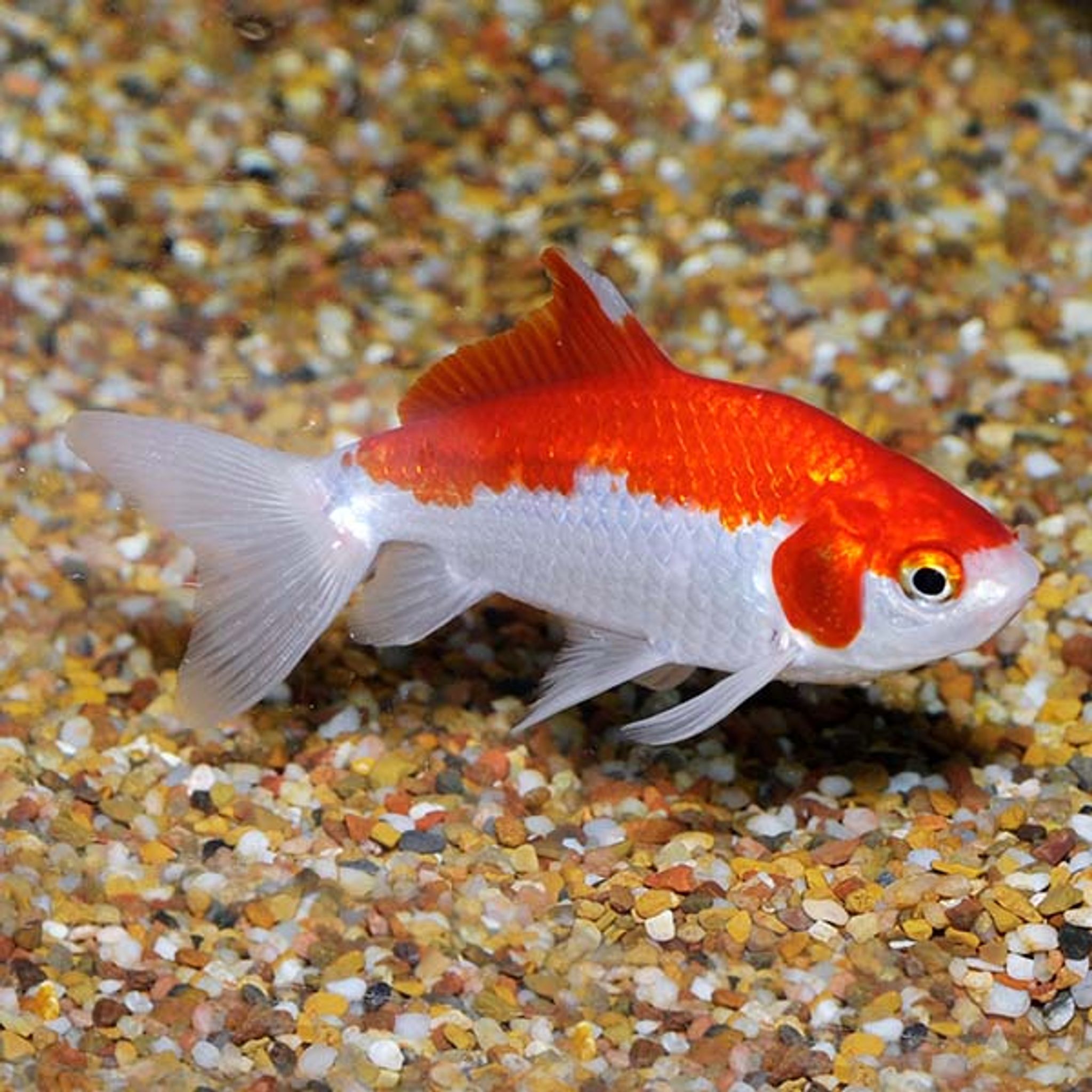

What Do Goldfish Eat? A Practical Feeding Guide
Goldfish eat a mix of a fiber-rich staple pellet, occasional protein treats, and regular vegetables, fed in small amounts several times a day rather than one big meal. Getting the routine right matters more than picking a single "best" food, since overfeeding — not the wrong ingredient — causes most goldfish health problems. This guide lays out exactly what to feed, how much, and how the routine changes for fancy versus slim-bodied goldfish.
What goldfish eat in the wild vs. in a tank
In the wild, goldfish are omnivores that graze almost constantly on algae, plant matter, small insects, crustaceans, and detritus on the pond or lake bottom. They never eat one large meal — they pick at food sources throughout the day.
That grazing habit is the reason captive feeding works best as little and often rather than a single big feeding. A goldfish's gut is built to process a steady trickle of food, not a large dump of it.
The daily staple: a goldfish-formulated pellet or flake
The base of any goldfish diet should be a quality sinking pellet or flake made specifically for goldfish. Compared to typical tropical fish food, a goldfish formula is:
- Higher in fiber — supports the constant digestion goldfish need
- Moderate in protein — roughly 30–35% crude protein
- Lower in fat — tropical foods are often higher in fat, which goldfish don't need as much of
What to check on the label
When comparing goldfish foods, look at the guaranteed analysis panel for:
- Crude protein in the 30–35% range for a maintenance diet
- Crude fiber on the higher end (goldfish foods typically run higher fiber than tropical formulas)
- Crude fat on the lower end relative to tropical fish foods
- Whole vegetable or algae ingredients (spirulina, peas, kelp) listed near the top
A staple that checks these boxes, fed as the daily base, covers most of a goldfish's nutritional needs without any guesswork. You can browse goldfish-appropriate options in FishyHub's food and supplements selection.
How much and how often to feed
The safest portion guide is simple: feed only what your goldfish can fully finish in about 2 minutes, or roughly an amount similar in size to one of the fish's eyes per feeding. When in doubt, feed less — it's far easier to fix underfeeding than to reverse the damage of chronic overfeeding.
Frequency depends on the goldfish's body shape:
| Goldfish type | Body shape | Feedings per day | Why |
|---|---|---|---|
| Comet, common, shubunkin | Slim, single-tail | 2–3 | Streamlined gut handles larger, less frequent meals well |
| Oranda, ranchu, fantail (fancy) | Round-bodied | 3–4 small feedings | Smaller, more frequent meals reduce gulping and bloat risk |
Fancy goldfish are more prone to swim bladder problems and constipation because of their compact, rounded body shape, so splitting their daily ration into smaller portions eases the strain on their digestion.
Remove any uneaten food promptly — with a net or siphon — since goldfish are messy, heavy waste producers and leftover food fouls water quickly, spiking ammonia within hours.
Why goldfish lack a true stomach (and why it matters)
Goldfish don't have a true, distensible stomach the way many animals do. Food passes in a fairly continuous stream through their digestive tract rather than pooling in a storage organ first. This anatomical quirk explains two things:
- Why goldfish overeat easily — there's no stomach signaling "full" the way a stomach-equipped animal experiences it, so a goldfish will often keep eating food that's offered.
- Why small, frequent portions beat one large meal — without a stomach to buffer a big feeding, a large single meal moves through as a slow-digesting mass, increasing the risk of blockages, bloating, and constipation, especially in egg-shaped fancy varieties.
Every portion-size rule in this guide traces back to this one fact.
Sinking vs. floating food: does body shape matter?
Yes. Round-bodied fancy goldfish (orandas, ranchu, fantails, lionheads) have a harder time controlling how much air they gulp at the surface. Floating pellets encourage them to gulp air along with food, which can lead to swim bladder disorder — a common cause of fancy goldfish floating sideways or sinking uncontrollably.
For fancy varieties:
- Soak floating pellets for a few minutes before feeding so they sink, or
- Feed a sinking pellet or gel food designed to be eaten below the surface
Slender-bodied comets, shubunkins, and common goldfish generally handle floating flake or pellets without issue, since their streamlined shape and more efficient swim bladder make air-gulping less of a problem.
Adding variety: vegetables and occasional protein
A single food type — even a good one — leaves nutritional gaps over time. Goldfish do better long-term with rotation across food types.
Vegetables (weekly, for fiber):
- Blanched or shelled peas
- Zucchini or cucumber slices
- Spinach or lettuce
- Any other soft, fiber-rich vegetable, blanched or canned and unsalted
Occasional protein (for growth and color):
- Brine shrimp
- Daphnia
- Bloodworms, fresh-frozen or freeze-dried
Frozen and freeze-dried options are a convenient way to rotate protein into the diet without live culturing — FishyHub stocks a range of freeze-dried food for exactly this purpose.
Gel food as an easy variety option
A gel food — either a premade mix or a homemade blend of pellets, vegetables, and protein set with gelatin — combines fiber, protein, and vegetables into one soft, easy-to-digest form. It's particularly useful for fancy goldfish, since the soft texture is gentle on digestion and the food naturally sinks, avoiding the air-gulping problem of floating pellets.
Transitioning to a new food
Switch foods gradually rather than all at once. Mix a small amount of the new food in with the current one for a week or two, slowly increasing the ratio. This avoids refusal from pickiness and gives the gut time to adjust, reducing the odds of a temporary loose-stool or bloating episode from a sudden diet change.
Peas for fish: the classic home remedy
Cooked, cooled, and deshelled peas are a well-known home remedy for constipation and bloat in goldfish. The fiber helps move a blocked digestive tract along. Feed peas as an occasional treat rather than a daily staple — mashed or halved for smaller fish — when you notice bloating, a distended belly, or trailing stringy waste.
Can goldfish eat tropical fish food?
Occasionally, yes — a few tropical flakes won't harm a goldfish. But tropical fish food shouldn't replace a goldfish-formulated staple, because it tends to run lower in fiber and higher in fat than food designed for goldfish. Goldfish need that extra fiber for their continuous digestion; a fat-heavy diet over time raises the risk of constipation and fatty deposits.
Can goldfish eat bread?
No. Bread swells once wet and continues expanding in the gut, offers almost no real nutrition, and is a common contributor to bloating and constipation in goldfish. Skip it entirely, along with other inappropriate human foods:
- Fatty meats
- Salty or sugary snacks
- Dairy products
Fasting: not something to fear
Goldfish can safely fast for 1–3 days with no ill effects, and healthy adults can commonly go up to about a week without food if needed. A short fast is a legitimate digestive reset — useful after a bout of bloating or overfeeding — not a sign of neglect. It's far safer than the instinct to keep feeding a fish that appears "hungry."
Feeding by season: tank vs. pond goldfish
Indoor tank goldfish kept at a stable temperature can follow the same feeding routine year-round. Outdoor pond goldfish need adjustments as water temperature drops:
| Water temperature | Feeding guidance |
|---|---|
| Above 68°F (20°C) | Normal routine: 2–4 feedings/day depending on body type |
| 50–68°F (10–20°C) | Reduce to 1 feeding/day; metabolism slows |
| Below 50°F (10°C) | Feed sparingly or stop; digestion becomes very slow |
| Near 41°F (5°C) | Stop feeding — goldfish essentially go dormant |
Overfeeding a pond in cold weather is a common mistake: food sits undigested in a sluggish gut and can cause serious harm, since a cold-slowed metabolism can't process it the way it would in summer.
Common feeding mistakes to avoid
- Overfeeding — the single biggest cause of bloating, constipation, swim bladder disorder, and fouled water
- Feeding only one food type — causes nutritional gaps over months; rotate weekly
- Leaving uneaten food to decay — spikes ammonia and feeds algae growth
- Skipping the soak for floating pellets with fancy goldfish — increases swallowed air and buoyancy problems
- Assuming a skipped meal means illness — often the fish is simply full, stressed, or reacting to water quality
- Not adjusting for cold water — appetite drops sharply as temperature falls; keep feeding the summer amount and you risk digestive harm
Troubleshooting: goldfish not eating
A goldfish refusing food is usually not the emergency it feels like. Work through these in order:
- Test water quality first — ammonia or nitrite spikes and temperature swings are the most common causes of appetite loss
- Consider overfeeding — a full gut simply won't want more food
- Rule out stress — recent tank changes, new tankmates, or a move can suppress appetite temporarily
- Try a different food — pickiness after switching brands or formats is common
- Allow a short fast — 1–3 days without food is normal and often resolves the issue on its own
If appetite loss persists alongside other symptoms — lethargy, visible sores, rapid breathing — it's worth checking with a fish-experienced veterinarian or aquatic specialist rather than continuing to guess.
What goldfish poop tells you about diet
Goldfish waste is a genuinely useful, if unglamorous, diagnostic tool:
- Normal: brownish, holds together in a short strand
- Long, stringy, or trailing: usually points to constipation from too little fiber or overfeeding — add peas or vegetables and cut back portions
- White or clear/stringy: can suggest poor diet, parasites, or a bacterial issue and is worth monitoring closely
Why does my goldfish keep opening and closing its mouth?
Mouth movement at the surface or along the glass is often just normal foraging or breathing behavior. But persistent gaping at the surface can also signal gill irritation from poor water quality, low dissolved oxygen, or parasites such as flukes. Test water parameters before assuming illness — it's the same first step as troubleshooting appetite loss.
Goldfish and pond algae
Goldfish (and koi) will graze on algae opportunistically, but they are not a dedicated algae control solution. Relying on fish alone to manage a heavy bloom rarely works — the fish simply can't eat fast enough to outpace nutrient-fed algae growth.
Algae blooms in ponds come from excess nutrients: uneaten food, fish waste, and sunlight exposure. Effective control combines:
- Partial water changes to dilute nutrient buildup
- Floating or marginal plants that compete with algae for nutrients
- A UV clarifier installed inline with pond filtration, which kills free-floating algae cells and clears green-water blooms — these need periodic bulb replacement and correct flow rate to stay effective
Pond lighting is a separate, later consideration for aesthetics and safety around a pond, and isn't directly tied to feeding or algae control.
A quick myth-bust: can you eat goldfish?
Pet goldfish aren't raised for human consumption and carry no established food-safety handling, so this isn't a real culinary option — just a common curiosity question, not a recommendation.
Frequently Asked Questions
How much should I feed my goldfish?
Feed an amount your goldfish can fully finish within about 2 minutes, 2–3 times a day for slim-bodied comets and commons, or 3–4 smaller feedings for fancy varieties. When unsure, feed less rather than more.
Can goldfish eat human food?
Small amounts of plain cooked vegetables and peas are fine as occasional treats. Avoid bread, salty snacks, fatty meats, sugary foods, and dairy — none support goldfish digestion and several can cause bloating or constipation.
Why is my goldfish not eating?
Check water quality and temperature first, since ammonia spikes and cold water both suppress appetite. After that, consider overfeeding, stress, or a recent diet change — a short 1–3 day fast is normal and not a sign of illness.
Do goldfish need vegetables?
Yes, regularly. Vegetables like peas, zucchini, and leafy greens supply fiber that prevents constipation and bloat, which goldfish are especially prone to due to their continuous digestion.
Can goldfish eat tropical fish flakes?
Occasionally, yes, but they shouldn't replace a goldfish-formulated staple. Tropical food tends to be lower in fiber and higher in fat than food made for goldfish.
How long can goldfish go without food?
Healthy adult goldfish can safely fast for several days, and many can go roughly a week without harm. Short fasts are a useful digestive reset, not a welfare concern.
Feeding the right staple, rotating in vegetables and protein, and matching portions to body type covers most of what a goldfish needs day to day. Browse goldfish-ready stock and feeding supplies in FishyHub's goldfish category to round out your setup.


