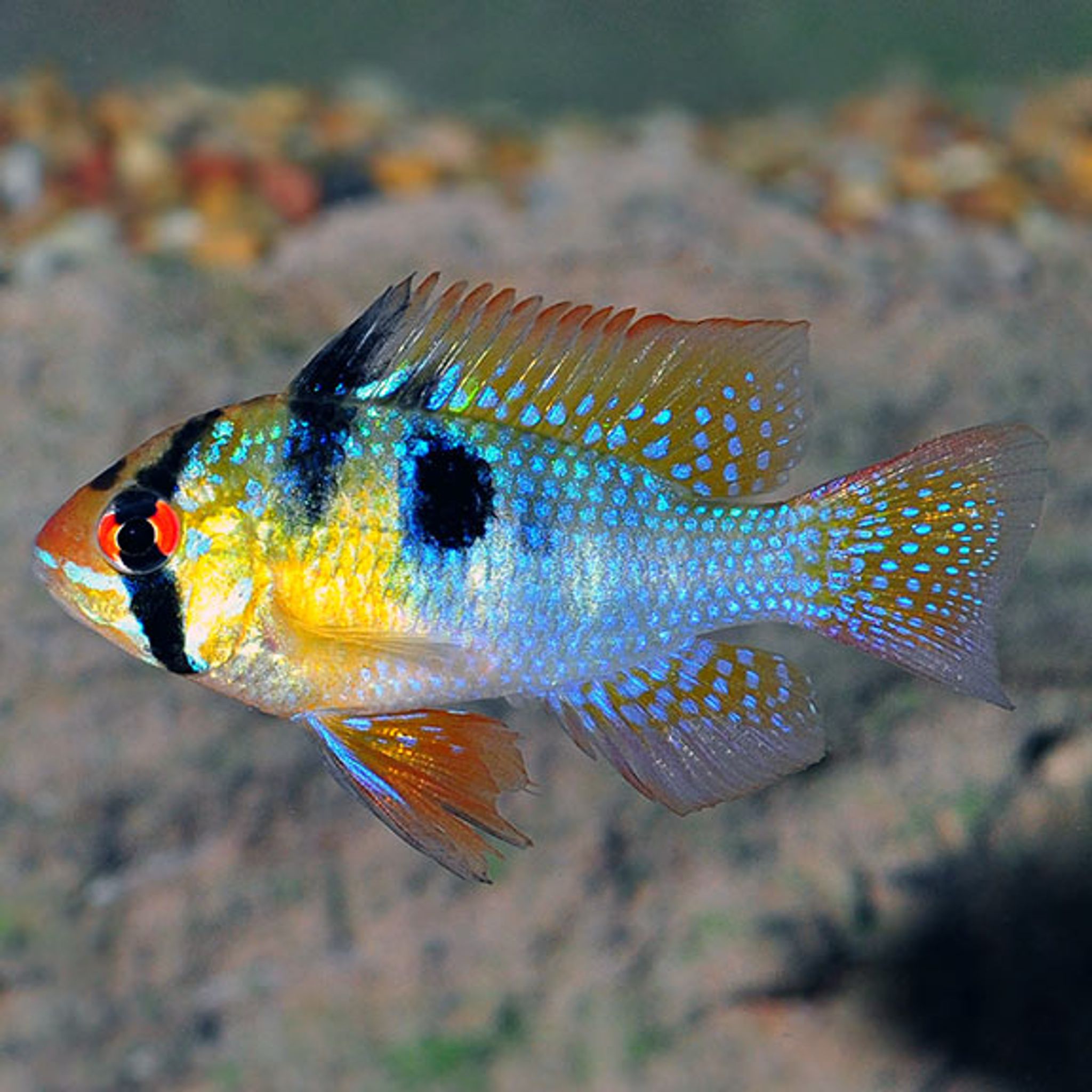

What Do German Blue Ram Eat? A Practical Feeding Guide
German blue rams (Mikrogeophagus ramirezi) need a varied, protein-heavy diet built around small frozen and live foods, supplemented with a quality micro-pellet — not a single staple food. This guide covers exactly what to feed, how much, how often, and how to troubleshoot the appetite problems that are common with this notoriously sensitive cichlid.
What German Blue Rams Eat in the Wild
In their native blackwater streams of the Orinoco basin, German blue rams are opportunistic micro-predators. They spend most of the day picking through substrate and leaf litter for:
- Small invertebrates and insect larvae
- Worms
- Tiny crustaceans
- Incidental plant matter and algae/biofilm
They are not strict carnivores, but their natural diet skews heavily toward protein. That biology is the reason a pellet-only or flake-only diet in captivity tends to leave them dull-colored and less vigorous over time — it doesn't match what they evolved to eat.
Building a Captive Diet: Rotate, Don't Rely on One Food
The single most important rule for feeding rams is variety. A good rotation includes:
- A small cichlid pellet or micro-pellet sized for their small mouths, as a base food
- Frozen or live bloodworms
- Brine shrimp (Artemia)
- Daphnia
- Mysis shrimp
- Cyclops
- Tubifex or blackworms, used sparingly and only from a reputable frozen or cultured source
Sources disagree on exactly how tubifex worms should be handled — some recommend them as an excellent protein source, while others warn that wild-collected batches carry a real risk of parasites or bacterial contamination. The practical middle ground: use commercially frozen or cultured tubifex/blackworms only, and skip live worms collected from unknown water.
High-quality flake can be offered occasionally as a supplement, but it shouldn't anchor the diet. Rams are slow, small-mouthed eaters that get outcompeted at the surface by faster tankmates, and flake that sits on top of the water does them little good if they can't reach it in time.
How Much Live/Frozen Food Should Breeding Pairs Get?
Live and frozen foods boost color, vigor, and breeding condition more reliably than dry foods. Estimates for how much of a breeding pair's diet should be live/frozen vary — figures anywhere from roughly 50% to 80% show up across different sources. Rather than chasing an exact number, treat it as a range: lean heavily toward live/frozen (majority of feedings) specifically during breeding conditioning, and relax toward a more balanced pellet/frozen mix for non-breeding adults.
Feeding Frequency and Portion Sizes
- Adults: 2–3 small meals per day. Two feedings a day is a perfectly acceptable minimum, especially if you can't reliably check on a midday feeding — overfeeding is a bigger risk for this species than underfeeding.
- Portion size: offer only what the fish clear in about 2–5 minutes. For a pair or small group, that's typically a small pinch of pellets or a pea-sized thawed portion of frozen food per feeding — adjust down rather than up if food is left over.
- Fasting day: skip feeding one day per week. This supports digestion and helps prevent bloat, which is one of the most common health issues tied to overfeeding.
Juveniles are the exception: growing rams benefit from more frequent, protein-rich feedings than adults on maintenance feeding, since they're putting on tissue and need the extra fuel.
| Life stage | Feeding frequency | Food emphasis |
|---|---|---|
| Fry (first days) | Multiple times daily | Infusoria / pond microorganisms |
| Fry (growing) | 3–4 times daily | Baby brine shrimp, microworms, vinegar eels |
| Juveniles | 2–3 times daily | Protein-rich frozen foods, crushed pellet |
| Adults (maintenance) | 2–3 times daily | Rotated pellet + frozen/live |
| Breeding pairs (conditioning) | 2–3 times daily | Majority live/frozen |
Why Overfeeding Is the Costliest Mistake With This Species
German blue rams are less tolerant of ammonia and nitrite than many other cichlids, so the consequences of overfeeding are outsized compared to hardier fish. Leftover food breaks down quickly and pushes water quality in the wrong direction fast, which for a ram can mean a stalled appetite or outright illness within a day or two.
Practical safeguards:
- Remove uneaten food within a few minutes of feeding.
- Watch the substrate — rams feed low in the tank, and frozen or live food scraps are easy to miss during cleanup, especially in a planted tank.
- Err toward smaller portions rather than larger ones; a fasting day each week is not optional if you want to avoid bloat and fatty deposits.
Feeding Shy or Subordinate Rams in a Community Tank
Rams are bottom- and mid-water dwellers, and in a mixed tank they often lose out to faster, more surface-oriented fish before they get a fair share. "The tank gets fed" doesn't mean every ram gets fed — a subordinate or shy individual can end up chronically thin even in a well-fed aquarium.
Two fixes:
- Use sinking pellets rather than food that floats and gets grabbed at the surface.
- Target-feed with a turkey baster or feeding tube, releasing food directly near a shy ram's hiding spot so it doesn't have to compete in open water.
Gut-Loading and Supplements
Soaking food in a vitamin supplement or a small amount of garlic-based additive before feeding can help stimulate appetite and support immune resistance. This is particularly useful for wild-caught or recently stressed rams that are slow to start eating normally. Products for this kind of supplementation and small frozen/prepared foods are worth browsing in the Food & Supplements category.
Wild-Caught vs. Tank-Bred Rams
- Wild-caught rams tend to be pickier eaters and often refuse prepared foods entirely at first. Live foods — baby brine shrimp, daphnia — are usually necessary to get them started, with a gradual transition to frozen and pellet foods over 1–2 weeks.
- Tank-bred / domestic strains (including electric blue, gold, and balloon rams) generally adapt to pellets and frozen food much more readily, since they've been raised on those foods from an early age.
Selectively bred color strains can also differ somewhat in vigor and feeding response compared to wild-type rams, so it's worth watching a new strain's feeding behavior for the first few weeks rather than assuming it will behave identically to a wild-type fish.
Feeding Ram Fry
Newly hatched ram fry can't take standard foods. The sequence is:
- First few days: infusoria or the microorganisms naturally present in aged pond or tank water.
- As they grow: baby brine shrimp nauplii, microworms, or vinegar eels.
A densely planted tank with a light film of algae naturally supplies infusoria, which reduces how much you need to culture separately in the early days.
Water Parameters and Appetite: The Missing Link
This is where most "my ram won't eat" troubleshooting goes wrong. German blue rams come from soft, warm, acidic blackwater, and their appetite is tightly linked to being kept in that range:
- Temperature: 78–85°F (26–29°C)
- pH: 5.5–7.0, with soft, slightly acidic to neutral water preferred
- Hardness: soft to moderate, roughly 2–12 dGH
Rams kept outside this range often show reduced appetite, stress coloration, or outright illness before the diet itself is even a factor. When a ram stops eating, the instinct is usually to change the food — but a temperature drop, an ammonia or nitrite spike, or a pH crash is the more common actual cause. Test water parameters first, before assuming the fish is simply being fussy about its menu.
If you're setting up or restocking a ram tank, browsing options in Angelfish, Discus, Rams & Cichlids is a good way to compare tank-bred and color-strain rams before deciding which will adapt most easily to your setup.
How to Safely Lower Aquarium pH for Rams
Getting water into the 5.5–7.0 range should be done gradually and with natural methods, not shortcuts:
- Driftwood releases tannins that soften and acidify water over time.
- Indian almond leaves and peat moss or peat pellets in the filter provide similar natural buffering.
- Blackwater extracts designed for aquarium use can supplement these methods.
- For larger or more persistent adjustments, blend reverse-osmosis (RO) water with tap water rather than relying on tap water alone.
Avoid chemical "pH down" products as a long-term fix. They tend to cause pH swings once they wear off between dosings, and a swinging pH is more dangerous to a ram than a stable pH that's slightly higher than ideal. Change pH gradually — no more than about 0.2–0.3 per day — and monitor with a reliable test kit. A fast or unstable pH swing is enough to suppress appetite or trigger illness in this species.
Common Feeding Mistakes to Avoid
- Overfeeding — the single most common mistake, leading to bloat, fatty deposits, and ammonia spikes.
- Flake/pellet only, no variety — leads to dull color and low vigor over months.
- Ignoring subordinate fish — a shy ram can go underfed even in a tank that "gets fed" regularly.
- Blaming the food when water quality is the real issue — always test temperature, ammonia, nitrite, and pH before switching diets.
- Using unrinsed, wild-collected live foods — a common route for introducing parasites or bacterial infections.
- Giving up too fast on wild-caught rams — patience with live foods like baby brine shrimp and daphnia usually gets them transitioning within 1–2 weeks.
- Letting uneaten frozen or live food decay in the substrate — rams feed low in the tank, so scraps are easy to miss during cleanup.
Frequently Asked Questions
Can German blue rams eat flake food?
Yes, flake can be offered as an occasional supplement, but it shouldn't be the main diet. Rams do best with a rotation of frozen and live protein foods plus a quality small pellet, since flake alone doesn't match their natural feeding style or nutritional needs.
How often should I feed my German blue ram?
Feed 2–3 small meals a day, giving only what they can finish in a few minutes. Include one fasting day per week to support digestion and reduce the risk of bloat.
Do German blue rams need live food?
It's not strictly required for a healthy, established adult, but it's strongly recommended for breeding conditioning and for picky or wild-caught individuals. Live and frozen foods also noticeably improve color and vigor compared to a dry-food-only diet.
What do baby German blue rams (fry) eat?
Fry start on infusoria or the natural microorganisms in aged pond or tank water for the first few days. As they grow, they move on to baby brine shrimp nauplii, microworms, or vinegar eels.
Why is my ram not eating?
It's usually a water-quality or temperature issue rather than a problem with the food. Check ammonia, nitrite, temperature, and pH before assuming the fish is simply refusing its diet.
Can I feed German blue rams bloodworms every day?
Occasional bloodworms are fine, but relying on them exclusively can be too rich or fatty over the long term. Rotate bloodworms with brine shrimp, daphnia, and a quality pellet to keep the diet balanced.
Do German blue rams eat algae or plants?
They'll graze incidentally on biofilm and algae and may occasionally nip at soft plants, but they are not effective algae eaters. Don't rely on rams for algae control in a planted or community tank.
What's the ideal pH for keeping and feeding German blue rams, and how do I get there safely?
Aim for soft, slightly acidic water in the roughly 5.5–7.0 pH range. Reach it gradually using driftwood, peat, Indian almond leaves, or RO-blended water rather than chemical pH-adjusting products, which can cause destabilizing swings.
Ready to put together a feeding routine for your own setup? You can compare small frozen foods, freeze-dried options, and other feeding supplies in FishyHub's Food & Supplements category.


