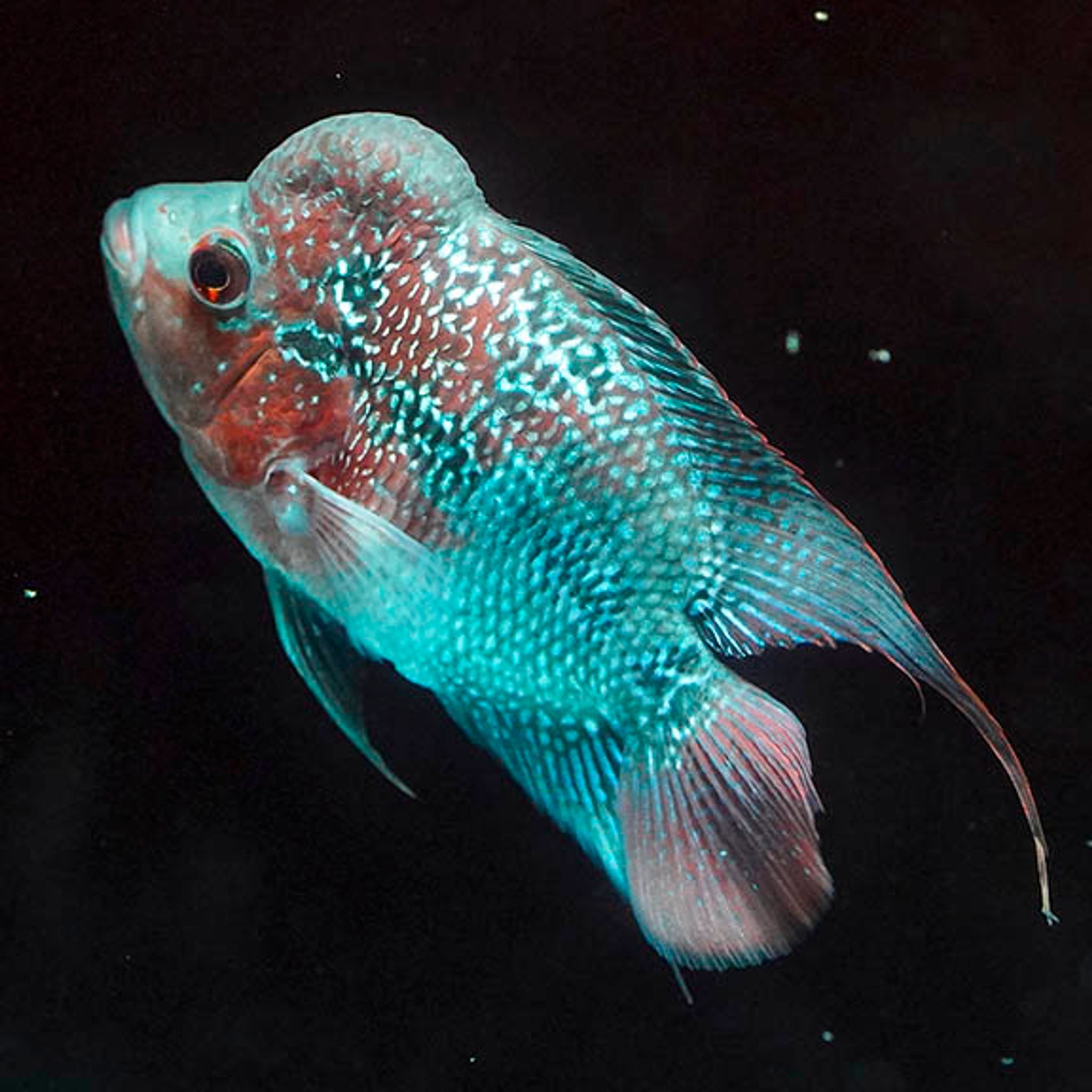

What Do Flowerhorn Eat? A Practical Feeding Guide
Flowerhorns are aggressive omnivores with appetites that catch most new owners off guard. This guide breaks down exactly what to feed one, how much, how often, and how to rotate foods so growth, color, and water quality all stay on track.
The Basic Diet: What Goes in the Bowl
A flowerhorn's diet should never be a single food type. These fish need a mix of protein and plant matter to grow properly, hold their color, and avoid digestive problems.
A practical rule of thumb is a roughly 60–70% protein-rich foods to 30–40% plant/fiber-based foods split. Some keepers prefer a looser framing — a quality pellet as the daily base, with protein-rich and vegetable foods rotated in around it, rather than weighing out an exact ratio. Both approaches work; treat the 70/30 split as a shopping and planning guideline, not a rule to measure precisely at every meal.
Protein Sources
- High-protein floating or sinking cichlid pellets — check the label for whole fish, shrimp, or krill listed as the first ingredients rather than generic "fish meal"
- Live or frozen bloodworms
- Brine shrimp and mysis shrimp
- Earthworms
- Crickets and grasshoppers
- Small crawfish or prawns
- Black soldier fly larvae
Look for a staple pellet with roughly 40–45% crude protein to support growth and energy. Adult fish that are no longer growing quickly can do fine on a slightly lower protein maintenance formula, but juveniles benefit from staying at the higher end of that range.
Plant and Fiber Sources
- Spirulina flakes or pellets
- Algae wafers
- Blanched spinach
- Blanched peas (shelled)
- Other prepackaged vegetable-based foods
These aren't filler. Fiber and plant matter support digestion and help prevent bloating and constipation, which are common problems in fish fed an all-protein diet. You can browse a range of pellets, frozen protein, and freeze-dried options in FishyHub's Food & Supplements category, including freeze-dried food as a shelf-stable alternative to frozen protein.
Boosting Color Without Changing the Kok
Color-enhancing ingredients work by intensifying pigment the fish already has — they don't create new color or affect the size of the kok (the nuchal hump on the forehead).
- Spirulina intensifies blues and greens.
- Shrimp, krill, and marigold-derived carotenoids (astaxanthin) intensify reds, oranges, and yellows.
The kok itself is largely genetic and hormone-driven. Good nutrition and stable water conditions help a flowerhorn reach its full genetic potential, but no food will grow a bigger hump than the fish's genetics allow.
How Often and How Much to Feed
Feeding Frequency by Life Stage
Sources vary here. Some recommend three feedings a day across the board; others say twice a day (morning and evening) is enough for adults, with three feedings reserved for juveniles that are actively growing. A sensible middle ground:
| Life Stage | Approx. Size | Feedings/Day | Notes |
|---|---|---|---|
| Juvenile | Under 4–5 in (10–13 cm) | 3x/day | Small, frequent meals fuel rapid growth |
| Sub-adult | 5–10 in (13–25 cm) | 2–3x/day | Begin tapering frequency as growth slows |
| Adult | 10–16 in (25–41 cm) | 2x/day | Larger portions, less often |
Whatever the schedule, the same portion rule applies at every stage.
The Portion Rule
Feed only what your flowerhorn can finish in about 2–5 minutes. If food is still lingering in the tank after a minute or two, you fed too much — reduce the next portion. As a rough starting point for pellets:
| Fish Size | Approx. Portion per Feeding |
|---|---|
| 2–4 in (5–10 cm) | 4–6 small pellets |
| 4–8 in (10–20 cm) | A small pinch (8–12 pellets) |
| 8–12 in (20–30 cm) | A generous pinch, or 1 cube of frozen food |
| 12–16 in (30–41 cm) | 1–2 cubes of frozen food or an equivalent pellet portion |
Adjust from there based on how quickly the fish clears the food. Because adults commonly reach 10–16 inches, it's easy to badly overestimate how much they actually need — a fish that size will eat far more than is healthy if you let it.
Weekly Fasting
Skip feeding entirely one day per week. This gives the digestive system a rest and reduces the risk of bloat and constipation, which are common in fish fed heavy protein loads every single day.
A Sample Weekly Rotation
A simple chart makes rotation easy to follow without overthinking each meal:
| Day | Morning | Evening |
|---|---|---|
| Monday | Staple pellet | Bloodworms or brine shrimp |
| Tuesday | Staple pellet | Blanched pea or spinach |
| Wednesday | Shrimp/krill-based food | Staple pellet |
| Thursday | Staple pellet | Algae wafer or spirulina pellet |
| Friday | Earthworm or cricket | Staple pellet |
| Saturday | Staple pellet | Frozen mysis shrimp |
| Sunday | Fast day — no feeding |
Adjust proportions and swap in whatever proteins and veggies you have on hand — the point is rotation, not this exact sequence.
Feeder Fish: Skip Them
Live feeder fish are best avoided. They carry a real risk of introducing parasites and disease, and a sick flowerhorn can refuse food or develop internal infections as a result. Frozen or freeze-dried invertebrates and worms from a reliable source give you the live-food benefit without that risk.
If you do offer live invertebrates like crickets or worms, gut-loading them — feeding them nutritious food for a day beforehand — passes more nutritional value on to your fish.
Feeding and Water Quality Go Together
Flowerhorns are messy eaters with a heavy bioload, and feeding schedule and tank maintenance are directly linked:
- Tank size: commonly cited minimums are around 70+ gallons (265+ L) for a single adult and 125–150+ gallons (475–570+ L) for a pair.
- Filtration: strong mechanical and biological filtration is necessary to keep up with waste from a high-protein diet. Browse filters sized for larger, messier setups.
- Water changes: weekly, or twice weekly in heavily stocked or overfed tanks, to keep ammonia and nitrite in check.
- Cleanup: remove uneaten food promptly after every feeding — leftover protein-rich food fouls water fast in a tank this size.
Common Mistakes
- Overfeeding. The single biggest issue. Flowerhorns will eat well past what they need, leading to bloating, poor water quality, and ammonia spikes. Stick to the portion/time rule and the weekly fast.
- Feeding only one food type. Relying solely on pellets, or worse, only feeder fish, causes nutritional gaps and duller color. Rotate at least 2–3 food types weekly.
- Using feeder fish. As covered above, the disease risk isn't worth it.
- Not removing leftovers. Uneaten food fouls water quickly given how much these fish produce; pair every feeding with solid mechanical filtration.
- Expecting food to change kok size. Nutrition supports overall health, but hump size is genetic and hormonal, not diet-driven.
Frequently Asked Questions
How many times a day should I feed my flowerhorn?
Two to three times a day, portioned so the fish finishes eating within a few minutes. Juveniles do better with three smaller feedings to support growth, while full-grown adults can typically manage on two.
What is the best staple food for flowerhorns?
A high-protein cichlid pellet, ideally 40–45% crude protein, with whole fish or shrimp listed as leading ingredients rather than generic fish meal. Supplement it with live or frozen protein and vegetable matter throughout the week.
Can flowerhorns eat feeder fish?
It's not recommended. Feeder fish carry a meaningful risk of parasites and disease that can lead to internal infections or a fish that stops eating. Frozen or freeze-dried invertebrates are a safer way to offer similar variety.
How do I make my flowerhorn's colors brighter?
Rotate in spirulina for blues and greens, and shrimp, krill, or marigold-based foods containing astaxanthin for reds, oranges, and yellows. Consistent water quality and appropriate lighting also play a role in how vivid the colors appear.
Does diet affect the kok (head hump) size?
Not directly. The hump is mainly genetic and hormone-driven, and good nutrition simply supports the fish in reaching whatever potential its genetics allow — it won't grow a hump on a fish that isn't predisposed to a large one.
Why is my flowerhorn not eating?
Check water quality first — ammonia, nitrite, and temperature (flowerhorns generally do best in the mid-70s to low-80s°F) are common culprits, along with stress or illness. Food monotony can also cause a fish to go off its usual pellet, so try rotating in a different protein before assuming it's simply being picky.
Should I fast my flowerhorn?
Yes. Skipping feeding one day per week is a commonly recommended practice that supports digestion and helps prevent bloat and constipation.
Ready to put this together? You can browse cichlid pellets, frozen and freeze-dried proteins, and vegetable-based foods on FishyHub's Flowerhorn and Food & Supplements pages to build out a rotation that fits your tank.


