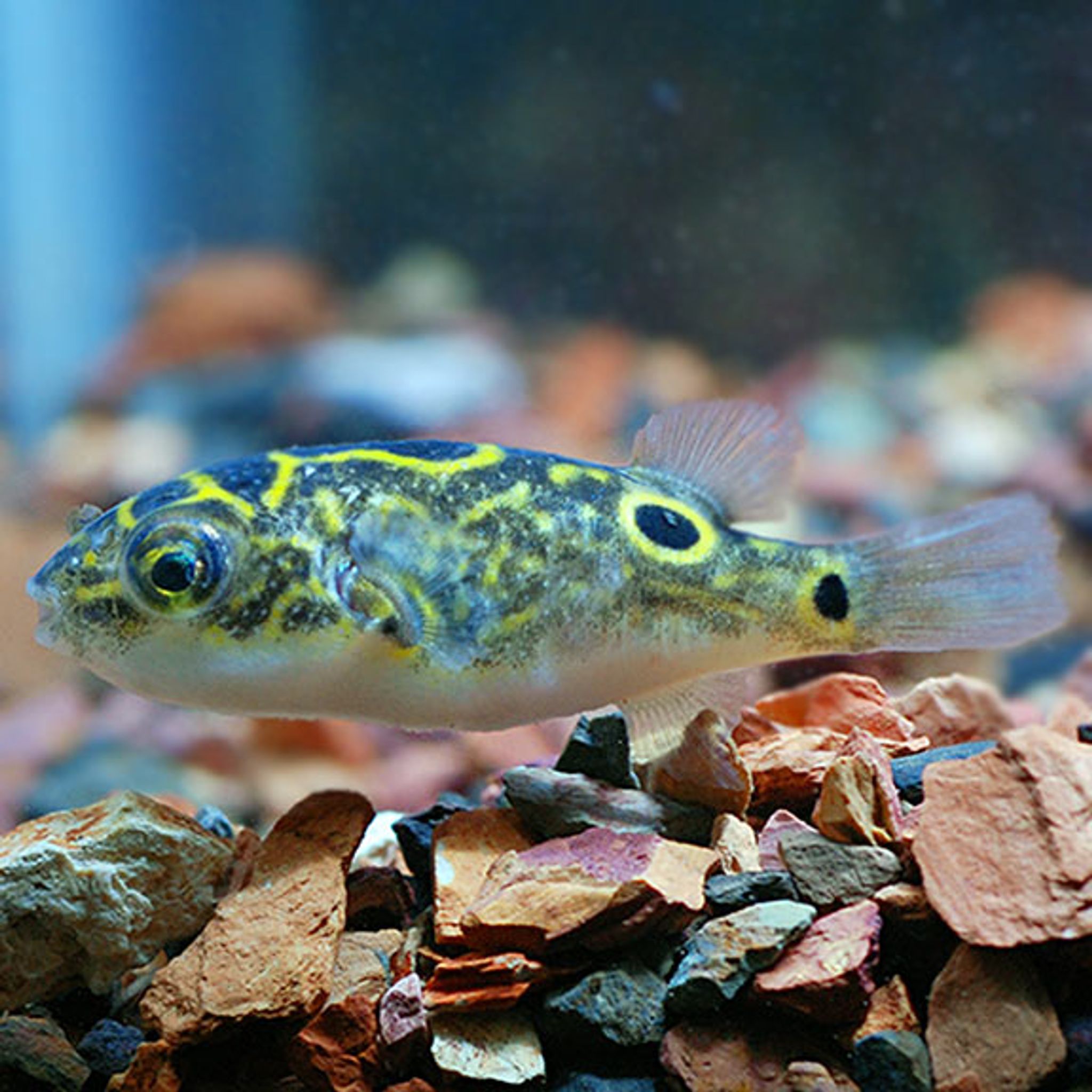
What Do Figure 8 Puffer Eat? A Practical Feeding Guide
A Figure 8 puffer eats meaty, shelled foods — snails, shrimp, mussels, and similar hard-bodied prey — not flakes or pellets. Getting this right matters more than with most fish, because the wrong diet leads directly to two of the species' most common health failures: an overgrown beak and obesity-driven organ stress. This guide lays out exactly what to feed, how often, and how to build it into a routine.
Species Snapshot: Why Diet Matters So Much Here
The Figure 8 puffer (Dichotomyctere biocellatus, sometimes listed as Tetraodon biocellatus) is a small fish, typically 2.5–3 inches (6–8 cm) at maturity. It comes from slow-moving rivers and estuaries in Southeast Asia, which means it evolved in low-end brackish water, not pure freshwater. Many US retailers sell it in freshwater display tanks, which leads new keepers to assume it's a permanent freshwater species — it isn't, and that mistake compounds feeding problems down the line (more on this below).
Feeding this species correctly is inseparable from two biological facts:
- It is an obligate carnivore and molluscivore (a durophage — an animal built to crush hard-shelled prey).
- It has a permanently growing beak that requires hard food to stay a manageable length.
Get the diet wrong and you're not just risking a bland fish — you're risking a fish that eventually can't eat at all.
What Do Figure 8 Puffers Eat? The Core Food List
Figure 8 puffers should get a rotating mix of shelled and soft-bodied meaty foods — never a single staple item. Rotating foods also reduces the risk of nutritional gaps and keeps the fish interested at feeding time, since these puffers are known for recognizing their keeper and showing enthusiasm ("begging") when fed.
Good staple and rotation foods:
- Snails — ramshorn, Malaysian trumpet, and pond snails (live, ideally home-cultured)
- Shrimp, shell-on (not peeled)
- Mussels, clams, and cockles
- Krill
- Crab, with claws removed if fed live
- Bloodworms (frozen or live)
- Blackworms
- Crayfish tail
- Mysis shrimp
- Small pieces of white fish or tilapia (occasional treat, not a staple)
Shell-on items are doing double duty: nutrition plus tooth wear. A snail is more valuable to a Figure 8 puffer than an equivalent amount of soft bloodworm, because it exercises the beak the way soft food never can.
Foods to Avoid or Limit
- Dry flakes and pellets — nutritionally inadequate for this species, and most Figure 8s ignore them outright.
- Feeder fish from generic feeder tanks — a real disease and parasite risk, and poor nutrition even when healthy.
- Fatty fish or excess bloodworms as a daily staple — calorie-dense and linked to obesity and fatty liver over time.
- Shelled-mammal meat (beef heart and similar) — far too rich and not part of a natural diet.
If you're sourcing frozen convenience foods, browsing a dedicated food and supplements selection makes it easier to rotate between bloodworms, mysis, and other frozen items without overcommitting to one type.
The Beak: Why Hard Food Isn't Optional
Figure 8 puffers don't have individual teeth in the usual sense. They have four fused tooth plates that form a continuously growing beak, similar in concept to a rodent's incisors. In the wild, crushing snail shells and crustacean exoskeletons wears the beak down at roughly the same rate it grows.
In captivity, a diet of only soft foods (bloodworms, fish fillet, thawed shrimp meat) removes that wear mechanism. The beak keeps growing unchecked, eventually overgrowing or crossing so the fish can't close its mouth properly. At that point, food falls out during attempted bites, intake drops, and the fish can slowly starve even with food available.
What to watch for:
| Sign | Normal beak | Overgrown beak |
|---|---|---|
| Length | Short, even, barely visible past the lip | Visibly protruding, often uneven |
| Mouth closure | Closes fully and cleanly | Gaps, or mouth can't fully close |
| Feeding behavior | Grabs and crushes food efficiently | Drops food, chews repeatedly without success |
| Body condition | Lean, rounded but not swollen | Often thinning despite attempts to eat |
The fix is prevention: include a hard-shelled item in most feedings, roughly 4–6 times a week, rather than treating snails as an occasional bonus. If a beak has already overgrown to the point of interfering with eating, this is a job for an exotic or fish-experienced veterinarian who can trim it — not a DIY fix.
How Often and How Much to Feed
Feeding frequency should scale with life stage, and portion size should always be judged by how quickly the food disappears, not by a fixed schedule:
- Juveniles: 2–3 small feedings per day, each cleared within a couple of minutes.
- Adults: once daily to once every other day.
- Portion rule of thumb: offer only what the fish visibly consumes in 2–3 minutes. If food is still sitting there after that window, you've overfed — remove it immediately.
A simple gut-check for new keepers: a single piece of food shouldn't be dramatically larger than the puffer's own eye-to-gill-cover distance. When in doubt, offer a smaller piece and add a second piece if the fish clearly wants more, rather than starting large.
Because these fish eat a high-protein, meaty diet and are messy eaters, leftover food fouls water fast. Uneaten scraps should be siphoned out promptly rather than left for the fish to "finish later." Watch ammonia and nitrite after feeding sessions, especially in smaller tanks.
A Sample Weekly Rotation
This is a template, not a rulebook — adjust proportions to what's available, but keep the hard-food frequency high.
| Day | Feeding |
|---|---|
| Monday | Ramshorn or pond snails |
| Tuesday | Shell-on shrimp, small pieces |
| Wednesday | Frozen bloodworms |
| Thursday | Snails or crayfish tail |
| Friday | Mussel or clam meat (in shell fragments if possible) |
| Saturday | Mysis shrimp or krill |
| Sunday | Snails (fasting is also fine for adults) |
Note how snails or another shelled item appear on at least four of the seven days — that's the density needed to keep the beak worn down, not an occasional afterthought.
Building a Home Snail Culture
Since snails are the backbone of a healthy diet, many keepers set up a dedicated snail-breeding bin rather than buying them item by item. A simple setup: a spare container or small tank with a handful of ramshorn or pond snails, some java moss or floating plants, and vegetable scraps (blanched zucchini or spinach) for the snails to eat. Left alone, ramshorn and pond snails reproduce quickly, and a modest bin can supply a steady weekly harvest for a single puffer without extra cost.
Before feeding snails or shrimp sourced from another tank, give them a quick rinse and a brief quarantine period where practical. This lowers the risk of introducing parasites or pathogens that may be riding along on live feeder invertebrates.
Feeding Depends on Correct Habitat: The Brackish Connection
Diet and water chemistry aren't separate topics for this species — a Figure 8 puffer kept in the wrong water will eat poorly, get sick more often, and won't respond to even a perfect diet. This is a low-end brackish species, not a freshwater one, despite often being sold in freshwater setups.
Target parameters:
- Specific gravity: roughly 1.005–1.010, kept toward the lower end for younger fish and raised gradually as the fish matures (some sources trend it slightly lower for juveniles and closer to 1.010 for adults)
- pH: 7.5–8.0
- Temperature: 74–80°F (23–27°C), with 78°F often cited as ideal
- Substrate: aragonite or crushed coral, which helps buffer pH upward
Keepers who leave a Figure 8 puffer in straight freshwater long-term tend to see weaker immune response and shorter lifespans — problems that show up as poor appetite, increased disease susceptibility, and generally more fragile feeding response. A properly maintained brackish setup, by contrast, supports a strong appetite and can produce individuals that live well past 15 years.
For anyone transitioning a freshwater-sold juvenile into brackish conditions, raise specific gravity slowly over several weeks rather than all at once, and watch appetite closely during the process — a sudden drop in interest at feeding time is an early sign the fish needs the salinity change slowed down.
Tank Basics That Affect Feeding Success
- Minimum tank size: 20–30 gallons (76–114 L) per single puffer.
- Filtration: strong biological filtration and consistent water changes are non-negotiable given the high protein bioload from a meaty diet.
- Sourcing salt: use a marine-grade, non-iodized aquarium salt mix rather than table salt, and measure specific gravity with a hydrometer or refractometer rather than guessing. A water conditioning and additive range covers the salt mixes and buffers needed to hold these parameters steady.
Figure 8 puffers are also semi-aggressive and territorial. They're best kept alone or in a species-only setup — in mixed tanks, competition over food is a common trigger for fin-nipping, which is one more reason to feed on a predictable schedule rather than letting multiple fish compete on demand.
How Figure 8s Compare to the Mbu Puffer
The same "hard food prevents beak overgrowth" principle isn't unique to Figure 8 puffers. The Mbu puffer, a much larger true freshwater species from Africa, is also an obligate molluscivore and needs shelled food roughly five times a week for the same dental reason. The difference is scale and habitat: Mbu puffers can reach up to 2 feet (60 cm) and live in true freshwater, so a Mbu care sheet is not a substitute for Figure 8 husbandry — but it's a useful confirmation that this feeding principle holds across the puffer family, not just one species.
Brackish Tanks: An Underrated Niche
Brackish aquariums sit between freshwater and marine, defined by a range of specific gravity rather than one fixed salt level, and modeled loosely on mangrove-estuary habitats. Alongside Figure 8 puffers, they commonly house mollies, bumblebee gobies, archerfish, monos, and scats. Brackish setups remain less common in the hobby than pure freshwater or marine tanks, which is part of their appeal for keepers who want something outside the standard community-tank formula — but it also means these species need targeted, species-specific care rather than generic advice, and feeding is where that shows up first.
Common Feeding Mistakes to Avoid
- Relying on flakes or pellets as a staple — nutritionally inappropriate, and most Figure 8s won't eat them.
- Never offering hard, shelled food — the single biggest cause of beak overgrowth.
- Overfeeding bloodworms or other fatty foods — drives obesity and fatty liver over time.
- Keeping the fish in permanent freshwater "because it was sold that way" — weakens immunity and shortens lifespan.
- General overfeeding — leftover meaty food crashes water quality quickly; feed small amounts and remove anything uneaten.
- Using untreated feeder fish — unnecessary disease and parasite risk.
- Mistaking begging for hunger — these puffers beg readily and will overeat given the chance; stick to portion size and schedule, not on-demand feeding.
Frequently Asked Questions
Do Figure 8 puffers need saltwater?
No. They need low-end brackish water — a specific gravity of roughly 1.005–1.010 — which is well below full marine salinity and different from the plain freshwater they're often sold in.
Will Figure 8 puffers eat flakes or pellets?
Generally no. They're built to hunt and crush whole or meaty prey, and most individuals ignore dry flake or pellet food entirely.
How often should you feed a Figure 8 puffer?
Juveniles do best with 2–3 small feedings a day, while adults can go to once daily or every other day. In both cases, portion by what's cleared in a couple of minutes rather than a fixed amount.
What happens if a puffer's teeth get too long?
The beak can overgrow or cross, preventing the mouth from closing properly and causing food to fall out during feeding attempts. Left unaddressed, this leads to reduced food intake and eventually starvation; an aquatic vet can trim an overgrown beak if it reaches this point.
Can Figure 8 puffers eat feeder fish?
It's best to avoid them due to disease and parasite risks along with generally poor nutrition. If feeders are used at all, they should be quarantined and offered only occasionally, not as a staple.
Can you breed your own food for a Figure 8 puffer?
Yes. A simple ramshorn or pond snail culture — a small bin with vegetable scraps and some plant cover — is a common, low-cost way to keep a continuous supply of hard food on hand.
Are Figure 8 puffers aggressive toward tank mates over food?
They're semi-aggressive and territorial, and are best kept alone or in a species-only tank. Competing for food in a mixed setup can trigger fin-nipping.
How long do Figure 8 puffers live with proper diet and brackish care?
With a correctly rotated diet and stable brackish conditions, well-cared-for individuals commonly live well over a decade, with some documented cases exceeding 15 years.
Ready to build out a feeding rotation? You can source shell-on shrimp and other live and frozen foods to keep your Figure 8 puffer's diet varied and its beak in good shape.


