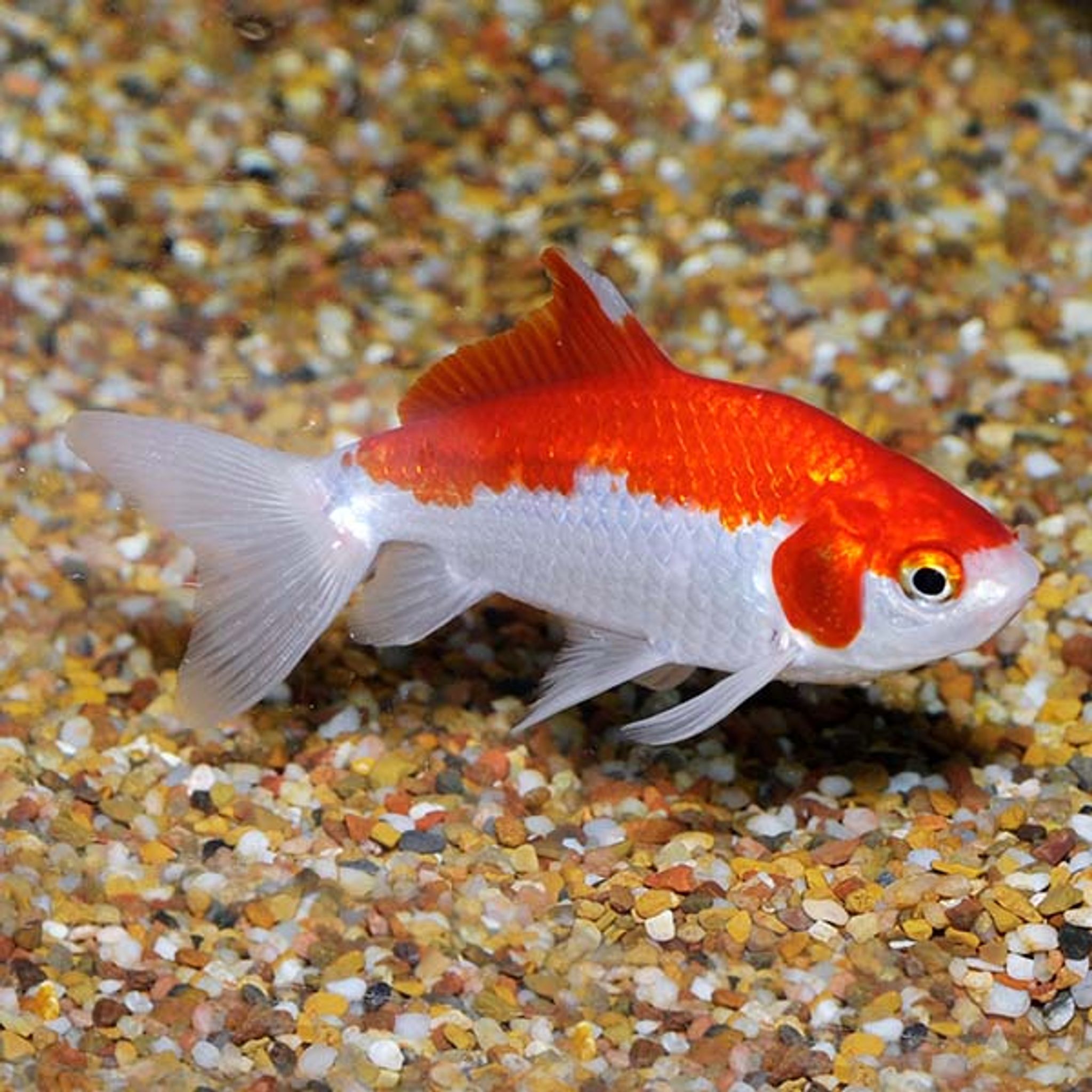

What Do Fancy Goldfish Eat? A Practical Feeding Guide
Fancy goldfish — orandas, ryukins, fantails, black moors, lionheads and their round-bodied relatives — do best on a sinking, moderate-protein diet fed in small amounts, twice a day, with vegetables a few times a week. Their compact, curved bodies squeeze the swim bladder more than a slender common goldfish's does, so the wrong food or portion size shows up fast as bloating or floating problems. This guide covers exactly what to feed, how much, and how to build a feeding routine that keeps a fancy variety's digestion and buoyancy in good shape.
The core diet: sinking pellets or gel food
Fancy goldfish are omnivores, and a varied diet consistently outperforms feeding one product forever. The daily staple should be a high-quality sinking pellet or gel food formulated specifically for goldfish — not a generic tropical fish flake, and not a floating pellet.
That distinction matters more for fancy varieties than for single-tailed comets or commons. A fancy goldfish's downturned mouth and rounded body make surface feeding awkward, and chasing food at the surface means gulping air along with it. That swallowed air is one of the more common contributors to buoyancy trouble in round-bodied breeds. Sinking food lets the fish feed in its natural head-down posture without the extra air intake.
Gel food is worth considering as an alternative staple, not just a treat:
- It holds together in the water instead of dissolving into cloudy debris, so it fouls the water less than pellets.
- It's easier to eat for fancies with mouth or eye deformities — bubble-eye and celestial-eye types in particular — since it doesn't need to be chased or crunched.
- It's naturally moist, so there's no dry-pellet expansion to worry about after swallowing.
When picking a dry pellet, read the label rather than the marketing copy. Goldfish-appropriate formulas generally run moderate protein (roughly 30–35%), higher fiber, and lower fat than food made for koi or cichlids. High-protein, high-fat pellets aimed at faster-growing or carnivorous species can contribute to fatty deposits that press on the swim bladder over time — a known issue in compact-bodied strains like orandas and ranchu. You can browse goldfish-specific staples and gel options in FishyHub's Food & Supplements category.
Why soak dry pellets first
Dry pellets absorb water and expand — that's expected in a bowl, but it's a problem if most of the expansion happens after the fish has already swallowed the pellet. Soaking pellets in a small cup of tank water for a few minutes before feeding lets them reach their full size beforehand, which reduces the internal gas and bloating that's been linked to swim bladder disorder in fancy goldfish.
Vegetables: the fiber fancy goldfish need
Vegetables aren't optional extras — they supply fiber that keeps digestion moving and helps prevent constipation, which is one of the most common health issues in an all-pellet diet. Offer blanched or soaked vegetables 2–3 times a week:
- Peas — shelled and with the skin removed, lightly boiled or blanched
- Zucchini or cucumber — blanched until slightly soft, sliced thin
- Spinach or lettuce — blanched to soften the leaf
Peas deserve a specific note here. They're widely recommended as a fiber-rich snack that supports digestion, and many hobbyists reach for them when a fish looks bloated. But peas are a supportive food, not a proven cure — they shouldn't replace proper troubleshooting (fasting, checking water quality, adjusting temperature) if a fish is genuinely showing signs of swim bladder disease.
Protein treats: occasional, not daily
Brine shrimp, bloodworms, and daphnia — live, frozen, or freeze-dried — make good treats 1–2 times a week. They're rich in protein and low in fiber, which is exactly why they shouldn't be a staple: fed daily, they push the diet toward the same fat-and-protein imbalance that plain high-protein pellets cause. FishyHub stocks a range of these under Freeze Dried Food.
How much and how often to feed
Portion size
A useful rule of thumb: feed roughly an amount equal in volume to one of the fish's eyes, per feeding. It sounds imprecise, but it keeps portions small and gives you an easy default that scales with the fish. In practice, aim for whatever the fish can finish in about 2 minutes (some hobbyists allow up to 3), then remove anything left uneaten before it fouls the water.
Frequency
Sources disagree here, but the practical middle ground works well for most adult fancy goldfish:
| Life stage / situation | Feedings per day | Notes |
|---|---|---|
| Fry / juveniles | 3–4 | Finely crushed food, small amounts each time |
| Adult, healthy | 2 | Small portions, 2 minutes each, default recommendation |
| Adult, prone to buoyancy issues | 1 | Reduces overfeeding risk; pair with a weekly fast |
| Any adult, once weekly | 0 (fast day) | Skip feeding one day to let the gut clear |
The weekly fast day is worth building into the routine from the start, not just as a fix once problems show up. Skipping a day of food roughly once a week lets the digestive tract empty out and helps prevent the chronic overfeeding and constipation that comes from feeding every single day without a break.
Feeding by water temperature
Goldfish are coldwater fish, and their metabolism slows as the water cools — which means their appetite and ability to digest food both drop off too. Since most fancy goldfish live in indoor tanks with fairly stable temperatures, this mostly matters for anyone keeping fish in an unheated room or transitioning fish outdoors seasonally.
| Water temperature | Feeding guidance |
|---|---|
| 68–75°F (20–24°C) | Normal appetite; standard 2x/day feeding |
| 65–68°F (18–20°C) | Slightly reduced feeding; watch consumption time |
| 55–65°F (13–18°C) | Feed less, less often (every other day); digestion is slow |
| Below 50°F (10°C) | Stop feeding entirely; fish are entering dormancy |
Transitioning a new goldfish to a better diet
Fancy goldfish bought from a store have often been raised on a generic flake diet. Switching abruptly to sinking pellets and vegetables can leave a nervous new fish not eating at all, so ease into it instead:
- Keep the first few feedings similar to what the fish is used to, offered in smaller amounts than before.
- Introduce a small amount of the new sinking pellet or gel food alongside the old food, gradually reducing the old food's share over a week or two.
- Add vegetables once the fish is reliably eating the new staple, starting with just one weekly serving before working up to 2–3.
- Watch feces and appetite through the switch — normal, slightly firm feces and steady interest in food mean the transition is going well.
Big-eyed and vision-impaired varieties need a different approach
Telescope eyes, celestial eyes, and bubble-eye goldfish have significantly reduced or effectively absent eyesight, along with slower reaction times when locating food. Standard feeding advice doesn't fully apply to them:
- Use slow-sinking pellets or gel food placed directly near the fish rather than scattered across the tank.
- Avoid housing them with fast, sharp-eyed tank mates that will out-compete them for every piece of food before they find it.
- Watch more closely for food that these fish miss entirely — it sinks unnoticed, sits on the substrate, and fouls the water if nobody catches it.
Feeding a mixed group of fancy varieties with different eyesight and mobility is one of the more overlooked causes of both underfeeding and overfeeding in the same tank: the fast fish get too much, the slow ones get too little.
Common feeding mistakes
- Overfeeding or feeding too often — the single most common goldfish-keeping mistake, and the main driver of ammonia and nitrite spikes from decaying leftover food.
- Feeding only flakes or floating food to fancy varieties, worsening air-gulping and buoyancy problems.
- Never fasting, which lets digestive buildup and constipation become chronic.
- Feeding dry pellets straight from the container without soaking them first.
- Using high-fat, high-protein food made for koi or cichlids as a daily staple.
- Ignoring reduced appetite in cold water and continuing full portions anyway.
- Not accounting for tank-mate competition, leaving vision-impaired or slow fish underfed while faster fish are overfed.
- Assuming illness when a fish floats or sinks abnormally, when a fast-plus-peas protocol for diet-related gas often resolves it first.
Swim bladder disorder, constipation, and diet
Swim bladder disorder is common in rounded fancy breeds because their compressed internal organs and curved body plan leave less room for the swim bladder to function normally. Diet is one of the biggest preventable factors: overfeeding, dry pellets swallowed unsoaked, and a lack of fiber all contribute to the gas and bloating that trigger it.
Constipation and indigestion show up as stringy or trailing feces, visible bloating, lethargy, reduced appetite, or floating and sinking abnormally. The standard response is:
- Fast the fish for 24–72 hours.
- Reintroduce food gradually with skinned, blanched peas.
- Build ongoing fiber into the regular diet so the problem doesn't recur.
Chronic constipation is usually traceable to an all-pellet, no-vegetable diet — which is exactly why the vegetable schedule above isn't optional for long-term health.
The encouraging news: when swim bladder disorder is diet-related and caught early, it's usually manageable with fasting, warmer water, and dietary changes, and it doesn't necessarily shorten the fish's lifespan. Fancy goldfish that are well cared for commonly live 10–15 years, with some reaching 20 or more. Genuinely genetic or severe cases are harder to resolve and can become a chronic, ongoing management issue rather than a one-time fix.
Diet problems also compound with other issues — a fish stressed by chronic digestive trouble is more susceptible to parasites and bacterial infections, so feeding correctly is a preventive pillar alongside water quality, not a separate concern.
Indoor tanks vs. outdoor ponds
Everything above is written for the indoor-tank setup most fancy goldfish live in, where water temperature stays fairly stable year-round. Ponds are a different environment with different rules, and not every fancy variety belongs in one.
Hardier fancies — fantails and shubunkin-type goldfish closer to the comet body shape — tolerate outdoor pond life reasonably well in mild climates. Delicate fancies — bubble-eye, celestial, and telescope varieties — are poor pond candidates: their impaired eyesight makes foraging outdoors difficult, and they're more vulnerable to predators and injury than in a controlled tank.
For pond-kept goldfish, a few extra points matter:
- Algae as a supplement, not a diet. Goldfish graze on soft algae naturally, and it's a fine dietary supplement, but it isn't a sufficient standalone food source. A pond with an algae bloom has a light or nutrient imbalance to fix — barley straw, UV clarifiers, and reduced feeding or nutrient input are the usual controls, not "let the fish eat it."
- Winter feeding shuts down, not just slows down. As pond water drops below roughly 50°F (10°C), goldfish enter a dormant state. Feeding should be reduced well before that point and then stopped entirely — cold-slowed digestion means food fed too late can't be processed before the fish goes dormant, and that undigested food can cause fatal impaction. Feeding resumes gradually in spring with easily digestible food as the water warms back up.
Frequently Asked Questions
How often should I feed my fancy goldfish?
Two small portions a day, each eaten within about 2 minutes, is a solid default for adult fancy goldfish. Consider dropping to once a day plus a weekly fast day for individuals prone to buoyancy issues.
Can fancy goldfish eat the same food as regular goldfish?
Broadly yes, but format matters more for fancies. Sinking pellets or gel food suit their rounded body shape and swim bladder sensitivity better than the flakes or floating pellets that slimmer common and comet goldfish tolerate fine.
Do goldfish need vegetables?
Yes. Blanched peas, zucchini, cucumber, or leafy greens a few times a week supply fiber that helps prevent constipation, which is one of the most common diet-related problems in goldfish kept on pellets alone.
Why is my goldfish floating sideways or sinking to the bottom?
This is usually swim bladder disorder linked to diet or trapped gas rather than a serious illness. Try a 24–72 hour fast followed by skinned peas, and check water temperature and water quality as part of the fix.
How much should I feed at once?
An amount roughly the size of the fish's eye, per feeding, is a workable starting point. When in doubt, feed less and watch how quickly it's consumed rather than guessing high.
Can I feed goldfish live or frozen brine shrimp and bloodworms?
Yes, as an occasional treat 1–2 times a week. They're too rich and too low in fiber to serve as a daily staple, so keep them as a supplement to the regular pellet or gel diet.
Do fancy goldfish need less food in winter or in a pond?
Indoor tanks generally stay warm year-round, so feeding can stay consistent through winter. Pond-kept goldfish need feeding reduced and then stopped entirely as water drops below about 50°F (10°C), resuming gradually in spring.
How long do fancy goldfish live, and does diet affect that?
Ten to fifteen years is typical with good care, and some fancy goldfish reach 20 or more. Diet-driven issues like organ stress and swim bladder problems are among the preventable factors that shorten a fish's life when feeding is mismanaged.
Getting the feeding routine right is one of the biggest levers a fancy goldfish keeper has, and it starts with picking the right fish for your setup. Browse FishyHub's Goldfish selection, including ryukin, to find fancy varieties suited to your tank.


