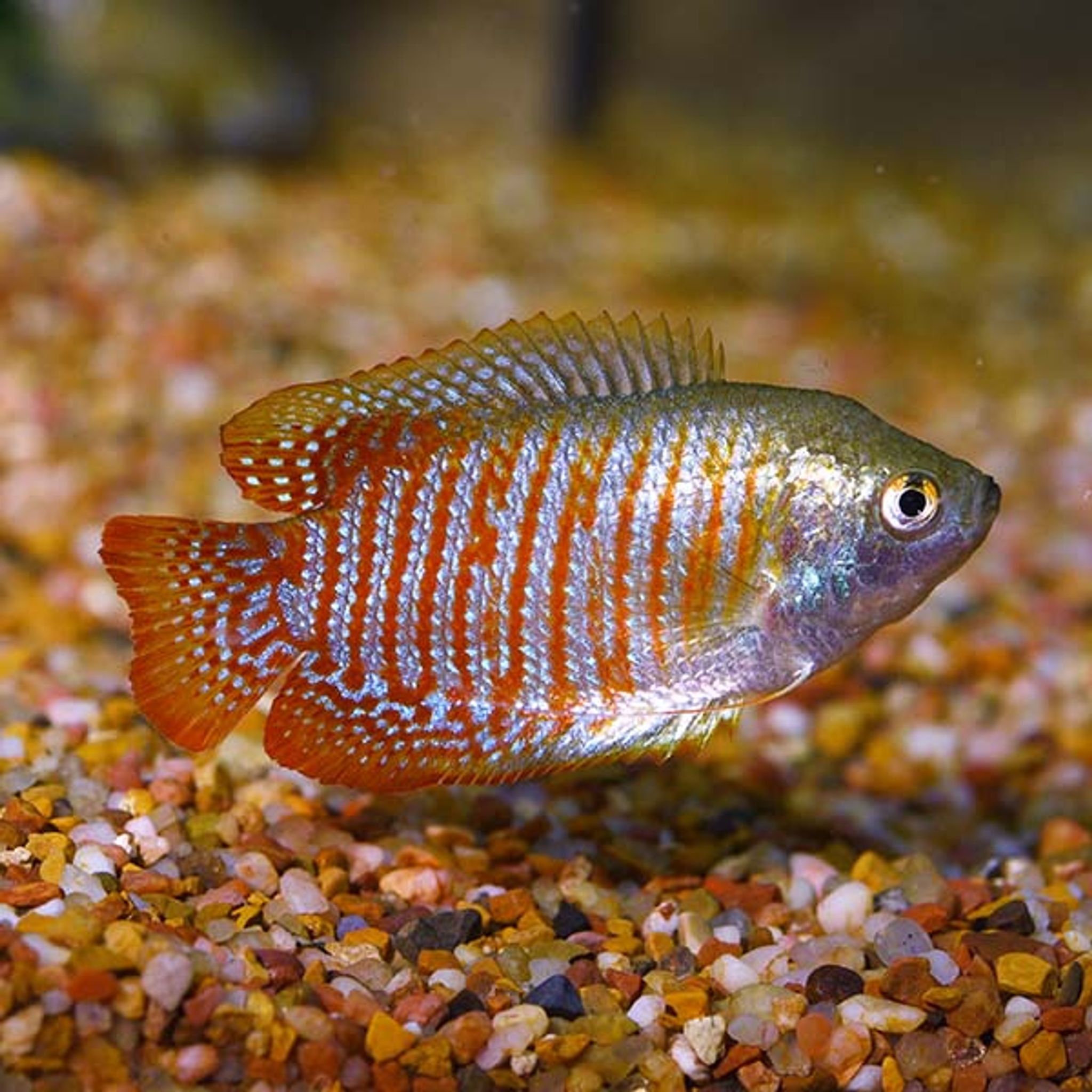

What Do Dwarf Gourami Eat? A Practical Feeding Guide
Dwarf gourami eat a mix of high-quality flake or micro-pellet as a daily staple, small amounts of frozen protein like bloodworms or brine shrimp a few times a week, and occasional blanched vegetables. Because this species is unusually prone to disease and digestive trouble, portion control and diet variety matter more here than for hardier community fish. This guide covers a concrete daily routine, a weekly rotation, and the feeding mistakes most likely to make a gourami sick.
What Dwarf Gourami Eat in the Wild
Dwarf gourami are omnivores that forage near the water's surface and among dense vegetation in slow-moving streams and rice paddies. In their natural habitat they pick off insects, insect larvae, small crustaceans, algae, and bits of plant matter that collect on or near the surface. This background explains two things that matter for feeding them at home: they need a varied diet with both animal and plant protein, and they are built to feed at or near the surface rather than off the substrate.
Why Mouth Shape and Feeding Position Matter
Dwarf gourami have small, upturned mouths adapted for picking food from the surface film. Food that sinks quickly past their feeding zone is simply wasted — it settles into the substrate, goes uneaten, and starts fouling the water. For that reason, the best foods for this species either float or sink very slowly, giving the fish time to find and eat them before they disappear.
Building a Daily Diet
A sound feeding plan for dwarf gourami rests on three components: a staple, a protein boost, and occasional plant matter.
The Staple: Flake or Micro-Pellet
The daily base of the diet should be a high-quality tropical flake or small, slow-sinking micro-pellet formulated for community or omnivorous fish. Look for a size appropriate to the gourami's small mouth — standard-size pellets meant for larger cichlids are the wrong tool here. This staple should make up most feedings throughout the week.
Protein: 2–3 Times a Week
A couple of times a week, supplement the staple with frozen bloodworms, brine shrimp, daphnia, or mosquito larvae. This protein boost supports color intensity and breeding condition. Live foods from a trusted culture are welcome as an occasional bonus, but they aren't required — previously frozen, thawed protein gives home hobbyists a very similar nutritional payoff with far less risk of introducing parasites or pathogens, which matters more for a disease-prone species like this one. Freeze-dried versions of the same foods are a reasonable middle ground when frozen isn't convenient, though many keepers soak freeze-dried cubes briefly before feeding to reduce the risk of bloating.
Plant Matter and Greens
Small amounts of blanched spinach, blanched zucchini, or a spirulina-based flake or algae wafer round out the diet. Plant matter supports gut health and helps bring out natural coloration. This doesn't need to be a daily addition — a couple of times a week is plenty.
A Simple Weekly Rotation
Rather than guessing at variety, a straightforward rotation removes the decision-making from daily feeding:
| Day | Morning Feeding | Evening Feeding |
|---|---|---|
| Monday | Staple flake/pellet | Staple flake/pellet |
| Tuesday | Staple flake/pellet | Frozen bloodworms or brine shrimp |
| Wednesday | Staple flake/pellet | Staple flake/pellet |
| Thursday | Blanched spinach or spirulina flake | Staple flake/pellet |
| Friday | Staple flake/pellet | Frozen daphnia or mosquito larvae |
| Saturday | Staple flake/pellet | Staple flake/pellet |
| Sunday | Fasting day | Fasting day |
A weekly fasting day is a widely recommended practice for small omnivorous fish like dwarf gourami — it gives the digestive system a break and helps prevent the bloating and constipation that come with constant feeding. Quality food and supplements suited to this rotation can be browsed on FishyHub, including freeze-dried options for the protein slots.
How Much and How Often to Feed
The Two-Minute Rule
Regardless of what you're feeding, offer only what the fish clear in about two minutes (some keepers allow up to three to five minutes for slower or shyer fish). It's better to underfeed slightly than to overfeed — excess food that sits uneaten is the single biggest driver of ammonia spikes, cloudy water, and bloating in gourami. Siphon out anything left after feeding.
Feeding Frequency
Sources vary somewhat here. Some guides say once daily is fine for adult gourami; others recommend two to three smaller feedings spread through the day. In practice, one to two small feedings daily is enough for adults. If your tank has multiple gourami, slower eaters, or fry present, splitting the ration into two feedings — always sized to the two-minute rule — tends to work better than one large meal.
Adjusting for Tank Type and Temperature
Dwarf gourami do best at water temperatures in the mid-70s to low 80s°F (roughly 24–28°C), and appetite tracks with metabolism at that range — a tank running cooler than ideal may show a sluggish feeding response, which is worth checking before assuming illness. In a heavily planted tank, gourami will also graze on biofilm and algae between feedings, which can slightly reduce how much supplemental food they need compared with a bare or lightly planted setup.
Feeding Fry and Juveniles
Fry and juvenile gourami need more frequent, smaller feedings than adults — several times a day rather than once or twice. Finely crushed flake, infusoria, and baby brine shrimp are appropriate first foods; increase particle size gradually as the fry grow.
Feeding During Quarantine
New dwarf gourami are especially prone to disease in their first few weeks, so a quarantine period calls for a simple, bland, easy-to-digest diet — a plain staple flake fed in small amounts — rather than introducing new proteins or greens right away. This keeps digestion predictable and makes it easier to notice if the fish stops eating, which is often the earliest visible sign of a health problem.
Common Feeding Mistakes
- Overfeeding. The most frequent mistake, and the one most directly linked to ammonia spikes, cloudy water, and bloating or swim bladder issues.
- Flakes only, no variety. A diet of flake alone, with no protein or vegetable rotation, tends to produce dull color and weaker disease resistance over time.
- Food that sinks too fast. Wasted food fouls the substrate instead of feeding the fish.
- Ignoring competition at feeding time. A shy or slower gourami can be consistently outcompeted by faster tankmates. Spread food across the surface or feed in two separate spots to even things out.
- Feeding dry pellets without soaking. Dry pellets can expand once swallowed, contributing to bloating and swim bladder stress in sensitive individuals. A brief soak in tank water before feeding softens them first.
- Skipping the fasting day. Continuous daily feeding without a break is a common but avoidable contributor to digestive problems.
Diet, Immunity, and Disease Prevention
Diet quality is tied to disease resistance in dwarf gourami more directly than in most community fish. This species is well known for its susceptibility to dwarf gourami disease (an iridovirus) and general disease vulnerability, and a varied, appropriately portioned diet is one of the few controllable factors that supports a stronger immune response. Overfeeding compounds the risk in two ways at once: it degrades water quality, which stresses fish and opens the door to illness, and it can trigger the bloating and swim bladder problems that push an already fragile species into decline.
Swim Bladder Trouble From Feeding
Overfeeding, gulping air at the surface during a feeding frenzy, or eating dry, unsoaked pellets are all common feeding-related causes of swim bladder disease — a gourami floating sideways or struggling to hold a level position in the water. The fix is straightforward: fast the fish for one to two days, then offer a small amount of soaked, skinned pea, keep portions smaller going forward, and soak any dry pelleted food before feeding it.
Fungus and Water Quality
Fungal infections — cottony white or gray patches on the body or fins — usually take hold on fish that are already stressed, or in tanks where uneaten food has fouled the water. Prevention here is about water quality and portion control, not a special diet: keep feeding conservative and remove leftovers promptly.
Frequently Asked Questions
How often should I feed my dwarf gourami?
One to two small feedings a day is adequate for adults. Only offer what the fish can finish in about two minutes, and remove anything left uneaten.
What is the best staple food for dwarf gourami?
A quality omnivore or tropical flake, or a small, slow-sinking micro-pellet, makes the best everyday staple. It should form the bulk of the diet, with protein and vegetables added a few times a week.
Can dwarf gourami eat vegetables?
Yes. Blanched spinach or zucchini, and spirulina-based flake or algae wafers, are all suitable in small amounts a couple of times a week. They support gut health and coloration but shouldn't replace the staple diet.
Do dwarf gourami need live food?
No. Frozen bloodworms, brine shrimp, or daphnia offered a couple of times a week deliver essentially the same nutritional benefit with much lower risk of introducing parasites or disease. Live food from a trusted culture is a nice extra, not a requirement.
Why is my gourami not eating?
Loss of appetite is usually a sign of stress, poor water quality, illness such as dwarf gourami disease, or water temperature that has drifted too low for the mid-70s to low 80s°F range this species needs. Check water parameters and temperature before assuming the food itself is the problem.
Can overfeeding make my gourami sick?
Yes. Overfeeding is linked directly to bloating and swim bladder problems, and to the ammonia spikes and water-quality decline that make broader disease outbreaks more likely.
Can fish choke on food?
Not in the mammalian sense — fish don't have a separate airway to block. But oversized pellets or flakes can lodge in the mouth or throat, or cause impaction if swallowed whole, so it's important to match food size to a gourami's small mouth and break up larger pieces.
Does diet cause or cure white spot disease (ich)?
No. Ich is a parasitic infection that produces salt-grain-like white spots on the body and fins, and it isn't caused by diet. A well-fed, unstressed fish resists it better, but treating an active outbreak calls for raised temperature (mid-80s°F), gradual water changes, and an anti-parasitic medication rather than a diet change. Suitable medication can be browsed on FishyHub if an outbreak occurs.
Are dwarf gourami and betta fed the same way?
Broadly, yes. Both are anabantoids with a labyrinth organ and a similar surface-feeding style, so the same staple-plus-protein-plus-vegetable approach works for both. Dwarf gourami are just one of several anabantoid species kept in the hobby that share this general omnivorous feeding pattern.
Ready to put this routine into practice? Browse dwarf gourami and the freeze-dried food options available on FishyHub to build out a staple-and-protein rotation suited to your tank.


