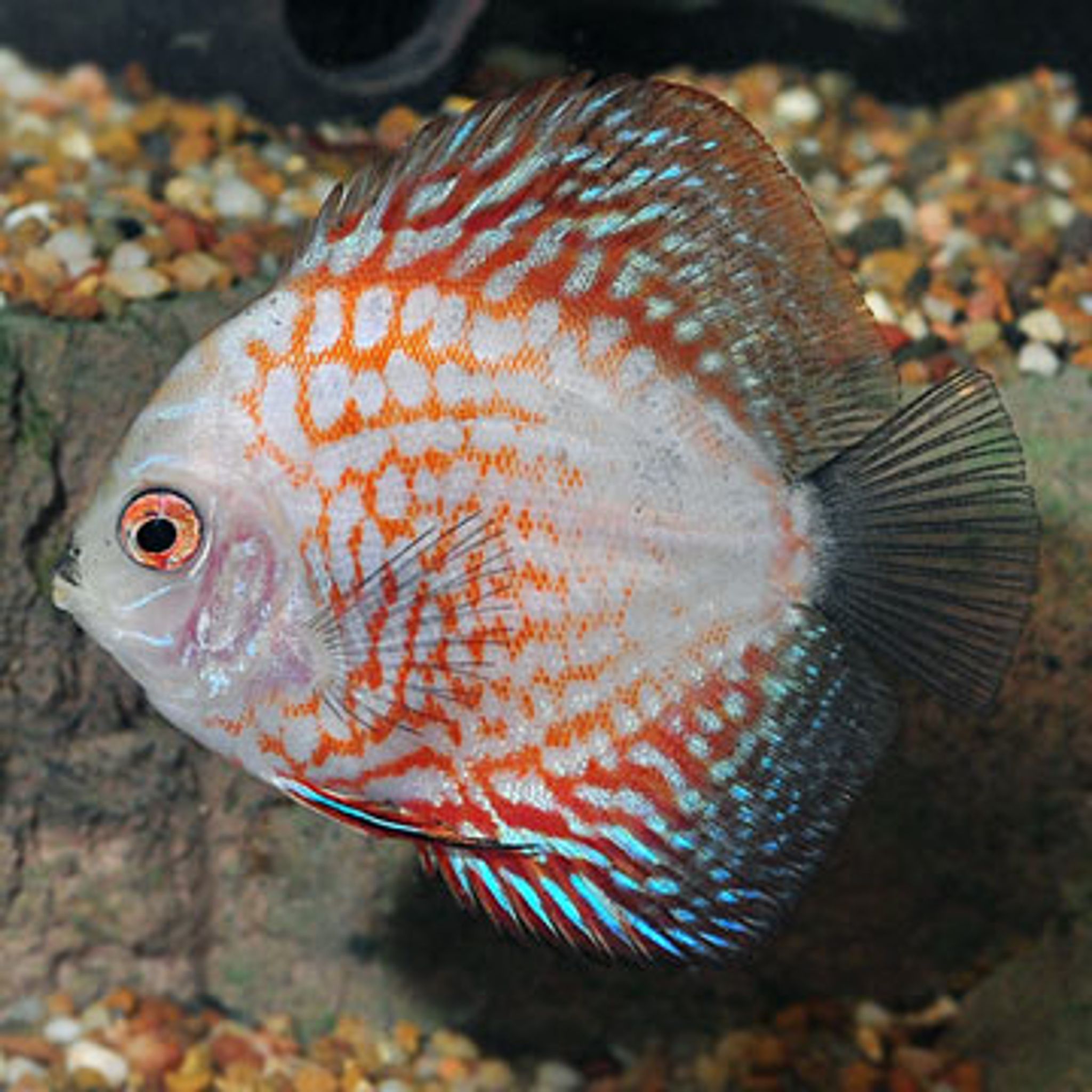

What Do Discus Eat? A Practical Feeding Guide
Discus are omnivores that lean carnivorous, thriving on a rotation of small crustaceans, insect larvae, worms, and prepared foods rather than any single item. This guide breaks down exactly what to feed, how much, and how often by life stage, plus the water-quality habits that keep a feeding-heavy discus tank healthy.
What Discus Eat in the Wild vs. the Home Aquarium
In their native rivers, discus graze almost constantly on small crustaceans, insect larvae, worms, biofilm, and bits of plant matter and algae. That grazing pattern matters more than any single ingredient: variety is the single most important principle in discus nutrition, repeated across virtually every experienced source. A diet built around one food type — even a good one — tends to create nutritional gaps that show up as dull color, slow growth, or a fish that goes off its food.
A practical home rotation covers three categories:
- A high-quality discus-formulated pellet or granule as the everyday staple. Look for a protein-dense formula sized specifically for a discus's small mouth.
- Frozen or live bloodworms, brine shrimp, and daphnia as regular supplements, fed several times a week.
- Vegetable matter — blanched spinach, algae wafers, or spirulina flake — added in small amounts for fiber and digestion.
You can browse discus-appropriate frozen and freeze-dried options, along with staple pellets, in FishyHub's Food & Supplements category.
A Note on Beef Heart
Beef heart mixes are a long-standing traditional staple among discus breeders — high in protein, inexpensive, and reliable when prepared correctly. Sources disagree on how central it should be: some treat it as an excellent primary food, while others caution it's not a natural food source and can foul water quickly if overfed or poorly frozen. The sensible middle ground for most home aquarists: use beef heart as an occasional protein boost, once or twice a week, in a well-filtered tank — and let a discus-formulated pellet do the everyday heavy lifting. It's simpler, less messy, and nutritionally balanced without the prep work.
Why Food Size Matters More With Discus
Discus have small mouths relative to their body size, which makes portion sizing more important than with most other fish. Oversized bloodworms or pellets get picked up and spat out repeatedly rather than swallowed, and every spit-out is wasted food decomposing in the tank. Chop larger frozen foods into smaller pieces and choose pellet sizes made for discus rather than generic community-fish pellets.
Feeding Schedule by Life Stage
Feeding frequency and portion size change substantially as a discus grows. Here's a practical breakdown:
| Life Stage | Feedings Per Day | Primary Foods | Portion Cue |
|---|---|---|---|
| Fry / very young juveniles | 4–6x | Baby brine shrimp, then finely crushed foods | Tiny amounts, gone in seconds |
| Growing juveniles (up to ~6 months) | 3–4x | Small pellets, chopped bloodworms, brine shrimp | Eaten fully within 2–5 minutes |
| Adults | 2–3x | Pellet/granule staple + frozen rotation, occasional beef heart | Eaten fully within 2–5 minutes |
For adults, some breeders running a beef heart rotation structure the day around three meals: a protein-rich mix in the morning, a mixed feeding at midday, and a lighter bloodworm or flake feeding in the evening. Whether you land on two or three feedings a day, treat it as a range rather than a fixed rule — lean toward three smaller meals in warmer, well-filtered tanks, and two if managing water quality is more of a stretch for your setup.
The Portion Rule
Regardless of life stage, feed only what's fully consumed in 2–5 minutes, and remove any uneaten food promptly. As a loose starting point, aim for roughly 2–3% of body weight per feeding — but treat this as approximate. Visual and behavioral cues matter more than the math: a belly that's rounded but not distended, and food that disappears quickly, are better indicators than any percentage.
How Temperature and Water Chemistry Affect Feeding
Discus are warm-water fish, typically kept at 78–86°F (25.5–30°C), with adults doing best at 82–86°F (28–30°C) and wild-caught or breeding pairs sometimes kept up to 86–88°F (30–31°C). Warmer water speeds up metabolism, which means faster digestion and a need for more frequent, lighter meals — but it also means more waste produced and less dissolved oxygen in the water, so extra aeration is worth adding if you're feeding heavily.
pH recommendations vary fairly widely across sources, from about 6.0 to 7.6. Tank-bred discus are generally adaptable across that range in soft to moderately hard water, while wild-caught fish prefer the softer, more acidic end.
Tank size matters directly for feeding: a minimum of about 50–55 gallons (190–210 L) is typical for a small adult group, and 75 gallons (285 L) or more is worth considering if you plan to feed heavily, since bioload rises along with feeding frequency. A discus-appropriate setup with the right filtration also makes the difference between a thriving feeding routine and constant water-quality firefighting — see FishyHub's Discus livestock category when planning a group.
Combining Feeding With a Water-Change Cadence
Because discus are sensitive to nitrate buildup and feeding drives most of the waste load, pair your feeding schedule with a matching water-change routine. For a typical 55–75 gallon home setup fed 2–3x daily with a mixed diet, weekly water changes of 25–50% are a reasonable baseline — lean toward the higher end if you're feeding three times a day or using beef heart regularly. Some experienced keepers also build in one fasting or light-feeding day per week, which gives digestion a chance to reset and can help prevent bloating.
Keeping Wild-Caught Discus
Wild-caught discus have meaningfully different feeding needs than tank-bred, domestic strains. Many wild fish will refuse dry pellets outright at first and need to be started on live or frozen foods — blackworms, bloodworms, and live brine shrimp are common starting points — before any transition to prepared foods is attempted. They also tend to prefer softer, more acidic, and warmer water than typical tank-bred lines, and are more sensitive to the water-quality swings that come with feeding waste. Patience is essential here: a wild discus can stay shy or stressed around food for weeks, and pushing pellets too early can mean the fish simply doesn't eat.
Signs of a Well-Fed vs. Overfed Discus
A quick visual check tells you more than any feeding chart:
- Well-fed: Belly is gently rounded, not flat or concave; stool is a firm, defined strand; fish is active and colorful; food disappears within minutes of feeding.
- Overfed: Belly looks swollen or lopsided; stool is stringy, pale, or trailing; leftover food sits on the substrate after 5+ minutes; water clouds faster than usual between changes.
Common Feeding Mistakes to Avoid
- Overfeeding at once — the single biggest cause of ammonia spikes, bloating, and cloudy water in discus tanks.
- Oversized food items the fish can't swallow, leading to repeated spit-outs and rotting debris.
- Relying on one food type — straight flakes or straight beef heart — which creates nutritional gaps and dull color over time.
- Ignoring temperature when setting frequency — warmer tanks need more frequent, lighter meals, not the same portions fed less often.
- Skipping water changes despite heavy feeding, which accelerates water-quality decline and is linked to issues like fin rot and hole-in-the-head.
- Moving wild discus straight to dry pellets without a live/frozen transition period, which can leave them stressed and underfed.
- Leaving uneaten food on the substrate, especially in the sparse, minimal substrate typical of discus tanks where debris is easy to miss.
Transitioning a New Discus Onto Your Feeding Routine
If you've just brought home a discus, its previous diet is usually unknown. Start with small, frequent feedings of a familiar, easy food — frozen bloodworms or brine shrimp are a safe first choice — and observe how readily it eats before introducing pellets. Increase portion size gradually over the first one to two weeks as the fish settles in, rather than jumping straight to a full adult schedule on day one.
Cost and Convenience Trade-Offs
For US hobbyists building a rotation, quality discus pellets and frozen cube foods are the lower-effort option: consistent nutrition, no prep, and minimal mess, at a higher per-feeding cost. A DIY beef heart mix costs less per feeding and adds a traditional protein boost, but requires prep time, freezer space, and more disciplined portioning to avoid fouling water. Many keepers land on a mix of both — a pellet-and-frozen-food base with beef heart worked in occasionally — which balances cost, convenience, and nutritional variety.
Frequently Asked Questions
How often should I feed my discus fish?
Adults typically do well on 2–3 feedings per day. Juveniles need 3–4x daily to fuel rapid growth, and fry require very frequent small feedings — often 4–6 times a day.
Can discus survive on flakes/pellets alone?
Yes, a quality pellet or flake can serve as a nutritional base, but relying on it exclusively tends to limit color and vitality over time. Rotating in frozen or live foods a few times a week fills nutritional gaps and keeps appetite strong.
Is beef heart good or bad for discus?
It's fine in moderation — once or twice a week as a protein-rich supplement in a well-filtered tank. As a sole diet, its fat content and tendency to foul water make it a less reliable everyday choice than a discus-formulated pellet.
What live/frozen foods are best for discus?
Bloodworms, brine shrimp, daphnia, and blackworms are the most commonly used. Introduce new foods gradually, and keep pieces small enough for a discus's mouth to avoid repeated spit-outs.
How much should I feed at each meal?
Feed only what's consumed within 2–5 minutes. Roughly 2–3% of body weight is a reasonable starting guideline, but a rounded (not distended) belly and quickly disappearing food are more reliable signals than the percentage itself.
Why won't my discus eat?
Common causes include stress, poor water quality, oversized food, competition from faster tankmates, or being a wild-caught or newly purchased fish that hasn't yet acclimated to prepared foods. Ruling out water parameters first is usually the fastest path to a diagnosis.
Do baby discus eat differently than adults?
Yes. Fry typically start on baby brine shrimp with very frequent, tiny feedings — often 4–6 times a day — and gradually taper down to the standard adult schedule as they mature over several months.
What temperature is best for feeding discus?
Warm, stable temperatures of 82–86°F (28–30°C) support the metabolism and appetite that discus need for regular feeding. Wild-caught or breeding discus are sometimes kept slightly warmer, up to 86–88°F (30–31°C).
Ready to start or expand a discus group? Browse tank-bred and specialty discus in FishyHub's Discus category, and pair them with a suitable pellet and frozen-food rotation from Food & Supplements.


