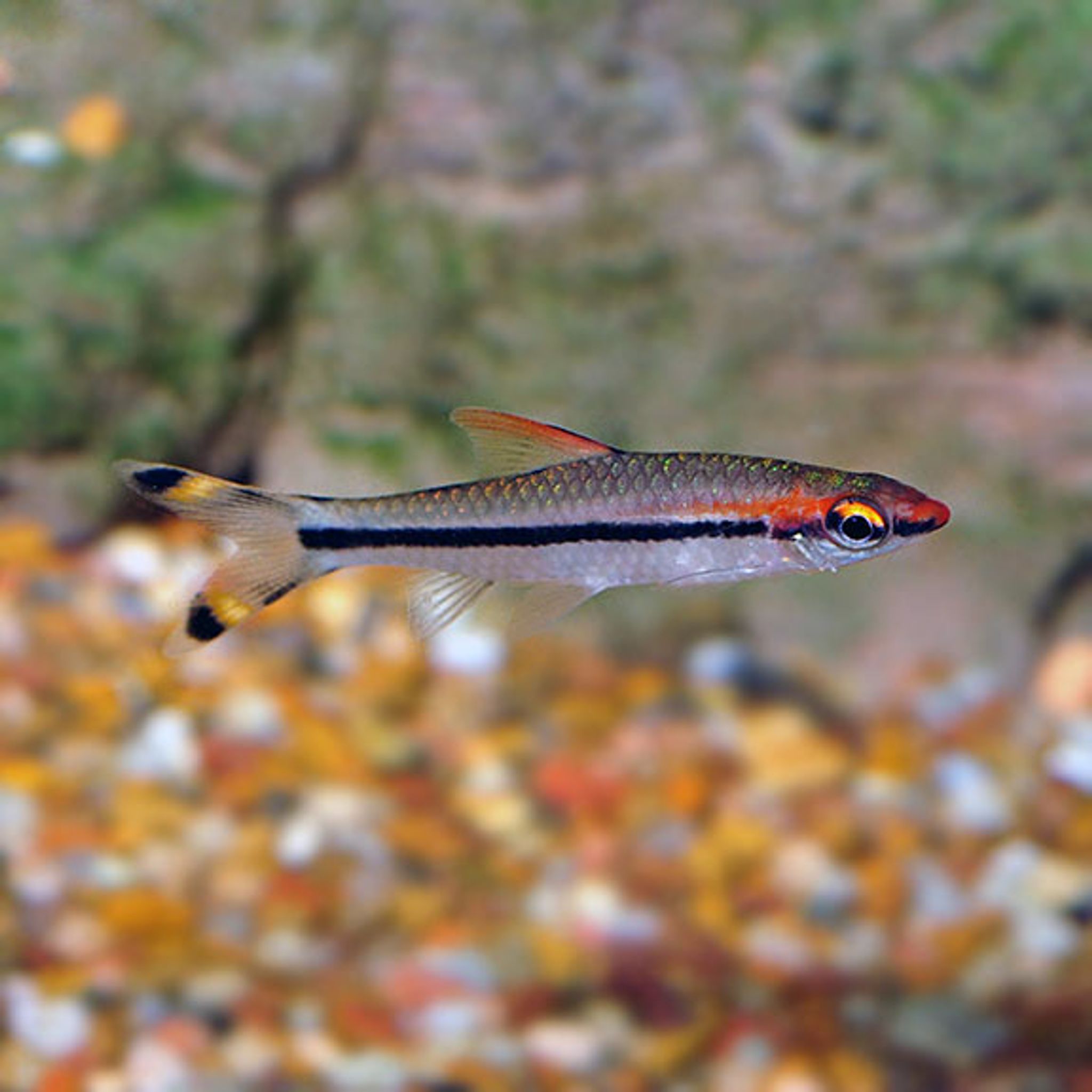

What Do Denison Barb Eat? A Practical Feeding Guide
Denison barbs (Sahyadria denisonii, also called roseline sharks) are omnivores that do best on a mix of quality staple pellet or flake, occasional frozen or live protein, and light plant matter. What matters more than any single ingredient is portion control, because this species tolerates poor water far worse than most community fish. Below is a concrete plan for what to feed, how much, and how feeding choices tie directly into keeping the tank stable.
Why Diet and Water Quality Are the Same Conversation
Denison barbs originate in the fast-flowing, well-oxygenated hill streams of the Western Ghats in India. That background shapes two things at once: what they're built to eat, and how much waste buildup they can handle. In the wild, their diet leans on algae and biofilm scraped from rocks, small aquatic invertebrates, insect larvae, and some plant material — a low-mess, constantly-diluted food supply moving through clean water.
A home aquarium can't replicate that constant flow, so every gram of food that goes uneaten becomes a water-quality liability. Fish from pristine, oxygen-rich streams generally have less tolerance for ammonia and nitrite spikes than fish bred for generations in still, nutrient-rich community tanks. That's the core reason this guide treats feeding and husbandry as one topic rather than two.
Core Captive Diet
The Staple
A high-quality flake or sinking micro-pellet formulated for omnivores or community fish should form the everyday base — not a pure carnivore pellet, which tends to be protein-heavy, messy, and mismatched to a fish that grazes algae in the wild. Look for a formula sized appropriately for an active, mid-size (5–6 inch) schooling fish, ideally with spirulina and a carotenoid source (astaxanthin or krill meal) included for color support.
When checking a label, a useful shortcut is to see whether a named protein source and spirulina appear near the top of the ingredient list, rather than generic fillers dominating the first few entries.
Protein Boosts, 2–3 Times a Week
Frozen or live protein rounds out the diet and supports color and conditioning:
- Bloodworms
- Brine shrimp
- Daphnia
- Mysis shrimp
Thaw frozen cubes in a small cup of tank water before feeding rather than dropping an ice-cold cube directly into the aquarium — this avoids a localized temperature shock and lets the food disperse more evenly once added.
Plant Matter, Occasionally
Because Denison barbs graze algae and biofilm naturally, a small vegetable component is appropriate but not mandatory daily:
- Spirulina wafers as an algae substitute
- Blanched zucchini or cucumber slices clipped to the glass
- Peeled peas, offered occasionally
Treat this as a supplement rather than a required daily food group — some guides skip it entirely and the fish do fine, but including it once or twice a week adds dietary variety at essentially no cost.
How Often and How Much to Feed
Twice daily is the standard recommendation for adult Denison barbs in a well-filtered tank. A third small feeding is reasonable for actively growing juveniles, but each portion should still be small enough to avoid tipping the bioload. The reliable portion rule: feed only what the group fully clears in about two minutes, then stop.
| Life Stage | Frequency | Portion Guidance | Food Form |
|---|---|---|---|
| Fry | Very frequent (several small feedings/day) | Tiny amounts, several times daily | Infusoria, newly-hatched brine shrimp |
| Juveniles | 2–3x daily | Small, 2-minute-clearable portions | Finely crushed flake/micro-pellet |
| Adults (5–6 in) | 2x daily | Standard 2-minute-clearable portions | Flake, micro-pellet, occasional frozen/live |
Color: What Actually Helps
The red mid-body stripe that gives the roseline shark its name is intensified by carotenoid-rich foods — spirulina, krill, and quality color-enhancing flake all contribute astaxanthin-family pigments. That said, diet is only part of the picture: genetics and overall husbandry (stable water quality, adequate flow, proper schooling) matter just as much as any single food. A fish under stress from a too-small group or poor water rarely colors up well regardless of what it's fed.
Tank Conditions That Support Healthy Feeding
Feeding success is inseparable from the surrounding setup:
- Tank size: minimum around 55 gallons (208 L), with a long, wide footprint; 75+ gallons (284+ L) is better for an adult school.
- Schooling: keep groups of 6 or more — undersized groups compete harder for food and are more prone to fin-nipping.
- Flow and oxygenation: moderate-to-strong current mimics their native stream habitat and helps distribute food.
- Temperature: roughly 60–77°F (16–25°C) — cooler than a typical tropical community tank.
- Water changes: 25–30% weekly, plus consistent filter maintenance, to offset the organic load feeding adds.
Feeding in a Hillstream-Style Setup
If the tank is run as a dedicated cool, high-flow "hillstream" biotope rather than a general community setup, strong powerhead current can blow light flake out of reach before the fish can eat it. A sinking or slow-sinking pellet paired with a feeding pause on the powerhead (or feeding into a lower-flow zone) keeps food available long enough for the whole school to get to it.
Schooling Behavior at Feeding Time
As an active mid-water schooler, Denison barbs will spread out and compete for food across the water column. Scatter food across the surface and mid-water rather than dropping it in one spot, so shier or smaller individuals in the group aren't muscled out. In a mixed-species tank, they can also out-compete slower or bottom-dwelling tankmates; using sinking foods or target-feeding shier species helps balance that out. A well-stocked school from FishyHub's freshwater barb selection gives enough numbers to spread feeding competition across the group rather than concentrating it on one or two fish.
Common Feeding Mistakes
Overfeeding is the single most-cited mistake with this species, and the consequences are more severe here than with typical community fish. Leftover food fouls the water, drives ammonia and nitrite spikes, and stressed fish are more prone to issues like ich outbreaks. The fix is consistent: feed only what clears in about two minutes, siphon out anything left, and vacuum the substrate regularly.
Other frequent errors:
- Relying only on dry food — can lead to duller color and less complete nutrition over time. Rotate in frozen/live protein and occasional vegetables weekly.
- Too little variety — a diet missing carotenoid sources tends to produce washed-out color; add spirulina or krill-based foods.
- Too few fish or too small a tank while free-feeding heavily — raises both aggression and bioload. Keep schools of 6+ in a properly sized, well-filtered tank and scale feeding volume to what the filtration can handle.
- Not adjusting portion size for growing juveniles — oversized flakes or pellets go uneaten and foul the water. Crush food finely for young fish.
- Skipping water changes after heavier feeding days — frozen food days add more organic waste than dry-food days. Stick to the 25–30% weekly water change regardless of what was fed that week.
A Fasting Day Helps
A once-weekly fasting day is a common practice across fishkeeping generally, and it's particularly useful for a waste-sensitive species like this one. Skipping food one day a week supports digestion and gives the filter and biological load a periodic break, without any risk to a healthy adult fish.
Target Water Parameters Tied to Feeding
Rather than a vague "keep water quality high," aim for concrete numbers and check them on a routine tied to your feeding schedule:
- Ammonia: 0 ppm
- Nitrite: 0 ppm
- Nitrate: under roughly 20–30 ppm between water changes
If nitrate creeps toward the top of that range faster than expected, that's usually a sign portions are too large or too frequent relative to the tank's filtration and water-change schedule — scale back before adjusting anything else. Reliable test kits and a routine water change schedule, available from FishyHub's treatment and water conditioning range, make it easier to catch a feeding-driven parameter creep early.
Breeding and Fry Feeding
Adult diet doesn't need to change specifically to trigger spawning, though conditioning adults with live or frozen foods in the weeks before a breeding attempt is commonly advised. Once fry appear, they need live plants for cover and infusoria or newly-hatched brine shrimp as first foods, fed in small amounts multiple times a day given their tiny stomachs and rapid growth needs.
Frequently Asked Questions
How often should I feed Denison barbs?
Twice daily is the standard for adults, with each portion sized to be fully cleared in about two minutes. Juveniles can benefit from a third small feeding to support faster growth, as long as portions stay small.
Do Denison barbs need live food?
No. A quality staple pellet or flake is sufficient as the base diet. Live or frozen food is a beneficial supplement for nutrition and color, not a strict requirement.
What foods bring out their red/orange coloration?
Foods containing carotenoids or astaxanthin — spirulina, krill, and color-enhancing flake — support pigment development. Good water quality and proper schooling numbers matter just as much as the food itself.
Can Denison barbs eat vegetables?
Yes. Occasional blanched zucchini, cucumber, or peas, along with spirulina-based foods, fit their omnivore diet since they graze algae and biofilm in the wild. Treat vegetables as a supplement rather than a daily requirement.
Why is my Denison barb not eating?
The most common causes are stress from poor water quality, too small a school size, water that's too warm, or a recently introduced fish that hasn't acclimated. Check ammonia, nitrite, and temperature first, then confirm the group has at least six individuals.
How much should I feed fry versus adults?
Fry need infusoria or newly-hatched brine shrimp in very small, frequent feedings throughout the day. Adults do well on the standard twice-daily schedule with 2-minute-clearable portions.
Will overfeeding really hurt Denison barbs more than other fish?
Yes. Because they come from pristine, fast-flowing streams, Denison barbs are notably less tolerant of ammonia and nitrate buildup than many common community fish, so portion control has an outsized effect on their long-term health.
Can Denison barbs be fed alongside other community fish at the same time?
Yes, but as an active mid-water schooler they can out-compete slower or bottom-dwelling tankmates for food. Spreading food across the tank and using sinking or target foods for shier species helps everyone get a fair share.
A well-planned feeding routine is one of the most effective things you can do for a Denison barb school's color, health, and longevity. Browse FishyHub's food and supplements category to build out a staple-plus-supplement feeding plan suited to this species.


