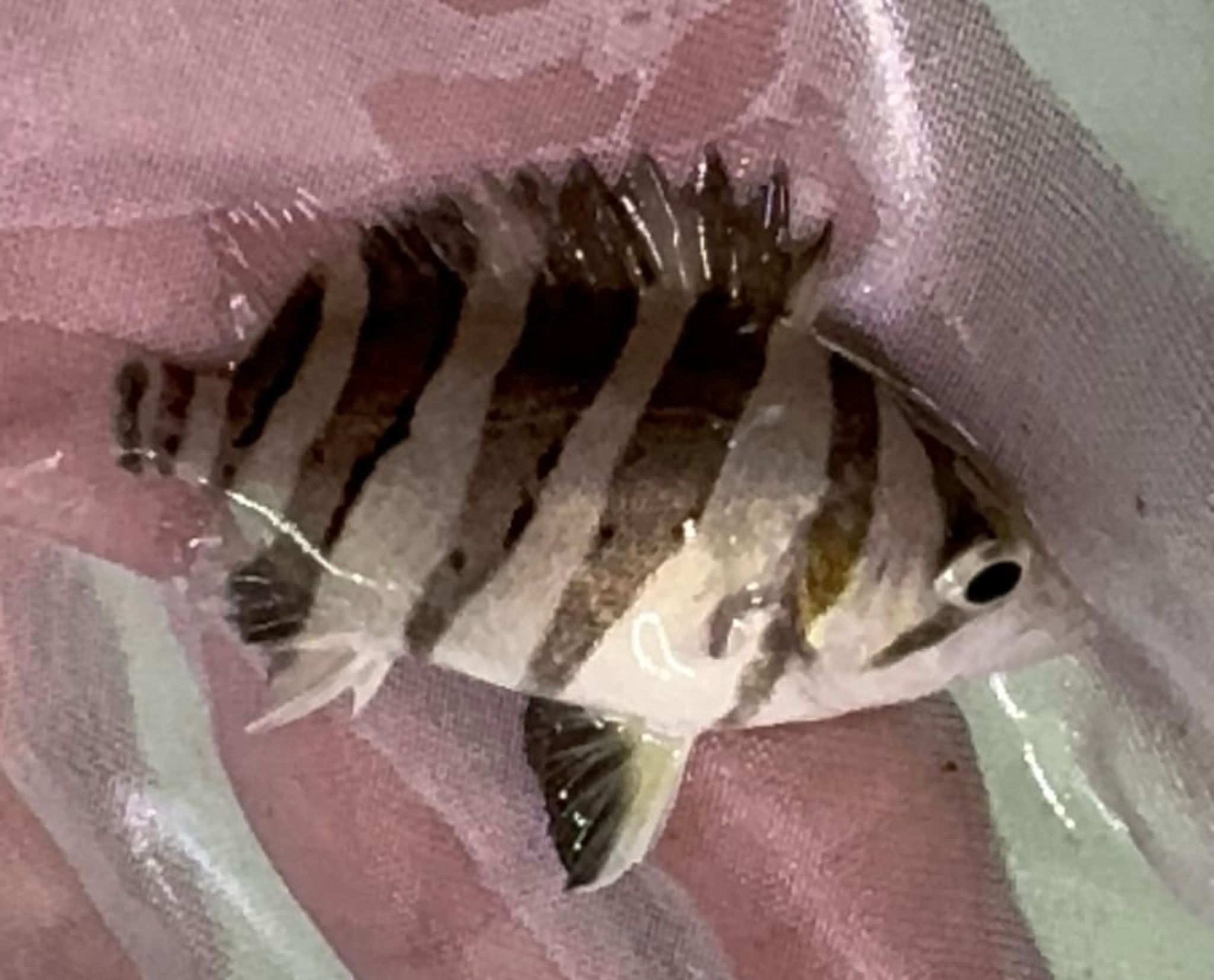

What Do Datnoid Eat? A Practical Feeding Guide
Datnoid, also called tiger datnoid or tiger perch (genus Datnioides), are strict carnivorous ambush predators that need meaty, whole-prey-style meals rather than flake food. This guide breaks down exactly what to feed at each life stage, how to wean a stubborn eater onto easier foods, and how to fix the most common feeding mistakes.
What Datnoid Eat in the Wild
In their native rivers and brackish estuaries, datnoid are opportunistic ambush hunters. Their natural diet consists of:
- Small fish
- Shrimp and crabs
- Aquatic insects and larvae
- Worms
This background matters because it explains why datnoid struggle with anything that isn't recognizable as "prey" — a floating flake or a static pellet simply doesn't trigger the same feeding response as a wriggling or fish-shaped meal.
The Best Captivity Diet: A Food Hierarchy
Not all meaty foods are equal. Use this rough hierarchy when deciding what to stock for a datnoid tank.
| Tier | Foods | Notes |
|---|---|---|
| Best staple | Frozen-thawed feeder fish, shrimp/prawn, krill, whole silversides, mussel, squid, earthworms, bloodworms, blackworms | Safer than live, nutritionally solid, widely accepted |
| Best long-term "prepared" staple | Chopped fresh or frozen seafood (fish fillet, shrimp, clam, mussel) | Once a fish is weaned off whole live prey, this becomes the easiest everyday option |
| Occasional addition | Small amounts of plain, lean cooked chicken breast | Not a staple — used sparingly for variety |
| Training target, not a guarantee | High-quality sinking carnivore pellets or sticks | Some individuals convert fully; others never touch them |
| Avoid as a regular diet | Beef heart, beef, pork, feeder goldfish | High fat, poor nutrient profile, linked to health problems over time |
Why avoid fatty mammal meat? Beef heart and similar red meats carry a fatty-acid profile built for a warm-blooded land animal, not a fish. Fed regularly, this fat is hard for a fish's digestive system to process efficiently and can accumulate as fatty deposits, particularly around internal organs, over months of steady feeding. Whole fish and invertebrates, by contrast, supply a fat and protein profile — including taurine levels — much closer to what a piscivore's body is built to use.
Whole Prey Sizing
Whole prey should be roughly bite-sized relative to the datnoid's mouth. Oversized prey items risk getting lodged in the throat or being refused outright, while prey that's too small just wastes feeding opportunities on a fish that wants a real meal. As a working rule, a whole feeder or prey item should be no wider than the datnoid's head and short enough to be swallowed in one or two attempts.
Live Feeders: Handle With Care
Live feeder fish carry real disease and parasite risk — ich, internal worms, and bacterial infections are all commonly introduced this way. If live feeders are used at all:
- Quarantine feeders for 2–4 weeks before offering them
- Buy from a trusted, clean source rather than an unknown mixed tank
- Gut-load feeders with a quality food beforehand so they pass on more nutrition
- Prefer frozen-thawed over live whenever the datnoid will accept it
On feeder goldfish specifically: an occasional feeder goldfish won't ruin a healthy fish, but goldfish are fatty and carry the same disease risks as other live feeders. They should never be a routine staple — frozen or fresh seafood is the safer long-term default.
Feeding Frequency and Portions by Life Stage
Datnoid metabolism and growth rate slow considerably as they mature, so feeding schedules should shift accordingly.
| Life stage | Frequency | Food type |
|---|---|---|
| Fry / young juveniles | 2–3 times per day, small amounts | Brine shrimp, bloodworms, tiny live feeders |
| Larger juveniles | 2–3 times per day | Larger whole prey, chopped meaty foods, live/frozen mix |
| Sub-adults | 1–2 times per day | Chopped seafood, whole prey, pellet training continues |
| Adults | 1 time per day, or skip a day occasionally | Chopped seafood as staple, occasional whole prey |
Rather than treating "once daily" versus "every other day" as a strict rule for adults, watch the fish's body condition. A datnoid with a visibly full, rounded belly and good muscle tone can comfortably skip a day now and then; a thinner fish should be fed daily until it fills back out.
Portion rule: offer only as much as the fish clears within a few minutes. If food is regularly left uneaten, cut the portion back. If it's inhaled instantly and the fish still looks thin or hollow-bellied, increase the amount gradually over several feedings rather than doubling it overnight.
A Practical Weaning Protocol
Weaning a datnoid onto prepared foods is far easier with juveniles than with adults, and it works best as a structured routine rather than random attempts.
Weeks 1–2: Feed the live or frozen food the fish already readily eats. Immediately after it takes that food, drop a small pellet or a chunk of shrimp/fish in the exact same spot. Expect it to be mouthed and spat out — that's normal and doesn't mean it failed.
Weeks 2–3: Keep repeating the same sequence at every feeding. Reduce the live/frozen portion slightly each week while keeping the pellet or chunk offering consistent in size and location.
Weeks 3–4: Many juveniles begin taking the prepared food directly by this point. If a fish is still refusing, keep the live/frozen food as the primary source and revisit pellet training again in a few weeks rather than forcing the issue.
A useful trick for a stubborn individual: house it with a tankmate that's already trained onto pellets. Datnoid often learn to associate a food item with safety by watching another fish eat it first.
Set expectations honestly: even with a textbook protocol, some datnoid — especially wild-caught adults — never fully convert to pellets. Keep a fresh or frozen meaty backup plan indefinitely rather than betting the fish's nutrition on a single food type.
Wild-Caught vs. Captive-Bred Feeding Differences
This distinction gets glossed over in a lot of general advice, but it matters a great deal for feeding success. Wild-caught adult datnoid are typically far more food-shy than captive-bred individuals and are often reluctant to accept anything except live prey for weeks or months after import. Captive-bred juveniles, by contrast, tend to adapt to prepared and frozen foods much faster since they never developed a strong dependency on hunting live prey in the first place. If sourcing an adult, budget for a longer, more patient acclimation period before expecting any pellet or even frozen-food acceptance.
Why New Datnoid Won't Eat
Datnoid are notoriously shy, skittish eaters, and a newly acquired fish refusing food is almost always about stress rather than the food itself. Tank setup plays a direct role here:
- Hiding spots — driftwood and rockwork give a nervous fish somewhere to retreat, which reduces the constant low-level stress that suppresses appetite
- Subdued lighting — dim tank lighting, especially at feeding time, mimics the low-visibility conditions where datnoid naturally hunt
- Low-traffic placement — a tank in a quiet corner of a room, away from constant foot traffic, settles a skittish fish faster than one in a busy hallway
For a fish that won't eat, try offering live blackworms or feeder shrimp at night with the room lights off and minimal activity nearby, rather than repeatedly switching food types. Patience over several days to a couple of weeks resolves the great majority of "won't eat" cases.
Watch for outcompeted fish, too. In a community or mixed monster-fish tank, a shy, slow-approaching datnoid can simply be beaten to the food by faster tankmates every single feeding, which looks like a feeding refusal but is really a competition problem. Target-feeding with tongs, or feeding right after the lights dim when bolder fish are less active, solves this.
Supplementing a Shrimp-and-Fish Diet
A diet built mostly around shrimp and whole fish is solid but can leave gaps in fat-soluble vitamins over the long term, since freezing and thawing reduces some nutrient content. Soaking frozen foods in a fish-specific vitamin supplement for a few minutes before feeding is a simple way to close that gap, particularly for a fish eating the same one or two food items week after week. Rotating between several protein sources — fish, shrimp, mussel, squid — also helps cover more nutritional ground than any single food item alone.
Tank Conditions That Affect Feeding
Water conditions influence appetite and metabolic rate directly:
- Temperature: typically 75–84°F (24–29°C)
- pH: roughly 6.5–7.5
- Ammonia and nitrite: 0
- Nitrate: ideally under 20 ppm
Warmer water within that range speeds up metabolism, which increases feeding needs — a datnoid kept at the higher end of the temperature range will generally want food more often than one kept cooler.
Tank size also affects feeding indirectly: an undersized, stressed fish feeds poorly regardless of what's offered. Species vary considerably in adult size and space needs.
| Species group | Adult size | Typical tank size needed |
|---|---|---|
| Siamese tiger datnoid | Smaller of the group | 100–150+ gallons (380–570+ L) |
| Indonesian / New Guinea "false" tiger | 12–20+ inches (30–50+ cm) | 180+ gallons (680+ L) |
| Silver datnoid | 12–20+ inches (30–50+ cm) | 180+ gallons (680+ L) |
All three groups share the same predatory diet needs — the difference is scale, not food type. Browsing the Monster Fishes category is a useful way to compare species before committing to a tank size.
Common Feeding Mistakes
- Using fatty foods as a staple. Beef heart and feeder goldfish, fed regularly, lead to fatty liver, obesity, and dull color over time.
- Offering oversized whole prey. This risks choking or gets refused outright.
- Skipping feeder quarantine. This is one of the most common ways parasites and disease enter a datnoid tank.
- Giving up on pellet training too early. A handful of refusals is normal; persistence over weeks with a young fish is what actually works.
- Not scaling portions down with age. A feeding routine set for a fast-growing juvenile becomes overfeeding once growth slows into adulthood — this is one of the most overlooked causes of obesity in older datnoid.
Hand-Feeding: A Bonus of Routine Feeding
Once a datnoid settles into a tank and associates a person with food rather than threat, many individuals become tame enough to take food directly from tongs or even fingers. This isn't guaranteed for every fish, particularly shy wild-caught adults, but consistent, calm feeding routines make it a realistic long-term outcome for most captive-bred datnoid.
Frequently Asked Questions
Will datnoid eat pellets?
Sometimes. Individuals started on pellet training as juveniles have a real chance of converting, and some grow faster once they're fully on pellets. Many datnoid, however, never fully switch, so it's best to keep a fresh or frozen meaty backup as part of the regular diet regardless.
How often should I feed a datnoid?
Juveniles do best with 2–3 small feedings a day to support fast growth, while adults typically do well on once a day or even every other day. Base the exact frequency on body condition and only offer what the fish clears within a few minutes.
Can I feed feeder goldfish?
Occasionally, yes, but not as a staple. Goldfish are fatty and carry the same disease risks as other live feeders, so frozen or fresh seafood should make up the bulk of the diet instead.
Why won't my new datnoid eat?
This is almost always stress or shyness from a fish adjusting to a new tank, not a rejection of the food itself. Add hiding spots, dim the lighting, minimize disturbance near the tank, and try offering live or wriggling foods like blackworms before switching food types repeatedly.
What live foods are safe?
Quarantined feeder fish, shrimp, earthworms, and blackworms are all reasonable options as long as they're sourced from clean, trusted stock. Quarantining feeders for 2–4 weeks before use significantly cuts the risk of introducing parasites or disease.
How big does a datnoid get, and does that change feeding?
Depending on species, adult datnoid can reach 10 to 20-plus inches (25–50+ cm). As they grow, both prey size and portion amounts need to scale up substantially, and tank volume needs to increase alongside the fish to keep it feeding comfortably.
Can datnoid be hand-fed?
Yes. Many datnoid become tame enough to take food from tongs or even fingers once they're fully settled into a tank and have built trust around a consistent feeding routine.
For live prey items, chopped seafood alternatives, and freeze-dried options to round out a datnoid's diet, browse Food & Supplements on FishyHub, including the freeze-dried food selection and live shrimp for a natural, quarantinable feeder option.


