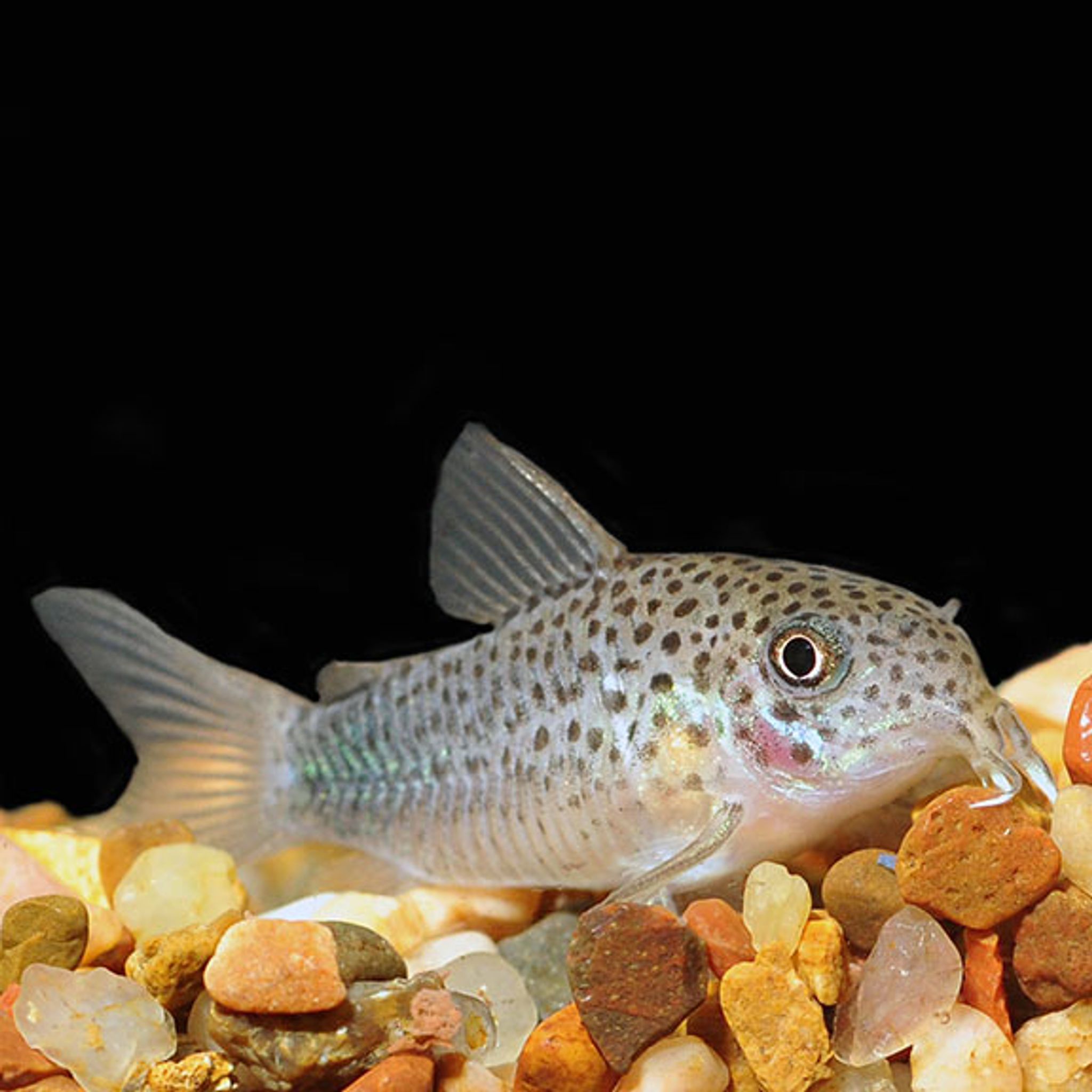

What Do Corydoras Catfish Eat? A Practical Feeding Guide
Cory catfish are bottom-dwelling omnivores that need their own sinking, protein-rich meals — they are not living vacuum cleaners for algae or leftover food. This guide covers exactly what to feed them, how much, how often, and the mistakes that quietly starve or stress out a cory shoal even when the tank looks "clean."
Why Corys Aren't Cleanup Crew Fish
The genus Corydoras includes more than 170 species of small, armored catfish native to slow-moving South American streams and floodplains. In the wild, they spend their time sifting sand and mud for insect larvae, worms, small crustaceans, and bits of plant matter or organic detritus.
The key detail is their mouth. Corys have a subterminal mouth — underslung and facing downward, built for sifting substrate, not scraping. That anatomy simply cannot rasp algae off glass, rock, or decor the way a true algae grazer's mouth can. Anything a cory eats off the tank floor was either placed there for them or dropped by other fish; they aren't removing waste or algae as a "job."
What Corydoras Actually Eat
A well-rounded cory diet has three components, and skipping any one of them long-term leads to thin, faded fish.
1. A Sinking Staple
Because corys rarely feed at the surface or in mid-water, floating flakes usually never reach them. Use sinking pellets or wafers as the daily base, and check the ingredient label: look for whole fish or shrimp listed near the top rather than grain fillers or generic "fish meal" byproducts. A staple built around real animal protein supports steady growth and color; one built mostly around starch does not.
As a rough nutritional target, a quality sinking food for corys runs about 30–40% protein with moderate fat — reasonable given how active they are while foraging. You can browse sinking foods and other options in FishyHub's Food & Supplements category.
2. Frozen or Freeze-Dried Protein (2–4x/Week)
Rotate in bloodworms, brine shrimp, daphnia, mysis, krill, or tubifex a few times a week. Always thaw frozen food before dropping it in — feeding it still frozen can shock fish and cause them to ignore it. Freeze-dried freeze dried food options offer similar variety without the freezer.
Live foods like blackworms or live brine shrimp are relished and can be fed occasionally, but they carry a real risk of introducing parasites or pathogens without a proper sourcing or quarantine plan. For most home aquariums, frozen or freeze-dried protein is the safer default.
3. Occasional Vegetable Matter
A few times a week, offer blanched or thawed peas with the skin removed, or a slice of zucchini. Algae wafers or spirulina flakes work as a minor supplement too — useful for variety, not because corys are algae specialists.
| Food Type | Examples | Frequency |
|---|---|---|
| Staple sinking food | Sinking pellets, wafers | Daily, 1–2 feedings |
| Frozen/freeze-dried protein | Bloodworms, brine shrimp, daphnia, mysis, krill, tubifex | 2–4x per week |
| Vegetable matter | Blanched peas (no skin), zucchini, spirulina flakes | 1–2x per week |
| Live food (optional) | Blackworms, live brine shrimp | Occasional, sourced carefully |
How Often and How Much to Feed
Feed once daily for most adult corys in a home aquarium, kept to an amount they can clear in about 2 to 5 minutes. Juveniles, or corys in heavily stocked and actively growing setups, generally do better with two smaller feedings a day rather than one large one.
Building in one fasting day per week is a commonly recommended, sensible practice — it mimics the natural feast-and-famine rhythm of foraging fish and gives the digestive system a break.
Portion size scales with shoal size: a pinch of pellets or a small wafer broken into pieces per 5–6 corys is a workable starting point, adjusted based on how quickly it disappears. Since corys are shoaling fish and do best kept in groups of six or more, feeding as a group also matters — a proper shoal spreads out competition and helps shyer individuals actually get fed, rather than one bold fish eating everything.
Best Time to Feed
Corys forage most actively at night or after lights-out. Feeding at dusk or after the tank lights turn off does two things: it matches their natural activity window, and it keeps faster mid-water or surface fish from intercepting sinking food before it ever reaches the bottom.
Feeding Fry and Juveniles
Baby corydoras need much finer food than adults can manage:
- Powdered fry food or finely crushed flakes
- Baby brine shrimp
- Microworms
Move them onto regular sinking pellets and wafers once they're large enough to handle the pieces, usually as juveniles start approaching a couple inches (5 cm) in length.
Do Corydoras Eat Algae?
No — not meaningfully. Their subterminal, downward-facing mouth isn't shaped to scrape algae off glass or decor the way a true algae grazer's mouth is. Corys may opportunistically nibble soft, loose algae or biofilm they happen to sift through, but this is incidental, not a real food source or function. If algae control is the goal, pair corys with dedicated algae eaters like otocinclus or nerite snails instead of expecting corys to do that job.
Do Corydoras Eat Fish Waste or Poop?
Not intentionally. While sifting through substrate for food, a cory may incidentally ingest small amounts of fecal matter or the microbes on it, but this isn't nutritionally significant and shouldn't be counted on for anything. Relying on bottom feeders to "clean up" waste is a myth — it doesn't reduce ammonia, doesn't replace gravel vacuuming, and doesn't replace water changes. Corys reduce visible leftover food on the substrate, not the bioload from waste itself.
Where Corys Fit Among Bottom Feeders
Not all bottom-dwelling fish eat the same things, even though they all forage near the substrate:
- Algae grazers — otocinclus and many algae-eating fish rasp algae and biofilm off hard surfaces.
- Omnivorous scavengers — corydoras and many loaches sift substrate for meaty protein and organic matter, with only incidental plant intake.
- Detritivores/generalists — some shrimp and snails process a broader range of decaying organic material.
- Plecos — diet varies widely by species, from algae-focused to largely wood- or protein-based.
This is why "sinking food" is a universal rule for bottom dwellers, but the type of sinking food should match the species. A pellet formulated for algae grazers isn't the right staple for a cory shoal, and vice versa. You'll find species like corys and other bottom dwellers listed under Plecos, Corys & Bottom Dwellers.
Catfish Feeding Strategies, Broadly
The catfish order as a whole spans nearly every feeding strategy in fishkeeping: some are ambush predators, some are herbivores, some specialize in eating wood, and others scavenge broadly. Mouth shape and native habitat drive most of that variation. Corydoras, with their downward sifting mouths built for substrate foraging, land firmly in the omnivore/detritivore-adjacent camp — not predators, and not true herbivores either. Understanding that context helps explain why a one-size-fits-all "catfish food" rarely suits every species well.
A Note on Substrate and Foraging
Substrate choice affects feeding success more than most feeding guides mention. Corys constantly probe the substrate with sensitive barbels (the whisker-like feelers around their mouth), and rough or sharp-edged gravel can abrade or damage them over time, which in turn discourages natural foraging behavior. Fine, rounded sand is generally gentler and lets corys sift the way they would in the wild. If you're planning a substrate swap, FishyHub's Substrate selection includes finer, rounded options suited to bottom dwellers.
Signs of a Well-Fed (or Underfed) Cory
Use these practical checks rather than guessing:
- Barbels — intact and visibly present, not stubby or frayed (a sign of rough substrate or nutritional issues).
- Body shape — a slight fullness behind the head; a pinched or sunken belly suggests underfeeding.
- Color — bright, not dull or washed out.
- Activity — actively foraging and moving around the tank, not lethargic or hiding constantly.
Common Feeding Mistakes to Avoid
- Feeding only floating flakes — corys often never reach food that stays at the surface; switch to sinking pellets or wafers.
- Assuming corys replace tank maintenance — this leads to malnourished fish and a dirty tank at the same time; feed them directly and keep up water changes and gravel vacuuming regardless.
- Overfeeding because they "look thin" — check group size and target-feed instead of adding more food, which just fouls the water.
- Ignoring competition from faster fish — sinking food gets intercepted mid-water before it lands; feed after lights-out or use a feeding tube or bottom feeder tab.
- Feeding an all-pellet diet with no variety — long-term, this risks nutritional deficiencies; rotate in frozen protein and occasional vegetables.
- Keeping too few corys — a shoal smaller than six can suppress appetite through stress.
- Using live food without a sourcing plan — freeze-dried or frozen is the safer default for most home tanks.
Overfeeding and Water Quality
Because corys feed at the bottom, uneaten sinking food is easy to miss — it settles into the substrate and decomposes out of sight, driving up ammonia and nitrite. This is a bigger risk with bottom feeders than surface fish precisely because the evidence is hidden. Feed only what clears in a few minutes, and periodically check under decor and along the substrate for buildup.
Frequently Asked Questions
How often should I feed cory catfish?
Once daily is enough for most adult corys, with twice-daily small feedings better suited to juveniles or heavily stocked, actively growing tanks. Feed only what they can clear in a few minutes, and one fasting day per week is a reasonable practice.
Do cory catfish eat algae?
Not meaningfully. Their downward-facing, subterminal mouth isn't shaped to scrape algae from hard surfaces, so they aren't algae-control fish, even though they may pick at soft biofilm opportunistically.
Do corydoras eat fish poop?
Not intentionally. Any waste ingestion happens incidentally while they sift the substrate for food, and it's not nutritionally significant. It should never substitute for regular water changes and gravel vacuuming.
What is the best staple food for cory catfish?
A quality sinking pellet or wafer with whole fish or shrimp near the top of the ingredient list, fed daily and supplemented with frozen or freeze-dried protein a few times a week.
Can cory catfish eat flake food?
Yes, in small crushed amounts, but it needs to actually reach the bottom — either pushed down manually or fed alongside sinking food. Sinking pellets or wafers remain the more reliable daily staple.
What vegetables can cory catfish eat?
Blanched or thawed peas with the skin removed, and thin zucchini slices, offered once or twice a week as a supplement to their protein-based diet.
How do I feed cory catfish without other fish stealing the food?
Feed after the tank lights go out, when corys are naturally most active, or use a bottom feeder tab or a feeding tube/turkey baster to target-feed the group directly.
What do baby cory catfish (fry) eat?
Powdered fry food, baby brine shrimp, and microworms, or finely crushed flakes until they're large enough to handle regular sinking pellets and wafers.
Ready to add a shoal of your own? Browse corydoras available on FishyHub and pick out sinking foods to match.


