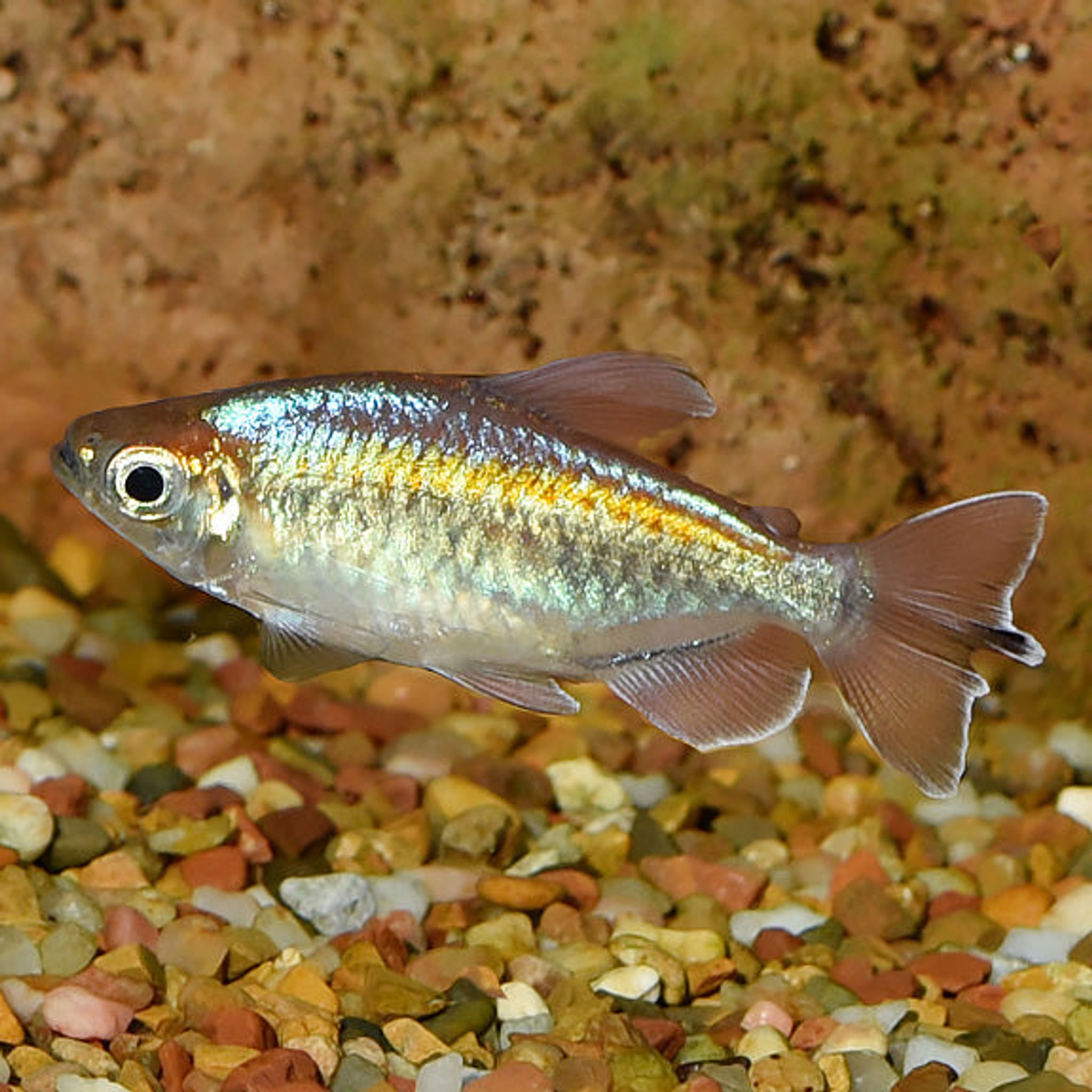
What Do Congo Tetra Eat? A Practical Feeding Guide
Congo tetras (Phenacogrammus interruptus) are omnivores that do best on a rotating diet of quality flake or small pellet food, frozen or freeze-dried protein several times a week, and the occasional live food and vegetable matter. Get the portions and timing right, and you're also feeding the vivid blue-gold shimmer and long flowing fins this species is prized for. Here's a concrete feeding plan you can actually follow.
What Congo Tetras Eat in the Wild
In their native Congo River basin, these fish forage almost constantly on:
- Insects and insect larvae
- Small crustaceans and zooplankton
- Worms
- Algae and biofilm
- Bits of plant matter and detritus
That broad, protein-heavy but not exclusively meaty diet is the blueprint for feeding them at home. A single food type, fed forever, doesn't match how they actually eat in nature — and it shows in their appearance.
Sizing Portions for a Bigger-Than-Average Tetra
Congo tetras grow to roughly 3–3.5 inches (7.5–8.5 cm), making them one of the larger tetra species — noticeably bigger than neons, ember tetras, or other small community tetras that most generic feeding advice is written for. That extra body size means:
- They can handle slightly larger flake pieces or small pellets without crushing, though juveniles still need food broken down smaller.
- A school of adult Congo tetras will consume more total food per feeding than an equivalent school of small tetras — scale the pinch size to the fish, not a one-size-fits-all amount.
- Their upturned mouths and mid-to-upper water column feeding style mean flakes and slow-sinking or floating foods work better than fast-sinking pellets, though they will pick food off the substrate opportunistically too.
The Core Diet: Daily Staple
A high-quality flake or small pellet formulated for tropical omnivores or community fish should be the daily backbone of their diet. When choosing one, check the ingredient label:
- The first few ingredients should be identifiable protein sources — fish meal, krill meal, shrimp meal — not starchy fillers.
- Dry food is calorie-dense and practical as the everyday base; frozen and live foods work best as supplements rather than the sole diet.
- Match the food's form to their mouth position: since Congo tetras feed at the surface and mid-water, flakes or floating/slow-sinking pellets suit them better than fast-sinking sinking pellets designed for bottom feeders.
You can browse flake and pellet options, along with other feeding staples, in FishyHub's Food & Supplements category.
Weekly Feeding Rotation
Variety is what separates a healthy, average-looking Congo tetra from one showing full color and fin development. A simple weekly pattern:
| Day | Primary feeding | Notes |
|---|---|---|
| Monday | Flake/pellet staple | Core diet |
| Tuesday | Flake + frozen bloodworms or brine shrimp | Protein boost |
| Wednesday | Flake/pellet staple | Core diet |
| Thursday | Flake + frozen daphnia or mysis shrimp | Protein boost |
| Friday | Flake + live food (brine shrimp, daphnia, or grindal worms) | Optional color/vitality boost |
| Saturday | Flake + spirulina flake or blanched vegetable | Fiber/plant matter |
| Sunday | Fast day — no feeding | Digestive rest |
Adjust to your schedule: the pattern matters more than the exact day. Aim for frozen or freeze-dried protein 2–4 times a week (bloodworms, brine shrimp, daphnia, mysis shrimp, or tubifex), live food 1–2 times a week as an optional upgrade, and some vegetable matter worked in occasionally.
Live vs. Frozen: Which Actually Matters More
Live foods are often framed as essential for peak color and breeding condition, but for most home aquariums, quality frozen or freeze-dried foods are an entirely adequate substitute for day-to-day feeding. Treat live food as a nice-to-have that adds enrichment and natural hunting behavior, and save it specifically for conditioning fish before a breeding attempt, rather than assuming it's mandatory for basic health.
How Often and How Much to Feed
For aquarium fish generally, a useful mental model is that a fish's stomach is roughly the size of its own eye — it doesn't take much food to fill it. Applied to Congo tetras:
- Feed 2–3 small meals per day, each fully eaten within about 2–3 minutes.
- If your schedule only allows one feeding, that's workable, but 2–3 smaller feedings better match their grazing behavior and small stomach capacity than one larger dump.
- Active schooling fish like tetras tend to do better with several small feedings than one big one, since they're natural constant grazers.
- Warmer tank temperatures speed up metabolism and may call for slightly more frequent feeding; cooler water slows digestion, so reduce frequency or amount if your tank runs on the cool side.
- Build in one fasting day per week where you skip feeding entirely — it supports digestion and is a common practice for community tanks generally, not just Congo tetras.
Diet's Effect on Color and Fin Growth
This is the part most feeding advice skips: the connection between what you feed and the traits that make Congo tetras worth keeping in the first place.
- Protein quality and variety support tissue growth, including the long, flowing dorsal and caudal fin extensions that mature males develop.
- Carotenoid-containing foods — many crustacean-based frozen and live foods, along with algae/spirulina — contribute pigments linked to the blue and gold iridescent sheen these fish are known for.
- A diet of flakes alone, fed month after month, tends to produce duller color and slower, less impressive fin growth compared to fish fed a rotating menu of flake, frozen protein, and occasional live food.
If you want your Congo tetras to reach their full visual potential, the rotation above matters more than any single "best" food.
Feeding in a Community Tank
Congo tetras are mid-water feeders, which creates a specific challenge when housed with faster or more aggressive tankmates:
- Faster surface feeders can out-compete them for food if everything is dropped in one spot.
- Spread food across multiple points on the water's surface, and consider adding some food that sinks slowly to reach fish waiting in the mid or lower water column.
- In a mixed community, watch the first few minutes of feeding to confirm the Congo tetras are actually getting fed and not just crowded out.
Congo tetras are commonly kept in peaceful community setups; you can browse other compatible community species in FishyHub's tetra category when planning tankmates.
New Fish and Quarantine Feeding
Newly acquired Congo tetras — especially during a quarantine period — sometimes hesitate to eat unfamiliar flake right away. Offering a small amount of live or frozen food initially can encourage them to start eating, after which you can gradually transition them onto your regular flake or pellet staple over the following one to two weeks.
Fry Feeding Progression
If you're raising Congo tetra fry, their food needs change quickly as they grow:
- First few days: infusoria (microscopic organisms) — fry are too small for anything larger.
- As they grow: newly hatched baby brine shrimp and microworms.
- Later stage: finely crushed flake alongside baby brine shrimp, as their mouths get large enough.
Grindal Worms as a Live Food Option
Grindal worms are a small, easy-to-culture live food that Congo tetras eagerly eat. A basic home culture just needs moist substrate kept at room temperature, fed small amounts of oats or cereal. They're a low-cost way to add live protein to the rotation — but worms alone are nutritionally incomplete. Overusing worm cultures as the entire diet can create a fat/protein imbalance, so treat grindal worms as a supplement to a formulated flake or pellet diet, not a replacement for it.
Overfeeding: Why It's a Bigger Risk Than Underfeeding
Leftover, uneaten food doesn't just disappear — it decomposes and drives up ammonia and nitrite, fuels algae blooms, and can lead to bloating, constipation, or swim bladder issues in the fish that do eat the excess. To avoid this:
- Stick to the 2–3 minute rule: if food is still visible after that, you fed too much.
- Keep the weekly fast day.
- Physically remove uneaten food and vacuum the substrate during routine maintenance.
Common Feeding Mistakes to Avoid
| Mistake | Why it's a problem | Fix |
|---|---|---|
| Feeding only flakes long-term | Duller color, slower fin growth | Rotate in frozen, live, and vegetable foods |
| Overfeeding because fish "look hungry" | Tetras beg constantly regardless of hunger | Judge portions by the 2–3 minute rule, not behavior |
| Feeding food too large for their mouths | Juveniles can't eat it, food goes to waste | Crush flakes/pellets for young fish |
| Ignoring slower fish in a mixed tank | Congo tetras get out-competed for food | Spread food across multiple spots |
| Skipping vegetable matter entirely | Can contribute to constipation over time | Add blanched veggies or spirulina food occasionally |
| Overusing live worms as the whole diet | Nutritional imbalance, obesity | Keep worms as a supplement only |
| Not adjusting for temperature swings | Cooler water slows digestion | Reduce frequency/amount in a cooler tank |
Frequently Asked Questions
Do Congo tetras eat plants?
They're omnivorous and will nibble algae, biofilm, and soft plant matter, but they aren't destructive plant eaters and won't shred healthy aquarium plants. An occasional vegetable supplement, like blanched spinach or spirulina flake, is fine and beneficial.
Can Congo tetras eat betta pellets or other community flake?
Generally, yes — protein-based flake or pellet food formulated for community or tropical fish works nutritionally. Just check that the pellet size fits their mouths and that the food isn't excessively fatty for a fish their size.
How much should I feed a school of Congo tetras?
Feed an amount that's fully eaten within 2–3 minutes, 2–3 times a day. Scale the portion to the size of your school rather than using a fixed pinch amount for every tank.
What live food is best for breeding conditioning?
Small live foods like daphnia, brine shrimp, grindal or white worms, and mosquito larvae fed for 1–2 weeks before a spawning attempt help condition adults for breeding.
What do Congo tetra fry eat?
Fry start on infusoria for the first few days, then move to baby brine shrimp and microworms, and eventually finely crushed flake once they're large enough to handle it.
Will diet affect their color?
Yes. A varied, protein-rich diet is directly linked to the vivid blue and gold iridescence and the long fin growth males are known for. A single-food diet tends to produce duller, less developed fish.
Can I feed Congo tetras once a day?
It's possible and won't necessarily harm them, but it's not ideal. Smaller, more frequent feedings — 2–3 times a day — better match their small stomach size and natural grazing behavior.
Do they need bottom-feeder food since they sometimes pick at the substrate?
Not as a staple. Congo tetras are primarily mid- and upper-water feeders, and occasional substrate picking is normal foraging behavior rather than a sign they need sinking pellets as a core food source.
A well-planned rotation of quality staple food, frozen or freeze-dried protein, and the occasional live treat is what turns an average-looking Congo tetra into one showing full color and fin development. Browse flake, frozen, and freeze-dried options to build your own rotation in FishyHub's freeze-dried food selection.


