What Do Cherry Barb Eat? A Practical Feeding Guide
Cherry barbs eat almost anything sized for their small mouths, which is exactly why so many owners overfeed them. The short answer: a quality flake or micro pellet as the daily base, plant matter a few times a week, and protein-rich frozen or live foods two to four times a week. Here's how to put that into an actual schedule.
Why Cherry Barbs Eat the Way They Do
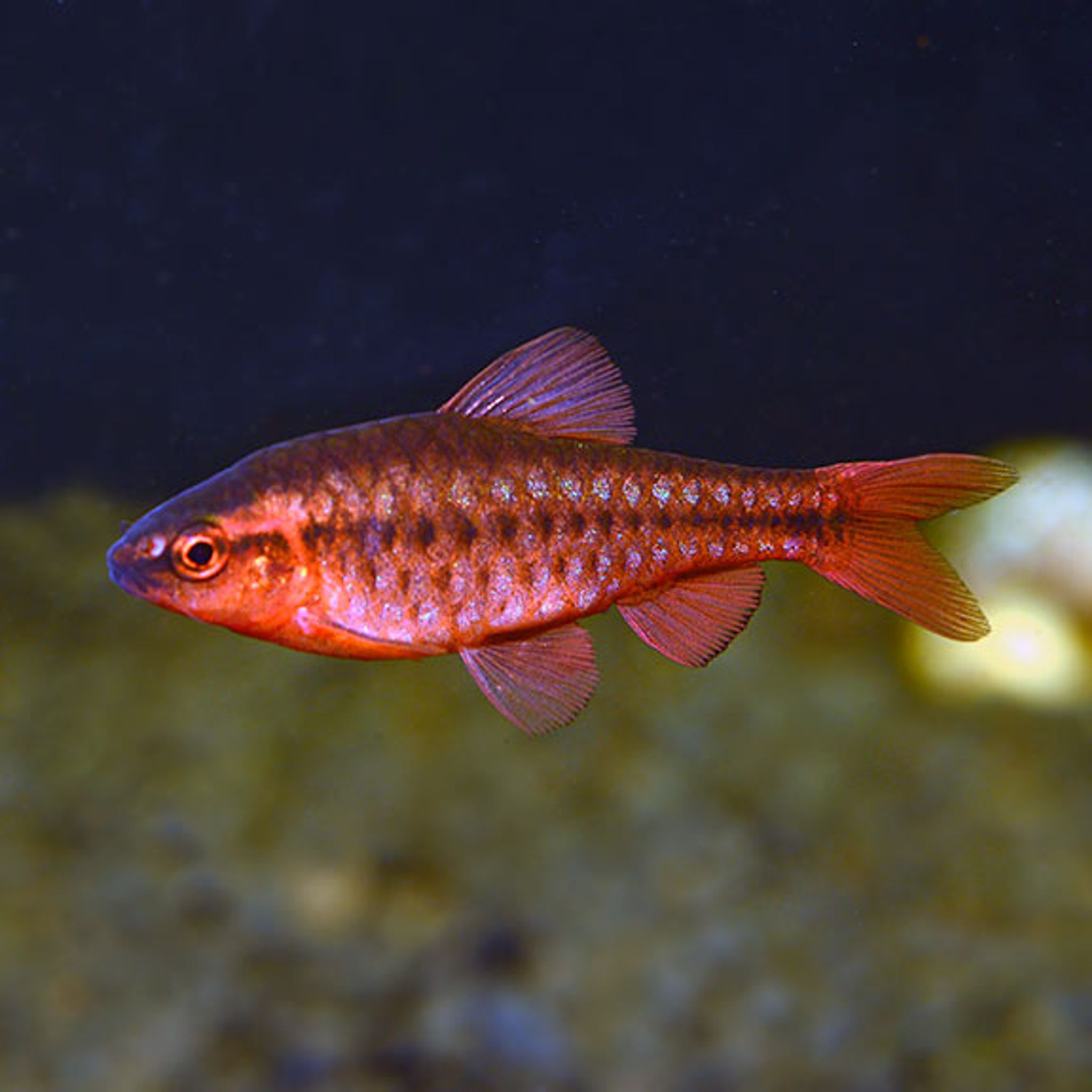
Cherry barbs (Pethia titteya) come from slow-moving, shaded streams and pools in the wet lowlands of Sri Lanka. These waters are often stained brown with tannins from fallen leaves, run soft and slightly acidic, and are packed with dense marginal vegetation.
In the wild, this habitat shapes an opportunistic, omnivorous diet: algae and biofilm coating rocks and leaf litter, small insects and their larvae, tiny crustaceans, zooplankton, and organic detritus drifting through the leaf litter. There's rarely one abundant food source, so cherry barbs graze constantly on whatever is available in small amounts.
That background explains two things aquarists notice at home: cherry barbs will pick at nearly anything you offer, and they do best in planted, dimly lit tanks that echo their native cover. A tank set up to mimic that environment — 73–81°F (23–27°C), soft to slightly acidic to neutral water, and some shaded planting — supports a healthier appetite than a bare, brightly lit setup where a shy fish may hide and eat less.
The Core Diet: What to Feed Day to Day
Adult cherry barbs reach roughly 1.5–2 inches (4–5 cm), so mouth size limits what they can handle. Everything you feed should be crushed, flaked, or naturally small.
Staple food
A quality tropical flake or a micro/nano pellet should form the daily base diet. Look for a small pellet size specifically marketed for nano or small community fish rather than a standard-size pellet meant for larger species — oversized food often goes untouched and just decays on the substrate.
Plant-based food
Because algae and biofilm make up a real part of the wild diet, work in spirulina flake or wafer, or blanched vegetables like zucchini, shelled peas, or spinach, a couple of times a week. This isn't optional garnish — skipping plant matter long-term is a common cause of dull color and nutritional gaps, even on an otherwise "complete" flake diet.
Protein boosts
Two to four times a week, offer live or frozen daphnia, bloodworms, brine shrimp, mosquito larvae, or tubifex. These support body condition, color intensity, and breeding readiness. Live and frozen foods aren't strictly required for a healthy fish, but they noticeably improve both color and spawning success, so treat them as a regular boost rather than an occasional treat or a strict requirement.
Color-enhancing foods
Foods containing natural carotenoid or astaxanthin sources — krill, brine shrimp, or a color-enhancing flake — intensify the male's signature red hue. These aren't medically necessary, but they're a popular and effective addition. The catch: they work best as a supplement layered onto a varied diet, not as the sole food, since leaning entirely on color foods can unbalance overall nutrition.
Sinking or Floating Food?
Cherry barbs feed mid-water and near the bottom, picking food off plants, decor, and substrate rather than staying at the surface. A mix of slow-sinking pellets and flake that drifts down as it wets works better than food that only floats, since it gives them a natural feeding column to work through and reduces food that's missed entirely.
How Much and How Often
Feed 2–3 small meals a day, with only as much food as clears completely within about two to three minutes. Sources differ here — some recommend once or twice daily, others push for three feedings — but for most home aquariums, two modest feedings a day is plenty, and a third is fine only if each portion is kept genuinely tiny, particularly for younger fish or breeding groups being conditioned.
Portion control matters more than food type. Cherry barbs have big appetites relative to their size and will beg and overeat readily if you let them, so it's on the owner to hold the line. Leftover food doesn't just disappear — it fouls the water, drives ammonia and nitrite spikes, and can cause bloating or constipation in the fish themselves.
A simple visual rule: offer a pinch small enough that every fish gets a bite and the water is clear of visible particles within two to three minutes. If food is still floating or settling after that window, you fed too much.
A sample weekly schedule
| Day | Staple (flake/micro pellet) | Extra |
|---|---|---|
| Monday | Yes, 2–3 small feedings | Protein (frozen daphnia or bloodworm) |
| Tuesday | Yes, 2–3 small feedings | Veggie (blanched zucchini or spirulina wafer) |
| Wednesday | Yes, 2–3 small feedings | Protein |
| Thursday | Yes, 2–3 small feedings | — |
| Friday | Yes, 2–3 small feedings | Veggie |
| Saturday | Yes, 2–3 small feedings | Protein or color-enhancing food |
| Sunday | Fasting day (adults) | — |
A once-weekly skipped feeding for established adults is a commonly recommended practice that supports digestion — it isn't neglect, it's a reset.
Feeding Fry
Newly hatched cherry barbs need much smaller food than adults. Start with infusoria or newly hatched brine shrimp (BBS), offered several times a day — three feedings daily is a common target — since fry have tiny stomachs and can't go long between meals. As they grow visibly larger, transition to crushed flake or a micro pellet ground fine enough for their mouths. Move gradually rather than switching foods all at once, watching that fry are actually consuming the new size before dropping the smaller food entirely.
Feeding in a Group and a Community Tank
Cherry barbs are shoaling fish, and a group of six or more is the general recommendation. Feeding a lone fish or a too-small group changes the picture: an undersized group tends to show more fin-nipping and squabbling, which owners often misread as a diet or nutrition issue when it's really a social one caused by insufficient numbers.
Even within a proper shoal, some individuals rank lower and get pushed off food. Spread food across two or three spots in the tank rather than dropping it in one place, so shier fish and any slower tankmates — bottom dwellers included — get a fair share before the fastest fish clean it all up.
Common Feeding Mistakes
- Overfeeding at once. Leftover food fouls water and can cause bloating; a small amount several times a day beats one large dump.
- Flakes only, forever. A flake-only diet with no rotation tends to produce duller color and nutritional shortfalls over time.
- Food too large. Standard pellets or flakes made for bigger fish often go untouched by a cherry barb's small mouth and just decay.
- Ignoring social rank at feeding time. Shy or lower-ranked fish in a group can be consistently outcompeted; spreading food out helps.
- Skipping the fasting day. A weekly no-feed day for adults supports digestion rather than harming the fish.
- Assuming appetite loss is just pickiness. Reduced eating can flag poor water quality, a temperature swing, or illness — check parameters before writing it off as fussiness.
- Treating color food as the whole diet. Color-enhancing foods work as a supplement; leaning on them exclusively can unbalance overall nutrition.
One point worth calling out directly: muted color is often blamed on tank mates or water conditions when diet variety is actually the bigger lever. A cherry barb fed one food exclusively, even a good one, tends to look flatter than one getting a genuine weekly rotation of staple, protein, and plant matter.
If you're stocking a shoal for the first time, browsing barbs alongside other small community fish is a good way to plan a compatible, appropriately sized group before you settle on a feeding routine.
Frequently Asked Questions
Do cherry barbs eat algae?
Yes — in the wild they graze on algae and biofilm, and they'll pick at algae in the tank too. It's part of a natural, varied diet but isn't enough on its own to sustain them; they still need regular supplemental feeding of staple, protein, and plant-based foods.
Can cherry barbs eat betta pellets or food?
An occasional small amount won't hurt, but betta food is often sized too large or too protein-heavy to use as a steady diet for a fish this small. A nano or small-fish formula is a better everyday match.
How often should I feed cherry barbs?
Two to three small feedings a day, with only as much as clears in a couple of minutes, works well for most home aquariums. Consider one no-feed day per week for established adults to support digestion.
What do baby cherry barbs (fry) eat?
Fry start on infusoria or newly hatched brine shrimp, fed several times a day, since they need frequent, tiny meals at first. As they grow, shift them onto crushed flake or a fine micro pellet.
Will cherry barbs eat live plants?
They're not typical plant destroyers, but an underfed group may nip soft plants like Java moss shoots out of hunger. A well-fed shoal on a consistent schedule usually leaves live plants alone.
Do cherry barbs need live food to breed?
Not strictly — a good staple and rotation can support basic breeding. But conditioning breeding pairs with live or frozen protein foods noticeably increases spawning frequency and egg output.
What human foods or DIY foods can I feed cherry barbs?
Blanched zucchini, cucumber, and shelled peas work well as vegetable additions, and an occasional homemade gel food is fine too. Avoid anything seasoned, oily, or salted, since that's made for people, not fish.
Can cherry barbs go a few days without food while I'm on vacation?
Healthy adults tolerate short fasts of up to about a week without harm. For longer trips, use a feeding block or an auto-feeder rather than overcompensating with a big meal right before or after you leave.
For staples, freeze-dried proteins, and color-enhancing options to build out this rotation, FishyHub's Food & Supplements category is worth browsing alongside its freeze-dried food selection.


