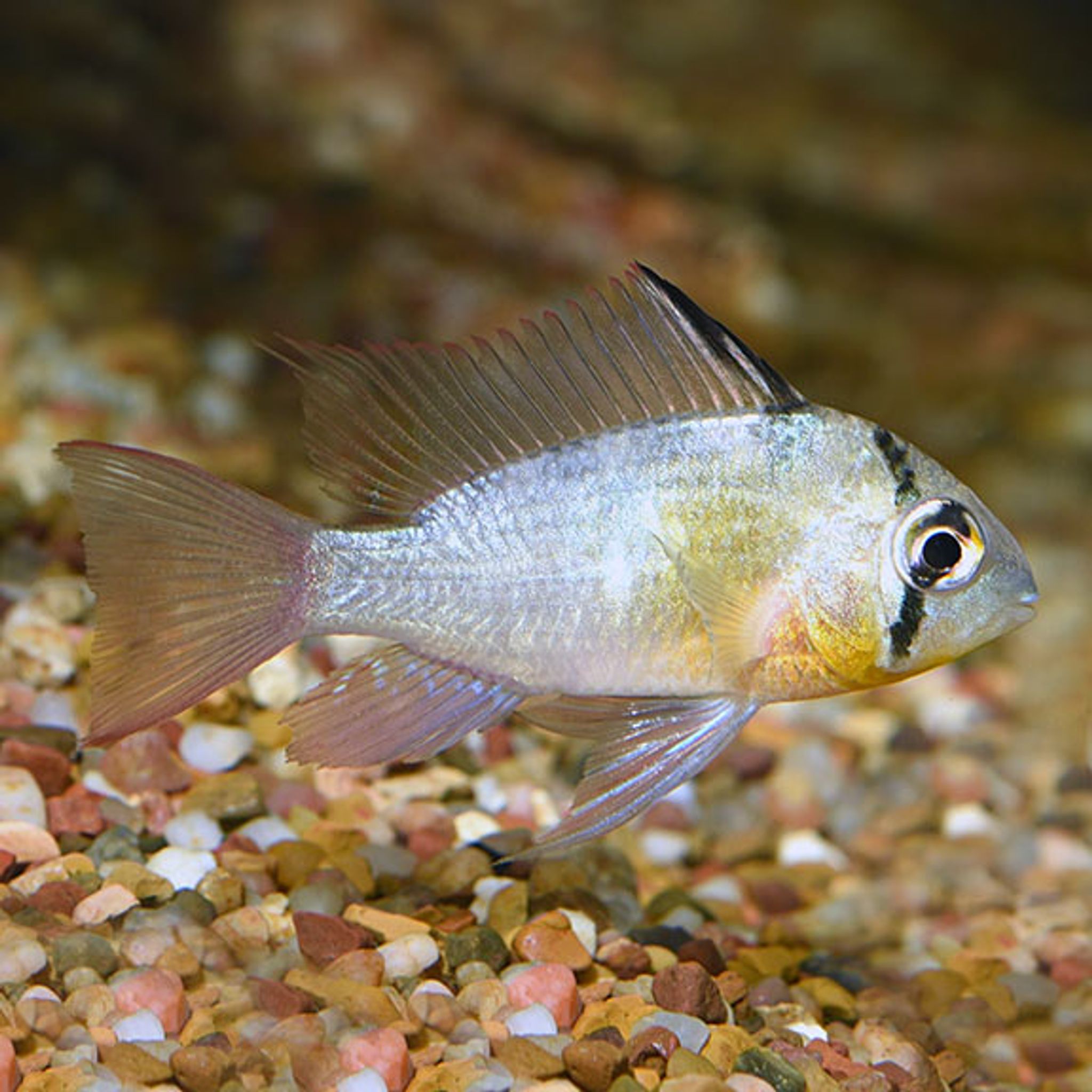

What Do Bolivian Ram Eat? A Practical Feeding Guide
Bolivian rams thrive on a varied, protein-forward diet built around a quality sinking pellet and rotated with frozen or live foods. This guide covers exactly what to feed, how much, how often, and how to fix the most common feeding mistakes that lead to poor color, bloating, or a fish that refuses to eat.
Species Snapshot: Know the Fish Before You Feed It
The Bolivian ram (Mikrogeophagus altispinosus) is a small, peaceful dwarf cichlid, typically 2–3 inches (5–7.5 cm) as an adult. It comes from slow-moving tributaries of the Amazon and Mamoré basins in South America, where it forages along soft substrate in warm, often tannin-stained water.
Compared to its more popular cousin, the German blue ram, the Bolivian ram is noticeably hardier and more tolerant of temperature and water-quality swings. A stressed or chilled German blue ram often stops eating outright, while a Bolivian ram tends to keep feeding through minor fluctuations, though its appetite still drops in cold water. Choosing between the two, the Bolivian ram is the more forgiving option for feeding consistency.
What Do Bolivian Rams Eat in the Wild?
In their native habitat, Bolivian rams are omnivores that lean carnivorous. Wild diet studies of similar dwarf cichlids point to a diet dominated by:
- Small insect larvae
- Crustaceans and zooplankton
- Aquatic worms
- Incidental plant matter and detritus picked up while sifting substrate
This natural diet is the blueprint for a captive feeding plan: protein-heavy, varied, and delivered near the bottom of the water column rather than at the surface.
Building the Staple Diet
Pellets as the Foundation
A high-quality micro or small pellet — ideally a cichlid-formula pellet sized appropriately for a 2–3 inch fish — should form the base of a Bolivian ram's diet. Pellets hold their nutritional density better than flakes and, critically, most are formulated to sink, matching how rams naturally feed.
Flakes: Supplement, Not Staple
Flake food is fine as an occasional addition but shouldn't be the primary diet. Flakes tend to be less protein- and nutrient-dense than pellets or frozen foods, and they float — which works against a fish that prefers to feed at the bottom or mid-water. Some general cichlid-care sources still list flakes as a primary food, but specialized dwarf-cichlid feeding advice consistently favors pellets and frozen foods as the staple, with flakes kept as a backup for days when you're low on other options.
Protein Variety From Frozen and Live Foods
Rotate in frozen or live protein sources 2–4 times per week to round out the diet, boost coloration, and condition fish for breeding:
- Bloodworms
- Brine shrimp
- Daphnia
- Mysis shrimp
- Blackworms
Live food has a reputation for being necessary to get rams eating at all. In practice, this depends on the fish's history: wild-caught or older imported rams can be genuinely picky and may need live or frozen bloodworms to trigger a feeding response, while most captive-bred stock adapts to pellets and frozen foods within a reasonable acclimation period.
Vegetable Matter — Optional, Not Essential
Bolivian rams will nibble biofilm and detritus, and small amounts of blanched spinach, zucchini, or spirulina flakes are a welcome addition. That said, they need far less plant matter than many other cichlids, so treat vegetables as an occasional supplement rather than a dietary requirement.
How Much and How Often to Feed
Portion Size
The rule of thumb is to feed only what fish can consume in 1–2 minutes. In concrete terms, that's typically 3–5 small pellets per adult fish per feeding, or a pinch of flake/frozen food sized to disappear within that window. Overfeeding — not underfeeding — is the single most common mistake ram keepers make, and it directly drives ammonia spikes, cloudy water, and digestive bloating.
Feeding Frequency by Life Stage
| Life stage | Feedings per day | Notes |
|---|---|---|
| Fry (first days) | Multiple small feedings | Infusoria or liquid fry food |
| Fry (growing) | 3–4 small feedings | Baby brine shrimp, microworms |
| Juveniles | 2–3 small feedings | Smaller, more frequent portions support growth |
| Adults | 1–2 feedings | Favor 2 smaller feedings for breeding pairs or active fish |
Sources split on adult feeding frequency: some recommend once daily, others twice. A reasonable middle ground is 1–2 feedings per day depending on tank temperature and fish size — lean toward two smaller feedings for breeding pairs, and one for calmer, established adults.
The Weekly Fasting Day
Skip feeding entirely one day per week. This is a common practice across cichlid keeping generally, and it gives the digestive tract a break, reducing the risk of constipation and bloating that comes from constant feeding.
Why Sinking Food Matters
Bolivian rams are bottom and mid-water feeders that sift through substrate for food in the wild. Floating flakes that linger at the surface too long often go untouched, especially if faster surface-feeding tankmates get to them first. Favor sinking pellets or foods that settle quickly, and if you're using flakes occasionally, crumble them and push them gently below the surface so the rams can find them where they naturally look for food.
Water Temperature and Appetite
Feeding response is closely tied to water temperature. Bolivian rams do best at 77–82°F (25–28°C). Below the mid-70s°F, appetite and digestion both slow noticeably — a ram that suddenly seems disinterested in food is often just cold, not sick. Check the heater and thermometer before assuming illness.
A Sample Weekly Feeding Schedule
| Day | Morning | Evening |
|---|---|---|
| Monday | Micro pellets | Bloodworms (frozen) |
| Tuesday | Micro pellets | Micro pellets |
| Wednesday | Brine shrimp | Micro pellets |
| Thursday | Micro pellets | Daphnia |
| Friday | Mysis shrimp | Micro pellets |
| Saturday | Micro pellets | Blackworms |
| Sunday | Fast day — no feeding | Fast day — no feeding |
Adjust portions and timing to your fish's activity level, and drop to one feeding per day on this schedule if you keep calm, established adults rather than juveniles or breeding pairs.
Foods to Avoid or Limit
- Bread: no nutritional value, fouls water quickly
- Excess mammalian meat (such as beef heart): too fatty and nutrient-imbalanced as a regular food
- Low-quality flake fillers: often bulked with cheap grain rather than protein
- Freeze-dried foods fed dry: always soak or rehydrate freeze-dried bloodworms and similar products first — feeding them dry can cause the food to expand in the gut and lead to bloating
You can browse freeze-dried food options if you want to add variety, just remember to rehydrate before feeding.
Feeding Fry: From Hatch to Juvenile
If you're breeding Bolivian rams, fry feeding follows a clear progression:
- First few days: infusoria or a commercial liquid fry food, since fry are too small for anything larger
- As fry grow: transition to newly hatched baby brine shrimp and microworms, which provide the protein needed for rapid early growth
For better results, consider gut-loading your live foods — culturing brine shrimp or daphnia on a quality feed before offering them — so the nutrition passed to fry and adult rams is higher than what unfed cultures provide.
Diet, Breeding Readiness, and Egg Quality
Feeding quality has a direct line to breeding success. Rams conditioned on a varied diet heavy in live or frozen protein in the weeks before spawning tend to produce more viable eggs and show stronger parental care than rams kept on a monotonous or low-protein diet. If you're working toward a spawn, step up the frequency of bloodworms, brine shrimp, and daphnia in the weeks leading up to it — this is the same conditioning effect breeders use across dwarf cichlids generally.
Feeding During Quarantine and Acclimation
New rams — whether wild-caught or freshly shipped captive-bred stock — often have a suppressed appetite during the first days in a new tank. Offer small amounts of highly palatable food first, like frozen bloodworms, rather than pellets, feed less frequently than you would an established fish, and don't panic if a new ram skips a day or two of food. Pushing a full adult portion on a newly arrived, stressed fish is more likely to foul the water than to get it eating.
Extra: Removing Tannins From Ram Tanks
Bolivian rams come from tannin-stained blackwater habitats, so a tea-colored tank is not a health problem — it's closer to their native water. If you'd rather keep the water crystal clear for viewing:
- Run activated carbon or a purigen-type resin in your filter to pull tannins out relatively quickly
- Do more frequent partial water changes to dilute tannin buildup
- Pre-soak or boil driftwood before adding it, since driftwood is usually the main tannin source
It's worth being clear that removing tannins is a cosmetic choice, not a health necessity — mildly acidic, tannin-stained water can actually benefit rams by mimicking their natural habitat.
Extra: Colony Breeding vs. Single Breeder Setups
Ram keepers generally choose between two breeding approaches:
- Colony-style setup: multiple pairs or a small group housed in a larger, well-decorated tank with flat stones and caves, allowed to pair up naturally. This tends to produce more natural spawning behavior and better parental care, but it needs more space and careful bioload management to keep water quality stable with several breeding-condition fish in one tank.
- Breeder trap/single-pair approach: an established pair is isolated, or eggs are moved to a separate rearing tank away from the parents. This gives more direct control over the fry environment but removes the natural pairing process and parental care.
Neither approach is strictly better — a colony setup rewards patience and space, while a single breeder tank rewards control, especially for a first breeding attempt.
Extra: Conditioning Pairs to Spawn
Beyond diet, a few environmental triggers help mimic natural spawning cues:
- A slight temperature rise toward the upper end of their preferred range
- Softer, more acidic water, closer to their native blackwater conditions
- Increased live food feeding in the weeks before the expected spawn
- Providing flat rocks, broad leaves, or slate as spawning surfaces, since Bolivian rams are substrate/open spawners rather than cave spawners
If you're setting up a dedicated breeding tank, browse American cichlids for compatible tankmates or additional breeding stock.
Common Feeding Mistakes and How to Fix Them
| Mistake | Result | Fix |
|---|---|---|
| Overfeeding | Ammonia spikes, cloudy water, bloating | Portion to 1–2 minutes of consumption, add a weekly fast day |
| Flakes-only diet | Poor color, low energy | Add frozen/live protein 2–4x/week |
| Floating food left uneaten | Wasted food, poor nutrition | Switch to sinking pellets, push food below surface |
| Cold water | Suppressed appetite mistaken for illness | Check and raise heater setting to 77–82°F |
| Picky new pellets | Fish ignores new food | Mix new pellets with familiar food, or start with frozen bloodworms |
| Dry freeze-dried food | Bloating, constipation | Always soak/rehydrate before feeding |
| Aggressive tankmates | Rams outcompeted at feeding | Target-feed with a turkey baster, feed in multiple spots |
Frequently Asked Questions
How often should I feed Bolivian rams?
Feed adults 1–2 times daily, adjusting toward two smaller feedings for breeding pairs or active fish. Juveniles do best with 2–3 small feedings a day, and it's worth building in one fasting day per week for all ages.
What is the best staple food for Bolivian rams?
A quality small or micro cichlid pellet, sized for a 2–3 inch fish, makes the best staple. Round it out with frozen or live foods like bloodworms, brine shrimp, and daphnia a few times a week for a complete diet.
Do Bolivian rams eat algae or plants?
They'll nibble at biofilm and detritus on surfaces and appreciate occasional blanched vegetables or spirulina, but they aren't dedicated algae eaters. Don't rely on them for algae control in a planted or community tank.
Can Bolivian rams eat flake food?
Yes, but only as a supplement. Flakes are generally lower in protein and nutrient density than pellets or frozen foods, and they float, so pellets and frozen options remain the better staple choice.
Why won't my Bolivian ram eat?
The most common causes are cold water, stress from a new environment, or unfamiliarity with the food offered. Check your heater first, then try frozen or live bloodworms, which tend to trigger a feeding response even in reluctant fish.
How much should I feed a Bolivian ram at each feeding?
Aim for roughly 3–5 small pellets per adult fish, or an equivalent pinch of flake or frozen food, consumed within 1–2 minutes. If food is still visible after that window, you're feeding too much.
What do baby Bolivian rams (fry) eat?
Newly hatched fry need infusoria or a liquid fry food for the first several days. As they grow, transition them to baby brine shrimp and microworms to support faster development.
Is it necessary to remove tannins from the water for rams?
No. Tannins are cosmetic and mildly beneficial, since the softer, more acidic water they create mimics the rams' native blackwater habitat. Removing them with carbon, resin, or water changes is purely a clarity preference, not a health requirement.
A consistent, varied feeding routine is one of the simplest ways to keep Bolivian rams colorful, active, and breeding-ready. To stock your setup, browse Bolivian rams and other dwarf cichlids available on FishyHub.


