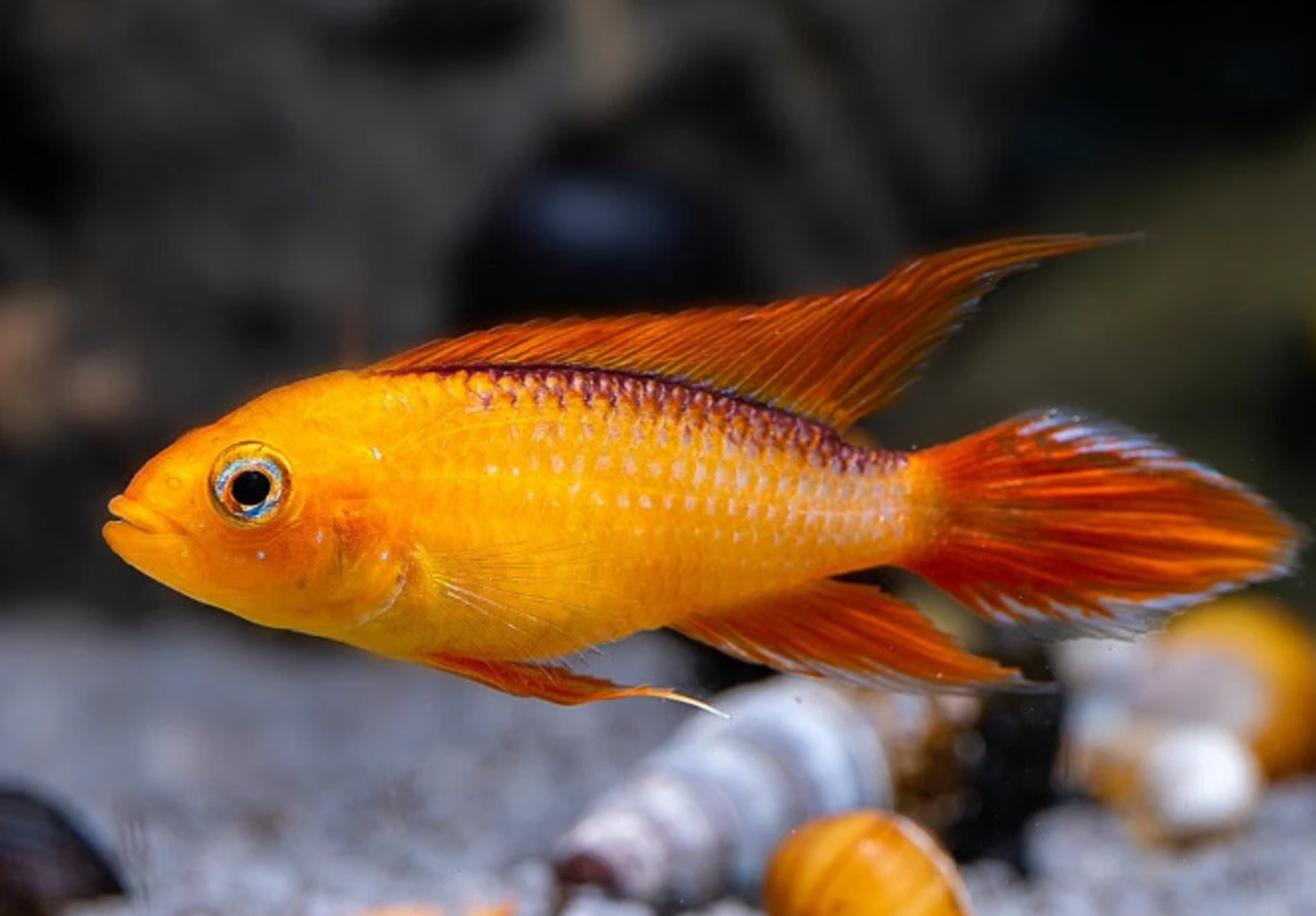

What Do Apistogramma Eat? A Practical Feeding Guide
Apistogramma are small, food-motivated dwarf cichlids, but their tiny mouths and blackwater origins mean a generic cichlid diet often falls short. This guide covers exactly what to feed, how often, how to win over shy or wild-caught fish, and how to culture live foods at home so your colony always has fresh protein on hand.
What Apistogramma Eat in the Wild
In South American blackwater streams, Apistogramma spend their day picking through leaf litter and sediment for small prey. Their natural diet is omnivorous but leans heavily carnivorous, made up mostly of:
- Aquatic insect larvae
- Small worms
- Copepods and other tiny crustaceans
- Zooplankton
- Some detritus and biofilm grazed off leaves and wood
Plant matter makes up very little of what they actually eat. This matters at home: a diet built around greens or generic flake mixes doesn't match what these fish are built to process.
Their mouths are small, slightly downturned, and somewhat protrusible — an adaptation for picking food off the substrate and leaf litter rather than gulping food from the water column. This is why food size matters more for Apistogramma than for larger cichlids. Anything oversized simply gets spit out or ignored.
Building a Staple Diet
The most reliable staple is a high-quality small sinking pellet or micro-pellet (1–1.5 mm) formulated for small cichlids. Sinking pellets suit their bottom-and-mid-water feeding style far better than flakes, which float and often go untouched.
There's genuine disagreement here worth flagging: some general cichlid guides list flake food as an acceptable staple, while Apisto-specific advice leans toward sinking pellets because of how these fish actually feed. The practical answer is to use small sinking pellets as the base, and treat flakes as an occasional supplement rather than the core of the diet.
Feed the staple pellet 3–5 times per week, working in live or frozen foods on the other days (more on that below). Relying on pellets or flakes alone, without rotating protein sources, tends to show up over time as duller color and weaker breeding results.
Why Live and Frozen Foods Aren't Optional
For Apistogramma, live and frozen foods function as essential dietary variety, not a treat you add for fun. Good rotation options include:
| Food | Feeding notes |
|---|---|
| Baby brine shrimp (live or frozen) | Excellent staple variety, good for all ages |
| Daphnia | Light, easy to digest, good for gut health |
| Bloodworms (frozen) | Rich protein, feed in moderation |
| Blackworms | Very high protein/fat; great conditioning food, feed sparingly |
| Grindal worms | Easy to culture, good protein-to-fat ratio |
| Microworms | Ideal for fry and picky feeders |
| Mosquito larvae | Highly relished, mimics natural prey |
| Tubifex worms | Only if commercially cultured — see caution below |
A note on tubifex: wild-collected tubifex carries a meaningful disease and parasite risk from the polluted waters it's often harvested from. If you use it at all, stick to commercially cultured, disease-free sources, or skip it in favor of blackworms, grindal worms, or brine shrimp instead.
A note on blackworms: they're one of the best conditioning foods available for breeding pairs, but their high fat content means moderation matters. Always rinse blackworms thoroughly before feeding, and buy only from a reputable, disease-controlled source.
How Often and How Much to Feed
Feeding frequency for adult Apistogramma is another point where sources diverge. Some say once a day is enough for established adults; others recommend two smaller feedings. In practice:
- Adults: two small feedings per day works well for most home tanks; once daily is acceptable for well-settled, stable adults.
- Breeding pairs: feed more frequently with a higher proportion of live/frozen food to support conditioning.
- Juveniles: 2–3 feedings per day, with live food making up a larger share of the diet.
The golden rule across all life stages: feed only what's consumed in 1–2 minutes. Apistogramma are notably sensitive to poor water quality, and leftover food breaks down fast in the low-flow, densely planted tanks many keepers favor. If temperatures drop toward the low end of their comfortable range, scale portions back slightly — metabolism and appetite slow along with the water temperature.
Signs of Overfeeding
- Food still visible on the substrate after a few minutes
- Cloudy water or an ammonia spike
- Visibly bloated fish
If you see any of these, cut the portion size and remove uneaten food promptly, especially in tanks with heavy botanicals and slow flow, where feeding volume and water-change frequency need to move together — heavier feeding in a tannin-stained, low-flow tank compounds waste buildup faster than it would in a brighter, higher-flow setup.
Getting Shy or New Arrivals Eating
New, shy, or wild-caught Apistogramma frequently refuse dry food at first. Wild imports in particular often need a longer live-food-only acclimation period before they'll accept anything processed. The fix is the same either way:
- Start with live foods only — baby brine shrimp, microworms, or grindal worms — dropped near where the fish is hiding.
- Keep the tank calm and dimly lit at feeding time to reduce stress.
- Once the fish is feeding confidently, introduce frozen foods.
- Gradually mix in small sinking pellets once frozen foods are accepted without hesitation.
A fish that "won't eat" is often assumed to be sick, but the more common cause is wrong water parameters — water that's too hard, too alkaline, or a tank that's too bright and exposed. Apistogramma do best in soft, slightly acidic water, roughly pH 5.5–7.0 and 78–84°F (26–29°C). Correct the environment before assuming illness.
Substrate and cover also affect feeding confidence: Apistogramma feed more readily over dark substrate with leaf litter or plant cover to retreat into, compared to a bare, brightly lit tank where they feel exposed. A dark, fine-grained substrate from FishyHub's substrate selection paired with some leaf litter can make a meaningful difference for a nervous fish.
Feeding Fry
Newly free-swimming fry need food at a much smaller scale than adults:
- First few days: infusoria or vinegar eels.
- As they grow: baby brine shrimp nauplii and microworms.
- Parents will often lead fry toward biofilm growing on leaf litter and plants, which supplements whatever you're feeding directly.
Fry have tiny stomachs and fast metabolisms, so multiple small feedings a day matter more here than at any other life stage.
Conditioning and Variety
Gut-loading live foods before feeding them boosts their nutritional value, and occasionally soaking dry food in a vitamin supplement supports color and breeding condition over time. FishyHub's freeze-dried food range works well as a rotation option alongside live cultures when fresh live food isn't available that day.
Culturing Grindal Worms at Home
Grindal worms are typically the easiest live food for a beginner to culture — no aeration needed, and they take up very little space.
- Container: a shallow plastic tub with a tight lid; cover any ventilation holes with mesh or nylon to keep out pests.
- Medium: coconut fiber, 1–2 inches (2.5–5 cm) deep, kept damp enough to form a ball that releases a drop of water when squeezed (roughly 23–25% moisture).
- Temperature: 68–77°F (20–25°C); reproduction stops below about 57°F (14°C). Keep the culture in a dark, warm spot.
- Feeding the culture: place crushed dry dog or cat food, fish flakes, oatmeal, or bread soaked in milk on top of the substrate — never buried. Light daily feeding is easiest; increase as the colony grows, and cut back immediately if food sits uneaten or starts to mold.
- Harvesting: lay a glass or plastic plate on the substrate surface. Worms climb onto it within a short time; rinse them into clean water and dose with a pipette or turkey baster.
- Maintenance: replace the entire culture medium every 3–4 months to prevent mite infestations and culture crashes.
Nutritionally, grindal worms are high in protein, low in fat and carbs, and carry useful vitamin A and carotene — a solid conditioning food used in rotation.
Setting Up a Blackworm Culture
Blackworms need a cooler, slower setup than grindal worms:
- Use a shallow container with only an inch or two (2.5–5 cm) of water, kept slow-moving or gently aerated with a sponge filter.
- A cool temperature range of roughly 50–60°F (10–16°C) keeps blackworms dormant and extends their storage life, though they'll tolerate room temperature for short periods.
- Feed sparingly — a pinch of fish flake or a small piece of blanched vegetable every few days is enough.
- Rinse and change the water regularly to prevent die-off and ammonia buildup, and harvest with a net or by siphon.
If culturing isn't practical, blackworms can simply be purchased and refrigerated in shallow, rinsed water for short-term storage instead.
Using Tannins and Botanicals
Driftwood, catappa (Indian almond) leaves, alder cones, and similar botanicals release tannins that tint the water tea-brown, mildly lower pH, and add trace humic and tannic acids. For Apistogramma, tannin-stained water:
- Mimics the natural blackwater habitat they evolved in
- Offers mild antibacterial and antifungal properties
- Tends to reduce stress and improve feeding and breeding behavior in shy dwarf cichlids
The main downsides are cosmetic — some keepers simply prefer clear water for viewing their fish. Tint level is easy to control: run activated carbon or a purifying resin to lighten it, or do water changes to dial it up or down.
Beyond tannins, leaf litter, seed pods, and bark serve a second purpose: as they decay, they grow a biofilm and microfauna layer that becomes a genuine grazing food source for Apistogramma and their fry, closely echoing the leaf-litter habitats they occupy in the wild. Rinse or boil botanicals before adding them to remove surface contaminants and control how quickly tannins release. For Apistogramma species suited to this style of setup, browse FishyHub's Angelfish, Discus, Rams & Cichlids category.
Common Feeding Mistakes to Avoid
- Food too large: oversized pellets or flakes get spit out or ignored — always match food size to a small, downturned mouth.
- Overfeeding in low-flow tanks: feed smaller amounts more often, and remove excess promptly.
- Mistaking stress for illness: a fish refusing food is more often reacting to hard, alkaline, or overly bright conditions than to sickness.
- Relying only on dry food for new arrivals: switch to live or frozen food first to establish a feeding response, then transition gradually.
- Skipping variety: an all-flake or all-pellet diet over time tends to dull color and reduce breeding success.
- Using unrinsed or poorly sourced live worms: this is a common way disease enters a tank.
- Letting a live-food culture crash: overfeeding the culture medium or skipping substrate replacement leads to mold, mites, and a collapsed colony.
Frequently Asked Questions
Can Apistogramma live on flake food alone?
Not ideally. Flakes float and don't match the size or nutrition profile Apistogramma need as a sole diet. Use small sinking pellets as the staple, with flakes only as an occasional supplement.
How often should I feed Apistogramma fry?
Multiple small feedings per day work best — infusoria or vinegar eels for the first few days, then baby brine shrimp and microworms as they grow. Fry have tiny stomachs and need frequent food to keep pace with their growth rate.
Do Apistogramma need live food to breed?
It's not strictly required, but strongly recommended. Live or frozen protein-rich foods like blackworms, brine shrimp, and grindal worms condition adults and noticeably improve spawning success.
Is blackwater or tannin-stained water necessary for feeding success?
Not mandatory, but many Apistogramma show more natural, less stressed feeding behavior in soft, tannin-tinted water that resembles their native streams.
What live food is easiest for a beginner to culture at home?
Grindal worms or microworms are typically the easiest, low-maintenance cultures to start with — both need minimal space and no aeration.
Can I overfeed Apistogramma, and how do I know?
Yes. Signs include leftover food after a few minutes, cloudy water, or visibly bloated fish. Feed only what gets consumed quickly, and remove any excess.
Are tubifex worms safe to feed?
Only if they're commercially cultured and disease-free. Wild-collected tubifex carries a meaningful parasite and pollution risk, so many keepers avoid it in favor of blackworms or brine shrimp.
How do I get a new, shy Apistogramma eating?
Start with live food dropped near its hiding spot, keep the tank calm and dimly lit at feeding time, then gradually introduce frozen and dry foods once it's feeding with confidence.
A well-rounded feeding routine — sized correctly, varied in protein source, and matched to soft, tannin-friendly water — does more for Apistogramma health and color than any single product ever will. Browse FishyHub's Food & Supplements category to build out a rotation that covers pellets, freeze-dried options, and conditioning foods in one place.


