
What Do African Butterfly Fish Eat? A Practical Feeding Guide
African butterfly fish (Pantodon buchholzi) eat live and frozen insects, small crustaceans, and occasionally floating pellets — but only if the food stays at the surface. Get the format wrong and a well-fed tank can still starve this fish, because it almost never looks down for a meal. This guide covers exactly what to feed, how often, and how to wean it onto easier prepared foods.
Why Format Matters More Than Ingredient
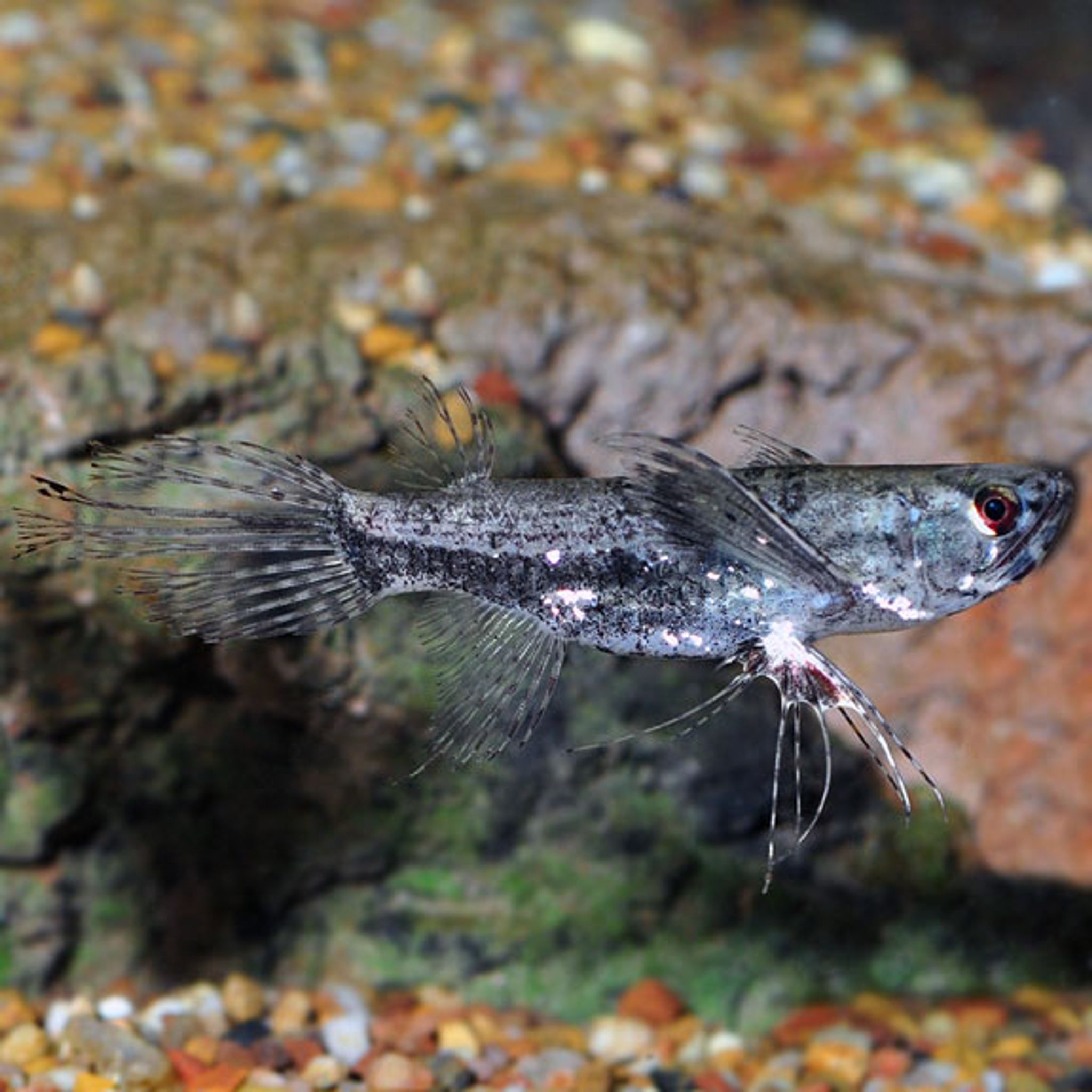
The African butterfly fish is a surface-ambush predator, built almost entirely around one hunting style. Its mouth is upturned, its eyes sit high on its head, and its flattened body is shaped to hover motionless just under the water's film, waiting for something to land above it.
In the wild, it feeds on terrestrial insects that fall onto the water — crickets, moths, and beetles — along with small fish and invertebrates it can reach without leaving the surface. It does not cruise the water column or forage along the substrate the way most aquarium fish do.
That anatomy explains the single most important rule in this guide: food has to arrive and stay at the surface. A fish that will happily eat a cricket dropped an inch from its mouth may ignore identical nutrition sitting on the gravel below, because sinking food simply falls outside its hunting instinct.
Core Diet: What to Actually Feed
Live Foods (the reliable base)
Live food triggers the strongest feeding response and should form the backbone of the diet:
- Crickets — the top choice overall, and especially useful for conditioning breeding pairs
- Mealworms and waxworms
- Roaches and other small feeder insects
- Live brine shrimp
Frozen and Prepared Foods
Once thawed, these can be floated on the surface as a supplement or partial replacement for live insects:
- Frozen bloodworms
- Frozen brine shrimp
- Floating krill
- Floating pellets or sticks — large enough to be noticed and persistent enough to float rather than sink
- Freeze-dried krill, browsable in FishyHub's freeze-dried food selection
Will They Actually Eat Pellets?
Sources disagree here, and it's worth being honest about it. Some guides claim African butterfly fish readily learn to take floating pellets; others report that most individuals never fully switch off live food. The realistic middle ground: expect a minority of fish to convert completely, and plan to keep live or frozen food in rotation regardless. Treat pellet acceptance as a bonus outcome, not the foundation of your feeding plan.
Feeding Frequency and Portions
Small, frequent meals suit this species better than one large daily feeding. The consensus is 2 to 4 small feedings per day, which mimics the natural pattern of ambush-and-rest hunting far more closely than a single big meal.
| Feeding approach | Result |
|---|---|
| 1 large feeding/day | Excess food often goes uneaten, fouls water, fish gorges then fasts |
| 2–4 small feedings/day | Matches natural hunting rhythm, less waste, steadier appetite |
| Sinking flakes/pellets | Frequently ignored entirely — food drifts below the strike zone |
| Food anchored at surface | Reliable feeding response, minimal waste |
Drop food gently directly onto the surface near the fish rather than scattering it across the tank. Feeding tongs or a floating feeding ring both help keep food from drifting under decor or plants before the fish can reach it.
Step-by-Step Weaning Onto Prepared Foods
If your goal is to reduce dependence on live insects over time, move through this sequence gradually rather than switching foods abruptly:
- Start with live crickets or small feeder insects. Confirm the fish is feeding confidently before changing anything.
- Introduce thawed frozen bloodworms or brine shrimp, floated at the surface alongside the live food.
- Mix in floating pellets or freeze-dried krill in small amounts once frozen food is accepted reliably.
- Gradually reduce the live-food ratio, watching closely for any drop in feeding activity.
- Expect some fish to plateau at partial conversion. If a fish stalls at accepting frozen food but ignores pellets entirely, that is a normal outcome — keep frozen and occasional live food as the permanent base rather than forcing the last step.
Feeding Fry and Juveniles
Fry share the adult's surface-only feeding behavior from a very early age, so their food has to be both tiny and floating:
- Baby brine shrimp as the primary first food
- Micro worms as a secondary live option
- More frequent, smaller feedings than adults receive, supporting their faster growth rate
Skip sinking fry foods entirely — even newly hatched fry will pass up food that drops below the surface film.
Tank Setup That Supports Feeding Success
A tank built around this fish's feeding style prevents most of the common problems keepers run into:
- Floating plants such as frogbit, water lettuce, or hornwort give ambush cover and calm the surface, both of which improve feeding confidence
- Low surface flow — strong filter output at the surface pushes food under or scatters it before the fish can strike; baffle the outflow or choose gentler filtration
- Dim lighting suits this light-sensitive, sedentary species and reduces stress that can suppress appetite
- A long, shallow footprint rather than a tall tank, since surface area matters far more than depth for a fish that hunts exclusively at the top
- A tight-fitting lid — non-negotiable, and directly tied to feeding, since this fish is a strong jumper and will launch itself at insects moving above the water or bolt when startled during feeding
On minimum tank size, treat 30 gallons (about 114 liters) as an absolute floor for a single fish, with 40+ gallons (150+ liters) as the comfortable standard, especially once tankmates are added. A long, shallow tank in the 40-gallon range gives noticeably more usable surface than a tall tank of the same volume — worth checking dimensions on FishyHub's glass tank selection before buying.
Water conditions also affect appetite directly: aim for roughly 75–86°F (24–30°C), a pH around 6.0–7.2 (soft, slightly acidic to neutral), and soft-to-moderate hardness. A stressed or poorly maintained fish goes off food well before other symptoms show up.
Tankmate Compatibility: A Feeding-Safety Issue
Because this is an ambush predator with a large upturned mouth, tankmate choice is really a feeding question in disguise:
- Unsafe: neon-sized tetras, small livebearers, shrimp, and anything else small enough to fit in its mouth — these will be eaten, not befriended
- Safe: mid-water and bottom-dwelling species of similar or larger size that won't compete for surface space or get mistaken for prey
If you're stocking a community tank around one, look toward appropriately sized options in FishyHub's other tropical fishes category rather than anything small enough to disappear at feeding time.
Feeder Insect Safety
Not all feeder insects are equal in risk:
- Prefer commercially raised feeder insects over wild-caught ones, since wild insects carry a real risk of pesticide exposure
- Gut-load feeder insects before offering them — a well-fed feeder passes better nutrition to the fish than an empty one
- Quarantine new feeders the same way you would a new fish
- Occasionally dust feeder insects with a calcium or vitamin supplement, a common practice with other insectivorous fish that also benefits this species over the long term
Nutritional Variety Matters
Long-term reliance on a single feeder insect can leave gaps in protein and fat balance. Rotating between several feeder types — crickets, roaches, waxworms, and occasional bloodworms or brine shrimp — spreads out nutritional strengths and weaknesses more effectively than any one food fed exclusively.
Signs of Poor Nutrition or Stress
Watch for these warning signs, which usually trace back to diet or environment rather than illness:
- Sunken belly despite apparent feeding
- Lethargy or reduced activity at the surface
- Color loss or dulling
- Refusing food outright
- Torn fins, often from stress-driven skittishness rather than aggression
If any of these appear, work back through feeding format, surface flow, and water parameters before assuming disease.
Common Feeding Mistakes to Avoid
- Feeding only flakes or pellets that sink or drift — the fish appears to ignore food entirely and slowly loses condition; switch to hand-feeding at the surface or use a floating feeding ring
- One large feeding instead of 2–4 smaller ones — leftover food fouls the water since this fish won't chase sunk leftovers
- A loose or missing lid — the single most cited care mistake, and it's a direct feeding hazard: live insects moving above an open tank are exactly what triggers a jump
- Small tankmates chosen for "community" tanks — they become food, not companions
- High water flow at the surface — pushes food under or scatters it, and stresses a naturally sedentary fish
- Wild-caught insects with no pesticide screening — stick to commercially raised feeders
- Assuming illness when a new fish won't eat — a short adjustment period is normal; try live crickets first, the most reliable trigger food, before escalating
The First 48–72 Hours With a New Fish
A newly acquired African butterfly fish often refuses food for the first day or two simply from transport stress. During this window, keep the lid secure, keep the surface calm, and offer live crickets before anything else — they're the most reliable way to get a stressed fish feeding again. Avoid disturbing the tank unnecessarily, and don't assume illness until several days of refused food have passed with no other symptoms.
Frequently Asked Questions
Will African butterfly fish eat flakes or pellets?
Sometimes, if the pellets float persistently and are large enough to register as prey, but many individuals still need live or frozen food as their reliable base. Don't build a feeding plan around pellet acceptance alone.
How often should I feed my African butterfly fish?
Feed 2 to 4 small meals a day, always delivered directly to the surface. Smaller, more frequent meals match this fish's natural ambush-and-rest hunting pattern better than one large feeding.
Can I feed it feeder goldfish?
Small feeder fish will be eaten opportunistically, but goldfish are a poor long-term choice due to their fat content and thiaminase risk. Insects, brine shrimp, or appropriately sized quarantined feeders are better staples.
Why is my African butterfly fish not eating?
Check first for food sinking out of reach, strong surface flow scattering it, new-fish adjustment stress, or water quality issues. Rule these out before assuming the fish is sick.
What live foods are best?
Crickets are the top pick, followed by mealworms, roaches, waxworms, and bloodworms. Rotating between several types helps avoid nutritional gaps that come from feeding just one insect long-term.
Do fry eat the same food as adults?
No — fry need much smaller live foods such as baby brine shrimp and micro worms, and they still only feed at the surface. Feed them more frequently than adults to support faster growth.
Can they be kept with shrimp or small fish?
Only if those animals are too large to be swallowed. Anything smaller than the fish's mouth will eventually be treated as food rather than a tankmate.
Do they need floating plants to eat well?
Floating plants aren't strictly required, but they're strongly recommended. Cover from plants like frogbit or water lettuce calms the surface and gives the fish ambush confidence, which improves feeding reliability and reduces stress-related appetite loss.
Ready to set up a tank built for a surface feeder? Browse live and frozen feeding options in FishyHub's Food & Supplements category to get your African butterfly fish's diet dialed in from day one.


