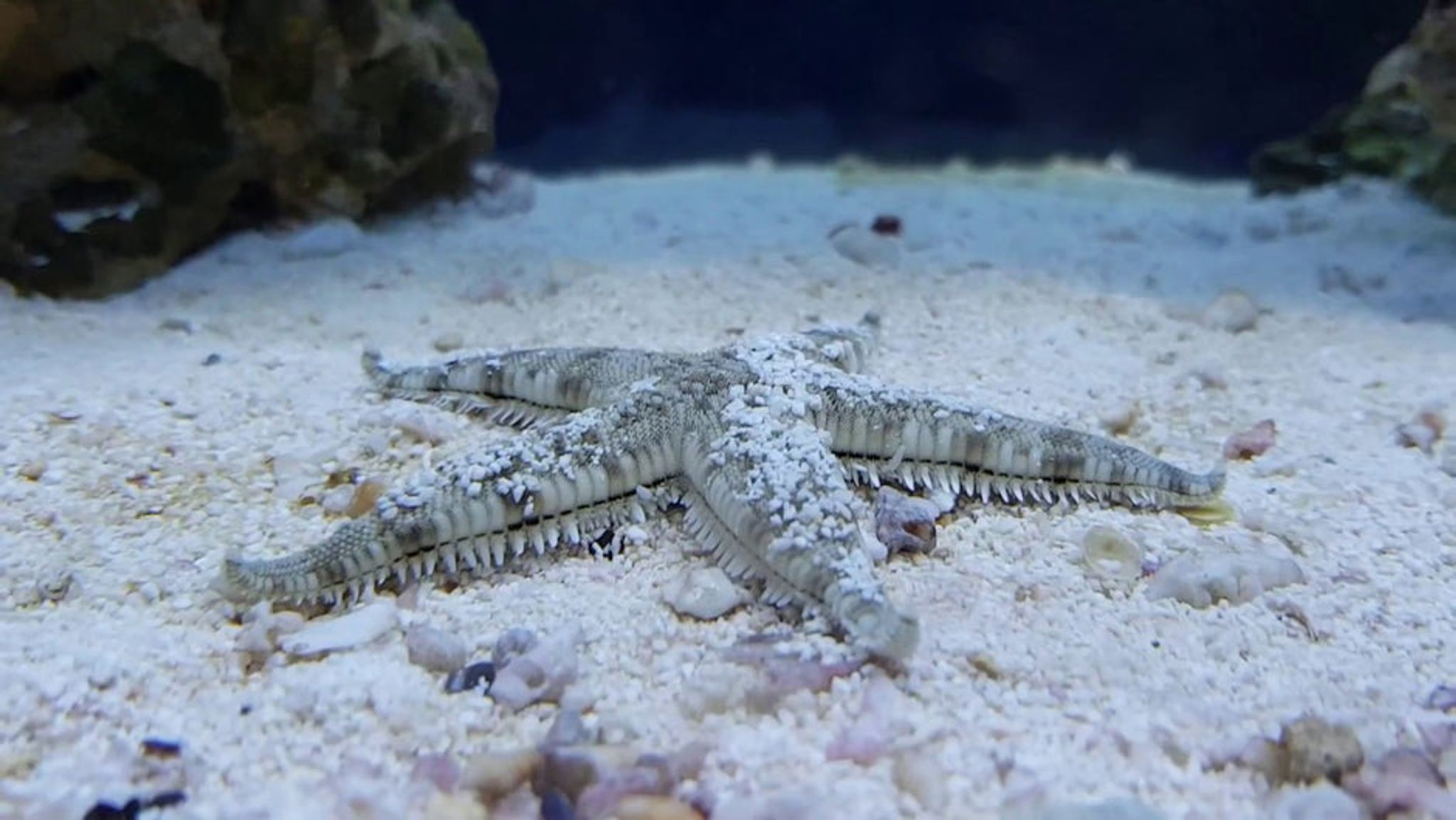

Sand-Sifting Starfish Care Guide: Tank Requirements, Feeding and Compatibility
A sand-sifting starfish looks like an easy, algae-munching cleanup crew addition, but the animals usually sold under that name (genus Astropecten) are heavy feeders that consume sand-bed life, not algae — and they starve in tanks that can't keep up. This guide covers the real tank size, sand depth, and feeding requirements for a genuine sand sifter, how to tell it apart from look-alike sea stars, and which tankmates are safe.
What Is a Sand-Sifting Starfish, Exactly?
"Sand-sifting starfish" most often refers to species in the genus Astropecten, sometimes labeled a sand-sifting sea star; occasionally the name is applied to Archaster typicus. These animals burrow through the substrate hunting live prey — they are not the same as several other sea stars commonly displayed alongside them at retail:
- Chocolate chip starfish (Protoreaster nodosus) — a scavenger/carnivore, not a sand sifter.
- Blue linckia (Linckia laevigata) — an algae/sponge-film grazer, not a sand sifter.
- Asterina stars — tiny hitchhikers that live on rock and glass, not buried in sand.
Confusing these species is one of the most common buying mistakes in the hobby, since store staff and general "starfish" content often lump them together despite very different care needs. Always confirm the genus before buying, not just the common name on the tank label.
Tank Size and Sand Bed Requirements
This is where the biggest disagreement in starfish care content shows up. General sea star guides often quote 20–30 gallons (76–114 L) as a workable minimum — and that's true for a chocolate chip star. A true Astropecten sand sifter is a different animal with a much larger food demand, and needs a 75-gallon (284 L) tank at minimum to support enough sand-dwelling life to sustain it long-term. Smaller reef cubes simply cannot regenerate infauna fast enough.
The sand bed itself is the actual food source, not just decoration:
| Requirement | Specification |
|---|---|
| Minimum tank size | 75 gallons (284 L) |
| Sand bed depth | 3–5 in (7.5–12.5 cm); 4–6 in (10–15 cm) for larger specimens |
| Sand type | Fine to medium live or aragonite sand |
| Tank maturity | 6+ months established, with visible infauna |
| Stocking density | 1 sand sifter per 75–100 gal, or one per larger footprint |
A shallow or bare-bottom setup won't work — the depth is what allows worms, amphipods, copepods, and small mollusks to establish a self-sustaining population the starfish can hunt.
Checking Whether Your Sand Bed Is Ready
Before buying, judge the sand bed's readiness rather than guessing:
- Age: has the substrate been undisturbed and cycling for 6+ months?
- Visible pods: shine a flashlight on the sand at night — a healthy bed shows small crustaceans skittering across the surface.
- Feeding history: has the tank been running fallow (no aggressive predators stripping the sand of pods) long enough to build a population?
If you can't confirm active infauna, hold off — adding the animal to an underprepared tank is the single most common cause of slow starvation.
Water Parameters and Acclimation
Sand sifters are sensitive to swings in water chemistry, so stability matters more than chasing an exact number:
- Temperature: 72–78°F (22–26°C)
- pH: 8.1–8.4
- Alkalinity (dKH): 8–12
- Specific gravity: ~1.023–1.025, kept stable
Echinoderms have no protective slime coat or gill covering, which makes them unusually vulnerable during handling:
- Use slow drip acclimation of 60+ minutes minimum for any new starfish.
- Never expose the animal to air — even brief air exposure can cause fatal internal damage or paralysis.
- Copper-based medications are lethal to starfish. Never treat a display tank that houses one; always quarantine fish separately in a copper-free system before medicating.
Feeding a Sand-Sifting Starfish
Sand sifters are nocturnal predators and detritivores. During the day they burrow beneath the substrate; at night they emerge to hunt amphipods, copepods, worms, small mollusks, and even other starfish living in the sand. In a mature tank with a well-established sand bed, this natural population can meet most of an adult's needs — for a while.
The problem is depletion. A sand sifter can strip a sand bed of infauna faster than it replenishes, especially in a smaller system or where more than one animal is competing for the same food. Once natural prey runs low, supplemental feeding becomes necessary:
- What to feed: minced shrimp, clam, or mysis.
- How: target-feed near the animal at night with tongs, since it won't come out to compete for food in open water like a fish would.
- How often: there's no fixed schedule. Feed based on condition, not the calendar — watch body condition and sand-bed activity, and only step in when you see signs of depletion. Overfeeding meaty foods just degrades water quality without helping an animal that isn't actually hungry yet.
Signs of Starvation
- Thinning, shrinking, or curling arms (a healthy sand sifter has plump, firm arms)
- Reduced nighttime activity or staying buried during normal foraging hours
- Visible weight loss at the disc
If you catch these signs early, increase supplemental feeding and consider boosting the sand bed's infauna population — adding a copepod culture or transferring sand from an established refugium can help rebuild the food base faster than waiting on natural reproduction. If the animal is severely emaciated in a tank too small to ever support it, the more honest option is rehoming it to a larger, more mature system rather than continuing to underfeed it.
Reef and Tankmate Compatibility
Sand-sifting Astropecten are reef-safe toward corals and generally peaceful with fish — but "reef safe" needs a caveat here. They actively consume the same beneficial infauna that other reef inhabitants, cleanup crew, and the sand bed's own biological filtration depend on. In a tank with limited sand-bed capacity, a sand sifter is effectively competing with everything else relying on that community.
Avoid keeping sand sifters with:
- Predatory fish that will eat or pick at them — triggerfish, puffers, large wrasses, and some angelfish
- Harlequin shrimp, a known predator of starfish specifically
- Aggressive crabs
- Other bottom-feeding competitors chasing the same infauna in a smaller tank — certain gobies, some wrasses, and other sand-sifting invertebrates
If you're stocking a large reef system and want fish that browse the marine invertebrates section for cleanup crew rather than compete with a sand sifter, look for species that feed higher in the water column instead of digging through the same substrate.
Multiple Sand Sifters or Sea Cucumbers
Stick to one sand sifter per 75–100 gallons, or one per larger footprint of sand-bed surface area. Adding a second animal — whether another sand sifter or a sand-sifting sea cucumber — means two competitors drawing on the same limited food supply, which can strip a sand bed within months in anything short of a very large system.
Sea cucumbers deserve their own caution here. Most sand-sifting cucumber species process detritus and infauna the same way a sand-sifting starfish does, so pairing the two just accelerates depletion. Suspension-feeding cucumbers, which filter plankton from the water column instead of processing sand, are a safer cleanup crew pairing since they don't draw on the same food base.
Sea apples are a separate risk entirely and not a direct sand-sifter competitor, but they're worth flagging in the same breath: if stressed or dying, a sea apple can release a toxin (holothurin) into the water that is capable of wiping out an entire tank. Keep sea apples isolated from sensitive invertebrates, or avoid them in a system you can't quarantine quickly. Browse cucumbers and other bottom-dwelling invertebrates with this compatibility profile in mind before adding one to an existing sand-sifter setup.
Substrate Choices for a Sand-Sifter Tank
Since the sand bed is the food source, substrate selection matters more here than in a typical reef tank.
- Grain size: fine to medium aragonite sand allows burrowing and supports a denser infauna population than crushed coral.
- Depth categories: bare bottom (0 in) and shallow beds (1–2 in / 2.5–5 cm) don't hold enough biomass for a sand sifter; a true deep sand bed (3–5+ in / 7.5–12.5+ cm) supports both denitrification and the worm/pod community these animals depend on.
- Live sand: not strictly required, but seeding new substrate with a cup of established sand from a mature tank speeds up infauna colonization significantly. This shortcut matters because building a self-sustaining pod population from scratch can otherwise take months — time a newly added starfish doesn't have.
You can compare grain sizes and depth-appropriate options in the substrate and sand selection when planning a new sand-sifter setup.
Commonly Confused Species
Chocolate Chip Starfish
A scavenger and opportunistic carnivore, not a sand sifter — it will eat coral tissue and small invertebrates. Needs only a 20–30 gallon (76–114 L) minimum tank and is typically hand-fed meaty foods rather than relying on infauna. Not reef-safe in the way sand sifters are.
Asterina Starfish
Tiny stars that hitchhike in on live rock, usually harmless detritus and algae grazers living on rock and glass surfaces rather than buried in sand. A small percentage of individuals will eat coral, and they can overpopulate quickly through fragmentation if left unchecked.
Blue Linckia Starfish
Notoriously difficult to keep alive outside of very mature, large, stable reef systems. Its diet leans on sponge and algae film that's hard to replicate, and it's highly sensitive to handling and shipping stress — expect a caution flag on this species regardless of tank size.
Lifespan and Realistic Expectations
A well-fed sand-sifting starfish in a large, mature system can live for several years. The honest counterpoint: in an undersized or underfed tank, many die within 6–12 months as the sand bed's food supply is exhausted faster than it regenerates. Tank size and sand-bed maturity, not general water quality alone, are the deciding factors in which outcome you get.
Frequently Asked Questions
How big of a tank does a sand-sifting starfish need?
At least 75 gallons (284 L) of mature, established water with a deep sand bed. Smaller tanks lack the sand-bed surface area to sustain the infauna population this animal depends on.
What do sand-sifting starfish eat?
Primarily amphipods, copepods, worms, and small mollusks living in the sand. Supplement with minced shrimp, clam, or mysis only when natural food runs low, target-fed at night.
Are sand-sifting starfish reef safe?
Yes toward corals and fish, but not fully "safe" toward the sand-bed community — they consume the same beneficial infauna that other cleanup crew and biological filtration processes rely on.
Can I keep a sand-sifting starfish with a chocolate chip or linckia starfish?
Not recommended in smaller systems. Each species has different food and handling requirements, and stocking multiple sea stars increases competition and stress in anything short of a very large tank.
How long do sand-sifting starfish live?
Multiple years in a large, mature, well-fed system. Often under a year in an undersized or underfed tank, since starvation is the leading cause of early death.
Why is my starfish's arm shrinking or curling?
Usually starvation from a depleted sand bed, though poor water parameters or a past air-exposure incident during handling can cause similar symptoms. Check body condition regularly — plump, firm arms and nighttime activity are signs of health.
Do sand-sifting starfish need live sand?
Not mandatory, but seeding new substrate with live or established sand speeds up infauna colonization considerably, which is essential groundwork before adding a sand sifter.
Can I keep a sea cucumber with a sand-sifting starfish?
Only in large tanks with ample sand-bed life, since both compete for the same infauna. A suspension-feeding cucumber species, which filters plankton from the water column instead, is a safer pairing.
Before adding a sand-sifting starfish, confirm your sand bed's depth, age, and infauna population can support it long-term. Browse marine invertebrates on FishyHub to compare sand sifters, cleanup crew cucumbers, and other reef-compatible species suited to your tank size.


