Rotala H'ra Care Guide: Light, CO2, Substrate and Growth Tips
Rotala H'ra can grow in almost any planted tank, but growing it green is easy — growing it the vivid pink-orange it's known for takes specific light, CO2, and nutrient targets. This guide walks through exactly what parameters push the color, plus a troubleshooting section for the most common complaints: green stems, legginess, and stalled growth.
What Is Rotala H'ra?
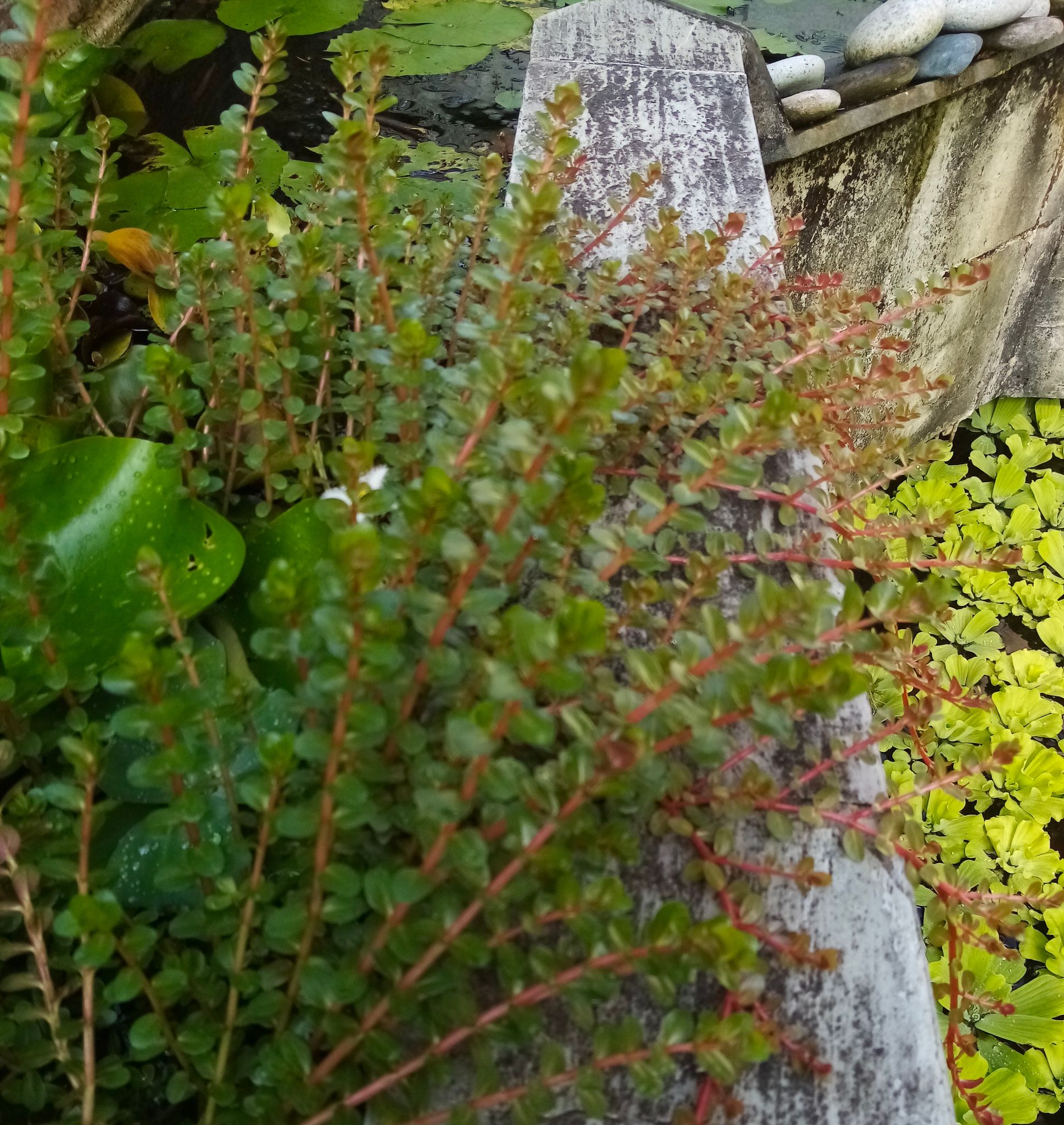
Rotala H'ra is a stem plant originating from the Gia Lai region of Vietnam, closely related to the widespread Rotala rotundifolia. It's usually sold as tissue-culture cups or as loose bare stems, and it's prized for foliage that shifts from green at the base to bright pink-orange at the growing tips when conditions are strong. Because its color response is so sensitive to light and nutrients, many aquascapers also use it as a quick visual check on whether a tank's overall lighting and CO2 are dialed in — if your Rotala H'ra stays green, other demanding stem plants in the same tank are probably struggling too.
Light Requirements for Color
Color in Rotala H'ra is driven almost entirely by light intensity, so this is the parameter to get right first.
- Target range: roughly 40–50+ PAR (µmol/m²/s) at the substrate for the strongest pink-orange coloration.
- Survivable but greener: 20–35 PAR keeps the plant alive and growing, but it stays mostly green and stretches toward the light source (legginess).
- Photoperiod: 6–8 hours per day is the safe default. Start at the low end and increase gradually if you see stretching or pale new growth — going long on duration before nutrients and CO2 are dialed in mainly invites algae.
If you don't have a PAR meter, watts-per-liter or lumens can serve as rough legacy proxies, but they don't account for spectrum or fixture optics, so treat them as a starting estimate rather than a target.
Why Tank Depth Changes Everything
Light intensity falls off sharply with distance, not just with tank volume. A fixture that delivers "high light" PAR at the substrate of a 12-inch-tall tank may only reach medium-light levels at 20–24 inches deep. This is the single most common reason a fixture that "should" be strong enough leaves Rotala H'ra green — the wattage or lumen rating looked fine, but the PAR at the substrate wasn't.
Practical rule: size your fixture to your actual water depth, not to tank volume or footprint alone. Deeper tanks need either a more powerful fixture or one with secondary lenses/optics that focus light downward instead of spreading it.
Planted Aquarium Lighting Basics
A few general lighting concepts make the numbers above easier to apply:
- PAR vs. lumens/watts: PAR measures the actual photosynthetically usable light hitting the plant, while lumens and watts describe output as perceived by the human eye or raw energy draw. Two fixtures with identical wattage can deliver very different PAR depending on LED efficiency and optics — PAR is the better metric whenever you can measure it.
- Spectrum: A color temperature around 6,500–7,500K reads as natural daylight-white and suits most planted community tanks, including Rotala H'ra.
- More isn't automatically better: pushing intensity or photoperiod higher than the tank's nutrients and CO2 can support just feeds algae faster than it feeds the plant.
PAR Tiers for Planted Tanks
| Tier | Approximate PAR | What grows well |
|---|---|---|
| Low | ~10–20 | Anubias, java fern, low-light mosses |
| Medium | ~20–35 | Most stem plants, but Rotala H'ra stays green/leggy |
| High | ~40–50+ | Rotala H'ra with full color, carpeting plants |
Rather than chasing an exact number, watch how the plant responds over 1–2 weeks and adjust. Drop checkers and PAR meters are useful measurement tools, but plant behavior — color, internode spacing, new-growth color — is the real feedback loop.
Choosing Lighting by Tank Size
- Nano tanks (under 10 gal / 38 L): small volumes overheat and overshoot PAR quickly. Start dim on a timer and step intensity up gradually.
- Standard tanks (20–29 gal / 76–110 L): a fixture matched to the tank's footprint at 6,500–7,500K is usually enough.
- Deep tanks (24 in. / 60 cm+ of water): look for high-output fixtures with secondary lenses or optics designed to punch light down to the substrate.
- Large tanks (55 gal / 208 L+): two parallel light bars typically give more even coverage than one wide, centered fixture.
What to Look for in an LED Fixture
Skip brand comparisons and focus on function:
- Adjustable or dimmable intensity, so you can start conservative and ramp up
- A programmable timer for consistent photoperiod control
- Enough PAR output at your tank's actual water depth, not just its footprint
- A full spectrum built for plant growth, not a pure "fish-viewing" white LED
You can browse a range of planted-tank fixtures in FishyHub's lighting category when sizing a light to your setup.
CO2: Optional for Survival, Essential for Color
Rotala H'ra will survive without injected CO2, but it won't look like the plant in photos. Without supplemental CO2, expect slower growth, a more open (leggier) growth habit, and duller, more green coloration. Pressurized CO2 injection is what allows the plant to actually use the high light and nutrients you're providing to build compact, colorful growth instead of stretching for more light.
Target: roughly 20–30 ppm dissolved CO2, generally read as a green to light-green color on a drop checker using a standard 4 dKH reference solution.
For beginners new to injection, a simple starting workflow:
- Set up a drop checker on the opposite side of the tank from the diffuser, and give it a few hours to equilibrate before reading color.
- Start bubble count low (roughly 1 bubble per second in a mid-size tank as a rough starting point, adjusted for tank volume and diffuser type) and increase gradually over several days.
- Turn CO2 on 1–2 hours before lights and off 1 hour before lights out, so dissolved CO2 is stable through the photoperiod.
- Watch livestock behavior (fish gasping at the surface signals CO2 is too high) alongside the drop checker color.
Substrate and Root Nutrition
A nutrient-rich planted substrate (an aqua soil type product) is the most direct route to strong Rotala H'ra color because it buffers pH slightly acidic and releases iron and micronutrients steadily at the root zone. If you're running inert gravel or sand instead, root tabs pushed near the root mass make up much of the difference, paired with regular liquid fertilizer in the water column.
Iron and phosphate availability are specifically called out as color drivers for this plant — a tank that's otherwise well-lit but iron-limited will often still trend green.
You can compare substrate options, including soil-type products, in FishyHub's substrate category.
Water Parameters
| Parameter | Target range |
|---|---|
| Temperature | 72–82°F (22–28°C) |
| pH | 6.0–7.5 (slightly acidic to neutral) |
| Hardness | Soft to moderately hard, tolerant |
These ranges overlap comfortably with most community planted tanks, so Rotala H'ra rarely requires parameters you'd have to adjust specifically for it.
Fertilization: A Practical Dosing Starting Point
General advice to use "an iron-rich fertilizer" isn't specific enough to act on, so here are practical weekly starting bands to dose toward and adjust from, based on regular water testing:
- Nitrate (NO3): keep on the lower end of typical planted-tank ranges — heavy nitrate dosing is repeatedly linked to lush but plain green growth rather than red/orange tones.
- Phosphate (PO4): maintain a steady, moderate level rather than letting it run to zero; phosphate availability is one of the specific drivers of pink-orange pigment in this plant.
- Iron (Fe): dose an iron-forward micronutrient product regularly (multiple times per week rather than once), since iron is the second major pigment driver alongside light.
Treat these as a starting framework, not a fixed recipe — confirm with test kits and adjust based on how the plant actually responds over 1–2 weeks. You can find liquid fertilizers and water additives in FishyHub's water conditioning category.
Planting Technique
- Plant stems individually rather than in tight bunches, spaced apart so each stem's roots have room to establish.
- Bury stems 2–3 inches (5–7.5 cm) deep into the substrate.
- Once stems approach the surface, trim the tops with sharp, curved scissors and replant the cuttings elsewhere in the tank — this is the main way to propagate and fill in a section of the aquascape.
Growth Rate, Height, and Placement
Rotala H'ra is a fast grower and can reach 10–20 inches (25–50 cm) tall depending on light, CO2, and trim frequency. Under high light and CO2 it stays more compact and holds its color; under low light it grows taller, leggier, and greener. Because of its eventual height, it's best used as a mid-ground to background plant in an aquascape, with regular trimming keeping the front-facing sections dense.
Maintenance Cadence
Under strong light and CO2, plan on trimming roughly weekly to every two weeks. This isn't optional housekeeping — Rotala H'ra's own upper growth shades out lower leaves quickly, and untrimmed stems are the most common cause of bare, leggy bottoms.
Acclimating Tissue-Culture Cups
Tissue-culture cups need a short transition step before planting, since they're grown in a sterile gel medium under humid, low-light (emersed) conditions:
- Rinse all visible gel off the roots and stems under clean water — leftover gel can foul water and encourage algae.
- Inspect closely for hitchhiking snails or algae spores before adding the plant to a display tank; a brief quarantine in a separate container is a reasonable precaution.
- Expect some melting of the original emersed-grown leaves in the first 1–2 weeks as the plant converts to submersed growth — this is normal transition stress, not a parameter problem, and new growth should look healthy if temperature, light, and CO2 are stable.
Common Mistakes and Troubleshooting
| Symptom | Likely cause | Fix |
|---|---|---|
| Plant turns green, loses pink-orange color | Insufficient light and/or low iron/phosphate | Raise PAR toward the high end, check micro-fertilizer dosing, confirm CO2 is actually dissolving (drop checker color, bubble rate) |
| Bare, leggy lower stems | Self-shading from untrimmed tops | Trim tops regularly and replant cuttings instead of letting stems tower |
| Slow or stalled growth despite good light | Missing CO2 or macro nutrients (N-P-K) | Audit the dosing schedule before assuming it's a light problem |
| Melting or dying lower leaves after replanting | Normal transition stress from shipping or tissue culture | Expect recovery within 1–2 weeks with stable parameters |
| Algae on the plant or glass | Photoperiod or intensity too high relative to nutrients/CO2 | Shorten photoperiod toward 6 hours or dim the fixture before adding more nutrients |
| Overheating or overshooting PAR in a nano tank | Small water volume amplifies light intensity fast | Start fixtures at low intensity and short duration, then step up gradually |
Frequently Asked Questions
How much light does Rotala H'ra need to turn red/orange, not green?
Medium-high to high light, roughly 40–50+ PAR at the substrate, combined with adequate iron and phosphate. Lower light keeps the plant alive but noticeably greener.
Can I grow Rotala H'ra without CO2?
Yes, it will survive without injected CO2, but expect slower growth, less vivid color, and a more open, leggy growth habit. CO2 is what pushes the compact, colorful form most hobbyists are after.
What substrate is best?
A nutrient-rich planted substrate (an aqua soil type) is ideal for steady root-zone nutrition. Inert substrates like plain gravel or sand also work, as long as you supplement with root tabs and regular liquid fertilizer.
How often should I trim it?
Weekly to every couple of weeks under strong light and CO2, since it's a fast grower that shades out its own lower leaves if left untrimmed.
What water temperature and pH does it prefer?
72–82°F (22–28°C) and pH 6.0–7.5, and it tolerates most community-tank water from soft to moderately hard.
Why is my Rotala H'ra losing lower leaves?
Usually self-shading from untrimmed tops blocking light from reaching the base, or a light/nutrient deficit lower in the tank. Trim the tops and double-check your dosing schedule.
What size and placement work best in an aquascape?
Plan for mid-ground to background placement, since it can reach 10–20 inches (25–50 cm) tall. Regular trimming keeps it bushier and better suited to areas closer to the foreground.
Does tank depth change what light I need?
Yes. A fixture rated "high light" for a shallow tank may only deliver medium PAR at the substrate in a deep tank, so match fixture output and optics to your actual water depth rather than tank volume alone.
Ready to build out the setup? Browse aquarium plants and the substrate, lighting, and water-conditioning supplies covered above in FishyHub's freshwater livestock and plant categories to get your tank tuned for color, not just survival.


