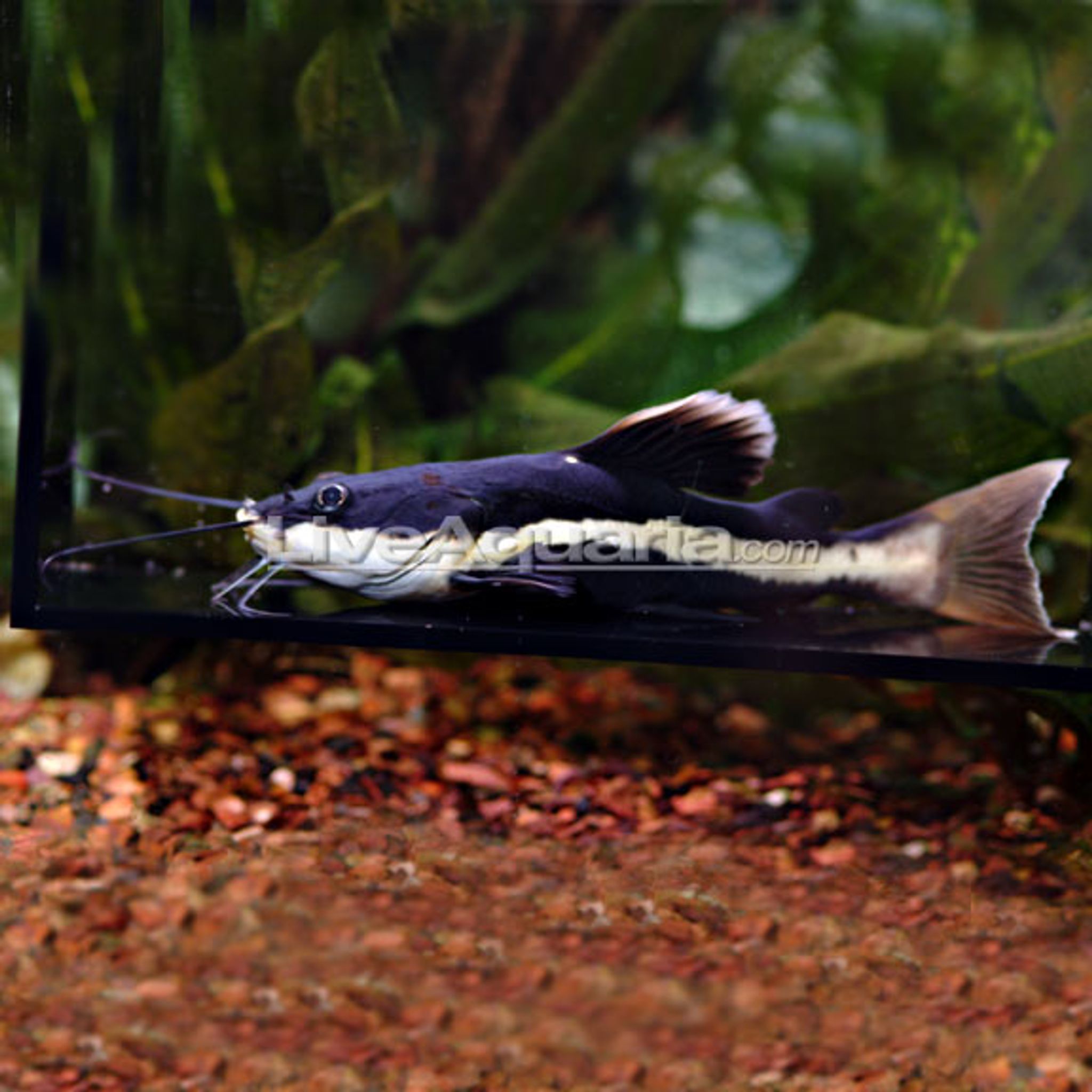

Redtail Catfish Care Guide: Tank Size, Diet, Water Parameters and Temperament
A redtail catfish is one of the most impulse-bought fish in the hobby, sold as a 3-4 inch juvenile that turns into a 3-4 foot predator within a couple of years. This guide gives you the real adult tank size, growth rate, diet, water parameters, and a decision framework so you can figure out whether this fish belongs in your home — or somewhere else entirely.
What Is a Redtail Catfish?
The redtail catfish (Phractocephalus hemioliopterus) is the only member of its genus, native to the Amazon and Orinoco basins of South America. It's sold under several regional names, including RTC, banana catfish, cajaro (Venezuela), and pirarara (Brazil).
In the wild, RTC reach 4-6 feet in length, with some reports up to 6.5 feet, and can weigh 150-180+ pounds. Even in captivity, with far more limited food and space, they commonly hit 3-4 feet. Lifespan averages around 15 years, with well-cared-for individuals living 20+ years — potentially longer in the wild. That's a multi-decade commitment to a fish that outgrows almost every home aquarium.
Growth Rate: Why the Cute Juvenile Doesn't Stay Small
This is the single biggest thing new owners underestimate. Redtail catfish grow roughly 1-2 inches per month as juveniles and can double their length in just 2-3 months. It's common for a fish bought at 3-4 inches to reach 24 inches within its first year.
That growth curve means the tank you set up on day one is obsolete within months, not years. If you can't commit to scaling up tank size repeatedly — and eventually to a system in the thousands of gallons — this isn't a fish you should bring home.
Real Adult Tank Size (Not the Marketing Number)
Tank size recommendations for RTC vary wildly across the hobby, and that inconsistency is part of why so many people get blindsided. Here's how to read the range:
- 500 gallons is cited by some sources as an absolute floor. Treat this as short-term housing for a young adult at best — not a permanent home.
- 1,500-2,000+ gallons is the consensus minimum among more detailed care guides for a genuine full-grown adult.
- 2,700+ gallons is recommended by some sources for fish approaching their maximum wild size.
Footprint matters more than depth. A long, wide tank or pond lets an RTC turn around and swim naturally; a tall, narrow tank does not, no matter how many gallons it holds.
Standard Tank Sizes vs. What an RTC Actually Needs
A 125-gallon tank (72" x 18" x 21") is considered a large home aquarium and is a popular "graduation tank" for growing predatory fish. For a redtail catfish, it's suitable for a few months at most before the fish needs something dramatically bigger.
| Life stage | Approximate size | Minimum housing |
|---|---|---|
| Juvenile (just purchased) | 3-4 in (7.5-10 cm) | 55-75 gal (208-284 L) temporarily |
| Sub-adult (6-12 months) | 12-24 in (30-60 cm) | 300-500 gal (1,135-1,890 L) |
| Young adult | 24-36 in (60-90 cm) | 500-1,000 gal (1,890-3,785 L), short-term only |
| Full adult | 3-6+ ft (90-180+ cm) | 1,500-2,700+ gal (5,675-10,220+ L) or a large pond |
The Weight Problem Nobody Mentions
Water weighs about 8.34 lb per gallon (fresh water). A 1,500-gallon system, before you even add substrate, rock, or the tank itself, weighs well over 12,000 pounds. That's a serious structural and flooring load — most residential floors aren't rated for that concentrated a point load without reinforcement. Anyone planning a system this size should consult a structural professional and think in terms of ground-floor slab placement or a dedicated outdoor pond, not an upstairs bedroom.
Glass or Acrylic for a Build This Big?
At the hundreds-to-thousands-of-gallon scale that RTC keeping requires, acrylic is usually the more practical material — it's lighter and stronger than glass at large panel sizes, which matters for both structural load and shipping/installation logistics. The tradeoffs: acrylic scratches more easily than glass and typically costs more per system. You can browse both glass tanks and stands on FishyHub if you're planning a large custom build.
Water Parameters
| Parameter | Range across sources | Recommended target |
|---|---|---|
| Temperature | 68-82°F (20-28°C) | 74-80°F (23-27°C) |
| pH | 5.5-7.5 | 6.0-7.0, tolerant up to 7.5 |
| General hardness | Soft to moderate | ~3-12 dGH |
| Water changes | — | 25-30% weekly |
RTC produce a heavy bioload relative to their size, so strong filtration — a sump system or large canister/external filters — is essential, not optional. That said, avoid strong water current: despite their bulk, redtail catfish aren't powerful swimmers and can struggle against heavy flow. Weekly water changes of 25-30% are recommended specifically because waste output is so high; skipping this is one of the fastest routes to ammonia and nitrite problems.
On pH, some sources recommend staying strictly under 7.0, while others give a wider 6.0-7.5 band. In practice, aim for the 6.0-7.0 sweet spot (slightly acidic to neutral, soft water) and treat anything up to 7.5 as tolerable rather than ideal.
Tank Setup
- Substrate: Bare-bottom is the safest and easiest-to-clean option. Fine sand is an acceptable middle ground. Avoid gravel entirely — large substrate can be swallowed and cause impaction, and every source agrees on this point even when they disagree on sand vs. bare-bottom.
- Decor: Keep it minimal. RTC will uproot plants and move or destroy lightweight ornaments. Use only heavy, secured items, or skip decor altogether.
- Lighting: Dim lighting with shaded zones suits their natural behavior — they're most active at night and dusk.
- Lid: A heavy, well-sealed lid is non-negotiable. These fish are surprisingly forceful and can displace a lightweight cover.
Diet
Redtail catfish are carnivorous, opportunistic predators that will eat anything that fits in their mouth.
- Juveniles: Sinking pellets, worms, feeder shrimp, and chopped fish or seafood, fed every other day.
- Adults: Whole fish, shrimp, crayfish, scallops, squid, cut white fish, and quality carnivore pellets, fed roughly once a week — adults eat large, infrequent meals rather than daily portions.
Avoid:
- Mammalian or avian meat (beef heart, chicken) — the fat isn't metabolized well and can contribute to organ and liver problems over time.
- Feeder fish that may carry parasites.
- Oversized prey that risks choking or intestinal blockage.
Because RTC can live 15-20+ years, diet variety matters over the long term. Rotating protein sources and occasionally offering vitamin-soaked foods helps guard against nutritional deficiencies that a single repeated food item can cause across a fish's full lifespan.
Temperament and Tank Mates
Labeling redtail catfish "aggressive" is misleading. The more accurate framing separates two different things:
- Aggression toward similarly sized tankmates: Low. RTC are not fin-nippers or territorial brawlers with fish their own size.
- Predation on anything smaller: Very high. If it fits in their mouth, it's food, not a tank mate.
They're solitary, bottom-dwelling foragers that become more territorial as they mature — most are best kept alone. In systems genuinely large enough (well beyond a typical home tank), suitable companions include large South American cichlids like oscars and peacock bass, pacu, arowana, gar, large stingrays, iridescent sharks, bichirs, and large datnoids. Peacock bass in particular need similarly warm, soft-to-neutral water and comparable space, making them a frequently cited (though still enormous) pairing option.
Never assume a tank mate is safe long-term just because it looks big enough today. RTC keep growing, and a fish that seemed too large to swallow at six months may not be safe at eighteen months. Avoid invertebrates entirely.
Breeding
Breeding redtail catfish in a home aquarium is essentially unachieved — the size and space requirements make it unrealistic outside of large fishery or aquaculture operations. Nearly all specimens in the trade are either wild-caught or produced through hormone-induced spawning at commercial facilities. Sexing adults is difficult and not well documented even among specialists.
Common Health Issues
- Fin rot and skin/gill flukes, often linked to poor water quality.
- Ammonia and nitrite stress, typically from undersized tanks or inadequate filtration relative to bioload.
- Impaction, from swallowed gravel or oversized prey items.
- Appetite loss and stress, a common sign that the tank is too small for the fish's current size.
A dedicated quarantine setup is worth planning for before you buy: new arrivals of this size need a properly sized quarantine tank and a slow, drip-style acclimation over several hours, since RTC are sensitive to sudden parameter swings.
Common Mistakes to Avoid
- Buying a 3-4 inch juvenile without planning for a 24-inch fish within a year.
- Underestimating bioload and running filtration sized for a "normal" fish instead of a heavy waste producer.
- Using gravel or heavy decor that risks impaction or injury.
- Feeding fatty mammalian meat as a dietary staple.
- Assuming a current tank mate will stay safe as the RTC continues to grow.
- Skipping an exit plan. Panic-rehoming an 18-inch predatory catfish with nowhere to go is a common and often bad outcome for the fish.
- Using a lightweight lid that the fish can physically push open.
Legal and Ecological Considerations
This is a section most care guides skip entirely, and it matters. Some US states restrict or require permits for large predatory catfish species — check your state and local regulations before purchasing. If a redtail catfish outgrows your setup, never release it into local waterways. In the US, releasing a non-native fish is both illegal in most jurisdictions and ecologically harmful — an established invasive predator can disrupt native fish populations for years. If you're already in over your head, contact specialist large-fish rehoming networks, public aquariums, or pond owners with genuine capacity instead.
Comparable "Monster" Catfish and Why They're Not a Shortcut
If you're drawn to the RTC's look or size but want a clearer picture of scale, here's how it compares to related and often-confused species:
| Species | Adult size | Minimum tank | Note |
|---|---|---|---|
| Redtail catfish | 3-6+ ft | 1,500-2,700+ gal | This guide's subject |
| Tiger shovelnose catfish | 3-4+ ft | 350-1,000+ gal | Similar Pimelodid predator; same diet warnings apply |
| Gulper catfish | ~10 in | ~100 gal / 6 ft tank | Beginner-friendlier "monster in miniature" |
| Giant Mekong catfish | Up to ~9 ft, 600+ lbs | Not appropriate for home tanks | World's largest freshwater fish; critically endangered wild |
| Channel catfish | Several feet | Outdoor pond only | North American native; not a home aquarium fish |
A few other species are worth knowing so you don't confuse them with RTC: the walking catfish, invasive in parts of Florida and capable of breathing air and moving over land, is a different family entirely; the flagtail catfish is another large predatory tankbuster sometimes mixed up with RTC due to a similar-sounding name, but it's a distinct species.
For hobbyists who love the RTC's predatory, bottom-dwelling behavior but genuinely cannot provide 1,500+ gallons, smaller pimelodid catfish or pictus catfish offer a similar look at a fraction of the space commitment — worth exploring in FishyHub's plecos, corys and bottom dwellers category before committing to a true monster species.
Should You Actually Keep One? A Pre-Purchase Checklist
Before buying a redtail catfish, honestly answer:
- Can I provide 1,500+ gallons of long, wide swimming space, or pond access, within 1-2 years?
- Is my floor structurally rated for a multi-ton aquarium system, or do I have pond space instead?
- Do I have an exit plan (pond, public aquarium, specialist rehoming) if my circumstances change?
- Am I prepared for a 15-20+ year commitment?
- Have I checked my state and local regulations on large predatory catfish?
If you answered "no" to more than one of these, an RTC belongs on your "someday, with a pond" list rather than in your next tank. Redtail catfish are consistently named among the classic tank-buster species that catch out well-meaning beginners — alongside oscars, large plecos, and pacu — and they're a recurring feature in "fish I regret buying" stories precisely because the juvenile gives no visual warning of what's coming.
If your setup and timeline genuinely support this fish, you can browse redtail catfish and other large predatory species in FishyHub's monster fishes category to compare available stock and plan your system around a specific specimen's current size.
Frequently Asked Questions
How big does a redtail catfish actually get in a home aquarium?
Typically 3-4 feet even in modest home setups, with wild specimens reaching 4-6+ feet. Growth to 24 inches can happen within the first year alone, so the fish's size changes far faster than most owners expect.
What is the real minimum tank size for one redtail catfish?
There's no single universal number — juveniles can start in smaller tanks — but a genuine adult needs 1,500+ gallons or a large pond. Anything under that should be treated as temporary housing, not a permanent home.
Can redtail catfish live with other fish?
Only large, robust species introduced at similar sizes, such as big cichlids, pacu, arowana, gar, or large stingrays, and only in systems large enough for all the fish involved. Anything small enough to fit in the RTC's mouth will eventually be eaten, regardless of how it started out.
What do redtail catfish eat?
Whole or cut fish, shrimp, squid, other seafood, and quality sinking carnivore pellets, fed roughly weekly for adults. Avoid land-animal meat like chicken or beef heart, and avoid prey large enough to cause choking or blockage.
Are redtail catfish aggressive?
Not aggressive in the fighting sense — they're calm toward similarly sized tankmates. They are, however, highly opportunistic predators that will eat anything smaller than themselves that fits in their mouth.
How long do redtail catfish live?
Around 15 years is the most commonly cited figure in captivity, with well-cared-for individuals reaching 20+ years. Wild lifespans may be longer still.
Can redtail catfish breed in a home aquarium?
Essentially no. The size and space requirements make home breeding unrealistic, and nearly all trade specimens are either wild-caught or produced through hormone-induced spawning at commercial fisheries.
What should I do if my redtail catfish has outgrown my tank?
Contact specialist large-fish rehoming groups, public aquariums, or pond owners with genuine long-term capacity. Never release an outgrown fish into local waterways — it's illegal in most US jurisdictions and can cause lasting ecological harm as an invasive predator.
Planning a redtail catfish setup or looking for tank mates to grow alongside it? Browse the current catfish selection on FishyHub.


