
Ranchu Goldfish Care Guide: Tank Size, Diet, Water Parameters and Temperament
A ranchu goldfish needs a lot more room, cooler water, and gentler décor than the "goldfish in a bowl" stereotype suggests. This guide covers realistic tank sizing, water parameters, a feeding routine that avoids swim bladder problems, and which tankmates actually work with a slow, dorsal-fin-less swimmer.
What Is a Ranchu Goldfish?
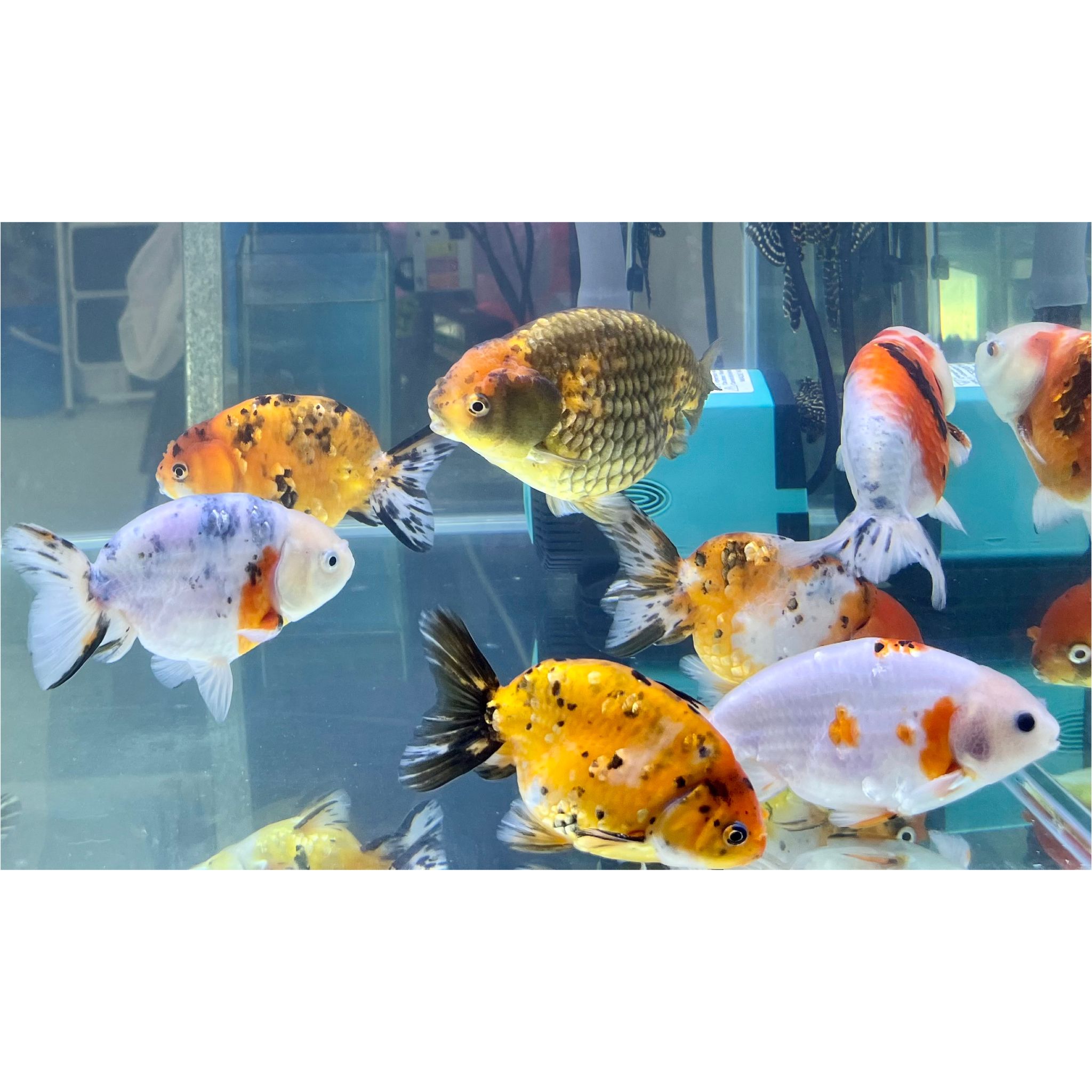
The ranchu is a fancy goldfish variety developed in Japan from Chinese lionhead stock, prized for centuries as a top show fish and sometimes called the "king of goldfish." Its defining traits:
- Body shape: stocky, egg- or sumo-wrestler-shaped, with a pronounced arch or hump along the back.
- No dorsal fin: unlike most goldfish, the ranchu's back is smooth from head to tail.
- Tail: a double (fan) tail carried low and close to the body rather than flared upward.
- Wen: a fleshy head growth, sometimes called a "helmet," that covers the top of the head and cheeks and thickens as the fish matures.
- Colors: orange, red, white, black, calico, and various mixes.
Males are often slightly larger and show more color contrast than females, which is useful to know if you're comparing individuals before buying.
Ranchu vs. Lionhead: How to Tell Them Apart
Ranchu and lionhead (oranda-type) goldfish get confused constantly because both carry the wen. The real difference is posture:
- A ranchu has a more pronounced arched back and holds its tail low and tucked close to the body.
- A lionhead sits flatter through the back and carries its tail at a different, less tucked angle.
If a fish's back looks like a smooth, high arc and the tail seems to droop rather than spread, you're likely looking at a ranchu.
Adult Size and Growth
Most ranchus kept in home aquaria reach 6–8 inches (15–20 cm) in body length. Well-fed individuals can push to 10–12 inches (25–30 cm), and claims of fish reaching 18 inches (46 cm) exist, but those are outliers from decades-old pond specimens in large, established ponds — not a realistic expectation for a tank-raised fish. Plan around the 6–8 inch range with headroom for growth toward 10–12 inches.
Tank Size: Bigger Than Most People Expect
Because ranchus are heavy waste producers and clumsy swimmers, tank size recommendations skew larger than typical stocking charts suggest.
| Setup | Minimum size | Notes |
|---|---|---|
| One young ranchu | 20 gallons (76 L) | Absolute floor, not a long-term home |
| One adult ranchu | 30–55 gallons (114–208 L) | 30 gallons is a realistic long-term minimum |
| Each additional ranchu | +10–20 gallons (38–76 L) | Scale up, don't hold size constant |
Footprint matters more than height. Ranchus lack a dorsal fin and are inherently less stable swimmers than other fancy goldfish, so a long, wide tank gives them room to cruise without needing to fight for balance in a tall, narrow column. A single ranchu should never live permanently in a bowl or in anything under 10 gallons — that setup guarantees stunted growth and chronic ammonia stress.
As a stocking rule of thumb, goldfish need more surface area and water agitation per fish than typical tropical stocking charts assume, since oxygen exchange at the surface matters more for a heavy waste producer than raw gallon count alone.
Water Parameters
Ranchus are cool-water fish, not tropical fish, and they're more sensitive than common or comet goldfish due to generations of selective breeding for body shape.
| Parameter | Target range |
|---|---|
| Temperature | 65–75°F (18–24°C) |
| pH | 7.0–7.5 sweet spot, tolerating up to 8.0 if stable |
| General/carbonate hardness | ~5–19 dGH/dKH |
| Ammonia | 0 ppm |
| Nitrite | 0 ppm |
| Nitrate | Under 20–40 ppm, kept low via water changes |
Avoid sustained temperatures above 75°F or below roughly 60°F. A common mistake is assuming warmer water is fine "because they're just goldfish" — sustained heat in the mid-70s°F and above stresses ranchus and accelerates disease progression. A heater is usually unnecessary; it's only needed to keep room temperature from dropping into the low 60s°F in a cold house.
Because goldfish produce more waste than most community fish, oversize your filtration relative to what a standard stocking chart recommends. A sponge filter or hang-on-back filter rated for at least double the tank's listed capacity is a safer baseline than matching the filter to the tank size alone. FishyHub's filters category is a reasonable starting point for sizing options.
Diet and Feeding Schedule
Ranchus are omnivorous, but their downturned mouth and round body shape make feeding choices more important than for a standard goldfish.
- Base diet: high-quality sinking pellets or flakes formulated for fancy, round-bodied goldfish. Sinking food reduces air-gulping at the surface, which lowers swim bladder risk.
- Vegetables: blanched peas, zucchini, and spinach a few times a week.
- Protein: occasional live or frozen bloodworms, daphnia, brine shrimp, or tubifex.
- Frequency: 2–3 small meals a day for adults, 4–6 smaller meals for juveniles.
- Portion: only what's fully eaten within 1–2 minutes.
Overfeeding is the single biggest cause of water-quality crashes and swim bladder issues in this breed. If you only change one habit, it should be feeding less, more often, and switching floating food for sinking or pre-soaked food.
Temperament and Tank Mates
Ranchus are peaceful, slow, and non-aggressive. They spend a lot of time sifting substrate for scraps and rarely nip fins, but their flowing tail and unhurried pace make them easy targets for fast or nippy tankmates — and easy to starve out at feeding time.
Good tank mates: other slow, round-bodied fancy goldfish such as lionhead/oranda types, bubble eye, celestial eye, pearlscale, and telescope goldfish. Cool-water non-goldfish options include weather/dojo loaches, zebra danios, and white cloud mountain minnows.
Avoid:
- Comet, common, or shubunkin goldfish — too fast, will outcompete a ranchu for food.
- Tropical fish that need warmer water than a ranchu tolerates.
- Cichlids, barbs, tetras, and angelfish — fin nippers or simply too fast.
- Plecos or Chinese algae eaters — can rasp the slime coat or wen tissue.
FishyHub's goldfish category lists fancy varieties that pair well with a ranchu's pace.
Tank Setup Basics
- Substrate and décor: fine sand or smooth gravel, plus rounded décor, to protect the wen and eyes from scrapes. Sharp gravel or rough decorations are a common cause of injuries that open the door to fungal or bacterial infection.
- Plants: live or silk plants; ranchus often eat or uproot soft-leaved plants, so choose tougher species or accept some grazing.
- Aeration: good surface agitation and oxygenation, since ranchus are less efficient swimmers than finned goldfish varieties.
- Filter output: sponge filters or baffled outflows so the fish isn't fighting a strong current.
Wen maintenance tip: the wen can trap debris in its folds and become a site for bacterial or fungal infection if water quality slips. There's no need to scrub it — just observe it during water changes and keep ammonia and nitrate low, which is the actual prevention.
A note on normal swimming: because ranchus lack a dorsal fin, some wobbling or awkward swimming is normal breed conformation, not automatically illness. Don't panic at every odd tilt — watch for buoyancy problems, listlessness, or clamped fins before assuming something is wrong.
Bringing a New Ranchu Home
- Acclimate slowly: drip acclimation over 30–60 minutes is worth the extra time given how sensitive ranchus are to sudden shifts in temperature and chemistry.
- Quarantine 2–4 weeks: new fish and new plants should sit in a separate tank before joining the main aquarium. Only treat quarantine water for parasites if symptoms actually appear — don't dose preventively with blanket medication.
- Shop conformation, not just color: helmet (wen) development and tail symmetry vary widely between individuals and affect price and long-term appearance more than color does.
Common Parasites and Disease Signs
Beyond ich, watch for flukes and anchor worms, both of which usually arrive via new stock, live plants, or live food. Visible thread-like worms on the body or excessive flashing/scratching against décor are the tell.
First signs of illness in a ranchu include:
- Clamped fins
- White spots or cottony patches
- Bloating
- Sitting on the bottom
- Labored breathing
Isolate the fish and test water quality immediately if you see any of these. The biggest preventable driver of disease across the board is poor water quality and overcrowding — weekly partial water changes and avoiding overstocking do more for a ranchu's health than any medication. FishyHub's medication category covers targeted treatments once symptoms are confirmed.
Pond Care Basics
Ranchus can live outdoors in ponds in mild climates, but they need protection where winters get cold:
- Winter: a de-icer or heated shelter to keep an ice-free breathing hole; where hard freezes are common, bring fish indoors or ensure the pond is deep enough that it won't freeze solid.
- Spring start-up: raise temperature gradually and resume feeding slowly as the water warms.
- Algae control: manage with partial shade, reduced nutrient load, and manual removal rather than harsh chemical algaecides, since goldfish are sensitive to some of them.
Lifespan and Longevity Factors
A well-cared-for ranchu typically lives 10–15 years, and some individuals exceed that. Beyond genetics, the factors that push a goldfish toward the long end of that range are consistent temperature, clean water, and a varied diet — the same fundamentals covered throughout this guide, not a special trick.
Care Difficulty
Ranchus are often rated beginner-friendly, but "moderate" is more accurate. They're hardier than telescope or bubble-eye fancy goldfish, but more delicate than common or comet goldfish because of their selectively bred body shape and reduced swimming stability.
Breeding Basics
Ranchus typically reach sexual maturity around 1–2 years old. A spring-like pattern — a temperature drop followed by a gradual rise, paired with increased feeding — often triggers spawning. Eggs scatter onto plants or a spawning mop. Once spawning finishes, remove the adults promptly, since goldfish (including the pair that just spawned) will eat their own eggs and fry.
Frequently Asked Questions
How big of a tank does a ranchu goldfish really need?
Plan for at least 30 gallons for one adult, adding 10–20 more gallons per additional fish. Footprint matters more than tank height, since ranchus are weak, clumsy swimmers that benefit from horizontal swimming space.
Can ranchu goldfish live with regular (comet/common) goldfish?
Not ideally. Comets and common goldfish are much faster and will outcompete a ranchu for food at every meal. Pair a ranchu with other slow-swimming fancy varieties instead.
Why does my ranchu goldfish struggle to swim or float oddly?
This is usually swim bladder disease caused by overfeeding, gulped air, or a poor diet. Fasting the fish for a day or two and switching to soaked or sinking food typically resolves mild cases. Some wobbling is also just normal for a fish with no dorsal fin, so don't assume every odd tilt is illness.
Do ranchu goldfish need a heater?
No. Ranchus are cool-water fish that do best at 65–75°F room temperature. A heater is only necessary to stop room temperatures from dropping below the low 60s°F.
What's the difference between a ranchu and a lionhead goldfish?
The difference is mainly body and tail posture. A ranchu has a more pronounced arched back with the tail held low and close to the body, while a lionhead sits flatter with the tail carried at a different angle. Both share the fleshy wen on the head.
Can ranchu goldfish live in a pond?
Yes, in mild climates with a deep-enough pond and winter protection such as a de-icer or heater to maintain an air hole. Where hard freezes are common, bring the fish indoors or ensure the pond won't freeze solid.
How often should I feed a ranchu goldfish?
Feed adults 2–3 small meals a day, each fully eaten within 1–2 minutes. Juveniles do better with more frequent, smaller meals, typically 4–6 times a day.
What are the first signs of illness in a ranchu goldfish?
Watch for clamped fins, white spots or cottony patches, bloating, sitting on the bottom, or labored breathing. Isolate the fish and check water quality immediately if any of these appear.
Ready to set up a proper home for one? Browse fancy goldfish varieties in FishyHub's Goldfish category to find a ranchu or a compatible tankmate.


