
Ramshorn Snail Problems: Common Causes of Stress, Death and Poor Growth
Ramshorn snails are tough, but they aren't indestructible, and when something goes wrong—pitted shells, sudden deaths, or a population that's doubled overnight—the cause is usually traceable. This guide walks through the most common ramshorn problems symptom by symptom, so you can tell a genuine water-quality issue apart from normal aging or a management fix.
Ramshorn Snails: Friend or Foe
Before troubleshooting, it helps to reset expectations. Ramshorn snails are not an inherent pest species—they're an efficient cleanup crew that eats algae, biofilm, and decaying plant matter. The "ramshorn problem" most people describe (dozens of snails suddenly everywhere) isn't a flaw in the animal; it's a symptom of overfeeding or overstocking. Treat population size as a management signal, not a reason to panic.
Baseline Water Parameters Ramshorns Need
Most ramshorn health problems trace back to water chemistry that's drifted outside this range:
| Parameter | Target Range |
|---|---|
| Temperature | 70–78°F (21–26°C) |
| pH | 7.0–8.0 (never acidic) |
| General hardness (GH) | 8–15 dGH, up to 20+ for robust shell growth |
| Carbonate hardness (KH) | Roughly 5–15 dKH |
| Ammonia / Nitrite | 0 ppm |
| Nitrate | Under 20–40 ppm |
Sources disagree slightly on the GH floor—some say 7–8 dGH is adequate, others push for 12–15+ for the best shell density. A practical middle ground: treat 8 dGH as a bare minimum and aim for 10–15 if you want thick, healthy shells. Whatever GH you land on, keep KH stable too, since swinging pH is often the real driver behind shell damage, not the hardness number alone.
Shell Erosion and Pitting: The #1 Chronic Problem
If there's one issue that accounts for most long-term ramshorn complaints, it's shell erosion. A ramshorn's shell is over 95% calcium carbonate, and soft, acidic water actively dissolves it.
Signs to look for:
- Chalky white patches on the shell surface
- Thin or translucent areas you can see through
- Small holes or pitting near the apex (the shell's pointed center)
- Flaking or rough texture instead of a smooth coil
The fix is almost always mineral, not medicinal:
- Raise GH with a liquid remineralizer, or add crushed coral or aragonite to the filter media for a slow, steady calcium release
- Supplement calcium directly with a piece of cuttlebone, a snail-specific calcium supplement, or blanched vegetables that carry some calcium
- If you run reverse osmosis water or naturally soft tap water, build remineralizer dosing into your routine water-change schedule rather than adding it only after you spot a problem
A common mistake is treating a chalky shell as disease and reaching for medication. Test GH and KH first—a mineral deficiency is the far more likely explanation, and no medication fixes it.
Cracked or Broken Shells
Unlike erosion, a crack or a chip is usually mechanical damage—a fall from glass, a squeeze from shifting decor, or an aggressive tankmate—rather than a water chemistry problem. With clean water and a good calcium supply, minor cracks can seal and the snail can add sound new shell over the following 1–2 weeks. The catch: the damaged section itself never becomes healthy shell again. New growth only forms at the shell's lip (the aperture), so old damage stays visible even after the snail recovers. A severe break that exposes the snail's soft body is often fatal.
New Arrivals Dying Soon After Purchase
This is one of the most common and most misunderstood ramshorn problems. A batch of new snails dying within days of arrival is rarely a sign that your tank is unsafe—it's usually shipping stress combined with a sudden shift between the water they came from and your tank's parameters. Snails are especially sensitive to abrupt changes in GH, KH, and pH.
Reduce this risk by drip-acclimating or step-acclimating new snails over 30–60 minutes or longer, adding small amounts of your tank water gradually rather than dropping them straight in. Skipping acclimation is a frequent, avoidable mistake that gets misread as "something's wrong with my tank" when the tank itself was fine.
Ammonia Spikes From a Dead Snail
An empty ramshorn shell that's stopped moving and sits motionless—especially with a strong odor—needs to come out immediately. Decomposing snail tissue releases ammonia quickly in a small aquarium, and one overlooked death can trigger a spike that stresses or kills other snails and fish. After any die-off, test ammonia and nitrite right away rather than waiting for your next scheduled check.
Copper Toxicity
Copper is lethal to snails at concentrations so low that it won't necessarily register as a problem for fish. Before adding any fertilizer, medication, or tap water conditioner to a tank with snails, confirm it's labeled copper-free or invertebrate-safe. This is a common blind spot for planted-tank keepers who dose fertilizers without checking the ingredient list.
Overfeeding and Population Explosions
Ramshorns are hermaphroditic and some species are self-fertile, with eggs hatching in as little as 2–3 weeks. Feeding heavily "to help them grow" backfires—it fuels a breeding boom and adds waste that degrades water quality, which is the opposite of what you want. The population isn't the root problem; excess food and organic waste are.
Removing or Controlling Excess Ramshorns
- Prevent hitchhikers: quarantine and dip new plants before adding them to your tank, since eggs are the most common entry point
- Cut back feeding to what fish and shrimp consume in a couple of minutes
- Trap manually: a vegetable slice left overnight draws snails in for easy removal the next morning
- Add assassin snails as the most targeted biological control—unlike fish, they specifically hunt other snails
- Avoid chemical snail killers: a sudden die-off from a chemical treatment releases ammonia from dozens of decomposing bodies at once, often crashing water quality worse than the snails ever did
On snail-eating fish: some guides list loaches, bettas, or puffers as a fix. In practice, these fish are inconsistent—many ignore snails when other food is available, and some can turn aggressive once the snail supply runs out. Treat fish as a secondary, imperfect option rather than your main control strategy, and reach for assassin snails or manual removal first.
Low Oxygen and Surfacing Behavior
Ramshorns tolerate poor oxygenation noticeably better than fish or shrimp, and occasional trips to the surface for air are completely normal—not a distress signal by itself. That said, heavy dieback of algae or plants in an overstocked tank can still stress a snail population through oxygen swings and ammonia. If surfacing is constant and paired with lethargy or a foul smell, check your bioload and filtration rather than assuming it's harmless.
Diet and Underfeeding
Ramshorns are omnivorous grazers that clean up algae, detritus, and decaying plant material. Round out their diet with blanched zucchini or spinach, occasional lettuce, algae wafers, and a calcium source. Underfeeding is its own problem: a snail population with nothing else to eat will start grazing on soft, healthy live plant leaves out of necessity, which is different from the plant damage described below.
Do Ramshorns Eat Live Plants?
For the common pet-trade ramshorn, the answer is reassuring: they primarily target algae, biofilm, and dying or damaged leaves, and leave healthy plant tissue alone when they're adequately fed. The one notable exception is the giant Colombian ramshorn, a much larger species that can shred healthy leaves even in a well-fed tank. If you're seeing plant damage, first confirm which species you actually have before assuming all ramshorns are guilty.
Ramshorns Showing Up Uninvited in a Shrimp Tank
Ramshorns commonly hitchhike in as eggs on new plants, substrate, or decor, then appear seemingly overnight once they hatch. For shrimp keepers, the good news is that ramshorns are not a threat—they don't prey on healthy shrimp and will only scavenge shed molts or shrimp that have already died. If you want fewer of them, the same approach applies as anywhere else: reduce feeding and use traps, without resorting to chemical treatments that could harm your shrimp.
Identifying "What Is This Thing in My Tank"
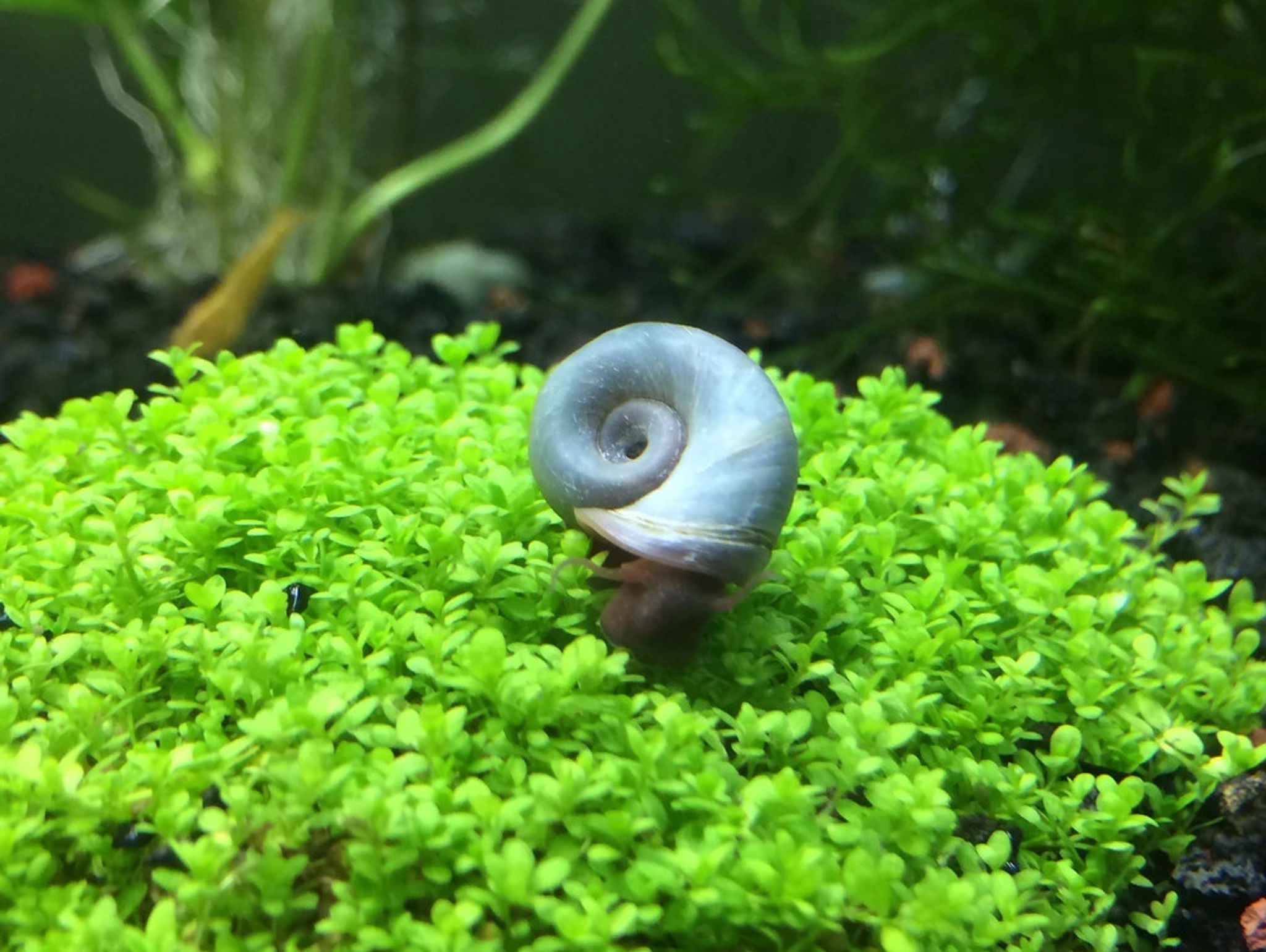
Before troubleshooting a snail problem, confirm you're actually dealing with a ramshorn. Ramshorns have a flattened, coiled shell that looks like a tightly wound spiral viewed from the side—distinct from the more elongated, pointed shells of pond snails or the smaller, teardrop-shaped bladder snails. Misidentifying the species means you might apply a ramshorn fix (like raising GH) to a snail with different needs, so take a close look before you start adjusting parameters.
Is It Old Age, Not a Tank Problem?
Ramshorn snails naturally live only about a year, with up to two years possible under ideal conditions. Before assuming a water quality issue, look for age-related clues:
- A noticeably shrunken or thinner body relative to shell size
- Reduced activity and slower grazing
- Thin, less defined new shell growth near the aperture despite good calcium levels
- Death with no accompanying signs of erosion, cracking, or parameter issues
Blaming water quality for what is simply a snail reaching the end of its natural lifespan is one of the most common misdiagnoses in ramshorn care, especially in tanks that have been stable for a year or more.
A Practical Diagnostic Order
When something looks off, work through causes in this order rather than guessing:
- Test GH and KH—rule out a mineral deficiency behind shell issues first
- Check pH—confirm it's stable and not drifting acidic
- Check for copper—review any recently added fertilizer, medication, or conditioner
- Check age and size—rule out natural senescence before blaming the tank
- Check feeding and bioload—look for overfeeding driving a population spike or waste buildup
Working through checks like GH and KH stability is easier with a reliable water conditioner and testing routine on hand, especially if your tap water runs soft.
Frequently Asked Questions
Why did my ramshorn snail die right after I added it?
This is usually transport and acclimation stress combined with a sudden shift in water parameters between the seller's water and your tank. Next time, drip-acclimate new snails slowly over 30–60 minutes or more to ease the transition.
Why is my ramshorn's shell turning white, thin, or pitted?
Low GH/KH and low pH dissolve the calcium carbonate in the shell over time. Raise GH toward the 10–15 dGH range and add a calcium source like cuttlebone or a snail-specific supplement.
Can a cracked ramshorn shell heal?
Minor cracks can seal, and new shell growth added at the aperture can be sound with good calcium levels and clean water. The originally damaged section itself won't regenerate, and a severe break exposing the snail's body is often fatal.
Are ramshorn snails bad for my aquarium plants?
Not normally. They primarily eat algae and decaying leaves and only bother healthy plants when the tank is short on other food. The giant Colombian ramshorn is a notable exception that can damage healthy leaves regardless of feeding.
How do I stop my ramshorn population from exploding?
Feed less, clean more often, and remove excess snails by trapping them with a vegetable slice overnight. Assassin snails are the most targeted biological control if trapping alone isn't enough.
Is it normal for ramshorns to float or hang at the surface?
Occasional surface time to gulp air is normal for this species and not a sign of distress on its own. Persistent floating with no movement usually means the snail has died or is dying.
Will my ramshorn snails hurt my shrimp?
No. Ramshorns are scavengers, not predators, and won't prey on healthy shrimp. They may pick at shed molts or shrimp that have already died.
Whether you're stocking a new tank or restoring one that's drifted out of range, you can browse healthy livestock and supplies for your setup in FishyHub's freshwater livestock category.


