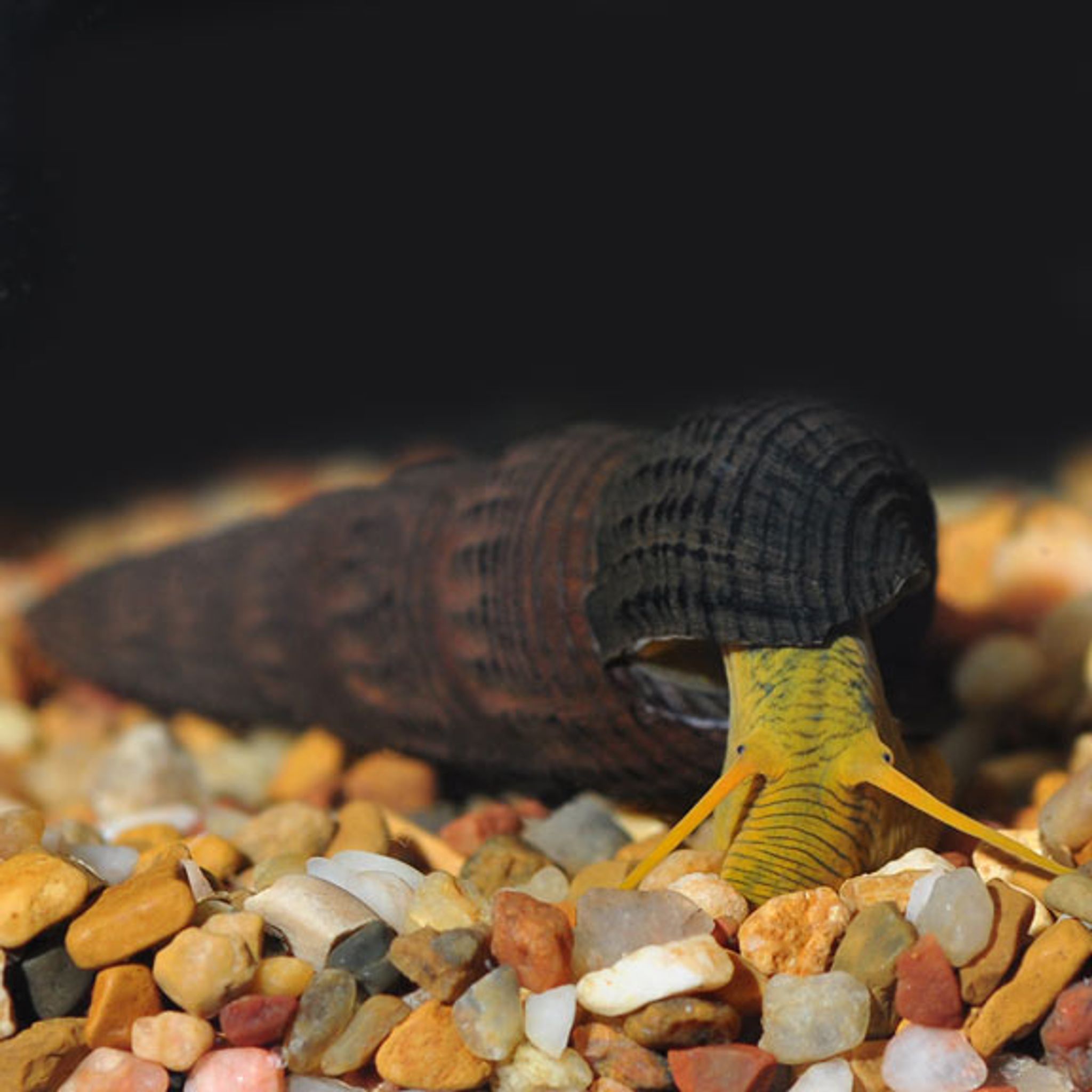

Rabbit Snail Problems: Common Causes of Stress, Death and Poor Growth
A rabbit snail with a fading or pitted shell, one that won't come out for days, or a colony that suddenly stops producing babies is telling you something specific about your water, not just having an off week. This guide walks through the most common symptoms — shell damage, prolonged hiding, sudden death, poor growth — and traces each back to a likely cause and a practical fix.
Rabbit snails (genus Tylomelania) are unusually sensitive to water chemistry compared to many other freshwater snails, which makes them a useful early-warning sign for problems building up in a tank long before fish show stress.
Get the Baseline Parameters Right First
Most rabbit snail problems trace back to water that drifted outside their comfort zone. Before troubleshooting a specific symptom, confirm the tank matches this target range:
| Parameter | Target range | Notes |
|---|---|---|
| Temperature | 76–86°F (24–30°C) | Sluggish and inactive below ~75°F (24°C); tolerate down to the high 60s°F but won't thrive there |
| pH | 7.3–8.5 | Alkaline water only — never soft or acidic |
| General hardness (GH) | Moderately hard to hard (roughly 8–15+ dGH) | Exact numbers vary by source; stability matters more than hitting one precise figure |
| Carbonate hardness (KH) | Enough to buffer pH (cited anywhere from 2–15 dKH) | Provides the calcium carbonate buffering that protects shells |
| Ammonia / nitrite | 0 ppm | Any detectable reading is a red flag for this species |
| Nitrate | Under 20–40 ppm | Lower is better; rising nitrate is an early sign of a maintenance gap |
Minimum tank size is another point where sources disagree: some recommend 20 gallons (76 L), others 30 gallons (114 L). Treat 20 gallons as an absolute floor for a single snail or pair, and plan on 30+ gallons if you intend to keep a breeding colony — rabbit snails are heavy waste producers, and a bigger volume dilutes that bioload before it becomes a chemistry problem.
Shell Problems: The Most Common Visible Symptom
A shell that's turning white, thinning, pitting, cracking, or looking like it's "melting" at the edges is almost always a chemistry issue rather than a disease.
Chemistry-related shell damage
Soft or acidic water actively dissolves the calcium carbonate in a snail's shell. If your GH/KH is low, or pH has drifted toward neutral or acidic, the shell will erode from the outside in, usually starting at the tip or growth edges. A straightforward calcium deficiency — even in adequately hard water — produces a similar thin, brittle shell that chips easily.
Fix:
- Test GH and KH, then raise them gradually using a remineralizer or buffer product rather than a single large dose.
- Add crushed coral or aragonite to the substrate or filter media to provide slow, ongoing buffering.
- Supplement calcium directly with a cuttlebone or a mineral/calcium block placed in the tank.
Physical shell damage
Not every damaged shell is a water-chemistry problem. A crack or chip concentrated in one spot, especially after a rearrange, a drop during handling, or a run-in with an aggressive tankmate, points to physical injury rather than dissolving. The distinction matters: physical damage in otherwise healthy water usually heals over slowly as the snail lays down new shell material, while chemistry-driven erosion keeps spreading until the water is corrected.
Staying Buried or Retracted: Stress or Normal Behavior?
Rabbit snails are naturally slow-moving and spend long stretches resting, buried in substrate, or tucked against decor — that alone isn't a red flag. What is worth investigating is a change from your snail's normal pattern: extended retraction into the shell, refusal to come out for food, or unusual inactivity across the whole colony.
When you see this, don't assume it's just resting. Test, in this order:
- Ammonia and nitrite (should be zero)
- Nitrate (should be well under the 20–40 ppm ceiling)
- pH and temperature (check for drift or a swing)
If every parameter checks out and only one snail is affected, it may simply be resting or preparing to molt-adjacent shell growth. If multiple snails are behaving the same way at once, treat it as a tank-wide chemistry issue until proven otherwise.
Mantle Collapse: A Late-Stage Warning Sign
If the soft mantle tissue appears to be separating or pulling away from the shell opening, this is a serious, usually irreversible stage of illness or extreme stress. It typically follows a sudden parameter swing, exposure to copper, or a prolonged severe nutrient deficiency. There's no reliable way to reverse mantle collapse once it's visibly underway — the priority at that point is correcting water quality immediately to protect the rest of the colony, not the individual snail.
Sudden Death With No Warning Signs
A rabbit snail that dies with no obvious prior symptoms usually points to one of three causes:
- An unnoticed ammonia or nitrite spike — these snails have little tolerance for either, and a spike can pass before a hobbyist checks parameters.
- A drastic temperature or pH swing, often triggered by a water change using mismatched tap water or a heater malfunction.
- Trace copper exposure. Copper is lethal to rabbit snails and other invertebrates even at concentrations too low to harm fish. It shows up in some fish medications, algaecides, and occasionally in tap water from old plumbing. Never dose a tank containing snails with a copper-based treatment — if a fish needs medicating, move it to a separate quarantine tank instead.
Diet and Poor Growth
Rabbit snails are omnivorous scavengers, but algae and biofilm alone rarely provide enough nutrition, especially in a clean, well-maintained tank with little natural grazing material. Supplement with:
- Algae wafers
- Blanched vegetables such as zucchini or spinach
- A calcium-rich snail-specific food
Poor growth in juveniles usually comes down to one or more of: insufficient calcium, not enough food or too much competition for it, unstable parameters, or water that's too cool or too acidic. As a rough benchmark, a well-fed juvenile in stable, warm, hard water should show steady, visible shell growth over the course of a few months — a young snail that looks the same size after two or three months is worth investigating rather than dismissing as "just slow."
An underfed rabbit snail may also start nibbling soft-leaved live plants. Occasional grazing is normal, but persistent leaf damage from rabbit snails is more often a sign of hunger or stress than typical foraging behavior.
Tankmates and Predation
Rabbit snails are peaceful and do well alongside other snails and freshwater shrimp. You can browse compatible options in FishyHub's shrimp category when stocking a peaceful invertebrate tank.
Avoid housing them with:
- Crayfish
- Aggressive or large cichlids
- Goldfish
- Puffers
- Loaches
- Assassin snails
All of the above will predate on or harass rabbit snails, and even non-lethal harassment adds chronic stress that shows up later as the shell and behavior symptoms covered above.
Reproduction Problems in a Colony
Rabbit snails are livebearers, not egg-layers, and they reproduce slowly even under ideal conditions. If a colony stops producing young, or babies aren't growing, the cause is almost always chronic mild stress rather than incompatibility between individuals — unstable parameters, marginal calcium levels, or insufficient food. A genuinely healthy, stable colony breeds readily over time; a stalled colony is a signal to revisit water quality and feeding, not a sign the snails "just don't get along."
Leeches and Quarantine
Leeches can attach inside a rabbit snail's shell and consume the snail's soft tissue over time, and they're most often introduced on new stock. A practical prevention routine:
- Quarantine any newly acquired snails separately for at least two weeks before adding them to your main tank.
- Give new snails a brief saltwater dip before quarantine to help dislodge hitchhiking leeches and other parasites — a short dip, not a prolonged soak.
- Inspect closely under the shell lip during quarantine, and remove and treat promptly if you spot a leech.
Filter Intake Injuries
Rabbit snails can be pulled into or wedged against a filter intake, causing physical injury or death — this is a mechanical hazard that's easy to overlook since it has nothing to do with water chemistry. Fit intakes with a pre-filter sponge or an intake guard, particularly on hang-on-back and canister filters with strong flow.
Substrate and Glass Cleaning Basics
Routine maintenance directly supports every issue above, since waste buildup is the root driver of the parameter swings that stress rabbit snails.
Substrate: Use a gravel vacuum during water changes to pull uneaten food and detritus out of the substrate without fully disturbing the beneficial bacteria colony. Vacuum gently around live plants and any snail-friendly sand, and schedule a deeper substrate clean about once a month. Adding a calcium-buffering gravel or sand substrate can also help maintain hardness between water changes.
Glass: Green, brown, or reddish film is algae and comes off with a non-abrasive scraper or pad. White, chalky deposits are hard-water limescale from calcium and magnesium and respond better to a diluted white-vinegar solution wiped on the outside of the glass. Never use soap or detergent on anything that touches tank water — residue is toxic to snails and fish alike.
Old Tank Syndrome: The Slow, Easy-to-Miss Decline
A tank that's been running for a long time without deep cleaning gradually accumulates organic waste in the substrate and filter media. This drives nitrate and phosphate up and destabilizes pH over weeks or months — slowly enough that it's easy to miss until snails or fish start showing the exact stress symptoms covered earlier in this guide.
If you suspect old tank syndrome:
- Test ammonia, nitrite, nitrate, pH, GH, and KH to establish where things actually stand.
- Correct course with a series of smaller, more frequent water changes rather than one large change — a big sudden swap can shock residents that have adapted to the degraded conditions.
- Vacuum substrate and rinse filter media in removed tank water (never tap water, which can kill the bacteria colony) alongside the water changes.
A water conditioner or remineralizer from FishyHub's water treatment and additives range can help you raise GH/KH gradually and stabilize pH during this kind of rehab.
Common Mistakes to Avoid
- Assuming a retracted snail is dead. Check for a foul odor or an empty, gaping shell before removing it — a gentle prod and a smell check are the standard way to tell.
- Doing one big abrupt water change to fix a problem, which itself causes a shock that compounds the original stress.
- Keeping rabbit snails in a soft, acidic, blackwater-style setup built for tetras or other soft-water fish without adjusting hardness.
- Using copper-based medication or algaecides, or trusting a "reef safe" label, without separately confirming invertebrate safety.
- Skipping calcium supplementation because the tank "looks fine." Shell erosion is gradual and usually only noticed once it's advanced.
- Letting a growing colony outpace maintenance — more snails means more waste, which means water changes and vacuuming need to scale up too.
Frequently Asked Questions
Why is my rabbit snail's shell turning white or flaking?
This is usually caused by low pH or soft water dissolving the calcium carbonate in the shell, or by a straightforward calcium deficiency. Test your GH and KH, raise them gradually, and add a calcium supplement such as a cuttlebone or mineral block.
Why did my rabbit snail die suddenly with no warning signs?
The most likely causes are an unnoticed ammonia or nitrite spike, a sudden temperature or pH swing, or trace copper exposure from medication, tap water, or old plumbing. Test your parameters immediately and review anything recently added to the tank.
Is my rabbit snail dead or just hiding or resting?
Rabbit snails are naturally slow and can spend long periods buried or retracted into their shell without anything being wrong. Before assuming the worst, check for a foul odor and see whether the shell is empty and gaping — those are the reliable signs of death.
What is the minimum tank size for rabbit snails?
Twenty gallons (76 L) is a reasonable floor for a single snail or a pair. For a breeding colony, plan for 30 gallons (114 L) or more, since bioload scales quickly with additional snails.
Can rabbit snails live with other snails or shrimp?
Yes — they're generally peaceful with other snails and freshwater shrimp. Avoid assassin snails, crayfish, and any aggressive or large fish, all of which can prey on or harass them.
Why are my rabbit snails not breeding, or the babies not growing?
Chronic mild stress is the usual cause — unstable parameters, marginal calcium levels, or inconsistent food supply. Since rabbit snails are livebearers, a healthy, stable colony will typically reproduce on its own once conditions are corrected.
Can I use aquarium medication with rabbit snails in the tank?
Avoid any copper-based medication, since even trace amounts are lethal to snails. If a fish in the tank needs treatment, move it to a separate quarantine tank instead of dosing the display tank.
How often should I clean the tank to keep rabbit snails healthy?
Aim for partial water changes with substrate vacuuming on a weekly to biweekly schedule, plus a deeper clean monthly. Avoid relying on one large, infrequent overhaul, since that kind of sudden change can shock an already-stressed colony.
Ready to build out a stable, snail-friendly community? Browse FishyHub's full freshwater livestock selection to find compatible tankmates and start your setup on the right footing.


