Powder Blue Tang Care Guide: Tank Size, Diet, Compatibility and Reef Safety
The powder blue tang is one of the most striking fish in the marine hobby and one of the most misunderstood, since its reputation for catching ich has as much to do with shipping stress as with the fish itself. This guide covers tank size, water parameters, diet, tankmates and reef safety, and treats disease prevention as the central factor in long-term success rather than an afterthought.
Species Identification
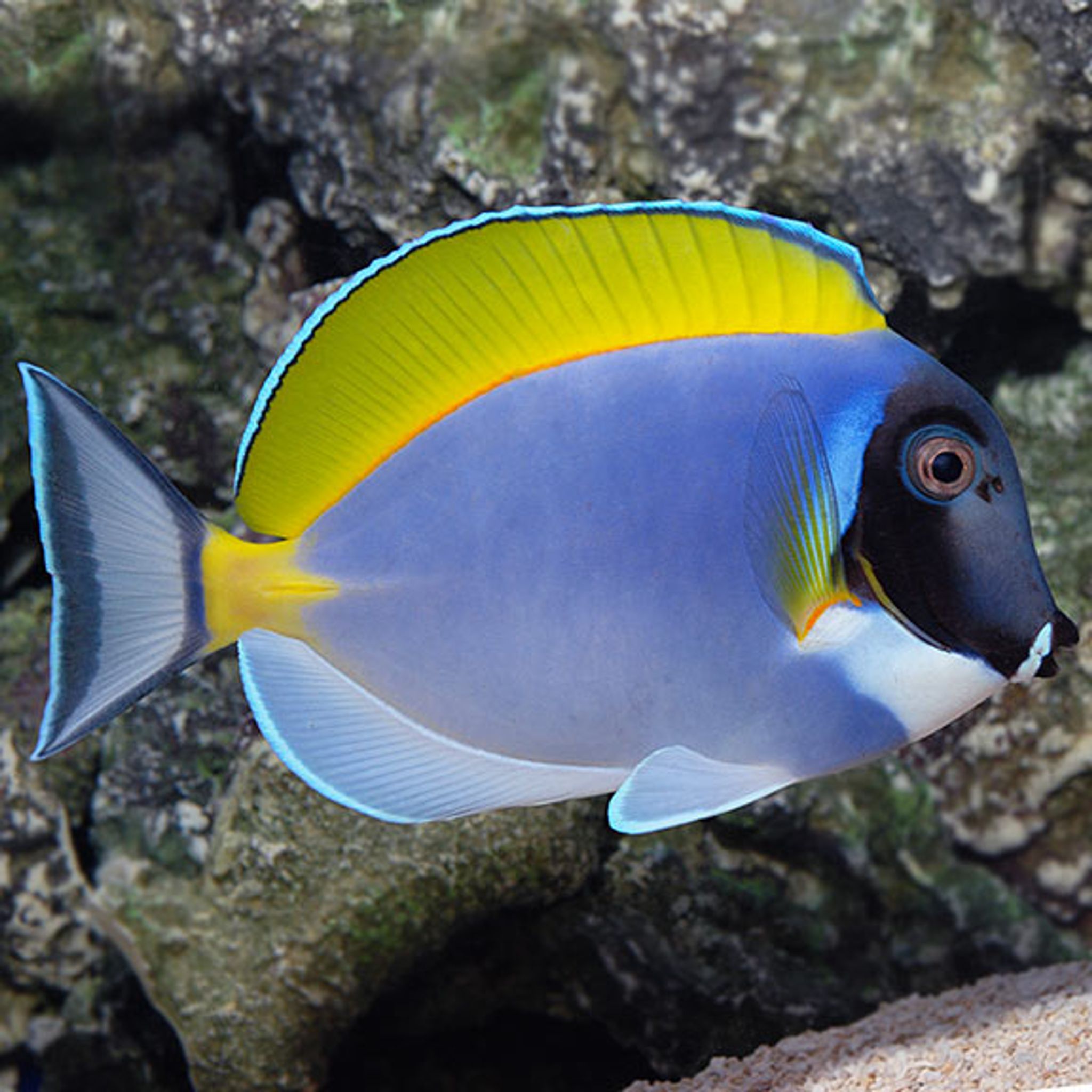
The powder blue tang (Acanthurus leucosternon), also called the blue surgeonfish, has a powder-blue body, a black facial mask, a yellow dorsal fin, and a white "bib" patch on the lower face and chest. It's frequently confused with two other fish:
- Blue hippo tang (Paracanthurus hepatus) — the "Dory" fish, a different genus entirely, with a black palette pattern and yellow tail rather than a solid yellow dorsal fin.
- Powder brown tang (Acanthurus japonicus) — a close relative in the same genus with a similar body shape but chocolate-brown coloring, a white facial patch, and orange streaks in the fins.
Knowing which fish you're actually looking at matters because their care needs, while similar in outline, aren't identical — more on the powder brown comparison below.
Adults reach roughly 9 inches (23 cm), and this is an active, fast-swimming fish that needs room to move, not just room to fit.
Tank Size and Setup
Sources disagree somewhat on the minimum tank size for this species, and it's worth being direct about why. A 125-gallon (473 L) tank is the bare floor for a single specimen in a species-focused setup. But because powder blue tangs are disproportionately sensitive to stress, and stress is the biggest driver of the disease problems this species is known for, 180 gallons (680 L) or larger is the recommendation for anyone serious about long-term success.
Tank shape matters more than raw volume here. A long, wide footprint gives a fast-swimming grazer room to cruise; a tall, narrow tank of the same gallonage does not. When comparing two tanks of similar volume, favor the one with more floor length.
The tank should also be established for at least 6 months before this fish goes in, with mature biofiltration and abundant live rock. Live rock isn't just decor — it's a grazing surface that supplements prepared foods with natural biofilm and algae.
Water Parameters
| Parameter | Target Range |
|---|---|
| Temperature | 74–82°F (23–28°C) |
| Salinity (SG) | 1.023–1.025 |
| pH | 8.1–8.4 |
| Alkalinity | 8–12 dKH |
| Ammonia / Nitrite | 0 ppm |
| Nitrate | Under 20 ppm (lower is safer) |
Stability matters more than chasing perfect numbers. A tank that holds steady at 1.024 SG and 78°F beats one that swings between "ideal" readings. Strong, well-oxygenated flow is non-negotiable — low-flow tanks stress this species and contribute to the same immune suppression that opens the door to disease.
Diet and Feeding
Powder blue tangs are obligate herbivores and near-constant grazers in the wild. A prepared-food diet needs to reflect that grazing pattern, not a once-a-day carnivore-style feeding.
- Nori or dried seaweed clipped inside the tank, available for grazing
- Spirulina and marine algae-based pellets or flakes
- Frozen herbivore blends formulated for tangs and surgeonfish
- Occasional mysis or other meaty food as a minor supplement, not a staple
Feed 2–3 times daily in small amounts rather than one large feeding. This mimics natural grazing behavior and supports the immune system — underfeeding, or feeding mostly meaty foods, is a common mistake that leaves this species thin and immunocompromised. A simple weekly rhythm works well: nori clipped in the tank most mornings, a pellet or flake feeding at midday, and a frozen herbivore blend in the evening, adjusted so the fish is grazing on something for a meaningful part of the day rather than eating one large meal and going hungry the rest of the time.
Live rock coverage matters here too — over-scrubbing rock clean of algae film removes a natural grazing surface and forces total reliance on prepared foods, which is harder to balance nutritionally.
Temperament and Tankmates
Powder blue tangs are semi-aggressive, primarily toward other tangs and surgeonfish — especially species with a similar body shape or color pattern. Toward non-tang tankmates they're generally peaceful.
Good tankmates:
- Wrasses
- Gobies
- Anthias
- Clownfish
- Other peaceful reef fish that don't compete for the same niche
Keeping multiple tangs: this only works reliably in 200+ gallon systems, using species with different body shapes and feeding niches, introduced to the tank at the same time rather than added one after another. Adding a second, similarly shaped tang later — or adding any tang too soon after the first — is a reliable way to trigger territorial aggression. In general, keep this species singly, and add it last to an established community so it isn't defending territory it hasn't yet claimed.
Hobbyists building out a reef community around a powder blue tang can browse wrasses and other options in the tangs and surgeonfish category on FishyHub.
Reef Safety
Powder blue tangs are reef safe. They don't eat coral, clams, or ornamental invertebrates, and their grazing habit actively helps by keeping nuisance algae in check on rock and glass. The main reef-tank consideration isn't compatibility with corals — it's simply making sure the tank is large enough and well-enough filtered to support a fast-growing, heavy-bioload grazer alongside sensitive sessile invertebrates.
Why This Species Gets Ich So Easily
Marine ich (Cryptocaryon irritans) comes up in almost every discussion of this fish, and for good reason: powder blue tangs are widely regarded as one of the tang species most prone to it. Two things are true at once here, and both matter:
- Acanthurus tangs as a genus are a classic "ich magnet." The species isn't uniquely fragile compared to its relatives.
- Most losses trace back to collection and shipping stress, not an inherent weakness in the fish. A powder blue tang that's well-sourced, properly quarantined, and given adequate space and flow is a fundamentally different proposition than one pulled straight from a stressful supply chain into a display tank.
By the time visible white spots appear, the fish has typically already been under stress for weeks — the spots are a symptom of a compromised immune system, not the start of the problem. That's why prevention, not treatment, is where the real work happens.
Ich Prevention for Tangs
- Quarantine every new tang, no exceptions, regardless of how healthy it looks at purchase.
- Minimize stress with adequate space, strong appropriate flow, and a consistent grazing-based diet.
- Some experienced keepers run a proactive copper treatment or the tank-transfer method in quarantine rather than waiting for visible spots to appear, given how predisposed this genus is.
- UV sterilizers or ozone can serve as a helpful adjunct disease-prevention tool for ich-prone tangs — worth considering, though neither is a substitute for quarantine and low-stress husbandry.
Setting Up a Quarantine Tank
A dedicated QT tank is the single most effective tool for keeping this species alive long-term. Keep the setup simple:
- 20–40 gallon bare tank, no substrate and no live rock — bare bottom makes medication dosing and cleaning far easier
- Sponge filter or seeded biological media to maintain some nitrifying capacity without the complications of live rock
- Heater to match display-tank temperature
- PVC pipe or similar hide so the fish has cover without decor that absorbs medication
- Parameters matched to the display tank to minimize additional acclimation stress
- Minimum 2–4 week observation period, watching feeding response and monitoring closely for parasites, before any move to the display tank
Quarantining for under two weeks is one of the most common mistakes hobbyists make with this species — many parasite life cycles need the full window to show themselves.
Choosing Captive-Bred Stock
Captive-bred marine fish are increasingly available as more species are successfully bred in controlled environments. Where available, captive-bred stock tends to be hardier, already trained onto prepared foods, and lower-impact on wild reef populations. Captive-bred powder blue tangs specifically are still rare and limited compared to wild-caught specimens, so most buyers will still be sourcing wild-caught fish — which makes quarantine and sourcing quality even more important for this species than for one with a robust captive-bred supply.
Buying Saltwater Fish Online
When shopping for a powder blue tang or any ich-prone marine fish online, a few practical checks reduce risk substantially:
- Favor sellers who quarantine stock themselves for 2–4 weeks before shipping
- Look for evidence the fish is already eating prepared foods
- Check for transparent species and size information rather than vague listings
- Treat an unusually low price as a red flag — skipped quarantine is often how sellers cut costs, and it's the buyer who absorbs that risk later
Shoppers can browse current stock and feeding-related products, including seaweed and pellet foods, in the food and supplements category on FishyHub.
Protein Skimming and Cleanup Crew
Strong protein skimming paired with a cleanup crew of snails and hermit crabs helps keep nitrate low and export organic waste before it accumulates. This ties directly back into disease pressure: a tang stressed by declining water quality is a tang more vulnerable to ich, even if every other husbandry factor is dialed in. Weekly 10–15% water changes are the baseline, but for a heavy-bioload tang in a large system, treat that as a floor rather than a fixed number — if nitrate creeps toward the 20 ppm ceiling between changes, increase frequency or volume rather than waiting for the next scheduled change.
General Marine Disease Prevention
Beyond ich specifically, most marine fish health problems in a home aquarium trace back to the same handful of root causes: skipped or shortened quarantine, unstable parameters, and avoidable stress. Marine fungal issues are less common than ich or velvet in saltwater tanks and usually follow an injury or a period of poor water quality rather than appearing on their own. Any fish showing spots, cloudy patches, or clamped fins should be isolated promptly — quick action at the first sign of trouble is far more effective than waiting to see if it resolves on its own.
Powder Blue Tang vs. Powder Brown Tang
Because these two Acanthurus species are frequently compared, a side-by-side is useful for anyone deciding between them:
| Trait | Powder Blue Tang | Powder Brown Tang |
|---|---|---|
| Coloring | Powder-blue body, black mask, yellow dorsal fin | Chocolate-brown body, white facial patch, orange fin streaks |
| Minimum tank size | 125 gal (180+ recommended) | 125 gal |
| Diet | Obligate herbivore/grazer | Obligate herbivore/grazer |
| Temperament | Semi-aggressive toward other tangs | Semi-aggressive toward other tangs |
| Disease sensitivity | Highly ich-prone, especially when stressed | Often considered comparably or slightly hardier once acclimated |
| Best kept | Singly | Singly |
The two share nearly the same care profile, which is why shoppers often treat them as interchangeable. The practical difference for most hobbyists comes down to coloring preference and a slightly better track record for the powder brown once it's past the acclimation period.
Common Mistakes to Avoid
- Buying on impulse before a large, mature tank is ready — the single biggest cause of early losses with this species
- Skipping quarantine, or cutting it short at under two weeks
- Feeding mostly meaty foods to a fish that needs to graze on algae-based nutrition constantly
- Adding a second tang too soon, or one with a similar body shape and color
- Placing the fish in low flow, which reduces oxygenation and adds stress
- Waiting for visible ich spots before acting, when the underlying stress has usually been building for weeks
- Over-cleaning live rock, removing the natural grazing surface this species relies on
Cost and Availability Notes for US Buyers
Because captive-bred stock remains limited for this species, most powder blue tangs sold in the US are wild-caught, and pricing reflects size, coloring, and how the individual seller handles pre-sale quarantine. Sellers that invest in longer holding and quarantine periods before listing a fish typically price it higher than those that ship straight from import — that price gap is often a reasonable proxy for how much stress the fish has already been through by the time it reaches a buyer's tank.
Frequently Asked Questions
How big of a tank does a powder blue tang really need?
125 gallons (473 L) is the minimum for a single specimen, but 180+ gallons (680+ L) is recommended for long-term success. A long, wide tank matters more than a tall one, since this is a fast, active swimmer.
Are powder blue tangs reef safe?
Yes. They don't touch corals or ornamental invertebrates, and their grazing habit can actively help control nuisance algae in a reef tank.
Why do powder blue tangs get ich so easily?
It's a combination of a genus-wide predisposition among Acanthurus tangs and high stress from wild collection and shipping. Good sourcing and a full quarantine period cut the risk substantially, even though they can't eliminate it entirely.
Can I keep two tangs together?
Only in very large tanks (200+ gallons), using different-shaped and different-colored species introduced to the tank at the same time. Avoid combining two similarly shaped surgeonfish, which is a reliable trigger for aggression.
What do powder blue tangs eat?
Primarily nori or dried seaweed, herbivore-formulated pellets or flakes, and algae-based frozen foods, fed 2–3 times a day. Occasional meaty foods like mysis can supplement the diet but shouldn't replace the herbivore base.
How long should I quarantine a new tang?
A minimum of 2–4 weeks in a bare quarantine tank, observing feeding behavior and monitoring closely for parasites before any move to the display tank. Cutting this short is one of the most common and costly mistakes hobbyists make with this species.
What's the difference between a powder blue tang and a powder brown tang?
They share nearly identical care needs and size but differ in coloring — blue with a black facial mask versus brown with a white facial patch and orange fin streaks. The powder brown is often considered comparably or slightly less disease-prone once it's past initial acclimation.
Is the powder blue tang beginner-friendly?
Generally not recommended as a first marine fish. It's better suited to hobbyists who already have an established, mature, large tank and the discipline to quarantine every new arrival properly.
A powder blue tang rewards patience: a mature, appropriately sized tank, a consistent grazing-based diet, and a real quarantine period before the display tank do more for this species' survival than any single water parameter. Explore current stock in the tangs and surgeonfish category on FishyHub to compare available specimens before deciding.

