
Oranda Goldfish Care Guide: Tank Size, Diet, Water Parameters and Temperament
The oranda is a fancy goldfish (Carassius auratus) prized for its raspberry-like head growth, but that same selective breeding makes it clumsier and more fragile than a common goldfish. This guide covers the tank size, filtration, water chemistry, diet, and tankmate choices an oranda actually needs, plus the health problems that show up when any of those slip.
Species Snapshot
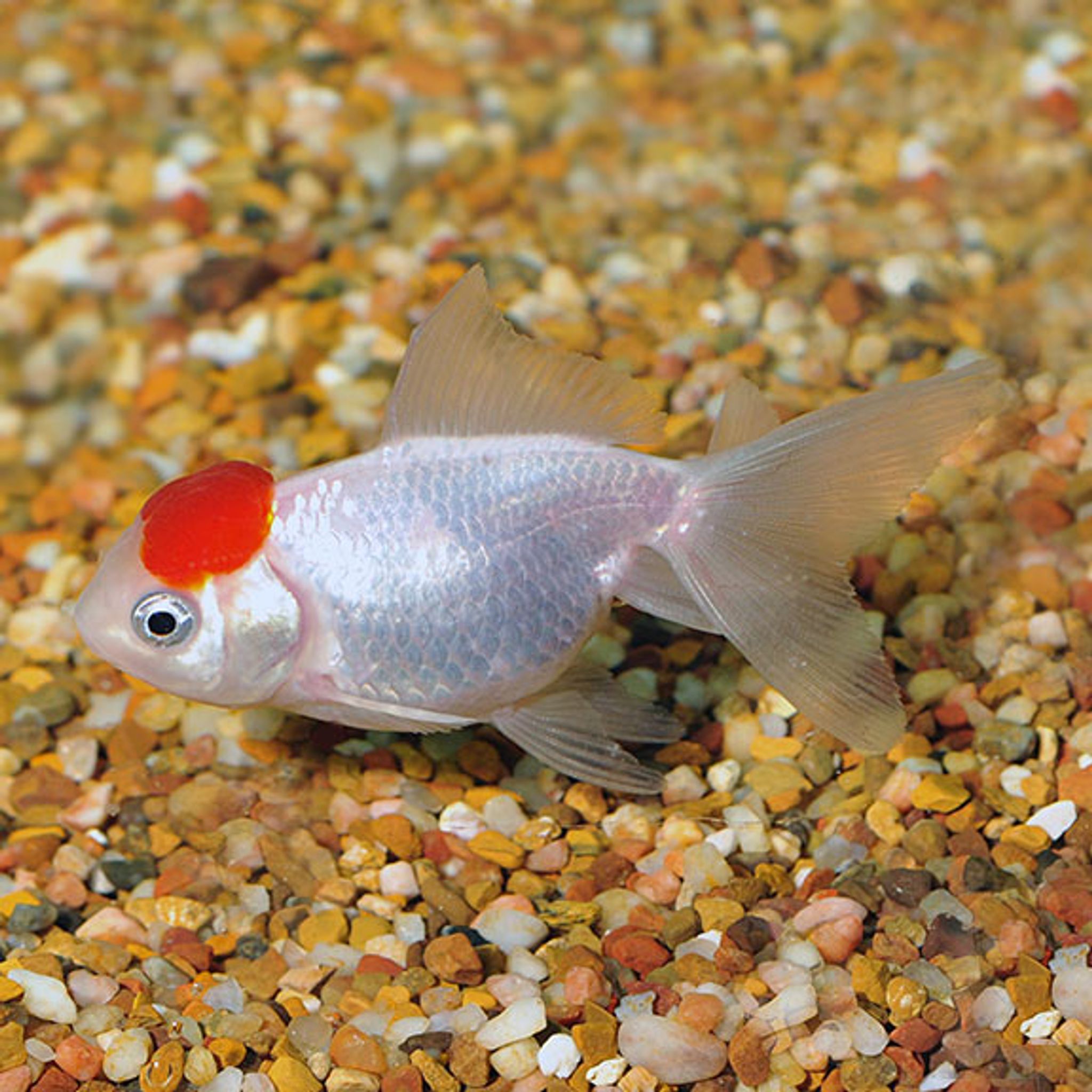
Orandas are egg-shaped, twin-tailed fancy goldfish best known for the wen (or hood) — a raspberry-textured growth that covers part or all of the head. That wen, along with the rounded body, is a product of generations of selective breeding, and it comes at a cost: orandas are slower, less coordinated swimmers than slim-bodied common or comet goldfish, and they're generally less hardy.
- Adult size: roughly 6–12 inches (15–30 cm) nose to tail-tip; plan for the larger end when sizing a tank.
- Lifespan: typically 10–15 years with good care; some well-kept fish reach 20 years or more.
- Body traits: egg-shaped body, twin tail fins, slow and somewhat ungainly swimming style.
- Color patterns: both metallic and calico varieties exist, in red, orange, black, blue, chocolate, calico, and red-and-white combinations. Wen coverage ranges from a small partial cap to a full hood that can partially obscure the eyes.
Understanding the wen is the key to understanding oranda care: because it's essentially specialized tissue prone to bacterial and fungal infection, nearly every husbandry recommendation below — smooth substrate, pristine water, gentle décor — exists specifically to protect it.
Tank Size and Setup
How Big a Tank Does an Oranda Need?
Sources disagree here, so treat it as a floor versus a target:
- 20 gallons (76 L) is the absolute minimum, and really only appropriate for a single small juvenile.
- 30 gallons (114 L) is the realistic starting point for one adult oranda, since they grow large and produce a lot of waste.
- Add roughly 10 gallons (38 L) per additional oranda.
Favor a long, wide footprint over a tall one. Goldfish are heavy waste producers, and surface area drives gas exchange far more than water depth does — a wide 30-gallon tank supports an oranda better than a tall 30-gallon tank with the same volume.
Filtration and Bioload
Oranda bioload is high relative to their size, so filtration needs to be oversized rather than "rated for the tank." Practical guidelines:
- Choose a canister or hang-on-back filter rated for a tank noticeably larger than the one you're stocking.
- Add supplemental aeration (an air stone or extra outflow agitation) — goldfish appreciate the extra dissolved oxygen, especially in warmer water.
- Service filters every 4–6 weeks, rinsing media in removed tank water rather than tap water, and never replace all media at once — that resets the biological filter.
Substrate and Décor
Because the wen and long fins are easily scraped or torn:
- Use smooth sand or rounded, polished gravel — avoid sharp or jagged gravel, which orandas can injure themselves on while foraging and digging.
- Choose smooth rocks and decorations with no sharp edges, especially anything near the top of the tank where the head growth passes.
- Go with silk plants or hardy, tough-leaved live plants like Anubias or Java fern, since orandas root around in substrate and eat soft-leaved plants.
You can browse tanks, filters, and substrate sized for a goldfish setup directly on FishyHub's filters category.
Water Parameters
| Parameter | Ideal range | Notes |
|---|---|---|
| Temperature | 65–72°F (18–22°C) | Some sources extend tolerance to 60–78°F (16–26°C), but stable mid-60s to low-70s is the consensus sweet spot |
| pH | 6.0–8.0 (aim 7.0–7.5) | Avoid pushing toward 5.0; treat 6.0 as the practical lower bound |
| General hardness | ~5–19 dGH | Moderate hardness is well tolerated |
| Ammonia | 0 ppm | Any detectable ammonia calls for an immediate water change |
| Nitrite | 0 ppm | Same urgency as ammonia |
| Nitrate | Under 20–40 ppm | Lower is better; rising nitrate signals it's time for a water change |
Ideal Water Temperature
Oranda goldfish do best held stable in the 65–72°F (18–22°C) range. If the fish room or house temperature fluctuates outside that window, use a heater — orandas are noticeably less cold-tolerant than common or comet goldfish because selective breeding for the wen and rounded body reduced their overall hardiness. Sudden temperature swings, not just cold itself, are what stresses the immune system and can trigger parasite outbreaks like ich.
Water Changes and Testing
- Change 25–35% weekly as a standard schedule; some keepers prefer smaller, more frequent changes (10–15% weekly) plus regular gravel siphoning.
- Test pH, ammonia, nitrite, and nitrate weekly, more often in a newly cycled tank.
- Before adding a new oranda, run the tank through a full nitrogen cycle first — seed it with beneficial bacteria, monitor ammonia and nitrite until both read zero and nitrate is present, and only then add fish. Skipping this step is one of the most common reasons new goldfish get sick in the first few weeks.
Diet and Feeding
Orandas are omnivorous and prone to overeating, so portion control matters as much as food quality.
- Base diet: high-quality sinking or slow-sinking pellets or flakes formulated for fancy goldfish. Floating flake encourages gulping air at the surface, which can worsen buoyancy problems given the oranda's rounded body shape.
- Vegetables: blanched spinach, peas, lettuce, or zucchini a few times a week for fiber and roughage.
- Protein: occasional brine shrimp, bloodworms, daphnia, or tubifex as treats.
- Portions: feed only what's eaten in 1–3 minutes, 2 small feedings a day for adults, 2–3 for juveniles.
- Soak dry pellets in tank water for a few minutes before feeding — this reduces the risk of swim bladder issues from pellets expanding after being swallowed dry.
Food, pellets, and treats formulated for goldfish are available on FishyHub's Food & Supplements category.
Temperament and Tankmates
Orandas are peaceful, social fish that do best in small groups of their own kind or alongside other slow-moving fancy goldfish. Their body shape makes them poor competitors against faster fish for food, and their fins and wen are vulnerable to nipping.
Good tankmates:
- Other fancy goldfish varieties — black moor, ryukin, pearlscale, fantail, telescope
- Calm bottom feeders such as corydoras or bristlenose/sailfin plecos
Avoid:
- Single-tail comets or fancy-common crosses (too fast, will out-compete for food)
- Known fin nippers, such as tiger barbs or nipping tetra species
- Small fish, shrimp, or snails an oranda may eat
- Tropical fish that need water warmer than goldfish tolerate long-term
You can browse the full range of fancy goldfish varieties on FishyHub's Goldfish category.
Breeding Basics
Orandas are egg-scatterers, typically triggered by a period of cooler water followed by a gradual warm-up, mimicking spring. A few things to know:
- Males develop small white bumps called breeding tubercles on the gill covers and head during spawning season — this is normal and not a sign of illness.
- A mature female can scatter thousands of eggs among spawning mops or fine-leaved plants.
- Eggs hatch in roughly 4–7 days.
- Remove the adults after spawning, since goldfish will eat their own eggs.
Red Cap and Black Oranda Varieties
Red cap oranda is one of the most recognizable varieties: a white or silver body paired with a solid red or scarlet wen, creating strong color contrast. Care requirements are identical to any other oranda.
Black oranda is solid black, sometimes fading toward orange or bronze with age or under strong lighting. This color shift is a normal pigment change tied to age, light exposure, and water chemistry — not a sign of illness — and it commonly confuses new owners who assume their fish is getting sick when the color simply changes as the fish matures.
Pond Keeping Basics
Orandas can live outdoors during warm months, but because they're less cold-hardy than common goldfish, most of the US requires bringing them indoors or into a heated section of the pond for winter.
Pond Size, Shape, and Equipment
- Budget roughly 10 gallons per adult goldfish, and more generous space for orandas specifically.
- Irregular or round pond shapes reduce dead zones where waste can accumulate.
- A pump should turn over the entire pond volume every 1–2 hours.
- Plan for mechanical and biological filtration sized for goldfish bioload, a UV clarifier to control algae, and dedicated aeration.
- If any fish will overwinter outdoors, at least one section of the pond should be 3 feet (about 1 meter) deep so it doesn't freeze solid, along with a bottom drain or skimmer.
DIY and Liner Ponds
A flexible EPDM rubber liner is the common choice for custom pond shapes, laid over an underlayment that protects against punctures from roots and sharp stones. Thin, budget liners can crack or degrade under UV exposure over time, so liner thickness and UV resistance are worth checking before installing.
Spring Start-Up
As water warms in spring, increase feeding gradually rather than resuming a full summer schedule immediately. Test water quality after winter dormancy, since debris builds up under ice or in a cold, low-flow system, and inspect fish closely for pop-eye or fungal growth that can develop over winter months.
Common Mistakes and Troubleshooting
- Housing an oranda in a bowl or under 20 gallons — leads to stunted growth, poor water quality, and a shortened lifespan.
- Overfeeding or feeding only floating flake — contributes to swim bladder disorder and obesity; switch to soaked, sinking food.
- Sharp gravel or décor — injures the delicate wen and opens the door to infection.
- Skipping the heater — assuming goldfish don't need stable temperatures; swings stress the immune system and can trigger ich outbreaks.
- Under-filtering for the bioload — causes ammonia and nitrite spikes, leading to stress, red streaking in the fins, and higher disease susceptibility.
- Mixing with fast or aggressive fish — an oranda can't compete for food and ends up with fin damage.
- Not quarantining new fish or plants — a common route for introducing ich, parasites, or bacterial infections into an established tank.
Quarantine and Hospital Tank Setup
Keep a separate bare-bottom 10–20 gallon tank on hand with a sponge filter (ideally seeded with beneficial bacteria ahead of time), a heater, and minimal décor for easy cleaning and dosing. Quarantine every new fish for 2–4 weeks before introducing it to the main tank, and use the same setup as a hospital tank if an existing fish gets sick.
A note on medications: some treatments, including formalin-based products and certain dyes, are riskier for scaleless or heavily-finned fancy varieties like the oranda. Always check that a medication's label specifically lists goldfish or fancy varieties as safe before dosing.
Frequently Asked Questions
How big of a tank does one oranda goldfish need?
Twenty gallons is the absolute minimum for a single small juvenile, but 30 gallons or more is the recommended starting point for an adult. Add roughly 10 gallons for each additional oranda you keep in the same tank.
What is the ideal water temperature for oranda goldfish?
Aim for a stable 65–72°F (18–22°C), using a heater if your room temperature fluctuates. Orandas are less cold-tolerant than common goldfish because selective breeding for the wen reduced their overall hardiness.
Can oranda goldfish live in a pond?
Yes, during mild seasons, but in most US climates they need to come indoors or into a heated section of the pond for winter. The pond also needs to be well filtered and roomy enough for the fish's bioload.
What is wrong with my goldfish if it's losing scales?
Scale loss is commonly linked to poor water quality, physical injury from sharp décor, or an early bacterial or fungal infection. Test your water parameters first, then inspect the fish for redness or ulcers to guide treatment.
How do I treat ich (white spot disease) in goldfish?
Gradually raise the temperature within a safe range to speed up the parasite's lifecycle, treat with a goldfish-safe ich medication, and add extra aeration since warmer water and some treatments lower dissolved oxygen. Continue the full treatment course length, not just until the visible white spots disappear.
What is dropsy and can it be cured?
Dropsy is a bacterial or kidney-related fluid buildup that causes a swollen body and raised, pinecone-like scales, usually signaling internal organ failure. Early cases sometimes respond to antibiotics and improved water quality, but advanced dropsy has a poor prognosis and is often considered terminal.
Is a salt bath safe for goldfish?
A short-duration, higher-concentration aquarium salt dip can help with certain external parasites or fungal issues and is generally well tolerated by goldfish. Dosage and duration still need to be controlled carefully, and a salt bath isn't a cure for internal illnesses like dropsy.
If you're setting up quarantine or treatment gear, FishyHub's Treatment category carries medications worth checking against goldfish-safety labeling before use.
Ready to add an oranda to your setup? Browse available fancy goldfish and compatible tankmates on FishyHub's Goldfish category.


