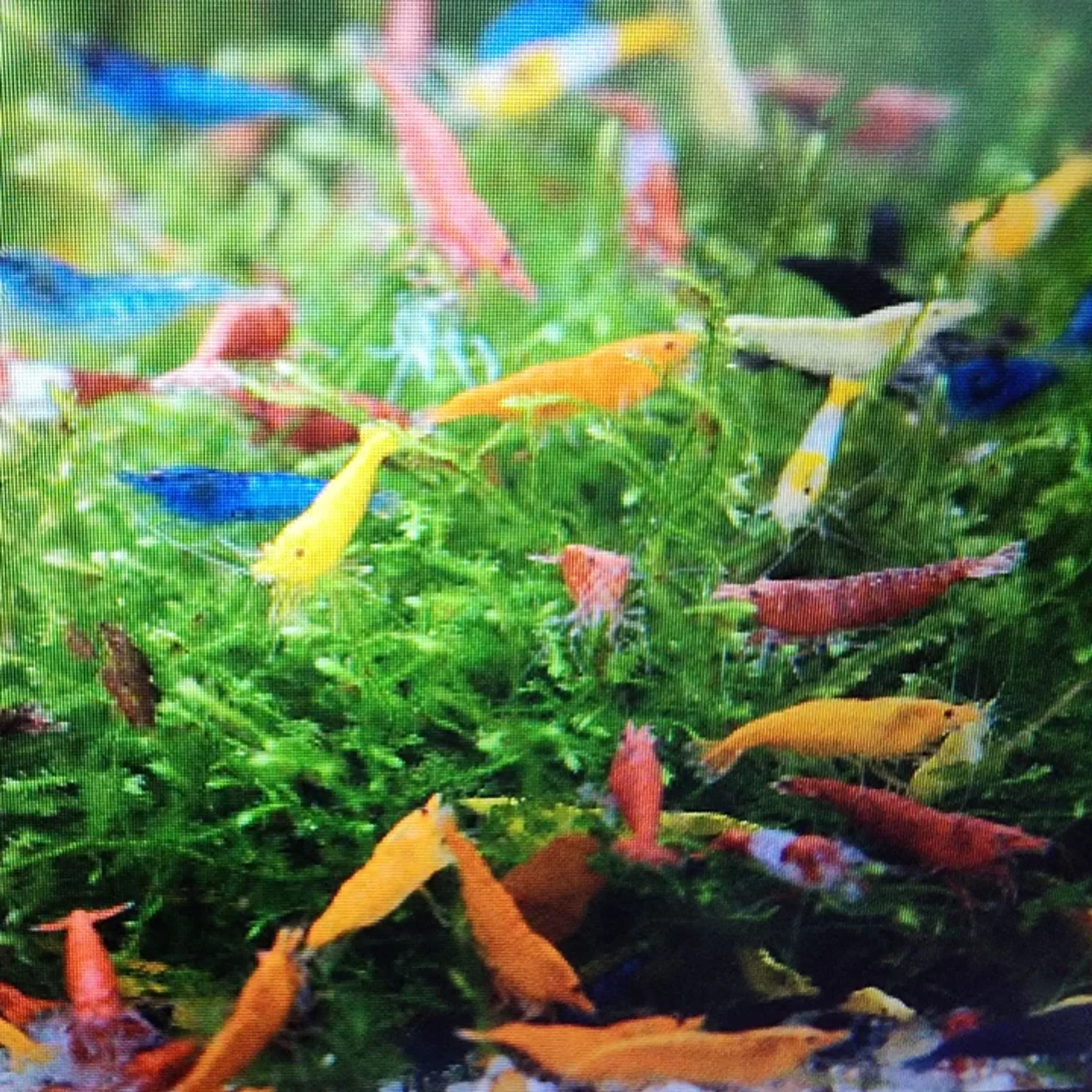
Neocaridina Shrimp Problems: Common Causes of Stress, Death and Poor Growth
Neocaridina shrimp (cherry shrimp and their many color strains) have a reputation for being nearly indestructible, yet a colony can crash within days without an obvious trigger. Most of the time the cause isn't disease at all — it's a water-chemistry swing, a bad molt, or an overlooked feeding habit. This guide walks through the causes in the order you should actually check them, from the most common to the rare.
Why Are My Shrimp Dying? A Ranked Checklist
Neocaridina are tougher than fish in some ways but far less forgiving of sudden change in others. When several shrimp die at once, work through causes in this order rather than jumping straight to medication:
- Uncycled tank or ammonia spike — by far the most common cause of unexplained die-offs, especially in new setups or after a big cleaning.
- Unstable GH, KH, or TDS — swings in mineral content, not just ammonia and nitrate, are the leading cause of failed molts.
- Chlorine or heavy metals from tap water — untreated water or old copper plumbing.
- Airborne or waterborne chemicals — soaps, cleaning sprays, air fresheners, fresh silicone, or new paint near an open tank.
- Overfeeding or underfeeding — both cause damage, just on different timelines.
- New-shrimp shipping stress — shrimp added without slow acclimation.
- Parasites and pests — the least common cause, but the one hobbyists jump to first.
Ammonia and Nitrate: The Usual Suspects
Neocaridina should live at 0 ppm ammonia at all times — even 0.25 ppm is enough to stress a colony. An uncycled tank, an overstocked tank, or a tank that was recently gravel-vacuumed too aggressively (stripping beneficial bacteria) is the top cause of sudden, unexplained deaths.
Symptoms of ammonia stress:
- Erratic, darting swimming
- Shrimp sitting motionless for long stretches
- Clustering near the surface
- Shrimp attempting to climb out of the water
Nitrate is more tolerable but still needs a ceiling. Keep it under 20 ppm; some shrimp tolerate creeping up to 30 ppm, but visible stress typically shows by 40 ppm. Symptoms overlap heavily with ammonia stress — hyperactivity or lethargy, surface-clustering, appetite loss, and breeding grinding to a halt.
Fixing an Ammonia or Nitrate Spike
- Do a small water change, not a drastic one — a sudden swap of "clean" water can be as stressful as the spike itself.
- Add live or floating plants to absorb nitrogen compounds continuously.
- Keep a water conditioner that detoxifies ammonia, nitrite, and nitrate on hand as a short-term stopgap while you fix the root cause — browse water conditioning and additive products for options.
- Stop overfeeding, and pull out uneaten food and any corpses within a few hours.
- Vacuum substrate gently and rinse filter media in old tank water rather than tap water, so you don't wipe out the bacterial colony.
Water Change Guidance: Stability Beats "Clean"
Shrimp keepers often make the mistake of doing large or frequent water changes to "help" a stressed colony — this usually backfires, triggering temperature, TDS, and GH swings that cause failed molts instead of solving anything.
A safer baseline is about 10% every one to two weeks, scaled up only when testing shows nitrate climbing toward 20 ppm — treat the calendar as a suggestion and the test kit as the real trigger. When you do change water:
- Match the temperature of the replacement water to the tank.
- Pre-treat with dechlorinator and, if needed, a remineralizer, and let it act before adding.
- Drip-acclimate both new water and any new shrimp slowly to avoid shock.
GH, KH, and TDS: The Overlooked Variables
Ammonia and nitrate get most of the attention, but for neocaridina specifically, swings in general hardness (GH) and carbonate hardness (KH) are the leading cause of failed or fatal molts. A common mistake is testing only ammonia, nitrate, and pH while ignoring hardness entirely — and missing the real cause of molting deaths.
General target ranges for neocaridina (they tolerate a noticeably wider band than caridina/soft-water shrimp):
| Parameter | General target range |
|---|---|
| GH | ~4–8 dGH |
| KH | ~0–4 dKH |
| pH | ~6.5–8 |
| TDS | ~150–250 ppm |
| Ammonia | 0 ppm |
| Nitrate | Under 20 ppm |
Stability across these numbers matters far more than hitting an exact figure. A slower, easy-to-miss cause of long-term drift is substrate choice — active, buffering substrates can gradually pull GH/KH down over months, while inert gravel or sand leaves hardness to drift with whatever you top off with. If molting problems creep in gradually over weeks with no obvious trigger, check whether your substrate has been quietly shifting your water chemistry.
Molting and Common Molting Problems
Neocaridina molt roughly every 2 to 4 weeks, more often when young and actively growing. A normal molt looks like this: the shrimp finds cover, sheds an empty, intact, translucent shell, and may hide or skip a meal for a day while the new exoskeleton hardens. This is frequently mistaken for illness or death — always check whether the shell is empty before assuming the worst.
Bad molts usually trace back to:
- Unstable or incorrect GH/KH
- Too much or too little calcium in the diet
- Poor dietary protein
- Sudden parameter shifts, often right around water-change day
White Ring of Death
This is a molt gone seriously wrong: the exoskeleton splits all the way around the body instead of cleanly at the neck, trapping the shrimp and usually killing it within a day or two. Root causes are the same trio — unstable parameters forcing a premature molt, inadequate protein or calcium, and mineral imbalance (water too hard or too soft).
Prevention:
- Keep water changes small and infrequent, never drastic.
- Feed a varied diet with roughly 35–45% protein, alongside calcium sources such as cuttlebone, blanched vegetables, or a mineral supplement.
- Avoid sudden temperature or TDS shifts.
A well-rounded diet from food and supplement products makes it easier to hit both the protein and calcium side of this without guesswork.
Stuck or Incomplete Molts
Occasionally a shrimp gets physically trapped in its old shell. Manual rescue attempts rarely succeed and generally aren't recommended — the shrimp is usually too far gone by the time it's noticed.
Starvation and Overfeeding
Starvation: Adult neocaridina can typically survive about a week to 10 days without food before real harm sets in. Beyond roughly 3 weeks, recovery becomes unlikely, and beyond 3–4 weeks it's usually fatal. Shrimplets are more vulnerable once they've used up their yolk reserves. Underfeeding shows up as poor growth, washed-out color, no breeding activity, and higher susceptibility to disease.
Feed a varied diet — sinking pellets, blanched vegetables, and natural biofilm/algae — in amounts the colony finishes within a few hours, removing leftovers afterward.
Overfeeding is at least as common a mistake, and arguably worse: it drives ammonia spikes directly and fuels blooms of planaria, hydra, and scuds.
If You're Going on Vacation
Adults tolerate roughly a week to 10 days without intervention. Leave a slow-release source — algae, biofilm-rich decor, or a feeding block — rather than dumping in extra food before you leave, which just sets up an ammonia spike while you're away.
Should Dead Shrimp Be Removed?
Yes, as a default rule. Decomposing shrimp add ammonia to the water and can spread pathogens to the rest of the colony — leaving a corpse in the tank "to see if others eat it" for more than a day is a commonly overlooked stressor behind mystery die-offs. Remove dead shrimp promptly whenever you spot them.
Shrimp Behavior: Normal vs. Abnormal Swimming
Is it normal for shrimp to swim around a lot? Yes, in the right context. Healthy shrimp forage actively for powdered food, and males swim energetically while hunting pheromone trails left by breeding females — both are completely normal.
Red flags appear when:
- Many shrimp swim erratically at once, rather than one or two individuals.
- Shrimp are darting, flipping, or lying on their side (often a molt gone wrong).
- Swimming is paired with surfacing or gasping, pointing to ammonia in the water or elevated temperature, which both lowers dissolved oxygen and increases ammonia's toxicity.
If several shrimp are behaving oddly at the same time, test water parameters before assuming illness — a single hyperactive male hunting pheromones is not a crisis, but a whole colony darting at once usually is.
Freshwater Shrimp Diseases and Pests: Quick Reference
Parasites and pests are the least likely cause of a sudden die-off, but they're worth knowing individually since they get searched for by name.
| Condition | How to identify it | Fix |
|---|---|---|
| Scutariella japonica | Small white, branching threads near the eyes or rostrum | Mostly cosmetic unless heavy; salt dip, praziquantel, or a shrimp-safe dewormer; remove shed molts for a few weeks afterward to break reinfection |
| Vorticella | White, fuzzy growth, often near the mouth | Linked to poor water quality and decaying organics; improve water quality plus a salt bath/treatment |
| Planaria | Small flatworms gliding on glass or substrate | Sign of overfeeding/excess waste; generally harmless to adults but can prey on eggs and shrimplets; cut feeding, trap and remove, medicated treatments if needed |
| Holtodrilus truncatus | Tiny worms attached to the body or gills | Can impair breathing in heavy infestations; a salt dip is very effective; quarantine new stock to prevent introduction |
| Muscular necrosis | Opaque white muscle tissue | Usually fatal, linked to stress, poor water, or genetics; no real cure — cull affected shrimp and improve conditions |
A quick way to tell muscular necrosis from a normal empty molt shell: check whether the shrimp itself is inside. An empty translucent shell with no shrimp is just a molt; opaque white tissue on a living or dead shrimp's body is the disease.
Always confirm any medication is invertebrate-safe before dosing a shrimp tank — many copper- or formalin-based fish treatments are lethal to shrimp. Shrimp-safe deworming and treatment options are worth keeping on hand; you can browse treatment and medication products built for this.
Hydra: Identification and Removal
Hydra are tiny, stalked polyps — usually white or clear — that attach to glass, decor, or plant leaves and bloom when a tank is overfed, dosed with excess live food, or gets new plants without quarantine. Sources disagree on how dangerous they are: some say hydra mainly threaten fry and barely bother adult shrimp, while others treat them as a real predator of shrimp generally. A reasonable middle ground: hydra are low risk to healthy adult neocaridina but a genuine threat to shrimplets and eggs, so treat any bloom promptly in a breeding tank even if the adults look unaffected.
Removal ladder, mild to aggressive:
- Cut back feeding sharply to starve the bloom out.
- Manually remove or blot-dry affected decor for light infestations.
- Add a hydra-eating fish (bettas, gouramis, some livebearers) if your tank setup allows fish alongside shrimp.
- As a stronger measure, a fenbendazole-based dewormer dosed carefully at invert-safe levels, redosed after a water change.
Avoid crushing hydra in the tank — fragments can regenerate into new polyps.
Scuds: An Unwanted Hitchhiker, Not a Shrimp Disease
Scuds (Gammarus) aren't really a "shrimp problem" so much as a tank contaminant. They compete for food, breed quickly, and can outcompete or harass shrimp during vulnerable molting periods. The best defense is quarantining anything new before it goes in the main tank; once scuds are established, a full teardown and disinfection is the only sure fix, though predatory fish and manual trapping can knock numbers down in the meantime.
Quarantine: The Step Most Hobbyists Skip
Introducing new shrimp, plants, or decor without quarantine is the main vector for hydra, scuds, planaria, Scutariella, and Holtodrilus. A simple protocol:
- Quarantine new shrimp for 2–3 weeks in a separate, bare-bottom container with a sponge filter.
- Watch daily for white threads near the eyes, fuzzy growths, unusual swimming, or visible worms.
- Consider a brief salt dip for new arrivals as a precaution against external parasites.
- Rinse new plants and inspect them closely, or hold them in quarantine too, before adding to the main tank.
Other Hidden Stressors Worth Ruling Out
- Copper toxicity: beyond corroded plumbing, watch for copper-based plant fertilizers, certain algaecides, and driftwood pretreated with copper-based products — all are lethal to shrimp in tiny amounts.
- Oxygen levels: poor surface agitation, high temperature, and heavy plant mass consuming oxygen overnight can all push shrimp toward the surface, mimicking ammonia stress.
- Strain sensitivity: higher-grade, intensely colored strains are generally more sensitive to parameter swings than wild-type or lower-grade neocaridina, so read stress symptoms a bit more cautiously in a high-grade colony.
Frequently Asked Questions
Why are my shrimp dying one by one with no obvious cause?
Slow-building ammonia or nitrate, or a gradual GH/KH drift, is usually the culprit rather than one single event. Test full water parameters — not just ammonia and pH — and think back to whether a recent water change or new tank addition lines up with when deaths started.
Is it normal for shrimp to swim around a lot?
Yes, when it's a few individuals foraging for food or males hunting pheromone trails from breeding females. It becomes abnormal when many shrimp swim erratically at once or when swimming is paired with surfacing and gasping, which points to water quality or low oxygen.
Why do my shrimp look white or opaque and die?
This is most likely muscular necrosis, which is largely untreatable and linked to stress, poor water, or genetics. Before assuming the worst, check whether the "white shrimp" is actually just an empty, intact molt shell with no animal inside it.
What's the ideal water change schedule for a shrimp tank?
Small and infrequent — about 10% every one to two weeks — scaled up only if nitrate testing shows it climbing past roughly 20 ppm. Large or frequent changes done to "help" a stressed colony tend to cause more molting failures than they solve.
Do I need to remove hydra if my shrimp seem fine?
Yes, remove them anyway if you have breeding shrimplets in the tank. Hydra mainly threaten eggs and young shrimp, so adults looking unaffected doesn't mean the bloom is safe to ignore.
How do I know if my shrimp had a bad molt versus a normal one?
A normal molt leaves an empty, intact, translucent shell with no shrimp inside it. A bad molt leaves the shrimp still attached to the shell, torn open, or dead nearby — the white ring of death is the clearest example of the latter.
Reliable water chemistry, a varied diet, and slow acclimation solve the majority of neocaridina problems before medication ever needs to enter the picture. For healthy stock to start or restock a colony, browse neocaridina and other freshwater shrimp available on FishyHub.


