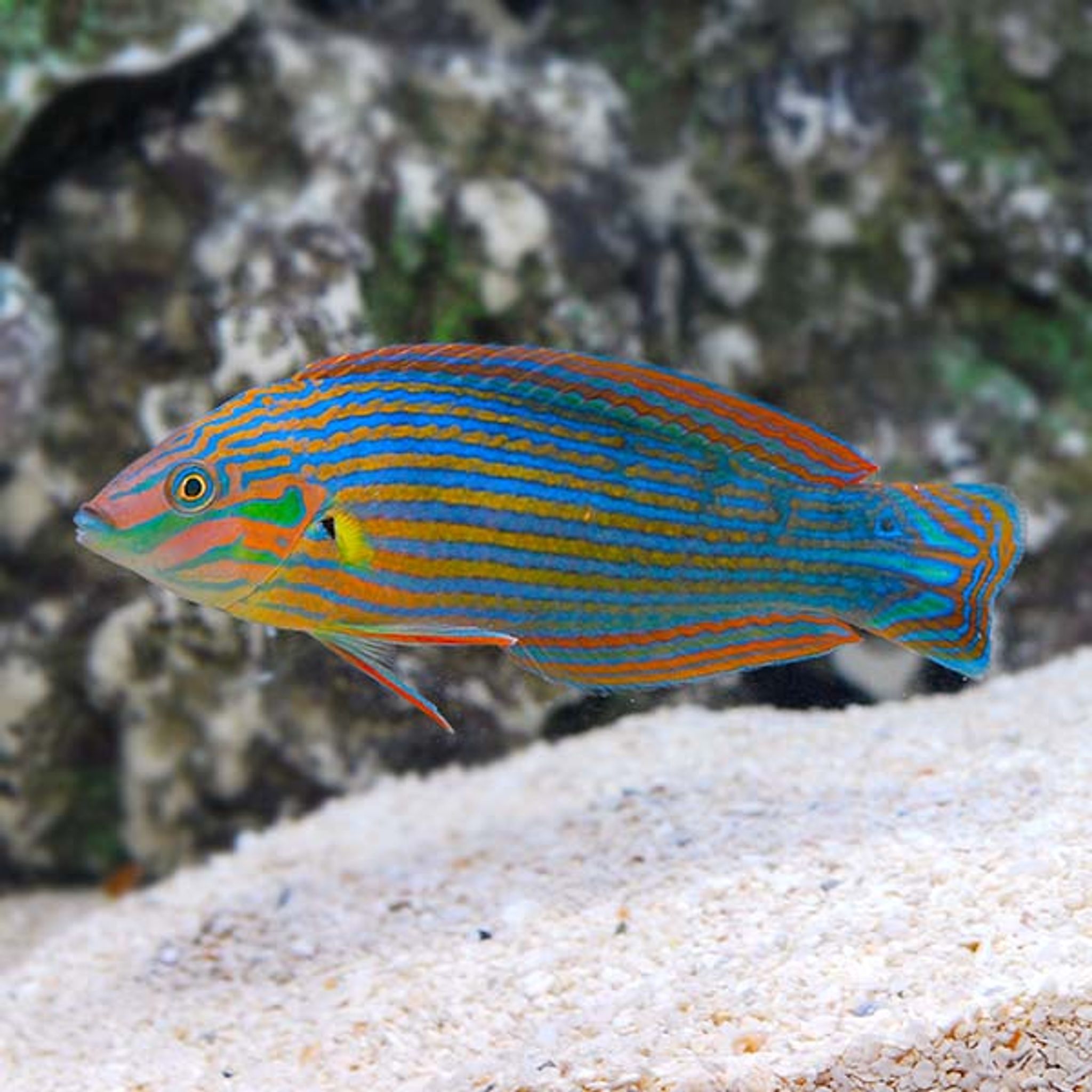
Melanurus Wrasse Care Guide: Tank Size, Diet, Compatibility and Reef Safety
The melanurus wrasse (Halichoeres melanurus) is a hardy, colorful mid-sized carnivore that fits well in a fish-only or coral-only reef system, but it is not automatically safe with cleaner shrimp, snails, or other mobile invertebrates. This guide covers exact tank size, sand depth, feeding, water parameters, and which tankmates actually work, so you can decide if this fish suits your setup before you buy.
Identification and Basic Biology
The melanurus wrasse is sold under several common names, all referring to the same species:
- Tailspot wrasse / tail-spot wrasse
- Hoeven's wrasse
- Neon wrasse
- Pinstripe wrasse
- Dusky-tail wrasse
- Yellow-lined wrasse
It's a protogynous hermaphrodite — every fish starts life female (initial phase), and the dominant individual in a group can transition to male (terminal phase) if no male is present. Initial-phase fish typically show more subdued green-and-orange striping, while terminal males develop bolder blue-green facial markings and more saturated coloring. If you're picking a specimen specifically for its color pattern, ask to see it out of the bag under full light, since juvenile and female coloring can look muted in a bare holding tank.
- Adult size: about 4–5 inches (10–12 cm), occasionally slightly larger
- Lifespan: roughly 5–8 years with good care
Tank Size and Setup
Retail sources disagree on the minimum tank size for this fish. Some list 30 gallons as sufficient for a single specimen; others recommend 50 gallons or more, especially with tankmates. In practice:
- 30 gallons is the absolute floor for one melanurus wrasse in a fish-only tank with no other territorial species.
- 40–50 gallons is the realistic, practical minimum — enough swimming room for this active, constantly patrolling fish and enough stability to support tankmates.
- Larger is genuinely better. This isn't a fish that "makes do" in a small footprint; it's an active swimmer that benefits from more open water and more rockwork to forage across.
Nano cubes under roughly 40 gallons are not a good fit for this species, even though it's sometimes marketed as compact or hardy enough for small setups.
Sand Bed
A sand bed isn't optional for this fish — it's a core behavioral need. Melanurus wrasses dive into sand at night to sleep and dive into it during the day when startled, so a shallow or coarse substrate directly causes stress and hiding.
| Substrate factor | Recommendation |
|---|---|
| Depth | 2–4 inches (5–10 cm); 3+ inches preferred |
| Grain size | Fine, "sugar-size" sand |
| Unsuitable substrates | Crushed coral, coarse gravel |
| Why it matters | Burrowing for sleep and predator-avoidance is instinctive, not optional |
Lid Requirements
A tight-fitting canopy or mesh cover is mandatory. Melanurus wrasses are determined jumpers, particularly right after introduction or when startled by a sudden light change or a tankmate. An open-top tank is the single most common way this species is lost — more so than disease or water quality issues.
Diet and Feeding
Melanurus wrasses are strict carnivores with a fast metabolism, and they need frequent, varied feeding to hold color and body condition.
- Staple: frozen mysis shrimp
- Supplements: frozen brine shrimp, chopped clam or squid, krill, cyclops, and a high-quality marine pellet or flake
- Feeding schedule: 2–3 small feedings per day, each fully consumed within a few minutes
An underfed melanurus wrasse — especially one fed just once a day — will slim down and lose color noticeably over a few weeks. This is a fish that needs consistent small meals, not one large feeding.
Wild-caught specimens sometimes refuse prepared foods at first. If yours won't touch mysis or pellets right away, offer live foods — blackworms, live brine shrimp, or live copepods — to get it started. Most individuals switch over to frozen and prepared foods within one to two weeks; don't give up in the first few days.
Natural Pest Control
As an added benefit, melanurus wrasses actively hunt and eat several common reef pests:
- Flatworms and planaria
- Pyramidellid snails
- Small bristle worms and fireworms
This pest-control behavior is genuinely useful, but it should never be treated as the fish's primary food source — it's a bonus, not a diet plan.
Is a Melanurus Wrasse Reef Safe?
This is where sources genuinely conflict, and the confusion comes down to an incomplete question. "Reef safe" needs to specify safe with what.
- Safe with corals and clams: yes. This fish does not pick at coral tissue or mantles, so it can be kept in a reef tank alongside SPS, LPS, and soft corals without issue. Browse reef corals if you're stocking a coral-only system around this fish.
- Not safe with most mobile invertebrates: no. It will actively hunt and eat snails, small or ornamental shrimp (including cleaner shrimp and sexy shrimp), feather dusters, tubeworms, and small crustaceans.
The accurate classification is "reef safe with caution." It's an excellent fit for a coral-only reef tank. It's a real risk in a full reef system stocked with cleanup-crew snails or ornamental shrimp — expect losses over time if you mix the two.
Temperament and Compatibility
Melanurus wrasses are generally peaceful but active and confident once settled. They patrol rock and sand constantly and can become somewhat boisterous as they establish territory, occasionally harassing very small, slow, or timid fish such as tiny gobies or pipefish.
Good tankmates:
- Other peaceful wrasses, including additional melanurus wrasses (one male with multiple females works well, mirroring their natural harem structure)
- Gobies
- Blennies
- Tangs
- Clownfish
Avoid:
- Two similarly sized, similarly colored male wrasses together — this reliably causes territorial fighting
- Very small ornamental shrimp in a mixed reef, for the reef-safety reasons above
- Adding this fish as the very first or most dominant resident — introduce it after other peaceful, established fish are already settled, ideally alongside other similarly active species rather than into a tank of shy newcomers
Stocking It With a Typical FOWLR or Reef Community
As a rough planning guide for a 50–75 gallon FOWLR or reef-with-corals tank: one melanurus wrasse, a pair of clownfish, one or two gobies, and a single tang can coexist comfortably given adequate rock and swimming space. Add species gradually rather than all at once, and always confirm adult size and territorial needs for each fish before adding it.
Water Parameters
These are standard marine/reef targets and apply whether or not your tank hosts corals:
| Parameter | Target range |
|---|---|
| Temperature | 72–78°F (22–26°C) |
| Salinity | 1.023–1.025 SG (~35 ppt) |
| pH | 8.1–8.4 |
| Alkalinity | 6.5–12 dKH (8–12 dKH typical target) |
| Calcium | 380–460 ppm |
| Magnesium | 1260–1460 ppm |
| Ammonia / Nitrite | 0 ppm |
| Nitrate | Under 20 ppm (lower for reef tanks) |
Quarantine and Acclimation
Wrasses as a group are prone to marine ich and velvet, and wild-caught individuals often need time to switch to prepared foods. A 2–4 week quarantine period before adding any melanurus wrasse to your display tank accomplishes both goals: it isolates potential parasites away from established livestock, and it gives you a controlled environment to work on feeding response before the fish has to compete with tankmates.
Don't skip this step because the fish "looks fine" at the store — outward appearance is a poor predictor of parasite load in the first weeks after collection.
Saltwater Setup Approaches
If you're setting up a new system specifically to house a melanurus wrasse, there are three broad paths:
- Fish-only (FO): simplest and cheapest, no live rock requirement, easiest to maintain
- Fish-only-with-live-rock (FOWLR): adds live rock for grazing, hiding, and biological filtration — a strong middle ground for this species
- Full reef: live rock plus corals, more equipment and more research required
A melanurus wrasse does well in either a FOWLR system or a reef tank stocked with corals only (no ornamental invertebrates). Whichever path you choose, saltwater systems cost more upfront and to maintain than freshwater, and the tank needs to be fully cycled and at least partially matured — ideally with an established pod population — before this fish goes in. A stable protein skimmer and mature live rock make a real difference in how quickly it settles in and starts eating.
Nano Tank Maintenance Basics
Since melanurus wrasses need 40–50 gallons minimum, they don't belong in true nano setups, but the maintenance principles for any small saltwater system still apply broadly: regular partial water changes, filter sock or media changes roughly monthly, targeted feeding for any corals present, and phytoplankton dosing if you keep filter-feeding invertebrates. None of this substitutes for the larger footprint this species actually requires.
Common Mistakes to Avoid
- Skipping a secure lid — the single most common cause of losing this fish
- Using coarse gravel or too-shallow sand — prevents natural burrowing and causes chronic stress
- Assuming "reef safe" covers everything — losing cleaner shrimp, snails, or feather dusters after adding this fish to an invert-heavy reef
- Feeding once a day or less — this high-metabolism fish needs 2–3 feedings to hold weight and color
- Giving up on a wild-caught fish that won't eat pellets right away — live foods and one to two weeks of patience usually solve it
- Skipping quarantine — risks introducing marine ich or velvet to an established display
- Adding it to an uncycled or immature tank — it needs established rock and some pod population to thrive long term
- Housing two similar males together — this causes ongoing territorial aggression
Similar and Alternative Wrasses
Red Coris Wrasse — Not the Same Fish
The red coris wrasse is frequently confused with the melanurus wrasse but is a very different long-term commitment. Juveniles are small and reddish-orange with white and black spotted markings, but adults can reach 12+ inches and develop green-and-orange striping with blue-red fins and a yellow tail. It needs 2–4 inches of soft sand like the melanurus, but requires far more swimming space, stable water quality, and eats bristle worms as part of its diet. If a listing shows a small, brightly spotted juvenile wrasse, confirm the species before assuming it stays melanurus-sized.
Halichoeres biocellatus (Redlined / Christmas Wrasse)
A close relative in the same genus, this species is similarly peaceful, carnivorous, and rated beginner-to-intermediate in care difficulty. It needs the same sandy substrate and live rock setup as the melanurus wrasse, making it a reasonable substitute if you want a similar profile with slightly different coloring. You can browse available wrasses to compare species side by side.
Fish-Only Wrasses (Bigger, Bolder, Not Reef Safe)
If you want a wrasse but don't need reef safety, larger fish-only groups like hogfish, tuskfish, Maori/humphead-type wrasses, bird wrasses, and slingjaw wrasses are robust carnivores that eat crabs, shrimp, and small fish outright. They need bigger fish-only systems, are also confirmed jumpers, and are unsuited to any reef tank. They're worth knowing about mainly as contrast — the melanurus wrasse is the smaller, milder option for hobbyists who want wrasse behavior and color without a bulk-carnivore commitment.
Oddball Fish-Only Wrasses
Species like the dragon wrasse, red breast wrasse, and checkerboard (marble) wrasse fall into a similar "go big or reef-safe, not both" category, with some needing 150–200+ gallons at full size. They need sandy substrate and live rock for hiding, and are best introduced after other tankmates are already established, since they can bully newcomers on arrival. If you want something visually bigger and more dramatic and don't need reef compatibility, this is the direction to look — but it's a very different tank commitment than a melanurus wrasse.
Frequently Asked Questions
Is the melanurus wrasse reef safe?
Yes with corals — it won't pick at coral tissue and does well in a coral-only reef tank. It is not safe with most mobile invertebrates, including snails, small ornamental shrimp, and feather dusters, so treat it as "reef safe with caution" rather than a blanket yes.
What size tank does a melanurus wrasse need?
Thirty gallons is the absolute minimum for a single fish in a fish-only setup. Forty to fifty gallons or larger is the realistic, recommended minimum, especially once you add tankmates.
Do melanurus wrasses jump?
Yes, they are known, determined jumpers, particularly when startled or newly introduced. A tight-fitting lid or mesh cover is essential and not optional.
What do melanurus wrasses eat?
They're carnivores that need frozen mysis shrimp as a staple, supplemented with frozen brine shrimp, chopped clam or squid, krill, cyclops, and a quality marine pellet or flake. Feed 2–3 small meals a day rather than one large feeding.
Will a melanurus wrasse eat my cleaner shrimp or snails?
Likely yes. This fish actively hunts small crustaceans, snails, and worms, so cleaner shrimp, sexy shrimp, and similar small ornamental invertebrates are at real risk in the same tank.
How long do melanurus wrasses live?
Typically 5–8 years in captivity with proper care, including adequate tank size, a stable sand bed, and consistent feeding.
Can I keep more than one melanurus wrasse together?
Yes — a harem-style group with one male and several females works well, reflecting their natural social structure. Avoid keeping two similarly sized, similarly colored males together, since that combination reliably leads to territorial aggression.
Why did my new wrasse disappear or stop coming out?
It has almost certainly burrowed into the sand, which is normal behavior at night and when the fish feels stressed or unsettled after a move. Check that your sand bed is deep enough (2–4 inches, fine-grained) and give the fish several days to acclimate before assuming something is wrong.
If you've confirmed a melanurus wrasse fits your tank size and stocking plan, you can browse available wrasses on FishyHub to compare specimens and pair them with the right sand, rock, and tankmates for a stable saltwater setup.

