Long-Spine Urchin Care Guide: Tank Requirements, Feeding and Compatibility
Long-spine urchins are effective algae control for mature reef and FOWLR tanks, but they demand a stable, well-established system and careful handling to avoid painful spine injuries. This guide covers exactly what tank size, water parameters, diet and tankmates work, plus the mistakes that most often kill these animals.
What Is a Long-Spine Urchin?
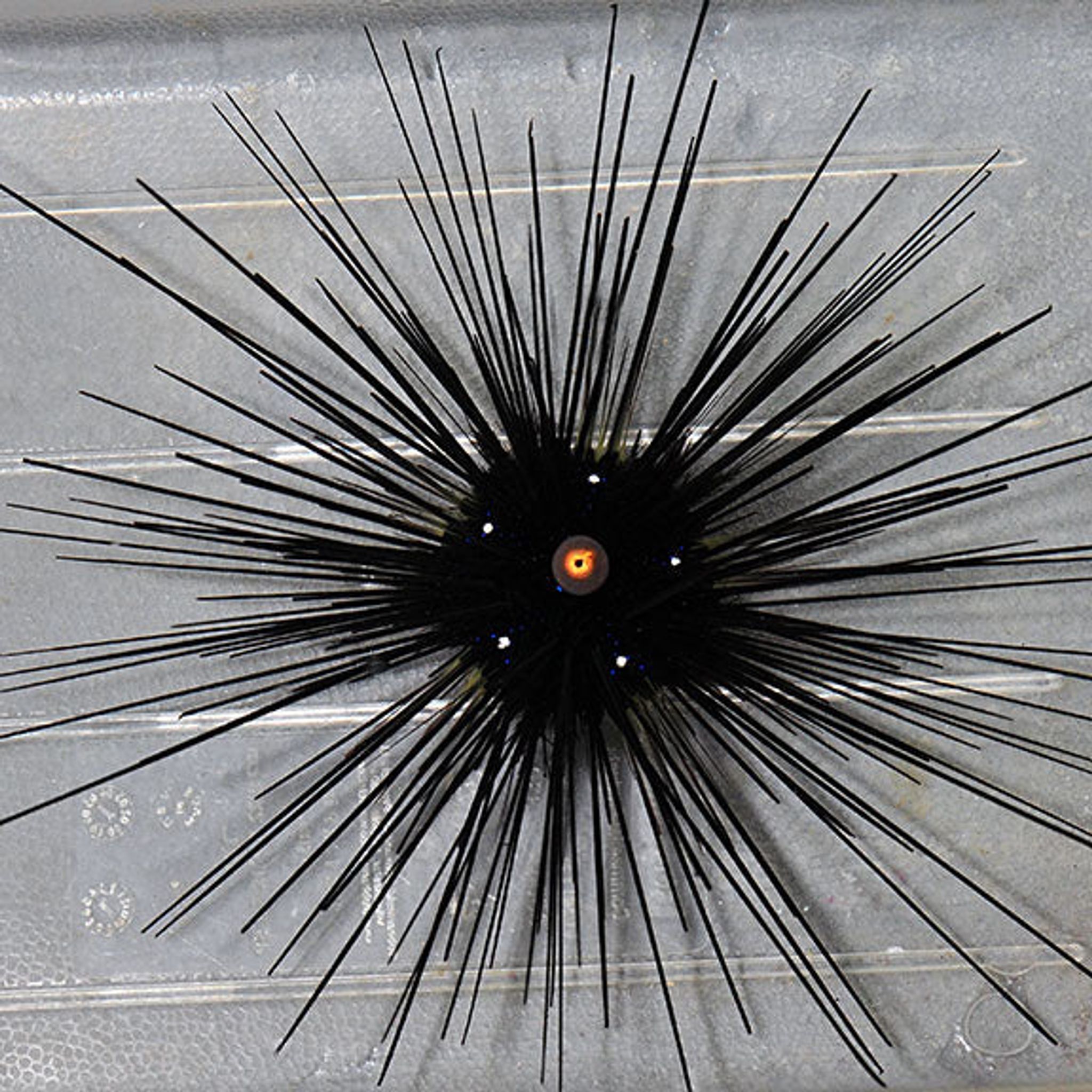
"Long-spine urchin" almost always refers to a species in the genus Diadema — most commonly Diadema setosum, D. antillarum, or D. savignyi. These are the classic jet-black urchins with pencil-thin, needle-sharp spines that can reach 6–12 inches (15–30 cm) in length on an adult.
Look-Alikes to Know Before You Buy
Several other urchins get lumped in with "long-spine" in casual conversation, but they behave very differently:
- Pencil urchins — short, thick, blunt spines used for climbing rather than defense; far safer to keep near hands and equipment.
- Tuxedo urchins — black-and-white banded spines, generally shorter and stouter than true Diadema.
- Pincushion urchins — dense, short spines packed tightly together; low injury risk compared to Diadema.
If a listing shows an urchin with fine, hair-like spines significantly longer than its body diameter, you're almost certainly looking at a true Diadema. Confirming the species matters because handling risk and reef impact both scale with spine length.
Tank Requirements
Tank Size and Maturity
Sources disagree on the minimum tank size. Some hobbyist forums cite 15–20 gallons as workable for a juvenile, but that framing ignores adult growth. The safer standard:
- 30 gallons — absolute floor for a single adult in a mature reef.
- 55+ gallons — the sensible long-term standard, given adult spine span and the bioload a large urchin adds to a system.
Just as important as size is age: the tank must be fully cycled and established for months, not weeks. Diadema urchins are highly sensitive to ammonia and nitrite spikes, and adding one to a young tank is one of the most common causes of early death.
Water Parameters
| Parameter | Target Range |
|---|---|
| Temperature | 72–78°F (22–26°C) |
| Specific gravity | 1.023–1.025 |
| pH | 8.1–8.4 |
| Alkalinity | 8–12 dKH |
| Calcium | 380–450 ppm |
| Nitrate | Low and stable |
Stability matters more than hitting exact numbers. Sudden swings in salinity or temperature are far more dangerous to this animal than parameters that sit slightly outside the ideal range but stay consistent.
Aquascaping
Long-spine urchins need solid, well-secured live rock with caves and crevices to retreat into during the day. A sand bed is appreciated but not required. Avoid loose, tumbling rockwork — an urchin using its spines as levers while moving at night can topple an unstable structure, and a wedged animal can also become trapped or damage itself trying to free itself.
Lighting and Behavior
These urchins are largely nocturnal. Expect them to hide under rock or in crevices during the day and emerge to graze rock, glass and sand at night. Standard reef lighting is fine — their photosensitive tube feet help them detect and move away from bright light rather than needing anything specialized.
Feeding
Long-spine urchins are primarily herbivorous grazers. In a healthy, algae-producing tank, their natural diet includes:
- Diatoms and film algae
- Hair algae
- Cyanobacteria films
- General biofilm on rock and glass
In tanks that don't generate enough natural grazing material, supplement with a small amount of dried seaweed or nori clipped to a rock or veggie clip, sinking algae wafers, and occasional Mysis or other frozen meaty food for variety. You can find suitable dried and frozen options browsing Food & Supplements on FishyHub.
Matching Feeding to Algae Supply
Rather than a flat feeding schedule, base supplementation on how much algae your specific tank produces:
| Tank condition | Feeding approach |
|---|---|
| Visible nuisance algae film on glass/rock | Minimal supplementation; let the urchin graze naturally |
| Occasional light algae | Nori or wafer 2–3 times per week |
| Very low-nutrient, "too clean" display | Feed nori/wafers most days to prevent it targeting coralline or coral |
An underfed urchin in an algae-scarce tank will turn to coralline algae, sponges, and even soft coral tissue for nutrition — a direct cause of the "not fully reef safe" reputation these animals have earned.
Growth and Lifespan
A mature long-spine urchin can reach 12+ inches spine-to-spine. In a stable, well-fed home aquarium, lifespans of 10–15+ years are common, with some wild individuals reported living 20+ years. Plan tank placement and tankmate choices with that multi-decade commitment in mind.
Is a Long-Spine Urchin Reef Safe?
The honest answer is reef safe with caution, not unconditionally reef safe. Retail listings often market Diadema as simply "reef safe," but invertebrate-focused sources are more accurate: these urchins will graze coralline algae as a matter of course, and when natural algae runs short they can nip at sponges, soft coral tissue, and clam mantle edges.
The risk is directly tied to food availability. A well-fed urchin in a tank with plenty of algae rarely bothers coral or clams. One that's hungry in a low-nutrient system is a different story. If you keep clams or delicate soft corals, factor this in before adding one.
Handling and Safety
This is the section most retail pages underplay. Long-spine urchin spines are:
- Hollow and brittle — they snap easily and fragments can lodge under the skin.
- Puncture hazards — even a light brush against skin can cause a deep, painful wound.
- Possibly mildly venom-coated — some Diadema species carry a mild venom component that produces burning pain beyond a plain mechanical puncture, though sources differ on how significant this effect is across species.
Practical rules for working around one:
- Never handle bare-handed. Use tongs, a container, or thick gloves during any tank maintenance.
- Keep hands and arms clear of overflow boxes and pump intakes, where the urchin can wedge itself.
- If a spine punctures skin, soak the area in hot water (as hot as comfortably tolerated) to help break down any venom component, gently remove visible fragments, and watch for ongoing pain, swelling, or redness — those signs warrant medical attention, since embedded fragments can lead to infection.
Molting and Spine Regrowth
Long-spine urchins routinely shed and regrow spines as part of normal biology. Finding a broken spine on the substrate, or noticing the animal looking temporarily patchy, is usually not an emergency. As long as water quality stays good and the urchin remains active and responsive, spines typically regenerate over several weeks.
Tankmate Compatibility
Long-spine urchins generally do well alongside peaceful reef fish, gobies, blennies, and cleaner shrimp. They're territorial in the sense that they'll rearrange rockwork while foraging, so one per tank is typically plenty given the bioload and space a large adult occupies.
Avoid housing them with:
- Triggerfish and puffers — natural urchin predators that will pick spines apart or eat the animal outright
- Large wrasses known to target urchins
- Aggressive crabs that may harass a molting or resting urchin
If you're stocking a tank around one, browsing Marine Fish with this predator list in mind will save you a costly mismatch later.
Acclimation and Quarantine
Fast, unacclimated drop-ins are a leading cause of early death from osmotic shock. Use a slow drip acclimation over 60+ minutes or longer, matching temperature and salinity gradually before the animal enters the display. A brief observation period is reasonable, but a full medicated quarantine protocol designed for fish is not appropriate here.
Most critically: skip copper-based medications entirely, in the display, sump, or any shared system water. Invertebrates are copper-intolerant, and exposure — even indirect, through shared sump water — can be lethal.
Purchasing and Selection Tips
When choosing a specimen, look for:
- Full spine coverage with no bald or thinning patches
- Active tube feet that respond visibly to touch or water movement
- Firm attachment and normal movement rather than a limp or unresponsive animal loosely resting on the substrate
A urchin that's slow to react or has obvious spine loss beyond normal molting is a higher-risk purchase.
Reproduction and Ecological Sourcing
Diadema urchins are broadcast spawners and are essentially never bred in home aquaria — every specimen in the hobby is wild-collected or, less commonly, aquacultured through specialized programs. This matters more than it might seem: mass Diadema die-off events in the Caribbean and Red Sea have devastated wild reef populations in the past, removing a key algae-grazing species and allowing algae to overgrow coral. Where aquacultured stock is available, it's worth choosing, and it's reasonable to ask about sourcing when purchasing wild-collected specimens.
Algae Control Alternatives
If the spine risk gives you pause but you still want strong algae grazing, consider these lower-risk options:
| Option | Grazing strength | Handling risk |
|---|---|---|
| Long-spine urchin (Diadema) | Very high | High |
| Turbo snails | Moderate-high | None |
| Short-spined/pincushion urchins | Moderate | Low |
| Tuxedo urchins | Moderate | Low-moderate |
Turbo snails and shorter-spined urchin species won't match a Diadema's grazing output on tough hair algae, but they're a safer fit for tanks with young children, frequent hands-in-tank maintenance, or owners who'd rather skip the tongs-and-gloves routine entirely.
Common Mistakes to Avoid
- Adding one to an uncycled or brand-new tank
- Skipping drip acclimation and causing salinity/temperature shock
- Starving it in an ultra-clean, low-algae display
- Handling bare-handed during aquascaping or maintenance
- Housing with known predators like triggerfish or large puffers
- Leaving loose, unstable rockwork in the aquascape
- Mistaking normal nighttime hiding or molting for illness
- Using copper-based medication anywhere in a shared system
Frequently Asked Questions
Is a long-spine urchin reef safe?
Mostly, but not unconditionally. It will graze coralline algae as routine behavior and can nip coral or clam tissue if its algae supply runs low — best described as reef safe with caution rather than fully reef safe.
What do long-spine urchins eat?
Primarily algae and biofilm, supplemented with nori or dried seaweed and occasional frozen meaty food. If underfed in a low-algae tank, they'll also graze coralline algae and sessile invertebrates.
How big of a tank do long-spine urchins need?
30 gallons is the absolute minimum for one adult, but 55+ gallons is recommended long-term given adult spine span and bioload.
Are long-spine urchins dangerous to touch?
Yes. Their spines puncture skin easily, can break off under the skin, and some species carry a mild venom component. Always use tongs, gloves, or a container rather than bare hands.
What fish can live with a long-spine urchin?
Most peaceful community reef fish, gobies, blennies, and cleaner shrimp coexist well. Avoid triggerfish, puffers, and large wrasses known to prey on urchins.
How long do long-spine urchins live?
Commonly a decade or more — often 10–15+ years — in a stable, well-fed reef system, with some wild individuals reported living 20+ years.
Why did my urchin lose its spines? Are broken spines a problem?
Spines break and regrow routinely as part of normal biology. It's usually not an emergency as long as water quality stays good and the animal remains active.
Can long-spine urchins be added to a new tank?
No. Wait until the tank is fully cycled and stable, ideally established for several months, since these urchins are highly sensitive to ammonia and nitrite.
Ready to add algae-grazing invertebrates to an established reef? Browse the full selection of Marine Invertebrates on FishyHub to compare options suited to your tank size and cleanup needs.


