

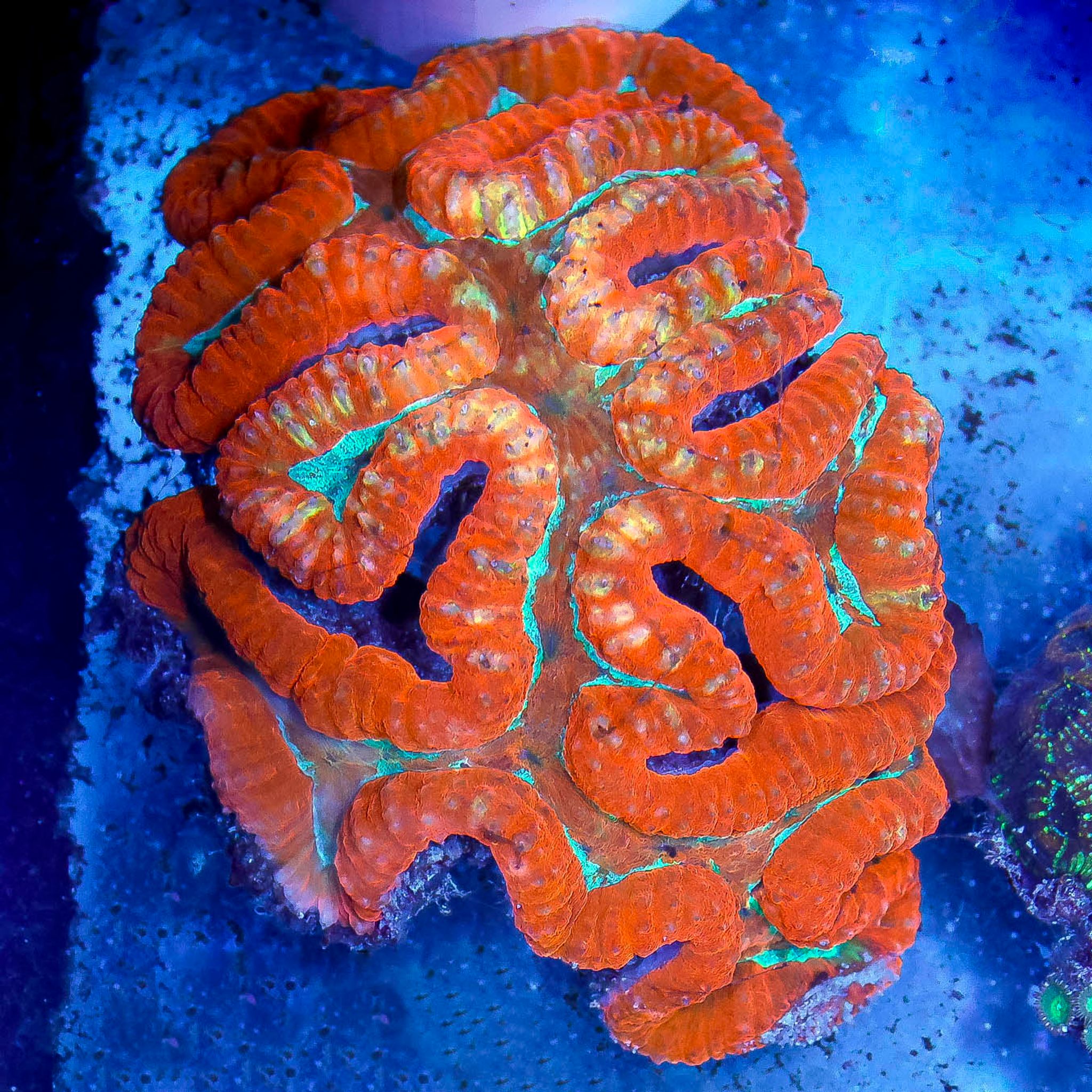

Lobophyllia Care Guide: Lighting, Flow, Feeding and Placement
Lobophyllia, better known as the "lobo," "brain coral," or "meat coral," is one of the most forgiving large-polyp stony corals you can add to a reef tank — provided its light, flow, feeding and spacing are dialed in correctly. This guide sorts through the conflicting advice on PAR numbers and feeding frequency to give you one clear, workable plan for keeping a lobo happy for years.
What Is Lobophyllia?
Lobophyllia is a large-polyp stony (LPS) coral in the brain/meat coral family, sold under common names including "lobo," "brain coral," "meat coral," and sometimes "flame coral." Its defining feature is a fleshy mantle that can inflate to several times the size of its underlying skeleton, giving it a soft, almost gelatinous look during the day that's very different from its skeletal footprint. That inflated tissue is also why lobos need more personal space than their skeleton size suggests — more on that below.
Water Parameters
Lobophyllia is not fussy about exotic parameters, but it does best inside standard reef ranges:
| Parameter | Target range |
|---|---|
| Temperature | 75–82°F (24–28°C) |
| pH | 8.1–8.4 |
| Salinity (specific gravity) | 1.024–1.026 |
| Alkalinity | 8–12 dKH |
| Calcium | 380–450 ppm |
| Magnesium | ~1,250–1,350 ppm |
| Nitrate | Under ~15–20 ppm |
| Phosphate | Low, but not zero |
A note on alkalinity: some references cite 3.5 meq/L instead of dKH — that's roughly 9.8 dKH, essentially the same target expressed in different units, not a conflicting range. Also worth flagging: chasing near-zero nitrate and phosphate isn't a goal for LPS. Lobophyllia and other LPS corals can pale and starve in an overly "clean" system, since some dissolved nutrition supplements what the coral's zooxanthellae produce through photosynthesis.
Lighting
Treat Lobophyllia as a low-to-moderate light coral. The safe consensus range is roughly 50–100 PAR at the coral's placement depth, with some well-acclimated colonies tolerating 120–150 PAR under strong fixtures. Rather than chasing one "correct" PAR number, judge success by how the coral actually behaves:
- Full polyp extension and steady or improving color = lighting is appropriate.
- Bleaching, tissue recession, or a shrunken, pale mantle = too much light, too fast.
Full-spectrum LED, T5, and metal halide fixtures all work fine; a spectrum weighted toward blue tends to suit lobos well. If you're outfitting a new reef tank, you can browse full-spectrum LED lighting built for LPS and mixed-reef setups.
Acclimation matters more than the exact PAR target. New or freshly shipped frags should spend 1–2+ weeks acclimating: start them low in the tank or in partial shade, then move them up gradually over that window. Shocking a lobo with full light on day one is one of the most common ways new keepers cause bleaching or tissue loss.
Flow
Lobophyllia wants gentle, indirect, turbulent flow — never a direct laminar jet. Numeric turnover targets (often cited as 20–40x tank volume per hour) exist, but they only describe overall tank circulation; what actually matters is the flow the coral experiences at its exact spot on the rockwork.
A simple rule: flow is right when it gently ripples the tissue without flattening it or exposing the skeleton edges underneath. If a powerhead blasts a lobo directly, expect the tissue to ball up, recede, and expose bare skeleton over time — redirect the flow or relocate the coral rather than reducing tank-wide circulation.
Feeding
Lobophyllia is photosynthetic through its zooxanthellae, so feeding isn't mandatory — but it's not a strong light-feeder the way many SPS corals are, and it responds well to direct feeding with noticeably better growth and color.
What to feed:
- Mysis shrimp or brine shrimp, sized to the polyp
- Chopped meaty seafood
- Zooplankton or phytoplankton for smaller-polyped colonies
How to feed:
- Target-feed each head individually with a syringe or turkey baster once food is positioned near the mouth
- Feed 1–3 times per week — sources disagree on the exact number, some pushing daily-ish feeding for growth, others warning that frequent large meaty chunks can bloat or deform tissue. The practical middle ground is 1–3x/week with appropriately sized portions, scaled back if you notice bloating, excess mucus, or a dip in water quality.
- Briefly reduce flow right after feeding so the coral has a chance to actually capture and process the food before current sweeps it away
Feeding tentacles and mesenterial filaments typically extend most visibly at night or when the coral senses food nearby — that's normal feeding behavior, not distress. A rotation of prepared foods, including freeze-dried and frozen options formulated for corals, makes it easy to keep portions consistent.
Placement and Spacing
Placement is where most lobo problems start. Set the coral low-to-mid tank on a flat rock ledge, a stable frag plug, or directly on the sand bed — never wedge it into a crevice, since the inflated mantle will rub against surrounding rock and tear.
Spacing is non-negotiable. Because the mantle can inflate to 2x or more the size of the underlying skeleton, a lobo needs a genuine buffer — generally 4–6 inches (10–15 cm) or more in every direction — from any neighboring coral. At night, lobos extend long sweeper tentacles to sting anything within reach, and they can also extrude mesenterial filaments (digestive tissue pushed out through the mouth) directly onto a neighbor, killing its tissue within hours of contact.
Keep Lobophyllia well clear of acan corals, other LPS, zoanthids, and soft corals unless spacing is generous. It's generally safe around most reef fish, but coral-eating species like some butterflyfish and angelfish, along with certain picking invertebrates, can nip at exposed flesh.
Secure it firmly. A frag or colony that tips over from current or a bumping fish tears its own tissue, and that damage heals poorly and can lead to infection. Use reef-safe epoxy or coral glue to anchor an unstable base before you walk away from the tank.
Common Mistakes and Troubleshooting
| Symptom | Likely cause | Fix |
|---|---|---|
| Bleaching or tissue recession soon after arrival | Placed too high/bright too fast | Move to a shaded, low spot and re-acclimate light gradually |
| Tissue balled up, skeleton exposed | Direct powerhead blast | Redirect flow or relocate the coral out of the jet |
| Neighboring coral tissue dies overnight | Insufficient spacing from a lobo's sweeper tentacles or filaments | Keep 4–6+ inch buffers; check after lights-out |
| Coral stays shriveled during the day | Often normal — many LPS deflate in bright light/high flow and inflate at night | Observe overnight before assuming a problem |
| Tears or won't heal after a knock | Unstable base | Epoxy or glue the frag/colony down |
| Bloating, excess mucus, or nuisance algae nearby | Overfeeding large chunks too often | Feed smaller portions less frequently; watch nutrient levels |
| Pale, receding tissue despite good light/flow | Nutrients stripped too low (over-skimming, aggressive export) | Resume consistent target feeding rather than chasing zero nitrate/phosphate |
One distinction worth learning early: normal nighttime tentacle extension looks stringy and mobile, retracting by morning, while a real problem — such as tissue sliding off the skeleton, a foul smell, or a spreading brown, jelly-like film (often called brown jelly infection) — gets worse day over day and needs an isolation tank and closer inspection, not patience.
Buying and Quarantine Checklist
Before adding a lobo frag or colony to your display, check for:
- Fully retracted or gaping mouths, which can signal stress or disease
- Bleached or unusually pale patches on the tissue
- Torn or receding flesh near the skeleton edge
- A firm attachment point, not a loose frag rattling in its plug
Quarantine new lobo specimens for a few weeks before introducing them to a display tank, watching for slow, steady polyp extension as a good sign of acclimation. Shoppers looking for healthy specimens can compare options among LPS hard corals available on FishyHub.
Similar LPS Corals: Pectinia and Australomussa
Two other LPS genera are frequently confused with, or kept alongside, Lobophyllia:
Pectinia is another fleshy, aggressive LPS coral with long sweeper tentacles and mesenterial filaments. Its husbandry logic is nearly identical to lobo: low-to-moderate light, gentle indirect flow, and wide spacing from tankmates.
Australomussa is closely related to Lobophyllia and Symphyllia and is sometimes lumped into the same "brain/meat coral" group. It shares the same low-to-moderate light and gentle-flow requirements, is semi-aggressive with its own sweeper tentacles, and benefits from the same target-feeding routine.
In short, if you can keep a lobo successfully, you already have the skills for Pectinia and Australomussa — the differences between Lobophyllia, Symphyllia, and Australomussa are mostly in skeletal and polyp structure, not in how you care for them.
Why an Auto Top-Off System Helps
Stable salinity is easy to overlook but directly affects LPS health. As water evaporates from an open-top reef tank, salinity rises unless it's topped off with fresh RO/DI water — and swinging salinity stresses corals like Lobophyllia over time. An auto top-off (ATO) system automates this with a float switch or optical sensor paired with a small pump, adding fresh water as needed to hold salinity steady without daily manual topping off. It's a small piece of equipment, but one of the more effective ways to keep parameters consistent for a coral that doesn't tolerate swings well.
Frequently Asked Questions
How much light does Lobophyllia need?
Low-to-moderate PAR, roughly 50–100 (up to about 150 for acclimated colonies under strong fixtures), placed low-to-mid tank. Acclimate any new frag gradually over 1–2+ weeks rather than targeting an exact number.
What flow is best for lobo coral?
Gentle, indirect, turbulent flow that ripples the tissue without flattening it. If the coral looks deflated and torn-looking rather than simply closed, the flow at that spot is probably too strong.
Do I need to feed my Lobophyllia?
Not strictly — it photosynthesizes through zooxanthellae — but target feeding 1–3 times per week with appropriately sized meaty foods noticeably improves growth and color.
Why did my lobo shrink or not open after I got it?
This is usually normal shipping stress, and recovery can take anywhere from a few days to about two weeks. Check that light and flow are appropriately low at first, and be patient before assuming disease.
Can Lobophyllia touch other corals?
No. It stings with sweeper tentacles and can extrude mesenterial filaments that kill neighboring tissue on contact. Keep at least 4–6 inches of clearance from every neighbor in every direction.
Is Lobophyllia a good beginner coral?
Yes — it's generally considered hardy and disease-resistant once basic reef parameters, moderate light, gentle flow, and adequate spacing are in place, making it a common recommendation for a first LPS coral.
Ready to add a lobo to your reef? Browse current marine corals on FishyHub to compare available frags and colonies before you buy.