

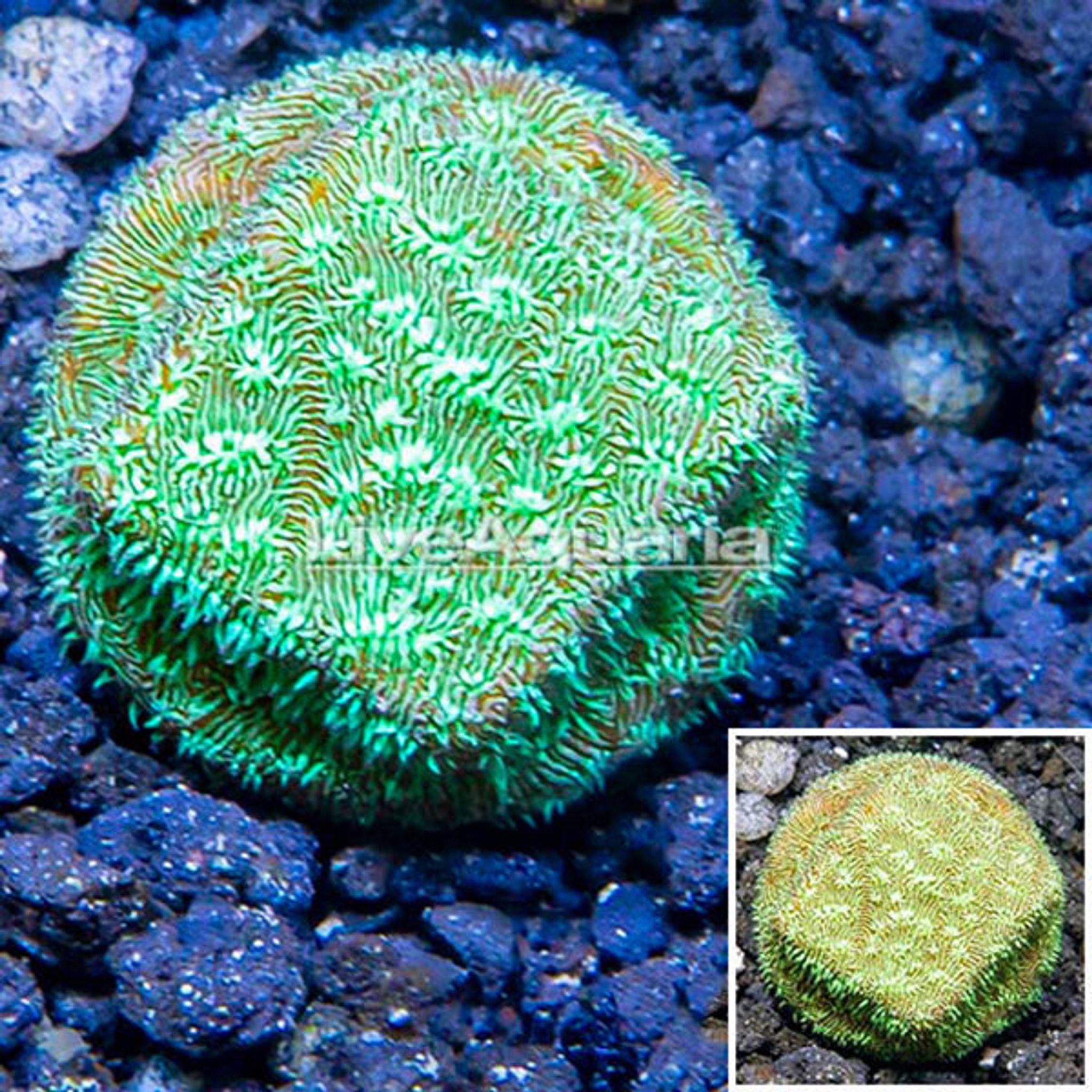

Leptoseris Care Guide: Lighting, Flow, Feeding and Placement
Leptoseris is a foliose stony coral that grows in thin, whorled plates and asks for less light and flow than almost any other coral in the SPS-adjacent category. This guide covers exactly how much of each it needs, whether feeding matters, where to place it in a mixed reef, and the mistakes that most often turn its tissue pale.
What Is Leptoseris?
Leptoseris is a genus of plating and foliose stony corals known for thin, delicate whorls or bowl-shaped, frilled plates that often stack in overlapping tiers as the colony matures. Colors range widely — greens, reds, oranges, and purples are all common, sometimes several on a single colony.
In the wild, Leptoseris is typically found on reef slopes and in deeper mesophotic zones, where light is naturally reduced. That native habitat explains almost everything about how to keep it successfully: it evolved to make the most of dim, filtered light rather than direct, intense exposure, which is the opposite of what most SPS corals expect.
Is Leptoseris Easy to Keep?
Call it moderate difficulty. Leptoseris is genuinely more forgiving on light and flow than typical SPS, which is why it's often pitched as an SPS-alternative for reefers who aren't ready for full-blast Acropora tanks. But that tolerance doesn't extend to water chemistry — it still needs stable, dosed reef parameters like a true SPS coral. Treat it as forgiving on placement, unforgiving on consistency.
Lighting: Give It Less Than You Think
Moderate lighting is the target, roughly 75–125 PAR. Leptoseris tolerates a broader range — from about 40 PAR up to 150+ PAR — but the best growth and richest color happen at the moderate end, not the top of that range. Treat 150 PAR as a ceiling for experienced keepers with a slow acclimation plan, not a default target.
The classic warning sign of too much light is bleaching or tissue paling, which shows up faster and more dramatically in this genus than in most corals. If a Leptoseris colony starts losing color, lighting is the first thing to check.
A color temperature around 12,000K, with some actinic supplementation, tends to bring out the coral's natural fluorescence without pushing intensity too high. Pair a dimmable LED fixture with a PAR meter reading rather than guessing from a preset "coral" mode — you can browse LED lighting options to find a fixture with enough low-end range for shaded, low-PAR zones.
Flow: Low and Gentle, Never Direct
Leptoseris wants low to medium flow, gentler than most SPS on the market. A direct powerhead blast aimed at the colony causes visible tissue damage and recession at the plate edges. At the same time, flow that's too weak lets detritus settle and trap in the whorls and folds, which leads to localized dieback or algae film.
The goal is indirect, broad circulation — enough to keep debris moving through the folds without ever hitting the coral in a direct stream. Watch the tissue at the colony's edge as a feedback signal:
| Tissue sign | Likely cause | Action |
|---|---|---|
| Subtle puffiness/extension at edges | Flow and light are dialed in | No change needed |
| Recessed or receding tissue | Flow too strong (or too weak) | Redirect or relocate; reassess in a few days |
| Detritus visible sitting in whorls | Flow too weak | Add gentle indirect current |
| Pale or bleached patches | Light too intense | Move to more shade, recheck PAR |
Feeding: Optional, Not Mandatory
Leptoseris is primarily photosynthetic, drawing most of its energy from zooxanthellae, so feeding is optional but recommended rather than required for survival. Supplemental feeding with small zooplankton — rotifers or cyclops, offered frozen or powdered — along with amino-acid supplements, supports tissue growth and richer color over time. Fish waste in a mixed reef also supplies usable nitrogen and phosphorus that the coral can take up passively.
When target-feeding, do it sparingly and during a low-flow period so the food actually stays near the polyps instead of blowing away immediately. Overfeeding is a real risk: it can spike phosphate and nitrate, inviting nuisance algae and stressing other corals sharing the tank.
Placement: Lower Tank, Shaded Zones
Place Leptoseris lower to mid-tank, in shaded or indirectly lit spots — under rock overhangs, on lower rockwork, or anywhere neighboring corals cast partial shade. Avoid top-of-rock, full-blast zones built for Acropora; that positioning is the single most common reason this coral pales.
Aquascaping for a Shaded Zone
In a high-light-dominant display, deliberately build shade rather than hoping for it:
- Use overhangs or small caves in the rockwork to block direct light from above.
- Position taller SPS or LPS colonies to create a partial-shade canopy over lower rock.
- Reserve the base of the rockwork, rather than the pinnacle, for shade-tolerant corals like Leptoseris.
Give It Space
Leptoseris extends sweeper tentacles roughly an inch long and will sting close neighbors. Leave several inches of clearance when placing it, and re-check that spacing as the colony grows — a frag placed with adequate room today can outgrow it within months. Its aggression is real but milder than genera like Galaxea or the hammer/torch/frogspawn group, so it's a reasonable neighbor for other moderate-temperament LPS as long as spacing is respected. You'll find suitable shade-tolerant tankmates browsing LPS hard corals.
Acclimating a New Colony
Corals bought at a high-light retail or frag-tank setup are usually kept under brighter conditions than a shaded display zone. Start a new Leptoseris colony at lower light and flow than its eventual target, then step up gradually over 2–4 weeks, watching tissue response at each stage rather than jumping straight to target PAR.
Quarantine and Pest Check
Plating corals with folded, whorled surfaces give pests plenty of places to hide. Before introducing a new colony to the display, run it through a standard quarantine and dip protocol, inspecting the undersides of plates and deep into the folds where flatworms or small crustaceans can go unnoticed.
Water Chemistry
Leptoseris needs standard SPS-adjacent reef parameters, kept stable rather than merely "in range" at any given moment:
- Calcium: ~420–450 ppm
- Alkalinity: roughly 8–11 dKH, avoiding swings
- Magnesium: ~1,300–1,400 ppm
Because it's a fast-growing plater, Leptoseris can draw down calcium and alkalinity noticeably in a mixed-coral tank, so consistent tracking and dosing matters more here than the exact number on any single test.
Calcium and Alkalinity Supplementation Methods
A few common approaches keep these parameters stable as tank biomass grows:
- Two-part liquid dosing: separate calcium and alkalinity solutions dosed daily, adjusted from test results.
- All-in-one/balanced additives: a single product formulated to raise multiple parameters together, simpler but less precise for large systems.
- Calcium reactors: dissolve media with CO2 injection for continuous, low-maintenance supplementation in larger systems with heavier coral biomass.
- Water changes with a high-parameter salt mix: a passive top-up method, generally best paired with one of the above rather than used alone in a fast-growing coral tank.
As overall coral biomass in the tank increases, dosing consistency becomes more important than which method is chosen.
Don't Chase Zero Nutrients
It's tempting to run nitrate and phosphate as low as possible for "pristine" water, but ultra-low nutrients from aggressive GFO or carbon dosing can cause paling or bleaching-like stress in fast-growing photosynthetic corals like Leptoseris. Moderate, stable nutrients generally support better color and growth than chasing zero.
Do You Need GFO?
Granular ferric oxide (GFO) is a phosphate-adsorbing media run in a reactor or media bag to control excess phosphate that fuels algae and dulls coral color. It's genuinely useful when phosphate readings are elevated or algae is already a visible problem, but it's skippable in a low-bioload, well-fed-coral system where nutrients are already modest. Test phosphate before running GFO rather than using it prophylactically — overuse can strip nutrients too low, which is exactly the paling risk described above.
Growth and Propagation
Leptoseris is one of the faster-growing plating corals in the hobby. Fragging is typically done with bone cutters or a wet saw/band saw along the plate. Because plate margins are thin, fresh-cut edges often need extra cyanoacrylate (gel super glue) to hold securely onto a frag plug or rock — a thin edge alone won't always grip on the first try.
Comparison: How Leptoseris Differs From Pavona
Pavona is a related plating and encrusting coral that's frequently confused with Leptoseris at first glance, but its care requirements point in the opposite direction on flow:
| Trait | Leptoseris | Pavona |
|---|---|---|
| Light | 75–125 PAR (moderate, shade-tolerant) | ~50–150 PAR, ~100 PAR typical |
| Flow | Low to medium | Medium to high |
| Hardiness | Moderate — forgiving light/flow, needs stable chemistry | Generally hardier, more tolerant of parameter swings |
| Propagation | Fast-growing, fraggable with cutters/saw | Very easy to propagate |
| Main stress risk | Too much light, or flow too weak/too strong | Detritus buildup on surface causing tissue die-back |
Pavona needs more active flow than Leptoseris specifically because detritus sitting on its surface causes tissue die-back, so it can't rely on the same gentle, low-flow approach. One popular Pavona species/growth form, often sold as Pavona cactus, is one of the common plate-forming color morphs — a good example that "plating coral" doesn't mean one universal care sheet. Placement logic (lower, shaded rock) overlaps between the two genera, but flow settings do not.
Telling Leptoseris Apart From Similar Plating Genera
At a glance, Leptoseris, Pavona, Echinopora, and Turbinaria can look similar on a retail frag rack. A few quick cues help:
- Leptoseris: very thin, delicate whorled plates, often almost paper-thin at the growing edge.
- Pavona: thicker, more rigid plates or encrusting mounds with a more uniform surface texture.
- Echinopora: plates with visible, somewhat spiky corallite structure across the surface.
- Turbinaria: cup or funnel-shaped plates that curl more dramatically, often thicker-walled.
Conservation Note: Favor Aquacultured Frags
Several Leptoseris species, particularly deep-water and mesophotic specialists, have appeared on U.S. endangered-species review lists alongside dozens of other stony coral species evaluated under IUCN vulnerable, endangered, or critically endangered categories. That status is a good reason to favor aquacultured frags over wild-collected colonies whenever possible, supporting captive propagation instead of continued wild collection.
Common Mistakes and Troubleshooting
- Placing it in a high-PAR zone meant for Acropora. Leads to bleaching or paling. Fix: relocate to a lower, more shaded spot and monitor for recovery over 1–2 weeks.
- Blasting it with direct powerhead flow. Causes visible tissue damage and recession at the plate edges. Fix: redirect flow or move the coral out of the direct stream.
- Letting detritus sit in the plate whorls. Too little flow causes localized dieback or an algae film. Fix: add at least gentle indirect current.
- Overfeeding target foods. Spikes nitrate and phosphate, inviting nuisance algae. Fix: scale back feeding frequency and amount, and increase export temporarily with water changes.
- Running nutrients too low chasing "pristine" water. Paradoxically pales fast-growing photosynthetic corals. Fix: test phosphate and nitrate, then back off GFO or carbon dosing.
- Placing it too close to neighbors. Sweeper tentacles sting adjacent coral tissue over weeks, not just on day one. Fix: leave adequate spacing as the colony grows, not only at initial placement.
- Letting alkalinity swing instead of staying merely "in range." Instability stresses growth even when the number looks acceptable on a given day. Fix: prioritize consistency over hitting an exact figure.
Frequently Asked Questions
Is Leptoseris coral easy to keep?
It's moderate difficulty: forgiving on light and flow compared to typical SPS, but it still needs stable, dosed water chemistry and adequate space from neighboring corals.
What PAR/lighting does Leptoseris need?
Roughly 75–125 PAR is ideal. It tolerates a wider range, but the best growth and color happen in that moderate zone rather than at high light.
Does Leptoseris need to be fed?
No — it's mostly photosynthetic and can survive without target feeding. It does benefit from occasional small zooplankton or amino-acid supplementation for improved growth and color.
How much flow does Leptoseris need?
Low to medium. Avoid direct powerhead flow, which damages tissue, but keep enough gentle current moving to prevent detritus from settling in its folds.
Where should I place Leptoseris in my tank?
Lower to mid-tank, in a shaded or indirectly lit spot such as under an overhang or lower rockwork, with clearance from neighboring corals due to its sweeper tentacles.
Why is my Leptoseris turning pale or losing color?
Usually too much light, or nutrients stripped too low from aggressive GFO or carbon dosing. Check both before assuming disease or a pest issue.
Is Leptoseris aggressive toward other corals?
Yes, moderately. It extends sweeper tentacles roughly an inch long and needs spacing from neighbors, though it's less aggressive than genera like Galaxea or the hammer/torch/frogspawn group.
How do you frag or propagate Leptoseris?
Cut plates with bone cutters or a fine saw, then secure the fresh-cut pieces with extra cyanoacrylate glue since the thin plate margins don't always hold on the first try. It's one of the faster-growing and easier-to-propagate stony corals in the hobby.
Ready to add a shade-tolerant plating coral to a mixed reef? Browse current coral selections on FishyHub, including SPS-adjacent options for tanks stepping up from LPS-only setups.