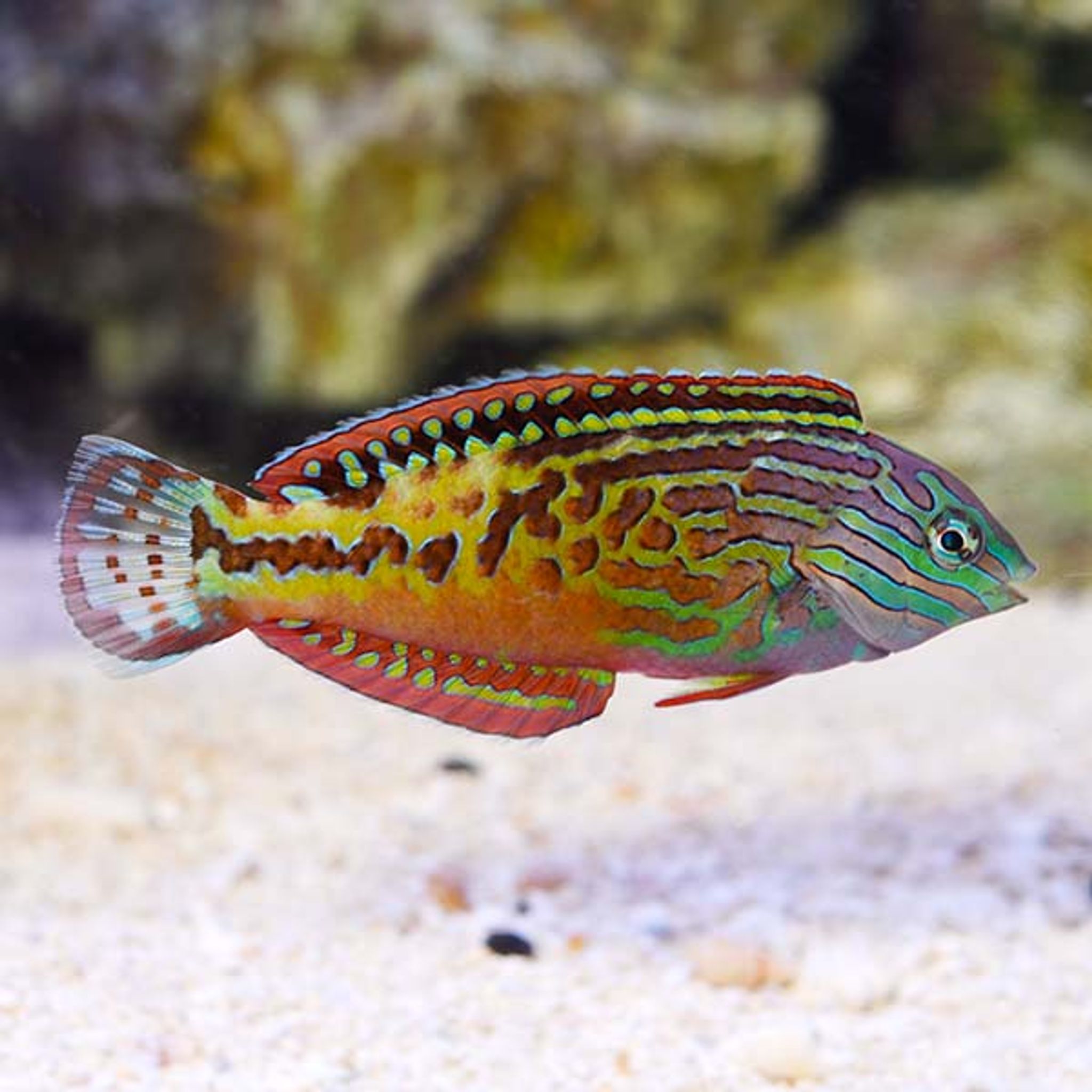
Leopard Wrasse Care Guide: Tank Size, Diet, Compatibility and Reef Safety
Leopard wrasses (genus Macropharyngodon) are among the most beautiful small reef fish sold in the marine trade, and also one of the most likely to quietly starve in a home aquarium. This guide covers realistic tank size and maturity requirements, the feeding protocol that actually improves survival odds, compatibility, and reef safety — so you can decide honestly whether your tank is ready before you buy.
What Is a Leopard Wrasse?
Leopard wrasses belong to the genus Macropharyngodon in the family Labridae. Species commonly available in the US trade include:
- Blue Star / Divided Leopard Wrasse (M. bipartitus)
- Ornate Leopard Wrasse (M. ornatus)
- Vermiculate (Reticulated) Leopard Wrasse (M. vermiculatus)
- Potter's Leopard Wrasse (M. meleagris)
- Kuiter's Leopard Wrasse (M. kuiteri)
- Guinea Fowl Leopard Wrasse (M. negrosensis)
- Splendid Leopard Wrasse (part of the M. cyanoguttatus/negrosensis species complex)
Adults typically reach 3.5–5 inches (9–13 cm), depending on species. Most are sexually dimorphic: males are usually larger and more vividly colored, while females tend toward plainer yellow or tan tones. In the wild, leopard wrasses form harems of one male with several females — a buyer who picks up a drab yellow specimen expecting it to "color up" is often actually looking at a female, not a juvenile.
Species selection matters more than most retail listings suggest. Potter's and Vermiculate leopard wrasses are generally considered somewhat hardier and better at acclimating to captive feeding than Ornate or Guinea Fowl wrasses, which are more finicky. If your system is less established, lean toward the hardier species.
Tank Size and Maturity
Recommendations for leopard wrasse tank size vary a lot online, ranging from a casual 30 gallons up to 75+ gallons from specialist sources. The sensible middle ground:
| Setup | Minimum size | Notes |
|---|---|---|
| Single leopard wrasse | 55 gallons (208 L) | Must be a mature, established reef, not a newly cycled tank |
| Pair or harem (1 male + females) | 90+ gallons (340+ L) | More room reduces territorial friction |
| Leopard wrasse + other semi-aggressive wrasses | 90+ gallons (340+ L) | Reduces competition for the same pod food |
Raw gallons matter less than tank maturity. A leopard wrasse should only go into a system that has been running at least 6 months to a year, with an established sand bed and a self-sustaining population of amphipods and copepods. A biologically young tank simply cannot produce enough natural food, regardless of its size.
Substrate Requirements
Leopard wrasses need 3–4+ inches (7.5–10+ cm) of fine, sugar-size sand. They dive headfirst into the sand at night to sleep and when startled during the day — this is instinctive, not optional behavior. A bare-bottom tank or coarse crushed coral substrate is unsuitable and will stress the fish. If you need to add or refresh a deep sand bed, FishyHub carries fine aquarium substrate sized for sand-diving fish.
Diet: The Real Challenge
This is the single most important section of any leopard wrasse care guide, and it's the part generic "peaceful reef fish" listings skip. In the wild, leopard wrasses graze almost continuously on tiny benthic invertebrates — amphipods, copepods, small worms, and foraminifera — picked one at a time out of sand and rubble. Many specimens refuse frozen or prepared foods when first introduced and can starve within 2–8 weeks if they never convert.
A Realistic Feeding Approach
- Weeks 1–3: Prioritize live copepods and amphipods from an established refugium or live sand/rubble. This is the fish's primary calorie source while it settles in.
- Weeks 2–6: Begin offering small amounts of enriched frozen mysis and enriched brine shrimp alongside live foods, in 2–4 small feedings per day rather than one large one.
- Ongoing: Add finely chopped meaty foods once the fish is reliably feeding. Some keepers use live blackworms or vitamin-soaked frozen foods to trigger initial interest in a reluctant eater.
- Monitor body condition visually — a healthy leopard wrasse holds a rounded belly profile; a pinched or concave stomach is an early starvation warning sign, not something to wait out.
A mature display with a deep sand bed and an appropriately sized refugium dramatically improves survival odds compared to a sparse, newer system. Size your refugium's pod-culture capacity with the wrasse's ongoing caloric needs in mind, not as an afterthought — a small refugium supporting one leopard wrasse alongside other pod-eating fish will be depleted quickly.
Before You Buy: The One Question That Matters
Only buy a specimen you've confirmed is already eating prepared or frozen food. Ask the seller directly, or watch the fish feed if you're buying in person. Buying an unconfirmed eater on impulse is the leading cause of leopard wrasse deaths — more so than tank size, water quality, or any other factor on this list.
Sourcing Matters Too
Collection method affects survival before the fish ever reaches your tank. Net-caught specimens from reputable, quarantine-focused suppliers generally have far better survival rates than fish from regions with poor collection practices (including cyanide-caught imports, which cause internal damage even when the fish looks healthy on arrival). Ask about collection origin when you can.
Is a Leopard Wrasse Reef Safe?
Yes — leopard wrasses will not touch corals, clams, or sessile invertebrates, making them reef safe in the strict sense. But "reef safe" does not mean "invertebrate safe":
- They may pick at very small ornamental shrimp and tiny snails while foraging through the sand.
- They will eat bristleworms and other sand-bed fauna.
- Over time, a leopard wrasse can deplete a tank's natural pod population, especially in a tank that isn't large or mature enough to keep replenishing it.
If you're stocking a tank with delicate small marine shrimp, factor this foraging behavior into your planning.
Compatibility and Temperament
Leopard wrasses are generally peaceful toward fish tankmates and non-aggressive toward corals and most invertebrates. Best practices for stocking:
- Keep singly unless the tank is large enough for a proper male/female pair or a harem (one male with multiple females of the same species).
- Two males of the same or similar-looking species will almost always fight — this is one of the most common avoidable mistakes.
- Avoid pairing with other high-strung, similarly shaped wrasses competing for the same pod food supply.
Quarantine and Acclimation
Given how fragile leopard wrasses are during the transition to captive feeding, a proper quarantine period of 2–4+ weeks is strongly recommended, both to confirm the fish is eating and to treat for parasites before it goes into the display. Because they instinctively dive into substrate, a bare-bottom quarantine tank can add unnecessary stress — a shallow sand layer in the QT, or acclimating through a sump/refugium setup, works better for this genus specifically.
Water Parameters
Leopard wrasses don't need anything exotic — standard stable reef parameters apply:
| Parameter | Target range |
|---|---|
| Temperature | 74–78°F (23–26°C) |
| Salinity | 1.023–1.025 SG |
| pH | 8.1–8.4 |
| Alkalinity | 8–12 dKH |
| Nitrate / Phosphate | Low, stable |
They're sensitive to poor water quality and nitrate spikes, which compound the stress of an already difficult feeding transition. Stable, moderate alkalinity in the 8–12 dKH range doesn't just support coral growth — it also supports the live rock and sand-bed pod populations that leopard wrasses depend on, so treat alkalinity management as part of your feeding strategy, not a separate topic.
Normal Behavior vs. Warning Signs
Leopard wrasses are diurnal and active swimmers during the day. At dusk, they bury themselves in the sand to sleep — this is completely normal and not a sign of illness or death. Don't panic if the fish "disappears" in the evening. A tight-fitting lid is standard practice for any reef tank, though leopard wrasses aren't noted as unusual jumping risks; the bigger concerns are a secure, deep sand bed and avoiding tankmates aggressive enough to stress the fish into hiding and skipping meals.
Don't Confuse These Look-Alikes
A few other wrasses get grouped in with "leopard wrasse" by shoppers, but have very different care requirements:
- Dragon Wrasse (Novaculichthys taeniourus) — a completely different genus. It grows much larger (needs 100+ gallons), is aggressive, and is not reef safe — it will rearrange rock and sand and eat small invertebrates and crustaceans. Juveniles look dramatically different from drab adults, adding to the confusion.
- Harlequin Tuskfish (Choerodon fasciatus) — a larger, hardier, very colorful wrasse with blue "tusks" that eats prepared foods readily, but is not reef-safe with crustaceans or small invertebrates and can be aggressive.
- Tamarin Wrasse (Anampses spp.) — a related sand-diving genus with similarly strict live-pod feeding requirements; treat it with the same caution as a true leopard wrasse.
If you want the sand-diving, jewel-toned look without the feeding risk, the Banana Wrasse (Halichoeres chrysus) is a hardier, all-yellow, reef-safe alternative that readily accepts prepared foods and shares a similar peaceful temperament.
You can browse the full range, including leopard wrasses and these alternatives, in FishyHub's marine wrasse category.
Beginner Fish Lists Get This Wrong
Leopard wrasses frequently show up in generic "top 5 beginner saltwater fish" roundups alongside clownfish, gobies, and cardinalfish. That grouping is misleading. Everything about a leopard wrasse's temperament, reef safety, and adult size is genuinely easy — it's the feeding transition alone that makes this an intermediate-to-advanced fish, not a beginner one. Don't let a casual species list talk you into buying one for a six-month-old tank.
Pre-Purchase Decision Checklist
Before buying a leopard wrasse, confirm all of the following:
- Your display tank has been running at least 6–12 months with an established sand bed.
- You have a refugium or live sand/rubble source producing pods on an ongoing basis.
- The specific specimen has been confirmed eating frozen or prepared food.
- You have 3–4+ inches of fine sand in the display.
- You can quarantine for 2–4+ weeks before adding it to the display.
- You're not adding a second male or a similarly patterned competing wrasse.
If you can't check every box, wait, or choose a hardier alternative like the Banana Wrasse instead.
Frequently Asked Questions
Are leopard wrasses reef safe?
Yes, for corals, clams, and sessile invertebrates — they won't touch them. Use caution with very small ornamental shrimp and tiny snails, which they may pick at while foraging through the sand.
What is the hardest part of keeping a leopard wrasse?
Getting it to eat prepared foods. It requires an established tank with a live pod population, patience over several weeks, and multiple small feedings a day rather than a single flake feeding.
How big do leopard wrasses get?
Most species reach roughly 3.5–5 inches (9–13 cm) as adults, with males typically larger and more colorful than females.
Can I keep more than one leopard wrasse together?
Only in a large, well-established tank as a male/female pair or a harem of one male with several females of the same species. Two males will almost always fight.
Do leopard wrasses need sand?
Yes — several inches of fine sand are essential, not optional. They dive into it at night to sleep and when startled, and a bare-bottom or coarse-substrate tank will stress them.
Why did my leopard wrasse disappear or die?
Usually starvation from never converting to prepared foods, or being added to a tank too new or too sparse to supply enough natural pod life. Nighttime sand-burrowing is normal behavior and isn't itself a sign of a problem.
What's the difference between a leopard wrasse and a dragon wrasse?
They're entirely different genera. A dragon wrasse grows much larger, needs 100+ gallons, is aggressive, and is not reef safe, while true leopard wrasses (Macropharyngodon) stay under 5 inches and are reef safe.
What tank size do I need for a leopard wrasse?
A 55-gallon mature, established reef tank is the realistic floor for one fish. Plan for 90+ gallons if keeping a pair, a harem, or other semi-aggressive wrasses in the same system.
Ready to stock responsibly? Browse leopard wrasses, Banana Wrasses, and other reef-safe options in FishyHub's marine wrasse category, and check current stock in the broader Marine Fish selection before committing to a tank setup.

