
Is Valentini Puffer Reef Safe? Coral and Invertebrate Compatibility Explained
A Valentini puffer is best described as conditionally reef safe: most individuals leave soft corals and many LPS corals alone, but invertebrates like shrimp, snails, and small clams are at real and ongoing risk. Whether one belongs in your reef depends less on the species label and more on your specific fish, your coral mix, and how much invertebrate loss you can accept.
Species Snapshot: Canthigaster Valentini
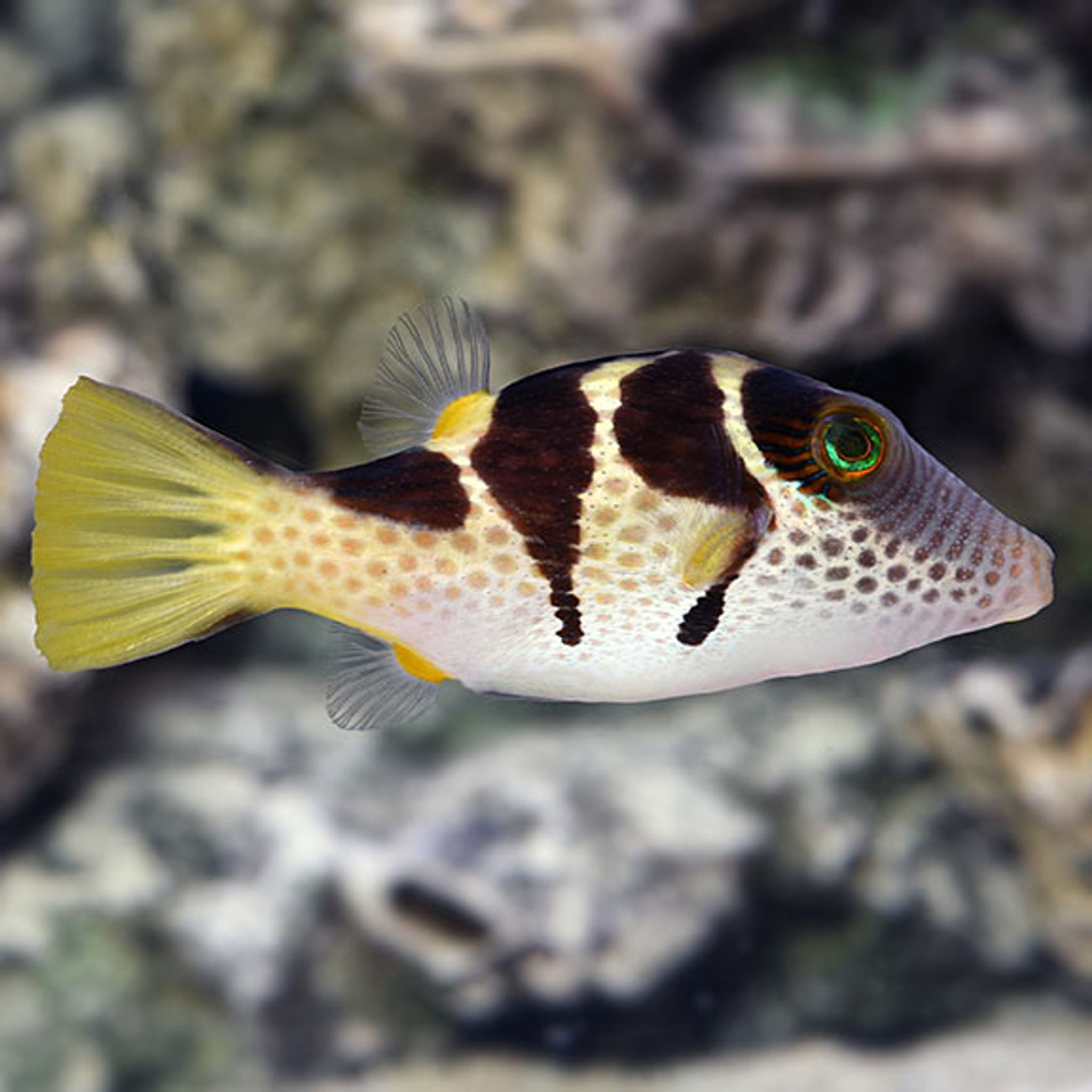
The Valentini puffer, also sold as the saddled toby or blacksaddle toby, is Canthigaster valentini — a small member of the sharpnose puffer group native to Indo-Pacific reefs. It's a manageable size compared to large puffer species:
- Adult size: roughly 4–6 inches (10–15 cm)
- Lifespan: several years with stable care
- Body shape: small, boxy, with a distinctive black saddle pattern used to mimic a toxic pufferfish species
Its compact size makes it tempting for reef tanks that couldn't house a larger puffer, but size alone doesn't determine reef compatibility — feeding biology and individual temperament do.
The Short Answer: Semi-Reef Safe, Not Guaranteed
The most accurate label for this species is "reef safe with caution" rather than a flat yes or no. That distinction matters because online fish-compatibility lists disagree with each other: some call it reef safe with most soft and LPS corals, others recommend against putting one in a reef at all and suggest a fish-only-with-live-rock (FOWLR) setup instead.
Both camps are describing real outcomes. The honest way to frame it is as a spectrum of risk by category, not a single verdict:
| Category | Typical risk level | Notes |
|---|---|---|
| Soft corals | Low | Generally ignored by most individuals |
| LPS (non-fleshy types) | Low to moderate | Usually tolerated |
| Fleshy LPS (Acanthastrea, Favia-type) | Moderate to high | More frequently targeted |
| SPS corals | Unpredictable | Some tobies ignore it completely; others peck at polyps or tips |
| Clams | High | Small/ornamental clams are commonly predated |
| Snails, hermit crabs | High | Among the most common losses reported |
| Ornamental shrimp | High | Cleaner, peppermint, and fire shrimp are all vulnerable |
| Brittle star legs | Moderate to high | Legs may be nipped over time |
The practical takeaway: a coral-only reef with a well-fed, individually vetted Valentini puffer can work well. A reef that depends on a full mobile invertebrate clean-up crew or pricey ornamental shrimp is a poor match.
Coral Compatibility, Category by Category
Soft Corals
Soft corals — leathers, mushrooms, zoanthids, and similar low-structure species — are the safest bet. Most Valentini puffers show little to no interest in them, which is part of why the species earns a "reef safe" label at all. You can browse a range of options in soft corals if you're planning a puffer-first reef build.
LPS Corals
Large-polyp stony corals are more mixed. Many keepers report no issues with hardier LPS, but fleshy, high-polyp-extension types like Acanthastrea and Favia-type corals draw more attention and carry a higher risk of nipping. If you're stocking LPS around a puffer, start with the less fleshy varieties from the LPS hard corals selection and observe before committing to pricier specimens.
SPS Corals
Small-polyp stony corals are the least predictable category. Anecdotal reports genuinely conflict: some tobies ignore SPS entirely, and birdsnest coral in particular is often spared, while other individuals target polyps or branch tips repeatedly. Treat SPS as individual-dependent, not blanket-safe, and watch new SPS additions closely for the first several weeks after introduction.
The Real Risk Is Invertebrates, Not Coral
If you're going to lose something to a Valentini puffer, it's far more likely to be a mobile invertebrate than a coral colony. Ornamental shrimp (cleaner, peppermint, fire), small clams, snails, hermit crabs, and even brittle star legs are all commonly predated — sometimes months after the puffer arrived and appeared to ignore them entirely.
This is the single most common complaint from keepers who add a full clean-up crew expecting it to coexist long-term with a puffer. A puffer that seems indifferent to snails for weeks can start hunting them the moment its beak needs wearing down or its appetite shifts.
Practical stocking approach: treat mobile invertebrates as expendable unless a specific puffer has proven trustworthy over an extended period. Many successful keepers stock corals first, add the puffer last, and only introduce cheaper, lower-value invertebrates as a test before risking anything expensive.
Clean-Up Crew Alternatives Worth Considering
Standard reef clean-up crews lean heavily on snails, hermits, and shrimp — exactly the group most at risk. A few substitutes tend to draw less attention:
- Larger, more established hermit species (tougher shells, less appealing than small snails)
- Sea cucumbers, which handle substrate detritus without the vulnerability of a shell-dwelling animal
- Bristleworms, which work as fill-in detritivores and are rarely targeted
None of these are risk-proof, but they shift the odds compared to a crew built entirely around ornamental shrimp and small snails.
Why Diet Drives Reef Behavior
A Valentini puffer's teeth and beak grow continuously, just like other pufferfish. In the wild, its diet naturally wears the beak down through benthic invertebrates, coralline and filamentous algae, tunicates, and small amounts of coral. In a captive reef, that wear has to come from somewhere — and if it doesn't come from deliberate feeding, it comes from the tank's inhabitants.
Feed hard-shelled foods 2–3 times per week, including:
- Shrimp or crab with shell intact
- Clams, mussels, or cockles
- Snails
This directly conflicts with keeping a clean-up crew, since the same items you're feeding are the ones a CUC is built from. Skipping hard-shelled feeding is one of the most common mistakes: an overgrown beak becomes a welfare issue in its own right, not just a coral-damage risk, and it tends to push the puffer toward attacking shells and coral skeletons more aggressively to compensate.
Tank Setup and Water Parameters
Tank Size and Environment
- Minimum tank size: 30 gallons (113 L); 40+ gallons (150+ L) preferred
- Flow: moderate, with some calmer zones
- Aquascape: generous live rock with caves and arches for grazing and hiding
The larger recommendation matters because this is a messy, heavy-bioload fish — undersized tanks and inconsistent water quality tend to worsen stress-driven aggression and nipping.
Water Parameters
No special reef chemistry is required beyond standard, stable reef-tank parameters:
| Parameter | Target range |
|---|---|
| Temperature | 74–78°F (23–26°C) |
| pH | 8.1–8.4 |
| Specific gravity | 1.020–1.025 |
| Alkalinity, calcium, magnesium | Standard reef levels |
Stability matters more than precision here — swings in parameters add stress that can worsen aggressive or nipping behavior.
Tankmate Compatibility
Valentini puffers can be fin-nippers toward long-finned or slow-moving tankmates, and they're territorial toward conspecifics and similarly shaped fish. Best practice is to keep one per tank, especially in smaller systems — two puffers together, even of the same species, tend toward aggression rather than tolerance.
Good tankmates:
- Tangs
- Wrasses
- Hawkfish
- Clownfish
- Damsels
- Larger angelfish
- Triggers
- Other robust, fast-swimming fish
Poor tankmates:
- Other puffers, boxfish, or similarly shaped fish
- Long-finned or slow species (mandarins, seahorses, pipefish)
- Tiny, shy fish that get bullied or outcompeted (neon gobies, assessors, grammas)
A quick troubleshooting note: if you see torn fins or missing tankmates alongside a second puffer or similarly shaped fish, territorial aggression — not "coral nipping" — is the more likely cause.
Are Tobies (Canthigaster Species) Reef Safe in General?
The semi-reef-safe caveat isn't unique to Canthigaster valentini. It applies across the broader toby/sharpnose puffer genus. Individual variation and invertebrate risk show up as a genus-wide pattern, so if you're comparing other toby species for a reef build, don't assume a different species name changes the calculus. None of the Canthigaster tobies come with a guarantee against nipping — the same coral-first, puffer-last, low-value-invertebrate-testing approach applies regardless of which toby you're considering.
Saltwater Tank Types: Where Does a Valentini Puffer Fit Best?
Understanding the three broad marine tank categories helps clarify whether a full reef is even the right goal:
- Fish-only: the simplest and least expensive setup — fish plus basic filtration, no live rock requirement, no coral-related parameter demands.
- FOWLR (fish-only with live rock): adds live rock for biological filtration and a more natural look and behavior environment, without the lighting or parameter precision a reef needs.
- Reef: built around corals and invertebrates, requiring stronger lighting, tighter and more stable parameter control, and generally higher setup and maintenance cost.
For a reader who wants a Valentini puffer without gambling on coral or invertebrate losses, a FOWLR build with live rock and no CUC dependency removes the compatibility question entirely. It's a fish-first setup rather than a coral-first one, and it lets the puffer graze on live rock and prepared foods without any risk calculus for corals or invertebrates. Reef-minded keepers who still want the fuller experience can browse tankmate options in marine fish to plan a FOWLR community around the puffer.
Testing a Puffer's Temperament Before You Commit
Because reef safety here is genuinely individual, a gradual introduction process reduces losses more than any stocking list can:
- Add the puffer to an established tank with only low-value soft coral or inexpensive frags present.
- Observe for several weeks before adding anything higher-value.
- Introduce a small number of low-cost snails or hermits as a test, not a full crew.
- Only add pricier SPS, clams, or ornamental shrimp after the individual has shown consistent, coral-safe behavior over an extended period.
This sequencing directly addresses the most common mistake: introducing pricey SPS or clams before observing temperament on cheaper specimens first.
Quarantine Matters More Than It Gets Credit For
Many Valentini puffers sold in the trade are wild-caught, which makes quarantine before introduction to a display reef particularly important. A dedicated quarantine period gives you a chance to catch parasites or disease — ich in particular — before the fish ever reaches your corals and invertebrates, protecting both the puffer's health and your existing reef inhabitants.
Frequently Asked Questions
Will a Valentini puffer eat my coral?
Usually not — most individuals leave soft corals and many LPS alone. But risk isn't zero, especially with fleshy LPS types and some SPS, and behavior varies from one puffer to another.
Can I keep cleaner shrimp or snails with a Valentini puffer?
Not reliably. Most keepers report eventual predation of ornamental shrimp, snails, and hermit crabs, so treat any mobile invertebrate as at-risk rather than safe long-term.
What's the minimum tank size for one?
30 gallons (113 L) minimum, with 40+ gallons (150+ L) preferred given the species' bioload and swimming needs.
Do Valentini puffers need special water parameters?
No. Standard, stable reef parameters — 74–78°F (23–26°C), pH 8.1–8.4, specific gravity 1.020–1.025 — are sufficient. Stability matters more than any unusual target.
Can I keep two Valentini puffers together?
Generally not recommended. Conspecifics tend toward territorial aggression, so this species does best kept singly, particularly in smaller systems.
What should I feed a Valentini puffer to protect my tank?
Offer hard-shelled foods — shrimp, crab, clams, mussels, or snails — 2–3 times per week. This wears down the continuously growing beak and reduces the drive to peck at coral or invertebrates out of necessity.
Is a FOWLR setup better than a reef tank for this puffer?
For reefers unwilling to risk invertebrates or prized coral, yes. A fish-only-with-live-rock setup removes the compatibility gamble entirely while still giving the puffer a naturalistic environment.
Are other toby/sharpnose puffers safer for reefs than Valentini?
Not meaningfully. The same genus-wide caution applies to other Canthigaster species — none are guaranteed 100% reef safe, and individual temperament remains the deciding factor.
If you've decided a Valentini puffer fits your plans, start by browsing current stock in marine livestock to compare puffers alongside the corals and tankmates you're considering pairing them with.


