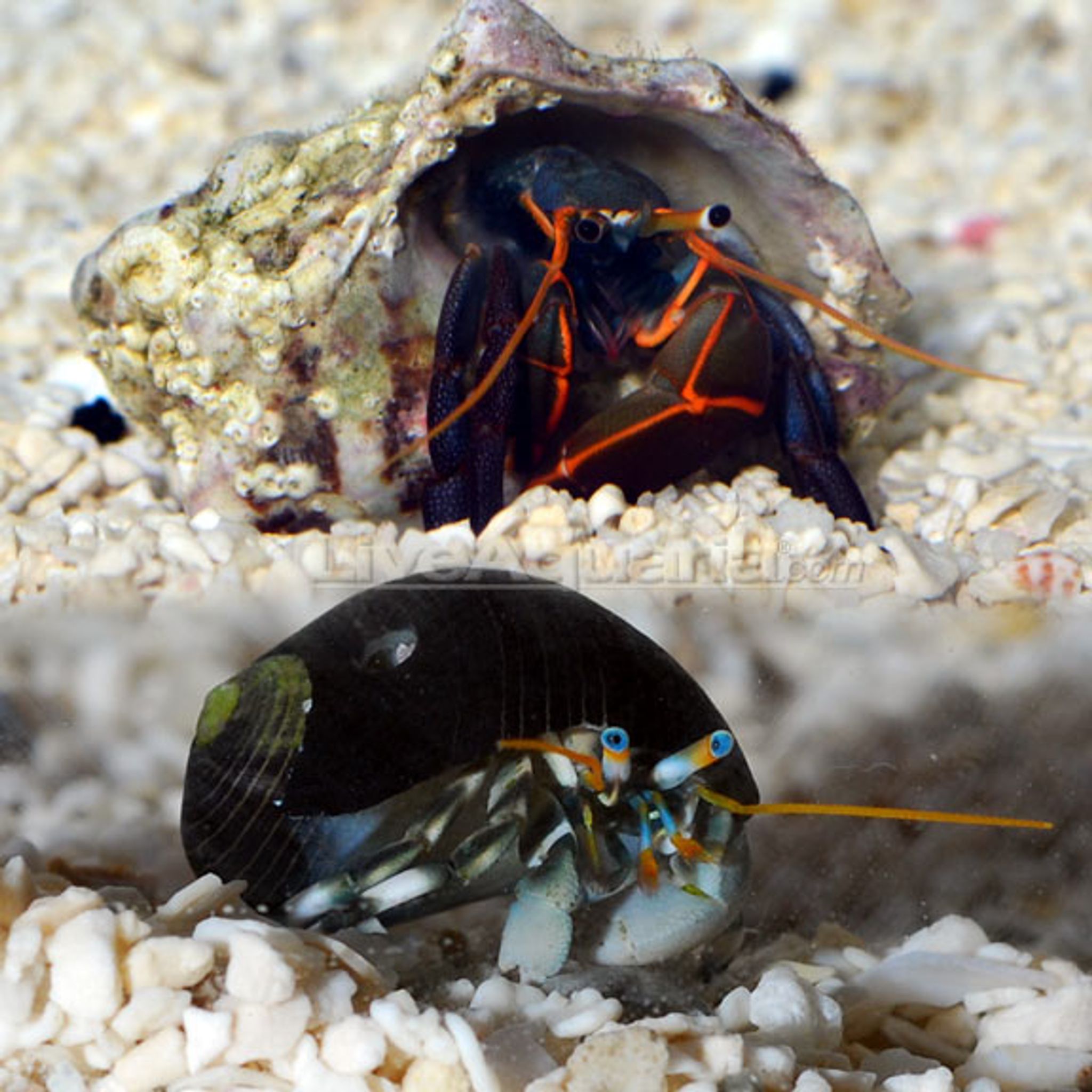

Is Porcelain Crab Reef Safe? Compatibility With Fish, Coral and Invertebrates
Yes — a porcelain crab is reef safe. It doesn't eat coral tissue, polyps, or clam mantles, and its diet of drifting plankton and detritus makes it one of the least destructive additions you can put in a mixed reef. The bigger questions are whether it needs an anemone host, how it gets along with clownfish, and how to keep a filter feeder fed in a well-run reef tank.
What Is a Porcelain Crab?
Despite the name, a porcelain crab isn't a true crab at all. It belongs to the anomuran group (family Porcellanidae), the same broad lineage as hermit crabs and squat lobsters, rather than the true crab order Brachyura. A few features make identification easy:
- Long, sweeping antennae used to sense its surroundings from inside a host.
- A flattened, disc-shaped body that wedges tightly into anemone tentacles or rock crevices.
- Oversized front claws (chelipeds) held outward for defense and display, disproportionate to the rest of the body.
- A much smaller second pair of legs (maxillipeds), fringed with fine bristles, which fan rhythmically through the water to strain out food.
The most commonly traded species in the hobby is the spotted porcelain anemone crab (Neopetrolisthes maculatus or N. ohshimai), sold specifically for anemone tanks. Plain "porcelain crab" is sometimes used loosely for free-living Petrolisthes species that live on live rock without any anemone attachment. Both share the same care template, but the anemone-associated species is far more dependent on a host than its rock-dwelling relatives — worth clarifying before you buy, since retail listings often blur the two.
Porcelain Crab and Anemone Symbiosis
The relationship between a porcelain crab and its host anemone is a genuine mutualism. The crab gains a stinging shield against predators and a steady supply of leftover food particles and mucus shed by the anemone; in return, the anemone gets its tentacles kept clear of debris and detritus. Neither species depends on the other for survival the way clownfish and anemones sometimes do, but the crab's behavior and coloring both improve dramatically with a host present.
Anemones that work well as hosts include:
- Carpet anemones (Stichodactyla species)
- Bubble-tip anemone (Entacmaea quadricolor)
- Sebae anemone (Macrodactyla doreensis)
Sources disagree on how essential this pairing actually is. Some sellers describe an anemone as a nice-to-have, with live rock crevices serving as a fine substitute. Others treat it as close to mandatory and discourage buying the crab without one. The practical middle ground: strongly recommend a host anemone for natural behavior and long-term color and activity, but understand the crab can survive in a rock-crevice-rich reef without one — at the cost of higher stress and greater predation risk over time.
Size and Tank Requirements
Porcelain crabs stay small for the life of the tank:
| Trait | Typical range |
|---|---|
| Adult body size | 1–1.5 in (2.5–4 cm) |
| Max size including claws | Up to ~3 in (7.5 cm), species-dependent |
| Minimum tank size | 5–10 gal (19–38 L) with a host anemone |
| Larger reef tanks | No upper limit — fine in any established reef |
Because it's so small and non-aggressive toward corals, a porcelain crab is a realistic option even for nano reef builds, as long as you can provide a stable host anemone or dense rockwork for shelter.
Water Parameters
Porcelain crabs need standard reef-quality water rather than anything species-specific:
- Temperature: 75–80°F (24–27°C), with 72–78°F cited as an acceptable range by some keepers
- pH: 8.1–8.4
- Specific gravity: 1.020–1.025
- Alkalinity (dKH): 7–12
- Nitrate: under 20 ppm
- Calcium, magnesium, iodine, and trace elements maintained at normal reef levels
Because this is a passive filter feeder, strong water flow matters more here than for most reef inverts — it needs current to deliver food particles past its fan-like feeding legs.
Feeding Guide
A porcelain crab doesn't hunt or chase food. It anchors itself near its host and repeatedly sweeps its feathery maxillipeds through the water column, straining out plankton, phytoplankton, and fine suspended particulates. It supplements this by scavenging detritus and picking mucus and leftover food off its host anemone's tentacles.
For supplemental feeding:
- Offer small amounts of mysis, brine shrimp, thawed meaty seafood, rotifers, or a food marketed for filter feeders.
- Target-feed 2–3 times per week using a turkey baster, releasing food directly into the current near the crab so it can filter it out without you overloading the whole tank's nutrient load.
- Never assume it will chase down meaty chunks the way a hermit crab does — food needs to come to it.
One issue that retail-style care sheets rarely mention: an ultra-low-nutrient reef system, run with aggressive skimming and GFO to keep corals colorful, can starve filter feeders like this one by stripping the water of the phytoplankton and fine particulates it depends on. If your crab looks thin or listless in an otherwise pristine, low-nutrient tank, that's a more likely culprit than disease.
Fish Compatibility
Porcelain crabs coexist peacefully with nearly all reef-safe fish, including gobies, wrasses, dartfish, blennies, and tangs — marine fish that ignore small filter feeders entirely.
The one real friction point is clownfish. Both species may compete for the same anemone as a home base, and territorial disputes over hosting rights are common. That said, many reefers keep them together successfully, particularly in larger anemones with room for both to claim separate sections. If you're planning to keep clownfish and a porcelain crab in the same tank, a bigger anemone or multiple hosting sites reduces the odds of ongoing conflict.
Avoid housing porcelain crabs with:
- Triggerfish
- Large or crustacean-eating wrasses
- Lionfish
- Eels
- Groupers
- Puffers
Any of these will treat a 1–3 inch crab as a snack.
Invertebrate Compatibility
Porcelain crabs generally get along with the rest of a peaceful cleanup crew: cleaner shrimp, peppermint shrimp, fire shrimp, snails, hermit crabs, and emerald crabs. Problems arise mainly between porcelain crabs themselves — they will fight conspecifics over the same host, using their oversized claws to drive off rivals. Keep only one crab per anemone, or an established, bonded male/female pair; give any additional individuals their own separate host.
Behavior, Molting, and Autotomy
Porcelain crabs are sedentary and spend most daylight hours anchored in or near their host, filter-feeding in the current. When threatened, they retreat deep into the anemone's tentacles or hold their claws out in a defensive posture.
A key defense mechanism is autotomy — the ability to voluntarily drop a claw or leg to escape a predator's grip. The lost limb regenerates over the following molts, so a crab missing a claw is very likely fine, not sick or injured.
Molting itself is a vulnerable period. The crab hides and goes still while its new exoskeleton hardens. Avoid disturbing rockwork or handling the crab during this stretch, since a soft-shelled animal is an easy target and physical stress can be fatal.
Signs of a Healthy vs. Stressed Crab
- Healthy: actively fanning its feeding legs in the current, bright coloring, tucked snugly against its host, retreats calmly when approached.
- Stressed: wandering far from any shelter, dull or faded coloring, reduced feeding-leg activity, or hiding constantly with little to no time spent in the open.
Persistent hiding usually points to a missing host or predatory tankmates; reduced feeding activity in an otherwise clean tank often points to low particulate food levels rather than illness.
Breeding and Lifespan
With stable parameters and a host anemone, a porcelain crab can live up to about 5 years. Females carry several hundred eggs, and larvae pass through planktonic zoeal and megalopal stages before settling. Full captive rearing past the early larval stages has not been reliably achieved by home aquarists, so breeding isn't a realistic project for a hobby tank — treat any egg-carrying female as a bonus, not a breeding plan.
Acclimation and Quarantine
Drip acclimate a new porcelain crab the same way you would any reef invertebrate — it's sensitive to rapid swings in salinity and pH. Quarantine is trickier than usual, since the crab genuinely needs a hiding structure to feel secure. A practical compromise is a bare-bottom quarantine tank fitted with a length of PVC pipe or a ceramic hide, giving it shelter without the complexity of cycling a full reef setup just for observation.
Common Mistakes to Avoid
- Buying an anemone-obligate crab with no anemone or rock crevice, then wondering why it hides constantly or vanishes.
- Mixing multiple unpaired porcelain crabs in one tank, expecting them to share a host — this leads to claw fights and lost limbs.
- Feeding only meaty target foods and skipping fine planktonic foods, which can slowly starve a filter feeder.
- Disturbing rockwork or handling the crab during a molt.
- Housing it with large predatory or crustacean-eating fish.
- Mistaking a missing claw for injury or illness instead of normal autotomy.
- Letting salinity or pH swing from inconsistent top-off or water changes.
Tank Setup Checklist
- Live rock with crevices, or a suitable host anemone
- Strong, consistent water flow for filter feeding
- Stable reef parameters (temperature, pH, alkalinity, salinity)
- No large predatory or crustacean-eating tankmates
- A feeding routine that includes fine planktonic foods, not just meaty chunks
Frequently Asked Questions
Is a porcelain crab reef safe with corals?
Yes. It doesn't eat coral tissue or polyps — its diet is drifting plankton and scavenged detritus, so it poses no threat to LPS, SPS, or soft corals sharing the tank.
Do porcelain crabs need an anemone to survive?
Not strictly, but they do much better with one. Without a host, they're more exposed and stressed, so provide either an anemone or plenty of rock crevices for shelter.
Will a porcelain crab fight my clownfish?
Possibly — both species may compete for the same anemone as a home. The friction is usually manageable, especially with a larger anemone or a tank offering multiple hosting spots.
What do porcelain crabs eat?
Mainly suspended plankton and phytoplankton filtered from the water column, plus scavenged detritus and anemone mucus or leftovers. You can supplement with small amounts of mysis or brine shrimp offered near the host.
Can I keep more than one porcelain crab together?
Only as an established male/female pair sharing the same anemone. Unrelated individuals will fight over a host, often resulting in lost claws.
How big do porcelain crabs get?
They're small, typically 1–1.5 in (2.5–4 cm) as adults, with a maximum of around 3 in (7.5 cm) across including the claws, depending on species.
Are porcelain crabs hard to keep?
No — they're rated easy care, provided water parameters stay stable and a host or hiding spot is available.
Why did my porcelain crab lose a claw?
This is almost always autotomy, a defensive limb-drop used to escape a threat or handling stress. The claw regenerates gradually over subsequent molts.
If you're building a reef setup around this pairing, you can browse host anemones and marine invertebrates including crabs on FishyHub to plan your stocking list.


