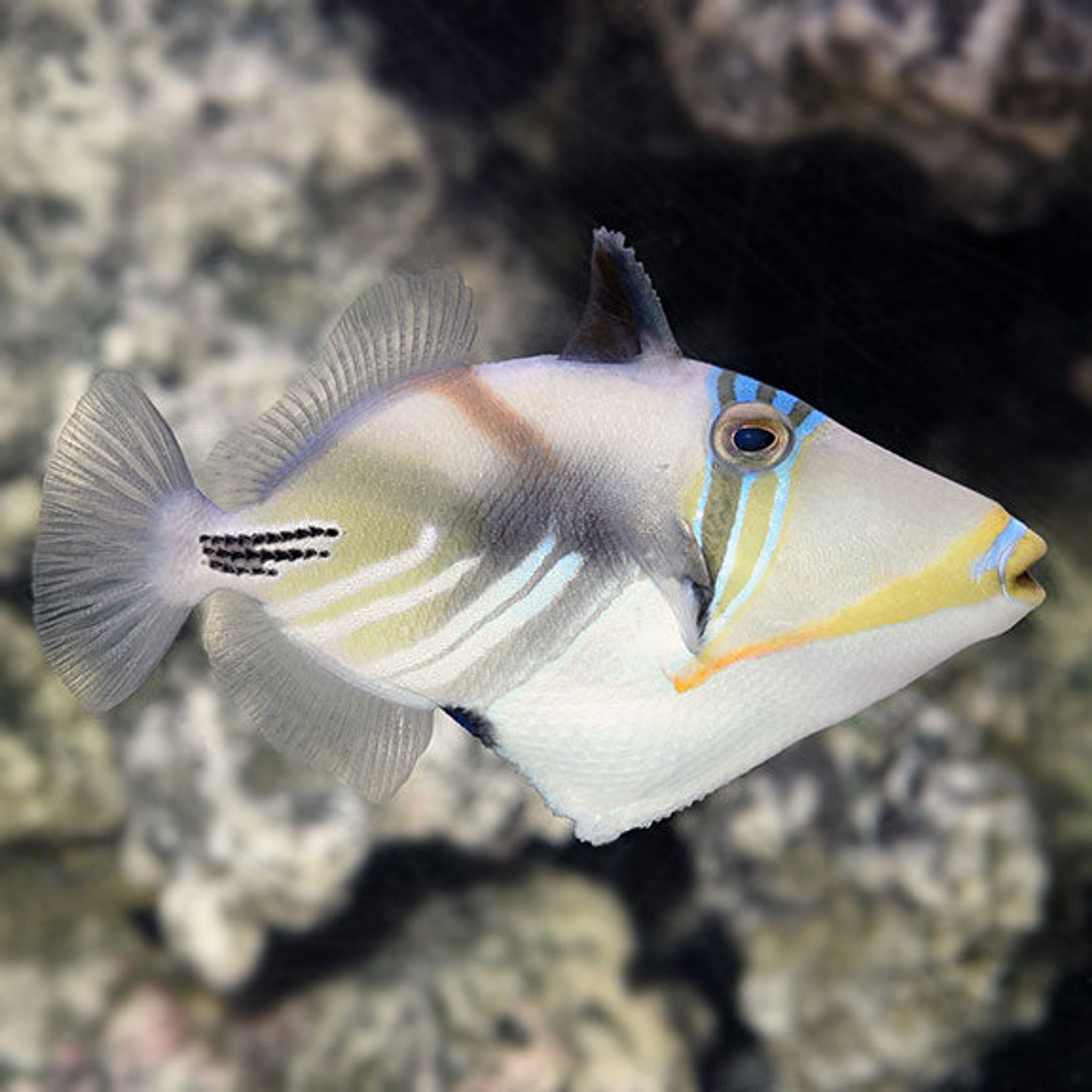
Is Picasso Triggerfish Reef Safe? Coral and Invertebrate Compatibility Explained
The short answer is no: the Picasso triggerfish (Rhinecanthus aculeatus, also called the Humu or Humuhumu) is not reef safe. It usually leaves coral tissue alone, but it is a determined predator of shrimp, crabs, snails, and other invertebrates, and its constant digging can wreck an aquascape even if the coral itself is never bitten. This guide explains exactly where the risk comes from and what a compatible setup actually looks like.
Why "Won't Eat Coral" Isn't the Same as "Reef Safe"
Reef safe should describe how a fish behaves toward the whole reef ecosystem, not just whether it nibbles coral polyps. A Picasso triggerfish is not a coral eater by diet, so hard and soft corals are usually physically ignored. That single fact leads many people to assume the fish is fine in a reef tank.
In practice, two separate problems make that assumption wrong:
- Indirect coral damage. Picasso triggers dig through sand and shuffle rockwork constantly. A frag rack or loose coral colony sitting in the path of that excavation can be toppled, buried, or crushed even though the fish never intended to eat it.
- Total loss of invertebrates. The same hunting instinct that lets these fish crack open hard-shelled prey in the wild makes them highly effective predators of cleanup-crew animals in captivity.
A tank can lose every shrimp, snail, and crab within days while every coral head remains physically untouched. That is not a reef-safe outcome — it's just a fish that skipped one category of livestock while destroying another.
The Real Risk: Invertebrates, Not Coral
In the wild, Picasso triggerfish feed heavily on benthic invertebrates: crabs, sea urchins, mollusks, and other hard-shelled animals found on lagoon and reef flats. That natural diet is exactly why the species is so effective at eliminating cleanup crews in home aquariums.
Invertebrates at serious risk include:
- Cleaner shrimp and peppermint shrimp
- Nassarius and Cerith snails
- Hermit crabs and most reef-safe crab species
- Sea urchins
- Feather duster worms
- Clams
Essentially any crustacean or mollusk in the tank should be considered prey. There is no dependable list of "safer" invertebrates to keep alongside this species — even animals marketed as hardy or well-armored are commonly targeted once the fish is established. This same predatory drive is also why captive diets should include shell-on foods: chewing through hard shells helps wear down the trigger's continuously growing teeth, which is healthy for the fish but is the identical behavior that makes it dangerous to invert-based cleanup crews.
A Simple Risk Matrix
Because sources tend to lump "coral" and "invertebrates" together under one reef-safety verdict, it helps to separate risk by category:
| Livestock type | Typical risk level | Notes |
|---|---|---|
| Coral tissue (LPS, SPS, soft corals) | Low (direct predation) | Rarely eaten, but not immune to physical disturbance |
| Coral colonies and frags (placement) | High (indirect) | Can be toppled, buried, or crushed by digging |
| Feather dusters, clams, other sessile filter feeders | High | Slow-moving and easy targets |
| Motile invertebrates (shrimp, crabs, snails, urchins) | Near-certain loss | Actively hunted as natural prey |
This matrix is the clearest way to explain why a Picasso trigger can sit in a coral-filled tank for months without touching a polyp, while the shrimp and snail population disappears almost immediately.
Aquascaping to Reduce Damage
If a Picasso triggerfish is going into a display with coral (understanding that invertebrates are off the table), the aquascape needs to be built to withstand a fish that digs and rearranges constantly:
- Secure rockwork to the tank bottom or back glass using rock-safe epoxy, mortar, or drilled and pinned rock towers rather than simply stacking pieces.
- Limit sand depth in open areas the fish is likely to excavate, since a deep bed gives more material to fling around and bury coral with.
- Keep coral frags elevated and out of digging zones, rather than placed low on loose rubble near the sand line.
- Watch for early rock shifts during the first few weeks after adding the fish, since this is when territory and digging habits get established.
None of this makes the tank reef safe — it only reduces the odds of an accidental rockslide crushing a coral colony or cracking the glass.
Tank Requirements
Size and Growth
Picasso triggerfish reach roughly 10 inches (25 cm) as adults, with some individuals approaching 12 inches (30 cm), and can live up to 10 years with good care. Minimum tank size recommendations vary by source, ranging from 100 to 180 gallons (380–680 L). A practical baseline is:
- 120 gallons (450 L) as a floor for one adult
- 150+ gallons (570+ L) preferred for long-term keeping
- 180 gallons (680 L) sometimes cited for multi-fish stocking or maximum long-term comfort
Bigger is always safer here — more space reduces aggression, gives room for secured rockwork, and accommodates a fish that patrols constantly.
Water Parameters
| Parameter | Target range |
|---|---|
| Temperature | 72–82°F (22–28°C) |
| pH | 8.1–8.4 |
| Specific gravity | 1.020–1.025 |
| dKH | 8–12 |
Strong water circulation and robust filtration or skimming are important, since this species produces a heavy bioload and generates a fair amount of waste from its feeding style.
Diet and Feeding
Picasso triggerfish are carnivores that do best on a varied, meaty diet fed in small portions two to three times daily. A good rotation includes:
- Shrimp, clams, snails, and crab (shell-on, to help wear down teeth)
- Other meaty marine protein sources
- Occasional gel foods for variety
Skipping hard-shelled foods for extended periods can lead to overgrown teeth or beak issues that eventually interfere with normal feeding, so shell-on items should be a regular part of the rotation rather than an occasional treat.
Tank Mates
Picasso triggerfish are bold, territorial, and constantly active, and they can deliver a genuinely painful bite — caution is warranted during any tank maintenance near their territory. Suitable tank mates need to be similarly robust:
- Large tangs and surgeonfish
- Large angelfish
- Wrasses
- Lionfish
- Groupers
- Snowflake eels
- Other hardy, assertive damsels
Avoid small, slow, or passive fish, which are likely to be bullied or eaten outright. As a general rule, keep only one triggerfish per tank, since intraspecific aggression between two triggers is common and can be severe.
Juveniles vs. Adults: A Temporary Window, Not a Strategy
Some hobbyists keep juvenile Picasso triggerfish in reef tanks for a short period with relatively few problems, since young fish are smaller and less driven to hunt. This window closes as the fish matures — appetite, boldness, and hunting behavior all increase with size. Treat any juvenile-in-a-reef-tank arrangement as a temporary phase that ends with a stocking change, not a long-term reef-keeping strategy.
The "Coral-Only, No-Inverts" Middle Ground
Some advanced reefers run a middle-ground setup: a coral display that keeps hard and soft coral but deliberately excludes all cleanup-crew invertebrates, essentially a fish-only-with-coral biotope. This can work because it sidesteps the invertebrate predation problem entirely, but the trade-offs are real:
- No natural pest control from snails, hermit crabs, or shrimp, so algae and detritus management falls entirely on manual maintenance
- Coral placement still needs to account for digging and rockwork disruption
- The keeper takes on more frequent water changes and cleaning to compensate for the missing cleanup crew
This is a workable compromise for someone who wants coral color without the risk to inverts, but it is still not the same as a true reef-safe setup.
The Journey from Reef to Aquarium
Most Picasso triggerfish available in the hobby are wild-caught rather than aquacultured, collected from lagoon and reef flat habitats and moved through the supply chain to retailers. Because their native lagoon environment naturally fluctuates in salinity, temperature, and organic load more than open ocean reef habitat, these fish tend to tolerate shipping and acclimation relatively well compared to more sensitive reef species.
That resilience is not a substitute for quarantine. New arrivals should still be isolated for several weeks to screen for parasites and disease before entering a display tank, and choosing a source with solid holding and quarantine practices reduces the risk of arrival mortality or introducing disease to an established system. Captive-bred Picasso triggerfish are essentially nonexistent in the trade — the species is not commonly bred in captivity, so assume any specimen is wild-caught and quarantine accordingly.
Common Mistakes to Avoid
- Assuming "won't eat coral" means reef safe, then losing an entire cleanup crew of shrimp, crabs, and snails within days.
- Under-securing rockwork, leading to slides that crush coral or crack glass or acrylic.
- Undersizing the tank (under 100–120 gallons), which causes stunted growth, chronic stress, and increased aggression.
- Skipping quarantine on a wild-caught specimen and introducing ich or other parasites to an established system.
- Not offering hard-shelled foods, resulting in overgrown teeth or beak problems.
- Adding a second trigger or small, passive fish after the Picasso is established, leading to bullying or predation.
- Reaching into the tank carelessly during maintenance — this species can lunge and deliver a strong bite.
Watch for a trigger that starts sampling coral tissue or rockwork more aggressively than usual; this is often a sign of stress or underfeeding, and adjusting the feeding schedule can reduce that opportunistic behavior before it becomes a habit.
You can browse triggerfish alongside compatible tank mates like tangs and surgeonfish on FishyHub, and check available marine invertebrates separately to understand what a Picasso trigger would put at risk before mixing the two.
Frequently Asked Questions
Will a Picasso triggerfish eat my coral?
Generally no — it mostly ignores coral tissue. However, it can knock over or bury frags and colonies while digging, so a coral display still carries real risk even without direct predation.
Can I keep a Picasso triggerfish with cleaner shrimp or other shrimp?
No. Shrimp of essentially any kind are considered prey and will very likely be eaten.
What invertebrates, if any, are safer with a Picasso triggerfish?
None are reliably safe. Even hardy snails and larger hermit crabs are commonly targeted, so the best practice is to keep no desirable invertebrates in the tank at all.
What size tank does a Picasso triggerfish need?
A minimum of about 120 gallons (450 L) for one adult, with 150+ gallons (570+ L) preferred. A larger tank reduces aggression and gives more room for secured rockwork and swimming.
Can juveniles be kept in a reef tank temporarily?
Some hobbyists do this short-term, but appetite and aggression grow with size, so it should be treated as a temporary phase rather than a long-term reef-keeping solution.
What tank mates work well with a Picasso triggerfish?
Robust, similarly sized fish such as large tangs, angelfish, wrasses, lionfish, and eels are good matches. Avoid small or timid species that could be bullied or eaten.
Are Picasso triggerfish aggressive toward other fish, not just invertebrates?
Yes. They are territorial and can bully or injure smaller or slower tank mates, and generally shouldn't be kept with a second triggerfish.
Where do aquarium Picasso triggerfish come from, and does that affect reef risk?
Most are wild-caught from lagoon and reef flat habitats. Their natural diet of hard-shelled invertebrates is exactly why the same predatory instinct makes them unsuitable around reef cleanup crews.
If a mixed reef display isn't the right fit, browse corals on FishyHub to plan a coral-only system, or look at other marine fish better suited to a full invertebrate cleanup crew.


