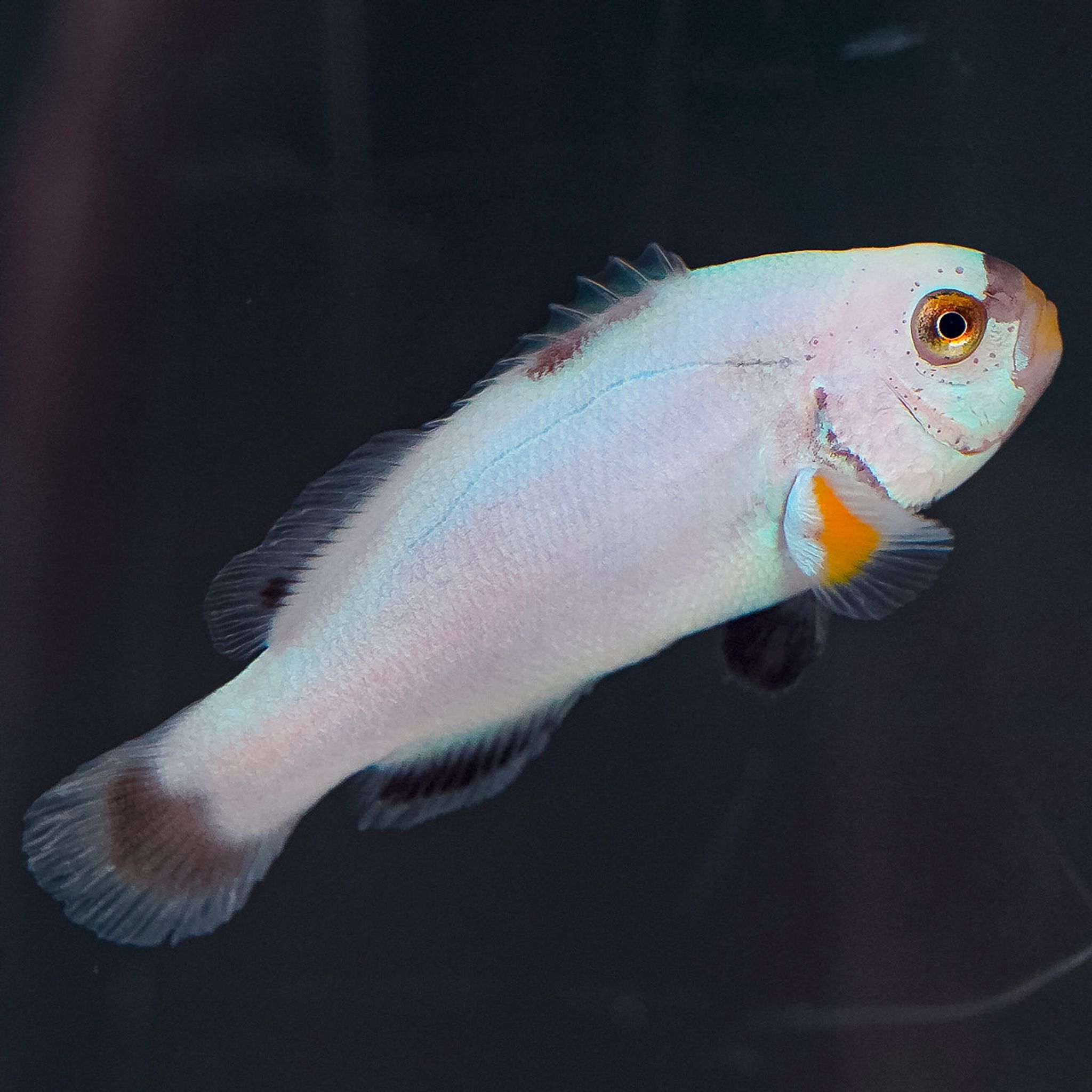

Is Percula Clownfish Reef Safe? Coral and Invertebrate Compatibility Explained
Yes — the true Percula clownfish (Amphiprion percula) is one of the most dependable reef-safe fish available, and it will not eat or sting your corals. The only real wrinkle is a harmless-but-noticeable habit called coral hosting, where a pair without an anemone may adopt a fleshy coral as a substitute home. This guide explains why that happens, which corals and invertebrates pair well with Percula clownfish, and how to stock one into a reef tank the right way.
The Short Answer: Percula Clownfish Are Reef Safe
Percula clownfish do not feed on coral tissue, polyps, or mucus, and they lack the biology to sting or damage invertebrates. That makes them compatible with:
- Soft corals (leathers, toadstools, mushrooms)
- LPS corals (hammer, torch, frogspawn, and similar large-polyp species)
- SPS corals (acropora, montipora, and other small-polyp stony types)
- Clams
- Cleaner shrimp, hermit crabs, snails, and sea urchins
- Most other standard reef clean-up crew members
Because of this track record, Percula clownfish sit near the top of most beginner reef stocking lists. You can browse tank-raised specimens in the clownfish category alongside compatible coral options.
The One Real Caveat: Coral Hosting Behavior
Clownfish have an innate biological drive to live in symbiosis with a host anemone. The anemone's tentacles provide protection from predators, and the clownfish develops a protective mucus coating that lets it nestle in without being stung. When no anemone is present, a mated pair will often redirect that same instinct toward a fleshy coral, nestling into its branches and rubbing or rocking against the polyps.
This is not predation. The fish is not eating the coral. But repeated hosting contact can:
- Reduce polyp extension on the targeted coral
- Cause temporary tissue retraction
- Stress the coral enough to slow its growth
It does not cause tissue damage, tissue loss, or death on its own. Think of it as a coral being used as furniture rather than food — annoying for the coral's owner, not dangerous to the coral's survival in most cases.
Corals Most Likely to Be Targeted
Clownfish gravitate toward corals with a similar branching or fleshy structure to an anemone's tentacle mass. In practice, that means:
| Coral type | Hosting risk | Notes |
|---|---|---|
| Hammer, torch, frogspawn (Euphyllia) | High | Long, fleshy tentacles closely resemble anemone tentacles |
| Toadstool / leather soft corals | High | Broad, soft surface invites rubbing |
| Duncan or candy cane corals | Moderate | Occasionally chosen, especially in small tanks |
| Mushroom corals | Low-moderate | Flat shape is less anemone-like |
| SPS (acropora, montipora) | Very low | Hard, branching structure is rarely chosen as a host |
| Zoanthids / polyps | Low | Occasionally brushed against but rarely adopted |
How to Redirect Hosting Behavior
If you want to protect a prized colony, you have options:
- Offer a dedicated "sacrificial" coral or anemone placed away from your best pieces — a hardy leather coral in a low-traffic corner often absorbs the behavior.
- Add a bubble-tip anemone once your tank is mature — this usually redirects hosting away from corals entirely.
- Shape live rock into a fold or crevice that mimics an anemone's structure; clownfish will sometimes host in rockwork instead of coral.
- Monitor polyp extension on the targeted coral. If retraction persists for more than a week or two, relocate the coral to a different part of the tank or introduce an alternative host.
Overreacting to hosting is a common mistake — new reef keepers sometimes assume the coral is diseased or being eaten and start dosing medications or removing the fish unnecessarily. In almost every case, it is normal fish behavior that resolves on its own or with a redirect.
Do Percula Clownfish Need an Anemone?
No. Hosting an anemone is optional, not a health requirement. Many captive-bred Perculas never host anything at all — coral or anemone — and live full, active, healthy lives regardless.
If you do want to attempt anemone hosting, match the anemone to your experience level:
- Bubble-tip anemone (Entacmaea quadricolor) — the most beginner-friendly and hardy option, and the most common in the aquarium trade.
- Heteractis magnifica and Stichodactyla gigantea — the anemones true Perculas host in the wild, but both are advanced-level animals requiring intense lighting, pristine and stable water, and a mature, well-established tank. These are not recommended for a first reef setup.
A common mistake is assuming an anemone is mandatory and buying a demanding species before the tank is ready. This routinely kills the anemone and destabilizes the tank in the process — skip it until your system has a proven track record of stability.
Tank Size and Water Parameters
Tank Size
- 20 gallons (76 L) minimum for a single Percula clownfish
- 30 gallons (114 L) or larger recommended for a mated pair
- Bigger is always better for reducing territorial stress and giving the pair room to establish a comfortable pecking order
Some sources cite 15 gallons (57 L) as an absolute bare minimum for one fish, but 20 gallons gives more stability and is the safer baseline for a reef setup that also needs to support coral.
Water Parameters
Reef-standard water quality benefits both the fish and the corals sharing the tank:
| Parameter | Target range |
|---|---|
| Temperature | 75–82°F (24–28°C) |
| pH | 8.1–8.4 |
| Specific gravity | 1.020–1.026 |
| Alkalinity | 8–12 dKH |
| Nitrate / phosphate | Kept low for coral health |
Unstable parameters stress fish and corals at the same time, so treat reef-safe water chemistry as one shared goal rather than two separate ones.
Diet
Percula clownfish are omnivorous and easy to feed:
- Frozen mysis or brine shrimp
- Marine pellets or flake food
- Occasional nori (dried seaweed)
- Small portions, 2–3 times per day
Social Behavior: One Pair, Not a Crowd
Keep only one mated pair per tank. In an established pair, the female is larger and dominant, while the male is smaller and subordinate. Adding unrelated pairs, a third individual, or multiple species of clownfish to a small tank typically leads to chasing and fin-nipping.
A single clownfish, on the other hand, adapts perfectly well and stays healthy on its own — it simply will not display pairing, hosting, or breeding behavior. This makes a lone fish a practical starting point for beginners who don't yet have a backup quarantine tank ready for a second fish.
Percula vs. Ocellaris: Does It Change Reef Compatibility?
Readers often conflate true Percula clownfish with ocellaris (false percula) clownfish. For reef purposes, the distinction barely matters:
- Both are equally reef safe and share nearly identical care requirements.
- Percula tends to have thicker black outlining and is generally a bit bolder and more food-aggressive at feeding time.
- Ocellaris is slightly more common in the trade and comes in more captive-bred color variants.
Neither species poses any additional risk to corals or invertebrates over the other.
Comparison Species Worth Knowing
Tomato Clownfish
Tomato clownfish are larger and considerably more aggressive than Percula, but that aggression is directed at other fish, not at corals or invertebrates — they remain fully reef safe with your coral and clean-up crew. They need at least 30 gallons (114 L), are very hardy and disease-resistant, and suit beginners who want a bolder personality than a Percula offers.
Longfin Ocellaris Clownfish
This is a fin-length variant of standard ocellaris, not a different species. It is reef compatible with the same care needs as a standard Percula/ocellaris, needs roughly 20–30 gallons (76–114 L) depending on the specific variety, will host an anemone if one is offered but does fine without one, and can live 10–15+ years or longer with good care.
Mutant and Designer Clownfish
Captive breeding has produced a wide range of color and pattern morphs — Picasso, Snowflake, DaVinci-type patterns, black "storm" lines, and gold-nugget types among them. These are bred primarily from ocellaris and maroon clownfish lines. They are cosmetic variations only, not separate species, and share the same reef-safe temperament and care requirements as standard Percula.
Quarantine Before Adding to a Reef Tank
This is the step most commonly skipped, and it's the one that protects your entire coral collection. Some general fish-care advice claims clownfish are hardy enough to skip quarantine — but hardiness reduces disease risk, it does not eliminate the chance of introducing a parasite that then spreads to fish and stresses corals through subsequent in-display treatment.
How to Quarantine a Saltwater Fish
- Use a dedicated QT tank of 30–40+ gallons (or smaller, sized appropriately to the fish), kept bare-bottom with PVC pipe sections for hiding spots
- Run a stable heater and reliable aeration/oxygenation
- Keep RO/DI mixed saltwater on hand for water changes during treatment
- Quarantine for 4–6 weeks minimum
- Common prophylactic treatment includes copper or chloroquine phosphate for ich and velvet, plus two rounds of praziquantel for flukes
- Never share nets, siphons, or other equipment between the QT tank and display without disinfecting first
- Keep the QT tank physically separate from the display to prevent any cross-contamination
The correct sequence for a first-time reef keeper adding a Percula is: quarantine fully, acclimate slowly to display water parameters, then introduce to the coral-stocked tank last, after the fish has cleared the full quarantine period disease-free.
Buying Tip: Choose Tank-Raised Stock
Tank-raised (captive-bred) Percula and ocellaris clownfish are hardier, more parasite-resistant, and more sustainable than wild-caught fish, and they consistently rank among the top beginner picks for tank-raised saltwater fish alongside species like green chromis. Prioritize tank-raised stock whenever you're sourcing a Percula for a reef tank — it reduces disease risk from the start and skips the wild-collection stress that can make fish harder to acclimate.
Setup Upgrade: Consider a Sump
A sump is a secondary tank or box plumbed below or behind the display. It's not required for a basic Percula-and-coral setup, but it offers real stability benefits for a growing reef:
- Increases total system water volume, which buffers swings in temperature and parameters
- Houses equipment like the heater, protein skimmer, and reactors out of sight
- Adds room for extra filter media or a refugium
If you're building toward a more heavily stocked coral display, a sump is a worthwhile upgrade to plan for early rather than retrofit later.
Common Mistakes to Avoid
- Skipping quarantine and adding a new clownfish straight to the display, risking ich, velvet, or flukes reaching fish and corals alike.
- Assuming an anemone is required, then buying a demanding species before the tank is mature enough to support it.
- Keeping unpaired or extra clownfish in one tank, which leads to chasing and fin damage — stick to one established pair.
- Panicking over coral hosting, mistaking normal rubbing behavior for disease or predation.
- Undersizing the tank, which increases territorial stress — stay at 20 gallons (76 L) minimum for one fish, 30 gallons (114 L) minimum for a pair.
- Letting water parameters drift, which harms fish and coral health simultaneously since both depend on the same stable chemistry.
Frequently Asked Questions
Will my Percula clownfish eat my corals?
No. Percula clownfish are not coral predators. Any contact you see — rubbing, nestling, or brushing against a coral — is territorial or hosting behavior, not feeding, and it does not consume coral tissue.
Do Percula clownfish need an anemone to be happy?
No, an anemone is optional. Many captive-bred Perculas never host anything at all and remain healthy, active, and long-lived without one.
Can Percula clownfish live with cleaner shrimp and snails?
Yes. Percula clownfish are fully compatible with typical reef clean-up crew members and ornamental invertebrates, including cleaner shrimp, hermit crabs, and snails.
What's the difference between Percula and Ocellaris for reef tanks?
Reef safety and care are nearly identical between the two. Percula tends to have thicker black outlining and is slightly bolder and more food-driven at feeding time, but both are equally coral-safe.
Can I keep a single clownfish in a reef tank?
Yes. A lone Percula adapts well, stays healthy, and is a low-risk option for beginners — it simply won't display pairing, hosting, or breeding behaviors without a second fish.
How long should I quarantine a new clownfish before adding it to my reef?
Plan for 4–6 weeks in a separate quarantine tank, with prophylactic treatment for ich, velvet, and flukes, before introducing any new clownfish to a coral-stocked display.
What tank size do I need for Percula clownfish in a reef setup?
Twenty gallons (76 L) minimum for a single fish, and 30 gallons (114 L) or more for a mated pair. Larger tanks reduce territorial stress for everyone involved.
Are designer or mutant clownfish morphs as reef safe as regular Percula?
Yes. Morphs like Picasso, Snowflake, or gold-nugget patterns are the same species with a different color or pattern from selective captive breeding — their reef-safe temperament and care needs are unchanged.
Ready to stock your reef? Browse tank-raised Percula clownfish and compatible coral options in FishyHub's marine livestock category, including LPS corals suited to a beginner-friendly reef build.


