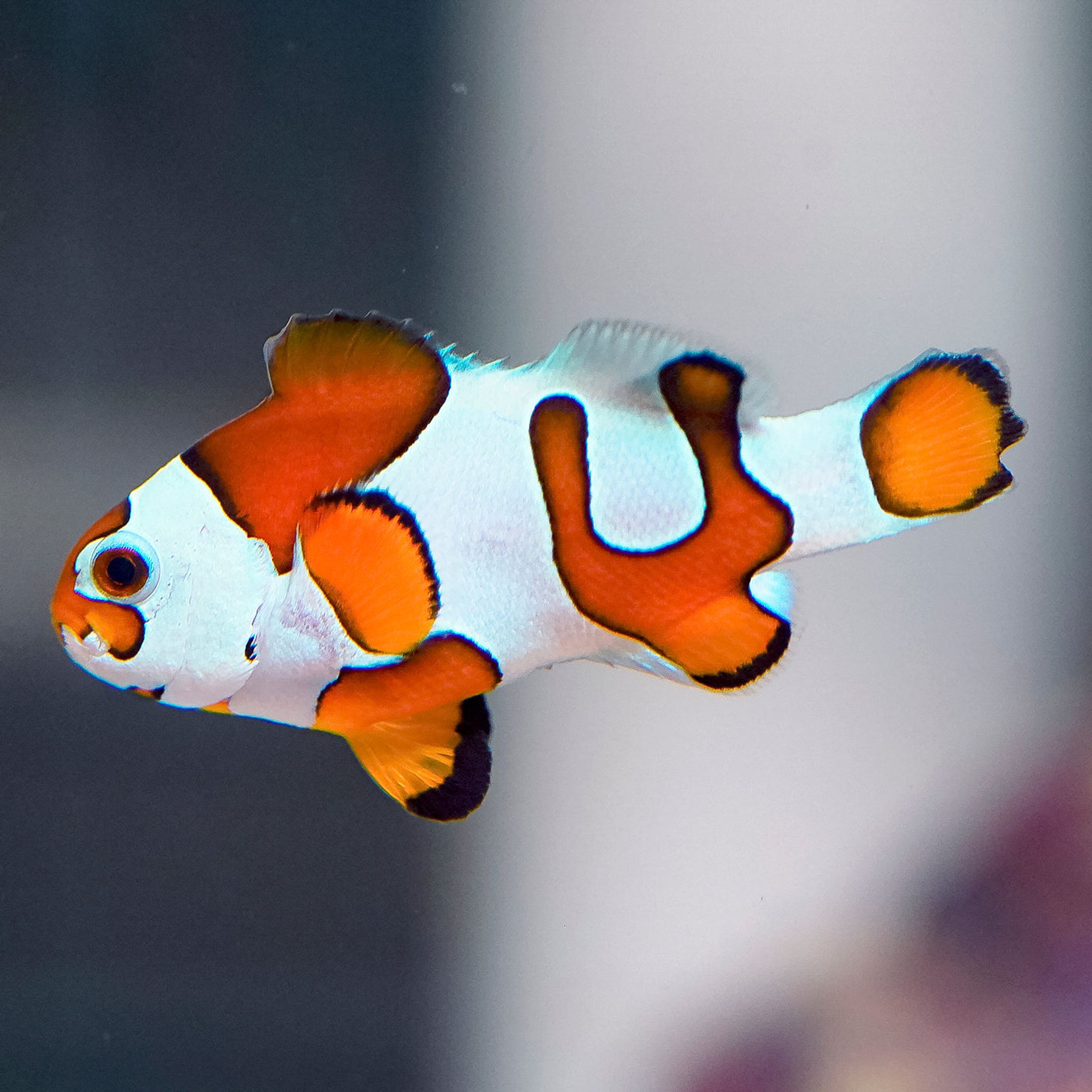

Is Ocellaris Clownfish Reef Safe? Coral and Invertebrate Compatibility Explained
Yes — the ocellaris clownfish (Amphiprion ocellaris) is one of the most reliably reef-safe marine fish you can stock, since it doesn't eat coral polyps or graze on live rock. That said, "reef safe" isn't the same as "zero interaction," and a few real caveats around hosting behavior and breeding-pair aggression are worth knowing before you buy.
The Short Answer
Ocellaris clownfish earn an unqualified reef-safe rating on most marine compatibility charts. Their diet is omnivorous — meaty foods like mysis and brine shrimp combined with algae or herbivore flake — so corals are never a food source. Unlike some angelfish or butterflyfish that pick at polyps and sponges, ocellaris simply have no biological reason to damage coral tissue.
The nuance comes from behavior, not diet. A clownfish that hosts in a large-polyp coral or anemone will make repeated physical contact with it, and that contact can occasionally stress the host. It's a low-risk issue, not a non-issue, and this guide covers exactly where the risk lies.
What "Reef Safe" Actually Means
Compatibility charts generally use three tiers:
- Reef safe — the fish won't eat or physically damage corals or invertebrates under normal conditions.
- Reef safe with caution — the fish is usually fine but has documented exceptions (nipping certain coral types, occasional shell-picking, etc.).
- Not reef safe — the fish is a known coral or invertebrate predator (many large angelfish, some butterflyfish, most triggerfish).
Ocellaris clownfish sit firmly in the first tier on nearly every chart. But it's worth remembering that a "reef safe" label describes typical behavior across the species, not a guarantee for every individual fish in every tank. An unusually bold or bored individual can still behave outside the norm, which is exactly why the hosting caveats below matter.
True Ocellaris vs. Percula vs. Maroon Clownfish
Not all "clownfish" are the same fish, and mixing them up leads to bad compatibility assumptions.
| Species | Common name | Reef safety | Notes |
|---|---|---|---|
| Amphiprion ocellaris | True/common clownfish | Reef safe | Subject of this guide; peaceful, hardy |
| Amphiprion percula | Percula clownfish | Reef safe | Nearly identical appearance to ocellaris; same compatibility profile |
| Premnas biaculeatus | Maroon clownfish | Reef safe with caution | Larger, noticeably more territorial; poor fit for peaceful reef communities |
Ocellaris and percula are close enough in appearance that hobbyists often can't tell them apart by eye, but they behave almost identically for stocking purposes. Maroon clownfish are a different story: they grow larger, host bubble-tip anemones aggressively, and are widely regarded as too territorial for a mixed peaceful reef. General "Finding Nemo fish" roundups sometimes lump every anemonefish together as equally gentle — that's the one generalization worth pushing back on.
Coral Compatibility in Detail
Corals They Generally Ignore
SPS corals, most zoanthids, and the great majority of soft corals see no attention from ocellaris clownfish beyond swimming past them. There's no polyp predation and no grazing on the coral's tissue or mucus layer as food.
Corals They May Host or Perch In
Ocellaris will sometimes adopt a large-polyp stony (LPS) coral — torch, hammer, or frogspawn — or a soft coral like a toadstool leather as a substitute host when no anemone is present. This is where sources genuinely disagree:
- One camp treats hosting as essentially harmless: the fish just perches and swims through the tentacles.
- Another camp notes that repeated contact can cause excess mucus production or occasional partial polyp retraction in the hosted coral, particularly with softer-bodied species.
The sensible middle ground: treat hosting as low-risk but real. Watch a hosted coral for prolonged closure or a shrinking polyp extension over several days — a coral that closes for an hour after being nudged is normal, one that stays closed for a week is not. Giving the coral room to grow away from constant contact, rather than crowding it right next to other pieces, reduces the odds of lasting stress.
The Anemone Question
In the wild, ocellaris host in anemones such as Heteractis magnifica, H. crispa, Stichodactyla, and Macrodactyla. In captivity, hosting is entirely optional — clownfish raised without an anemone thrive just fine and often show no interest in one even when offered. If you do keep an anemone, understand that anemones are considerably harder to keep alive than clownfish, needing precise lighting and flow, and a dying anemone can drag the fish's sense of security down with it. Skipping the anemone and letting the pair host a hardy coral (or nothing at all) is a perfectly normal, lower-maintenance choice.
Invertebrate Compatibility
Ocellaris clownfish coexist well with the invertebrates most reef keepers stock:
- Snails and hermit crabs — ignored entirely; no predation risk.
- Cleaner shrimp and peppermint shrimp — safe; clownfish and shrimp typically share space without conflict.
- Starfish — generally ignored.
- Clams (Tridacna) — safe in the vast majority of cases; very rare individual reports exist of a clownfish nipping an exposed mantle, but this is uncommon enough that it shouldn't factor into a stocking decision.
If you're building out inverts alongside your clownfish, browsing marine invertebrates is a reasonable next step once your tank is cycled.
Aggression: Peaceful Fish, Territorial Parents
Ocellaris are rated peaceful to semi-aggressive, and the discrepancy between those two words is really about life stage. General compatibility roundups tend to describe them simply as "peaceful and hardy." Breeder- and hobbyist-focused sources emphasize something different: aggression rises sharply once two fish pair up, and spikes hard once they've laid eggs. Both are correct — they're describing different moments in the same fish's life.
Group Dynamics
Clownfish are sequential hermaphrodites: in a group, one fish becomes the dominant female, one becomes the breeding male, and the rest stay immature and subordinate. Practical stocking implications:
- Keep a single fish, a mated pair, or a small juvenile group that sorts its own hierarchy naturally.
- Never add two unrelated, similarly sized adults hoping they'll pair up — this routinely ends in fatal fighting rather than a bond.
- If adding a second fish to an established one, choose a noticeably smaller juvenile so size hierarchy discourages conflict.
Bonded Pair vs. Breeding Pair
A bonded pair is two clownfish that get along and often host together but aren't necessarily sexually mature or spawning yet. A breeding pair actively lays and guards eggs. Buying an already-bonded juvenile pair from a supplier is the lowest-risk path to a stable pair, since you skip the dangerous stranger-introduction phase entirely.
Egg-Guarding Aggression
Once a pair spawns, expect a real behavior change. Eggs are laid on a flat surface — rock, a clay pot, or a spot near a host anemone or coral — roughly on a lunar-linked monthly cycle, hatching after about 6 to 10 days. The pelagic larvae need live phytoplankton and rotifers to raise, which is a specialized project most reef keepers don't pursue; the relevant point here is simply that guarding parents become noticeably more territorial. They'll chase and nip anything that approaches the nest, including tankmate fish, hands during maintenance, and occasionally nearby corals or anemones if the nest sits too close. Placing eggs (or letting them be laid) well away from delicate soft coral or a fragile invert's territory avoids collateral bumping from a defensive parent.
Importantly, none of this aggression extends to actual coral or invertebrate predation — it's territorial displacement behavior, not feeding behavior.
Reef Safe Doesn't Mean Safe With Every Fish
This is one of the most commonly missed points: a "reef safe" rating covers coral and invertebrate compatibility only. It says nothing about how a clownfish behaves toward other small, peaceful fish. A settled clownfish, especially a breeding pair, can be territorial toward similarly sized fish that share its section of the tank, particularly ones that resemble another clownfish or that linger near its host. When planning stocking, treat coral safety and fish-to-fish compatibility as two separate questions.
Tank Setup and Parameters
Tank Size
Ocellaris clownfish reach about 3 inches (7.6 cm) as adults. A single fish or pair can be comfortably housed starting at 20–30 gallons; go larger if you're adding an anemone or building a busier mixed reef community, since more swimming room reduces territorial friction with tankmates.
Water Parameters
Standard reef parameters suit ocellaris without any species-specific adjustment:
| Parameter | Target range |
|---|---|
| Temperature | 74–78°F (23–26°C) |
| Salinity | 1.023–1.025 SG |
| pH | 8.1–8.4 |
| Alkalinity | 8–12 dKH |
Acclimation and Hardiness
Drip acclimate new arrivals over 30 to 60-plus minutes. Ocellaris are among the most forgiving saltwater fish available, tolerating minor parameter swings far better than many reef fish — one reason they're such a common first marine fish.
Buying and Quarantining a Clownfish
Favor captive-bred, tank-raised stock over wild-caught. Tank-raised ocellaris are widely available (unlike many marine species that are still mostly wild-collected), and they tend to be hardier, more disease-resistant, and easier to acclimate — with the added benefit of no reef-collection impact. You can browse tank-raised clownfish to compare options.
Before buying, check for:
- Full, undamaged fins and active, even swimming
- No white spots, cloudy eyes, or labored breathing
- A supplier who can speak to quarantine history
Once home, quarantine new clownfish for 2 to 4 weeks before adding them to a display reef. This single step prevents the most common way ich or velvet gets introduced to an otherwise healthy, established tank.
A Quick Stocking Checklist
Before adding an ocellaris clownfish to a reef in progress, confirm:
- Tank size — at least 20 gallons for a single fish or pair
- Quarantine tank — available and ready for 2–4 weeks
- Pair strategy — single fish, pre-bonded juvenile pair, or single fish plus a smaller second fish later; never two strange adults at once
- Anemone decision — optional; skip it if you're not ready to maintain the lighting and flow an anemone needs
- Existing coral placement — leave room around LPS and soft corals a clownfish might host in, so contact doesn't become constant
Common Mistakes to Avoid
- Assuming clownfish need an anemone. They don't, and a poorly kept anemone is more likely to die and disrupt the fish than help it.
- Pairing two adult strangers. This is the single most common cause of clownfish fatalities in home aquariums — buy a juvenile pair instead.
- Mistaking normal hosting for an attack. Occasional nudging or perching in an LPS coral is not the same as visible tissue damage; give it a few days before concluding there's a real problem.
- Placing a nest next to fragile inverts or soft corals. A guarding parent can bump neighbors while defending eggs.
- Skipping quarantine. A single unquarantined fish can introduce ich to an entire established reef.
- Treating all "Nemo" fish as interchangeable. Maroon clownfish are not ocellaris, and blue tangs ("Dory") are a completely different care level, as covered below.
A Note on "Finding Nemo" Fish
Ocellaris and percula clownfish are the real-world basis for Nemo; the blue tang is the basis for Dory. It's a useful entry point for beginners, but real-world care diverges sharply from the movie — tangs, for instance, need much larger tanks than clownfish and aren't appropriate for a first reef setup. Not every fish that appears "Nemo-adjacent" shares the same reef-safety profile, which circles back to the maroon clownfish distinction above.
Saltwater vs. Freshwater: A Quick Reality Check
If you're arriving at this question from a broader "is saltwater hard?" search, here's the short version: saltwater isn't automatically harder than freshwater, but a reef tank specifically demands tighter parameter control, live rock, and protein skimming, plus generally higher upfront and ongoing cost than a comparable freshwater setup. A fish-only saltwater tank without corals is a gentler starting point than a full reef if you're brand new to marine keeping.
Frequently Asked Questions
Will clownfish eat my coral?
No. Ocellaris clownfish aren't coral eaters — their diet is meaty foods like mysis and brine shrimp plus algae-based flake, not coral polyps.
Do clownfish need an anemone?
No, hosting is entirely optional. Captive-bred clownfish do fine without one and will often host a coral instead, or simply swim freely with no host at all.
Are clownfish safe with cleaner shrimp and snails?
Yes. Ocellaris generally ignore or peacefully coexist with cleaner shrimp, peppermint shrimp, snails, hermit crabs, and starfish.
Can clownfish host and damage a coral?
Rarely, and usually mildly. Repeated physical contact from hosting can occasionally stress soft or LPS corals, causing extra mucus or brief polyp retraction, but it's not a common serious problem — monitor rather than assume the worst.
Are all clownfish species reef safe?
Ocellaris and percula clownfish are both considered reef safe. Maroon clownfish (Premnas biaculeatus) is more aggressive and a less reliable choice for a peaceful reef community.
How many clownfish can I keep together?
One fish, a mated pair, or a small juvenile group that establishes its own hierarchy naturally all work. Avoid adding multiple unpaired adults at once, since they will fight for dominance.
Do clownfish get more aggressive when breeding?
Yes. A breeding pair guards its eggs and may nip at nearby tankmates or hands during maintenance, though this aggression doesn't extend to true danger for fish or invertebrates elsewhere in the tank.
What tank size and parameters do ocellaris clownfish need?
A pair does well starting at 20 gallons, with standard reef parameters: 74–78°F (23–26°C), salinity 1.023–1.025 SG, pH 8.1–8.4, and alkalinity 8–12 dKH.
Ready to stock your reef? Browse tank-raised clownfish and compatible corals on FishyHub to plan a compatible community from day one.


