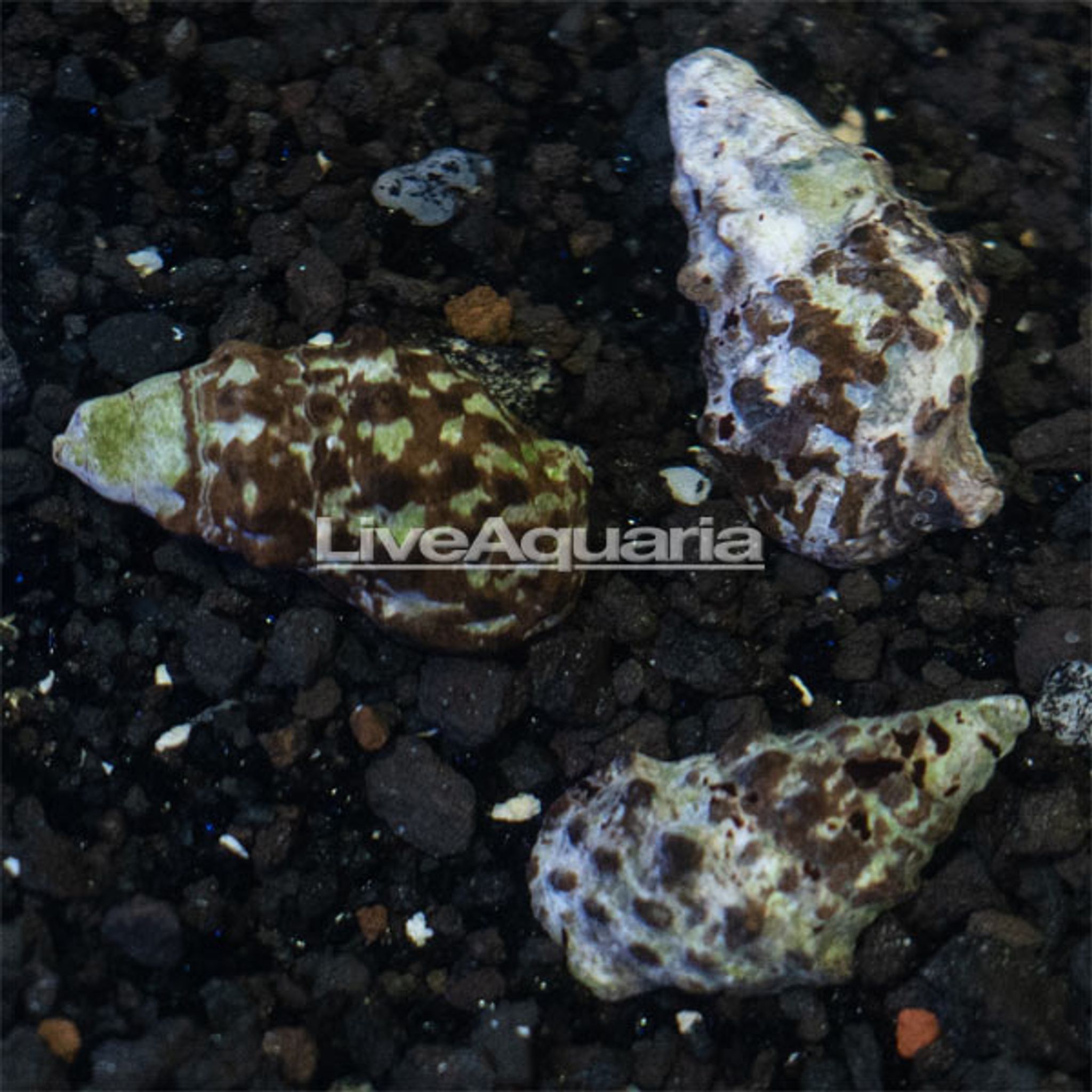

Is Nassarius Snail Reef Safe? Compatibility With Fish, Coral and Invertebrates
Yes — true Nassarius snails are reef safe. They are scavengers that patrol the sand bed for leftover food and decaying matter, and they do not eat live coral tissue, clam mantle, or the soft tissue of other sessile invertebrates. The compatibility questions that trip up new reefers are less about coral and more about tankmates, substrate, and telling a true Nassarius apart from a predatory look-alike — all covered below.
What Nassarius Snails Actually Eat
Nassarius snails are detritivores and scavengers, not algae grazers. Unlike Turbo or Trochus snails, which spend the day scraping film algae off glass and rock, Nassarius snails:
- Burrow into the sand bed and stay buried for most of the day
- Detect meaty food or decaying organic matter through a siphon that samples the water
- Emerge rapidly — often within minutes — once they sense uneaten food, a dead fish, or a dying invertebrate
- Consume that organic waste before it breaks down into ammonia
This makes them useful for cleaning up leftover feedings and reducing the risk of ammonia spikes, but they will not solve an algae problem. If your goal is algae control, pair them with dedicated grazers rather than expecting Nassarius to do that job.
Coral Compatibility
Nassarius snails are safe with LPS, SPS, soft corals, zoanthids, and mushrooms. Their feeding behavior is triggered by decaying tissue, not live tissue, so they have no interest in a healthy polyp or a thriving zoanthid mat.
The one gray area: if a coral is already dying or has necrotic tissue, a Nassarius may scavenge the dead portion. This isn't predation — it's the same behavior that makes them useful in the first place — and removing rotting coral tissue before it fouls the water can actually be a net positive for the tank. Browse options for stocking a mixed display in corals if you're building out a reef alongside a cleanup crew.
Fish Compatibility
Nassarius snails coexist peacefully with the vast majority of reef community fish, including clownfish, gobies, blennies, tangs, and dartfish. Problems arise only with fish equipped to crack shells:
| Compatibility | Fish |
|---|---|
| Generally safe | Clownfish, gobies, blennies, tangs, dartfish, most community reef fish |
| Risky / avoid | Pufferfish, triggerfish, large or aggressive wrasses, snowflake and zebra morays |
These shell-crushing species view a snail's shell as a durable food package, not a deterrent, and will pick Nassarius off one by one. If your stocking list already includes any of these, skip Nassarius and choose a different cleanup crew member instead. For everything else, they're a low-risk addition to a mixed marine fish community.
Invertebrate Compatibility
Nassarius snails generally get along with peppermint shrimp, cleaner shrimp, starfish, sea urchins, emerald crabs, and most other cleanup-crew members.
Hermit crabs are the exception. Hermits are opportunistic shell-seekers, and a Nassarius carries a shell that's often just the right size for a growing hermit. As hermit crabs outgrow their own shells, they may attack and evict a living Nassarius to claim its home. If you see an "empty" shell moving on its own weeks after adding snails, it's likely a hermit that has taken over — not evidence that the original snail simply vanished.
What About Other Snails?
This is where sources genuinely disagree, so it's worth being direct about it:
- Some reports describe Nassarius as completely peaceful toward other snails (Nerite, Trochus, Stomatella)
- Others describe opportunistic attacks on smaller or weaker snails, especially when food is scarce
The sensible middle ground: true Nassarius species are scavengers, not predators, and won't target healthy snails under normal feeding. But food scarcity can push any scavenger toward opportunistic behavior on a weak or dying tankmate. A second, larger factor behind "killer Nassarius" reports is misidentification — see the next section.
True Nassarius vs. Predatory Whelks
A significant share of the internet's "Nassarius killed my snails" anecdotes trace back to a case of mistaken identity rather than true Nassarius behavior. Predatory whelks (a related but distinct group) are sometimes sold or mixed into cleanup-crew packages under the "Nassarius" label, and these are genuinely predatory on other mollusks.
Use these signals to tell them apart at the store:
| Trait | True Nassarius | Predatory whelk look-alike |
|---|---|---|
| Daytime behavior | Buried in sand, rarely visible | Often visible on glass or rock |
| Response to food | Emerges quickly, then re-buries | Slower, more deliberate hunting |
| Shell shape | Elongated, smooth spiral, siphonal notch | Often heavier, more textured shell |
| Typical size | Small to medium (vibex-type) or larger (Tongan) | Varies, sometimes similar in size |
If a "Nassarius" is consistently seen crawling on rock or glass in daylight rather than staying buried, treat that as a warning sign before adding it to a reef with other snails.
Tank Setup Requirements
Nassarius snails need substrate to burrow in — a bare-bottom or crushed-coral tank is not suitable and will stress or kill them prematurely.
- Minimum tank size: roughly 5–10 gallons (19–38 L)
- Substrate: fine-to-medium aragonite sand, at least 1–2 in (2.5–5 cm) deep; many hobbyists prefer a deeper sand bed of 3–4 in (7.5–10 cm) for both burrowing behavior and detritus/nitrate processing
- Avoid: crushed coral or bare glass bottoms
Stocking Rate
- Common/smaller species (N. vibex and similar): about 1 snail per gallon
- Larger species (Tongan Nassarius, N. distortus): about 1 snail per 2–3 gallons
The trade sells more than one species under the "Nassarius" name, and they aren't interchangeable in terms of bioload:
| Type | Typical size | Stocking rate | Notes |
|---|---|---|---|
| Common/vibex-type | Small | ~1 per gallon | Fast burrowers, good for smaller tanks |
| Tongan / large Nassarius | Larger | 1 per 2–3 gallons | Heavier bioload per snail, more visible movement |
Overstocking beyond your tank's bioload is a common mistake — too many snails competing for too little leftover food leads to starvation, which is the same scarcity condition that can trigger opportunistic attacks on weaker tankmates.
Water Parameters
| Parameter | Target range |
|---|---|
| Temperature | 72–80°F (22–27°C) |
| Specific gravity | 1.023–1.025 (some tolerance down to 1.020) |
| pH | 8.1–8.4 |
| Alkalinity | 8–11 dKH |
| Calcium | 380–420 ppm |
| Nitrate | Under 5–10 ppm ideal; tolerated up to ~20 ppm |
Nassarius snails are actually more nitrate-tolerant than many reef invertebrates, so aim for reef-standard nitrate levels for your coral's sake generally, not specifically because the snails demand it. Like any snail, their shell can still erode in a system running low alkalinity or low pH even if the snail itself survives, so keep an eye on shell condition alongside the calcium and alkalinity numbers you're already tracking for coral.
Copper sensitivity: Nassarius snails, like nearly all invertebrates, cannot tolerate copper-based medications. Even trace copper residue left in a tank or sump from a past fish treatment is enough to be lethal. Never add snails to equipment that has held copper unless it's been thoroughly cleaned or dedicated to invert-safe use only.
Feeding When the Tank Is Otherwise Clean
In a low-bioload or heavily-skimmed tank, there may not be enough leftover food to sustain a full scavenger population. Signs of an underfed cleanup crew include snails that never emerge and gradual population decline.
To check whether supplemental feeding is needed, try a simple test: drop a small piece of shrimp or a sinking pellet near the sand and watch for multiple snails to emerge within 5–10 minutes. If few or none show up, they may already be well-fed from ambient waste; if response is strong and frequent, supplement.
When supplementing:
- Offer frozen mysis or brine shrimp, sinking pellets, or small bits of seafood a few times a week
- Drop food directly onto or near the sand bed so it reaches the snails before fish intercept it
- Watch for overfeeding — a larger scavenger population fed too generously can itself raise nitrate and phosphate, so there's a balance point rather than "more snails, more feeding, cleaner tank"
Sinking foods from a food and supplements selection work well for this kind of targeted, occasional feeding.
Breeding and Lifecycle Basics
Nassarius snails reproduce by laying egg capsules on hard surfaces like rock or glass. The resulting larvae go through a planktonic stage that is very difficult to raise in a home aquarium, so noticeable captive breeding is uncommon in typical reef tanks. Snails generally need to reach a certain size before becoming sexually mature, which is part of why population growth in a display tank tends to be slow and unpredictable rather than a sudden bloom.
Acclimating New Nassarius Snails
Because Nassarius snails are sensitive to sudden parameter swings even though they tolerate a fairly wide range over time, use a slow introduction:
- Drip acclimate new snails over 30–60 minutes or longer, matching temperature and salinity gradually
- Confirm the destination tank has no copper residue from past medications
- Consider a quarantine period for new arrivals, consistent with your normal livestock intake process
- Release snails near the sand bed so they can burrow immediately rather than being left exposed on rock
A Note on Sand-Bed Pests
Nassarius snails coexist fine with other beneficial sand-bed detritivores, but they are not a fix for a bristleworm outbreak or sand-bed nematode issues. They process organic waste generally; they don't selectively hunt or control other sand-dwelling organisms. If you're seeing an actual pest population explosion, that calls for a separate approach rather than relying on your cleanup crew to sort it out.
Common Mistakes to Avoid
- Bare-bottom or crushed-coral substrate — snails can't burrow, become stressed, and often die prematurely
- Overstocking beyond bioload — too many snails per gallon leads to starvation and opportunistic attacks on weaker tankmates
- Adding snails to a tank with copper residue — lethal even at trace levels
- Mistaking an empty, moving shell for a live snail — hermit crabs commonly occupy vacated Nassarius shells
- Assuming all "sand-sifting snails" behave the same — Cerith and Nerite snails graze algae and don't burrow the way true Nassarius do
- Assuming snails died after days of no sightings — normal Nassarius behavior is staying buried until food is detected; test with a piece of shrimp before assuming a loss
Frequently Asked Questions
Are Nassarius snails safe with corals?
Yes. They don't eat live coral tissue and will only scavenge dead or decaying matter, which can actually help remove rotting tissue before it affects water quality.
Will Nassarius snails eat my other snails?
Rarely, under normal feeding conditions. Reported attacks are usually explained by food scarcity triggering opportunistic behavior, or by misidentified predatory whelks sold under the Nassarius name.
Can Nassarius snails live with hermit crabs?
It's risky. Hermit crabs are opportunistic shell-seekers and may attack or evict a living Nassarius to claim its shell, especially as the hermit outgrows its current one.
What do Nassarius snails eat if there's no leftover food?
Supplement with sinking meaty foods such as frozen mysis or brine shrimp, or small bits of seafood, a few times a week so they don't go hungry in a low-bioload tank.
How many Nassarius snails per gallon is right?
About 1 snail per gallon for common, smaller species, and closer to 1 per 2–3 gallons for larger Tongan Nassarius, which carry a heavier bioload per snail.
Do Nassarius snails need a deep sand bed?
They need sand to burrow in at minimum — 2 in (5 cm) is a workable minimum, with 3–4 in (7.5–10 cm) preferred if you also want detritus and nitrate-processing benefits from a deeper bed.
Are Nassarius snails reef safe with fish?
Yes, with nearly all community reef fish. The exceptions are pufferfish, triggerfish, large or aggressive wrasses, and shell-crushing eels like the snowflake or zebra moray.
Can Nassarius snails survive copper treatment in the tank?
No. Copper is lethal to Nassarius snails and most invertebrates, even in trace residue. Remove or rehome inverts before any copper-based medication and confirm equipment is clean before reintroducing them.
Ready to round out your cleanup crew? Browse live marine invertebrates to find Nassarius snails and other reef-safe scavengers suited to your tank size and bioload.


